- 3/8, North Pirerbag
- 60 Feet Main Road
- Mirpur, Dhaka 1216
- +880-967-8247365
- support@informatix.systems

Emerging CTI and SOC Automation Strategies 2026
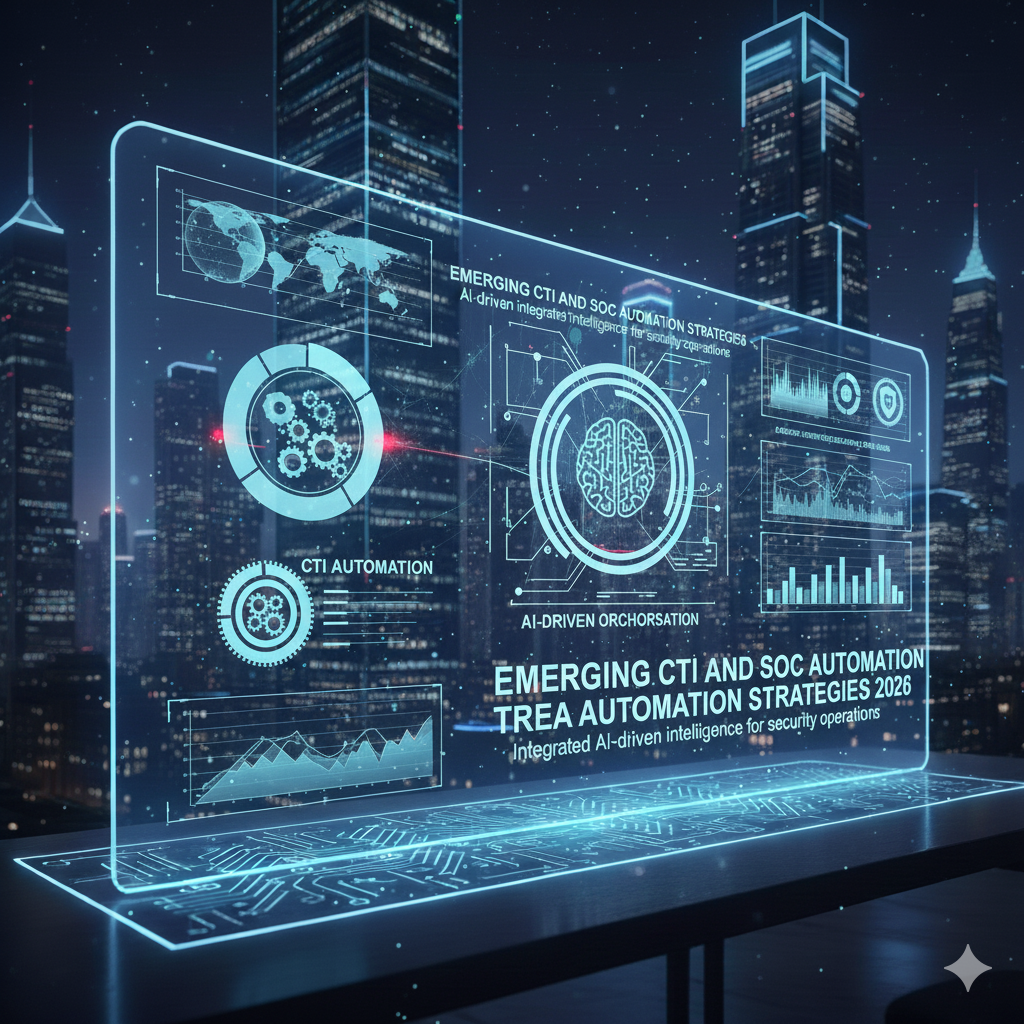
In 2026, the cybersecurity landscape is witnessing a critical evolution as organizations integrate advanced Cyber Threat Intelligence (CTI) and Security Operations Center (SOC) automation technologies. The explosion of sophisticated threats, rapid digital transformation, and the global expansion of enterprise IT infrastructures have dramatically increased the pressure on traditional security operations. Manual response workflows and static detection models can no longer withstand the scale and speed of modern attacks, at Informatix.Systems, we provide cutting-edge AI, Cloud, and DevOps solutions for enterprise digital transformation, enabling businesses to build resilient, intelligent cybersecurity frameworks that anticipate threats rather than merely react to them. As CTI and SOC automation redefine operational capabilities, organizations now have the opportunity to create predictive, adaptive, and autonomous defense ecosystems. The goal for 2026 and beyond is clear—augment human expertise with automated intelligence. Emerging strategies blend AI-driven analytics, machine learning, and orchestration platforms to achieve real-time situational awareness and proactive defense. Enterprises adopting these new approaches are seeing faster incident resolution, optimized threat detection, and reduced operational fatigue among security analysts. This article explores the most influential CTI and SOC automation strategies shaping 2026, the role of AI in operational excellence, and how enterprises can future-proof their cybersecurity posture with technologies offered by Informatix.Systems.
The Evolution of CTI and SOC Automation
From Reactive Response to Predictive Intelligence
Cybersecurity has evolved from traditional defensive monitoring into a proactive, intelligence-driven discipline. CTI fuels this shift by transforming raw data into contextualized insights that empower automated SOC environments.
Key evolutionary stages include:
- Legacy Monitoring Systems: Focused on rule-based detection and alert triage.
- Integrated Threat Intelligence: Combined data feeds from multiple sources for better threat visibility.
- AI and ML Integration (Post-2022): Introduced behavioral analytics for predictive alerting.
- Full Automation (2026): Decision intelligence and autonomous orchestration dominate enterprise SOC strategies.
The Data Explosion and Automation Necessity
By 2026, SOC teams face billions of logs daily. Only automation can ensure efficient processing, prioritization, and response under such volumes. Automated correlation, enrichment, and response allow analysts to focus on strategic tasks instead of repetitive manual actions.
Core Components of Modern CTI-Driven SOC Automation
Data Collection and Aggregation
Effective automation begins with comprehensive data sourcing:
- Threat feeds, dark web intelligence, and honeypot sensors
- Endpoint telemetry from XDR and EDR platforms
- Network traffic analysis and cloud security logs
Machine Learning Analytics
Machine learning models identify patterns across structured and unstructured data, enhancing detection accuracy and reducing false positives.
Orchestration and Response
Security Orchestration, Automation, and Response (SOAR) platforms now integrate directly with CTI to execute:
- Automated blocking of malicious domains
- Context-aware response workflows
- Dynamic playbook updates through continuous learning
Informatix.Systems helps enterprises design bespoke automation pipelines that synchronize CTI insights directly with SIEM and SOAR infrastructures.
Key Emerging Strategies for 2026
AI-Driven Threat Contextualization
AI models automatically evaluate threat relationships and contextualize alerts for faster and more accurate prioritization.
Threat Intelligence Fusion Models
Fusion intelligence merges internal telemetry with external feeds to create a unified view of organizational threat posture.
Cognitive SOCs
Cognitive SOCs leverage NLP-based chatbots and decision engines that emulate human reasoning to accelerate response.
Zero-Trust Adaptive Automation
Zero Trust architecture integrated into SOC workflows ensures continuous authentication, adaptive access, and self-healing policies.
Autonomous Incident Response
AI-powered systems autonomously isolate infected nodes, rollback malicious actions, and trigger micro-segmentation in real-time. Each of these strategies reflects a deep integration of automation within intelligence and orchestration workflows, delivered through advanced platforms offered by Informatix.Systems.
The Role of Artificial Intelligence in SOC Optimization
Predictive Threat Modeling
Using AI-based predictive models, SOCs can identify precursors to ransomware or phishing attacks before execution.
Reinforcement Learning in Security Operations
Reinforcement learning enables continuous improvement of playbooks based on outcomes from prior incidents.
AI-Augmented Human Analysts
Rather than replacing SOC analysts, AI acts as a digital teammate—analyzing massive datasets while humans validate critical decisions.
Building a Next-Generation CTI Framework
Essential Components
A future-proof CTI infrastructure integrates:
- Data pipelines for ingestion and normalization
- AI-based correlation engines
- Cross-domain context enrichment
- Automated reporting and threat scoring mechanisms
Steps to Implementation
- Define intelligence requirements.
- Map automation objectives.
- Integrate CTI into SIEM/SOAR stacks.
- Enable continuous feedback loops.
At Informatix.Systems, we assist organizations in designing modular CTI frameworks tailored to industry-specific risks.
SOC Automation Architectures for 2026
Layered Automation Design
A layered SOC architecture ensures resilience and flexibility, typically comprising:
- Detection Layer: Machine learning algorithms in next-gen SIEMs
- Decision Layer: Rule engines and reinforcement models
- Action Layer: Automated containment through orchestration tools
Integration with Cloud and DevOps Pipelines
DevSecOps alignment ensures CTI and SOC automation are embedded across CI/CD workflows, enabling continuous compliance and faster security validation.
Challenges in CTI and SOC Automation Adoption
Despite immense potential, several enterprise challenges persist:
- High initial integration complexity
- The need for skilled AI and security professionals
- Data privacy and policy compliance obligations
- Model drift and continuous optimization challenges
At Informatix.Systems, we mitigate these issues through managed AI-SOC services, hybrid cloud solutions, and adaptive governance frameworks.
Business Advantages of CTI and SOC Automation
Adopting automation yields transformative benefits:
- Cost efficiency: Reduced manual intervention and faster resolutions.
- Scalability: Handles vast data volumes without expanding headcount.
- Proactive security posture: Early threat anticipation and mitigation.
- Operational resilience: 24/7 defense continuity through AI orchestration.
These benefits position automation as a cornerstone for enterprise digital defense strategies.
Case Example: Automated Threat Containment at Scale
Consider a financial services enterprise integrating Informatix.Systems’ AI-based SOC automation platform. Within six months:
- Incident response time decreased by 72%.
- Alert fatigue dropped by 60%.
- False positives were reduced by half through continuous ML retraining.
This case exemplifies the operational efficiency gained through full automation synergy between CTI and SOC environments.
The Road Ahead: SOC Autonomy and Predictive Defense
By 2026 and beyond, we foresee the rise of Autonomous SOCs (A-SOCs)—systems that act, learn, and adapt independently, supported by explainable AI for traceable decisions. Predictive defense will shift cybersecurity from reactive alerting to anticipatory protection, aligning directly with national cybersecurity initiatives and enterprise resilience goals. As threats evolve in scale and sophistication, businesses that align with automation-powered CTI frameworks will lead in operational agility and resilience. SOC automation is no longer optional; it’s imperative for intelligent digital transformation at Informatix.Systems, we provide cutting-edge AI, Cloud, and DevOps solutions that empower enterprises to transition toward fully automated, intelligence-driven cybersecurity operations. Our expertise helps organizations deploy context-aware, predictive SOC frameworks that scale dynamically with business growth. Enterprises invested in the future must act now build intelligent defenses, automate routine responses, and integrate real-time CTI into every layer of digital infrastructure. Partner with Informatix.Systems today to drive your security transformation in 2026 and beyond.
FAQs
What is CTI automation in cybersecurity?
CTI automation involves using AI and machine learning to collect, analyze, and apply threat intelligence automatically for improved security decision-making.
How does SOC automation improve incident response times?
Automating SOC workflows minimizes manual analysis and enables instant response to detected threats through pre-defined playbooks and AI-driven orchestration.
Can small enterprises adopt these automation strategies?
Yes. Scalable AI-driven SOC platforms from Informatix.Systems support SMEs with modular, cost-efficient automation frameworks.
What technologies drive SOC automation in 2026?
Key technologies include AI analytics, SOAR systems, zero-trust frameworks, predictive modeling, and cognitive orchestration engines.
How do CTI and SOC automation work together?
CTI provides actionable insights into current and emerging threats, while SOC automation executes real-time responses and containment actions based on those insights.
What are the biggest challenges in automation adoption?
Challenges include integration complexity, data alignment, model maintenance, and governance compliance. Informatix.Systems provide frameworks to overcome each efficiently.
How can Informatix.Systems help businesses adopt these frameworks?
Informatix.Systems offers AI-integrated SOC solutions, automated threat intelligence pipelines, and end-to-end cybersecurity transformation services.
What’s the long-term vision of SOC automation?
Fully autonomous SOCs capable of predictive, self-healing operations leveraging explainable AI and adaptive learning models will dominate cybersecurity by 2030.
No posts found
Write a review