- 3/8, North Pirerbag
- 60 Feet Main Road
- Mirpur, Dhaka 1216
- +880-967-8247365
- support@informatix.systems

Future of CTI Automation 2028
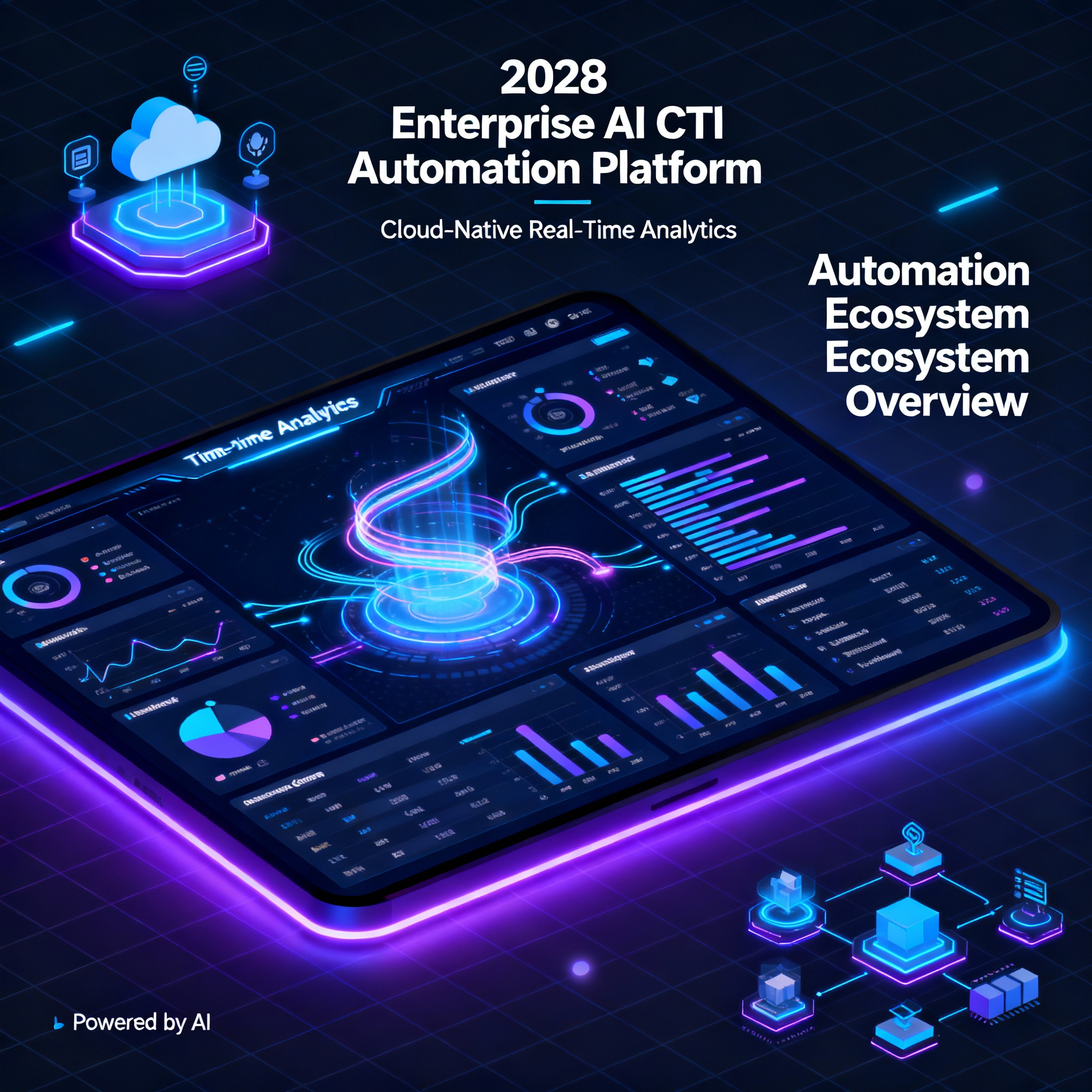
In an era defined by data velocity, real-time decision-making, and expanding digital perimeters, Cyber Threat Intelligence (CTI) has become the lifeblood of modern cybersecurity. The coming years leading to 2028 will witness a monumental shift from reactive defense systems to AI-driven CTI automation capable of self-learning, contextual reasoning, and proactive mitigation. Enterprises across industries are struggling with a surge in attack vectors, from ransomware-as-a-service and zero-day exploits to AI-generated phishing threats. Traditional CTI models, which relied heavily on manual correlation and analyst oversight, are no longer sufficient. The next evolution in security operations will hinge on automated intelligence orchestration, where machine reasoning and collaborative data pipelines proactively protect infrastructure at Informatix.Systems, we believe CTI automation represents more than just technological advancement; it’s a transformation of how organizations anticipate, react, and adapt in a global threat ecosystem. By leveraging AI, Machine Learning (ML), Natural Language Processing (NLP), and Cloud-native SOAR (Security Orchestration, Automation, and Response), businesses can now detect threats faster, reduce response latency, and align cyber resilience with enterprise goals. As we look toward 2028, CTI automation will extend far beyond operational productivity. It will become a strategic enabler uniting AI-driven analytics, real-time telemetry, and predictive modeling into a single, intelligent defense fabric.
The Evolution of CTI Automation
From Reactive to Proactive Threat Intelligence
Traditional CTI systems were primarily reactive. Analysts spent hours manually collecting indicators of compromise (IoCs), verifying intelligence sources, and correlating incidents. By 2028, automation will shift CTI into an anticipatory model:
- Predictive algorithms detecting unknown anomalies
- Autonomous correlation engines prioritizing relevant alerts
- Behavioral analytics learning from historical incident data
Key Milestones in CTI Development
- 2012–2018: Threat data aggregation and TIP (Threat Intelligence Platform) deployment
- 2019–2023: SOAR integration with CTI for automated response
- 2024–2028: Cognitive CTI AI reasoning systems integrating global threat feeds and context-aware decisioning
How AI and ML Power Modern CTI
Core Components of AI-Driven CTI
At the heart of CTI automation lies AI modeling and ML-based behavior recognition. By 2028, these systems will process petabytes of telemetry data using:
- Supervised learning for pattern discovery in attack sequences
- Reinforcement learning for autonomous defense adaptation
- Deep neural networks (DNNs) for contextual threat correlation
Predictive Analytics for Threat Forecasting
Predictive CTI platforms use vast datasets to infer probable attack paths, allowing SOCs to act before breaches occur:
- Early alerting on vulnerable endpoints
- Anticipating attacker movements
- Establishing preemptive mitigation workflows
At Informatix.Systems, we integrate predictive threat modeling into enterprise CTI solutions, ensuring scalable, context-aware detection across hybrid environments.
Automation in SOC (Security Operations Centers)
The Role of CTI Automation in SOC Efficiency
SOC teams face alert fatigue, false positives, and complex decision trees. By 2028, CTI automation will:
- Filter 85–90% of low-value alerts automatically
- Fuse threat feeds with dynamic playbooks
- Enable instant triage through machine learning
Integration with SOAR Platforms
SOAR is the operational catalyst enabling CTI automation to function across disparate systems:
- Automated ticketing and playbook execution
- Workflow standardization for incident response
- Closed-loop feedback improvement via AI validation
Human-AI Collaboration in the SOC 2.0 Model
While automation reduces manual workload, human analysts remain central. The SOC 2.0 model emphasizes:
- Analyst-overseen validation
- AI-guided incident prioritization
- Continuous learning loops improve model accuracy
Cloud-Native CTI: Flexibility and Scalability
Cloud Integration Benefits
By 2028, CTI will be largely cloud-native, offering:
- Elastic data storage across global threat aggregators
- API-based intelligence exchange for agility
- Multi-tenant architectures supporting multiple threat domains
Protecting Cloud Ecosystems
CTI automation ensures visibility across cloud workloads by monitoring containerized environments, Kubernetes clusters, and serverless functions.
At Informatix.Systems, our Cloud Security Intelligence Suite delivers unified visibility for hybrid deployments.
The Role of Cloud AI in CTI Evolution
Cloud-driven AI enables real-time intelligence distribution:
- 24/7 telemetry inference
- Scalable deep analysis for emerging IoCs
- Federated learning for secure inter-organizational collaboration
Predictive Threat Intelligence by 2028
Contextual Intelligence and Adaptive Learning
The next generation of CTI systems will possess adaptive reasoning capabilities, meaning intelligence layers can update autonomously when new threat evidence arises.
Threat Graphs and Knowledge Mapping
Graph-based data structures will fuel visualized intelligence models:
- Node-based representation of actor behaviors
- Relationship graphs identifying multi-stage attacks
- Scoring mechanisms ranking threat probability
Cross-Domain AI Threat Synthesis
CTI will increasingly merge cyber, physical, and digital intelligence to create unified risk profiles for multinational enterprises.
The Role of NLP in CTI Automation
Natural Language Processing will transform unstructured data (blogs, dark web forums, and incident reports) into actionable insights.
NLP-Based CTI Use Cases
- Extracting IOCs from unstructured threat feeds
- Identifying sentiment shifts in hacker communities
- Automating report summarization for CISO dashboards
Multilingual Intelligence Processing
As organizations operate globally, NLP models trained on multilingual datasets ensure no critical intelligence goes unnoticed across regional cyber ecosystems.
Ethical AI and Governance in Automated CTI
AI Transparency and Decision Accountability
By 2028, enterprises will demand explainable AI models within CTI platforms. These models must trace decision paths to align with global governance standards like GDPR and NIST frameworks.
Responsible Data Utilization
- Maintain ethical sourcing of threat data
- Prevent bias in model training
- Ensure interoperability between global CTI datasets
At Informatix.Systems, our AI Governance Framework integrates explainability and compliance-by-design principles into all CTI automation modules.
Integration with DevSecOps Pipelines
CI/CD Meets Threat Intelligence
CTI automation can now plug directly into CI/CD pipelines, alerting developers when vulnerabilities or misconfigured assets appear during deployment.
Continuous Feedback Loops
By 2028, DevSecOps will rely on bi-directional CTI flows, where threat knowledge enhances code security, and deployment policies continuously evolve against new attack frameworks.
Measuring ROI of CTI Automation
Quantifiable Outcomes
Key performance metrics for CTI automation include:
- Mean Time to Detect (MTTD)
- Mean Time to Respond (MTTR)
- False positive reduction rate
- Automated correlation accuracy
Business Impact
Automated CTI not only strengthens cybersecurity but also saves operational costs, reduces downtime, and builds corporate trust.
Preparing for 2028: Strategic Enterprise Roadmap
Maturity Stages of CTI Adoption
- Foundational: Manual analysis and fragmented feeds
- Augmented: Semi-automated triage with limited orchestration
- Autonomous: Fully AI-driven correlation and self-healing defense
Key Investment Priorities
- AI cybersecurity skill development
- Integrating CTI with governance, risk, and compliance (GRC) frameworks
- Strengthening SOC–DevOps collaboration
At Informatix.Systems, we help global enterprises transition across these maturity stages through our AI-Driven Threat Intelligence & Automation Framework. By 2028, CTI automation will redefine how enterprises detect, analyze, and respond to emerging cyber threats. It will merge AI cognition, cloud-native elasticity, and predictive analytics to create intelligent ecosystems where security operations run autonomously, and resilience becomes measurable. At Informatix.Systems, we empower organizations to embrace this future through advanced AI, Cloud, and DevOps solutions crafted for maximum agility and defense automation. Future-proof your enterprise. Connect with our experts to transform your CTI strategy today.
FAQs
What is CTI automation?
CTI automation refers to using AI and ML technologies to collect, analyze, and respond to cyber threat intelligence without human intervention.
Why is CTI automation crucial for enterprises by 2028?
It helps manage large-scale threat data efficiently, reduces analyst fatigue, and provides predictive visibility into evolving cyber risks.
How does Informatix Systems support CTI automation?
Informatix.Systems delivers integrated AI-CTI pipelines combining predictive analytics, SOAR, and DevSecOps integration for enterprise-scale security.
Can CTI automation fully replace human analysts?
No. It augments human decision-making by automating repetitive tasks while analysts handle complex investigations and strategic judgment.
Which technologies drive CTI automation?
Core enablers include Artificial Intelligence, Machine Learning, Natural Language Processing, Cloud Computing, and Automation frameworks.
Is CTI automation scalable across hybrid cloud environments?
Yes. Cloud-native architectures ensure scalability, interoperability, and multi-tenant intelligence orchestration.
How can businesses begin implementing automated CTI?
Start by integrating SOAR with CTI feeds, training ML models on historical incident data, and partnering with trusted automation providers like Informatix.Systems.
What outcomes can enterprises expect by 2028?
Faster threat detection, reduced incident response times, and AI-assisted resilience that aligns with business continuity goals.
No posts found
Write a review