- 3/8, North Pirerbag
- 60 Feet Main Road
- Mirpur, Dhaka 1216
- +880-967-8247365
- support@informatix.systems

Emerging AI Models for Predictive Cyber Defense Strategies 2029
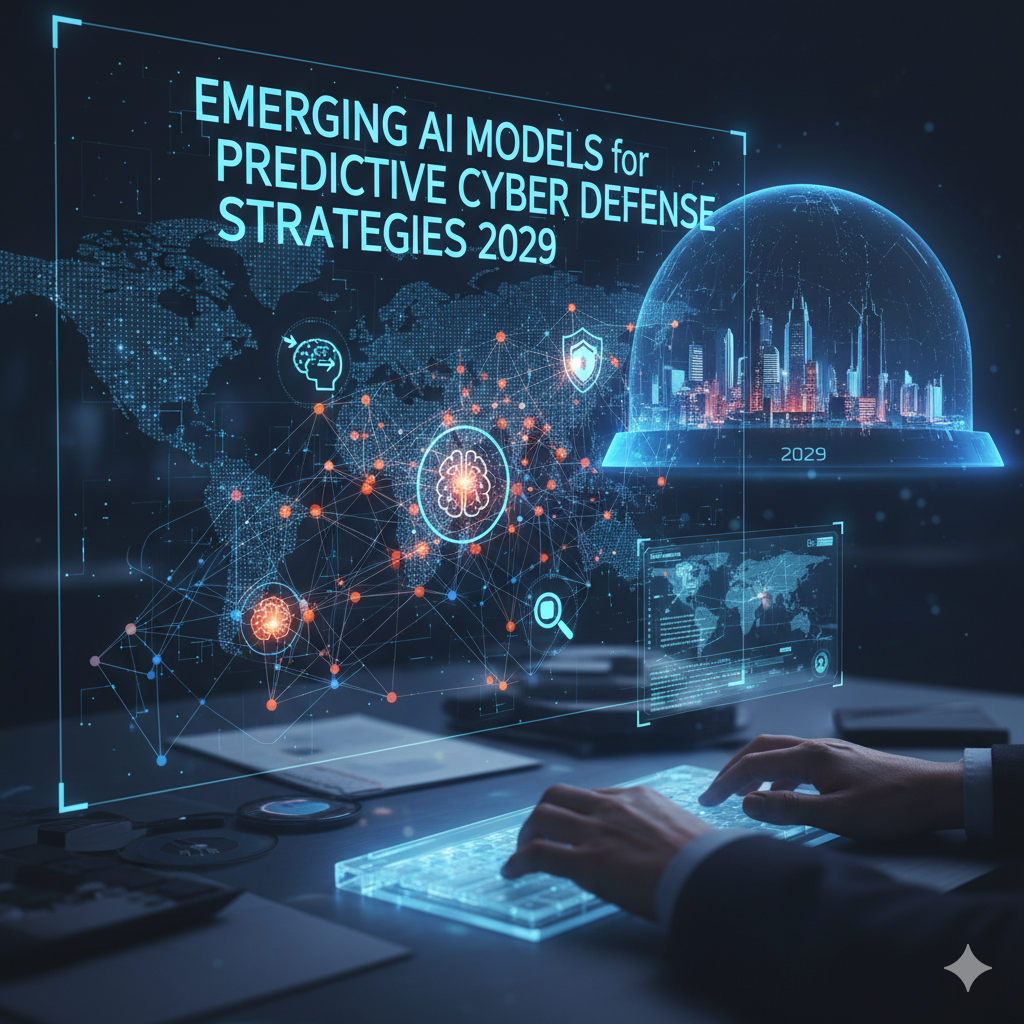
In today’s hyperconnected world, digital transformation has become a double-edged sword, driving innovation while exposing enterprises to new layers of cyber vulnerability. As businesses, governments, and critical infrastructures rely increasingly on cloud platforms, IoT, and AI systems, the scale and sophistication of cyber threats continue to outpace human defenses. Traditional security models can no longer respond quickly enough to evolving attack vectors that exploit automation and machine intelligence. To stay ahead of adversaries, enterprises are embracing Predictive Cyber Defense, a proactive approach that uses AI and advanced analytics to foresee and prevent threats before they manifest. By 2029, AI-driven predictive defense models will form the nervous system of global cybersecurity, empowering organizations to simulate potential attacks, automate responses, and neutralize threats in real time. These emerging models combine machine learning (ML), deep learning, reinforcement learning, and natural language processing (NLP) to understand adversarial behaviors and predict future threats. This transition marks a significant paradigm shift, from reactive defense based on detection to intelligent foresight powered by predictive analytics. At Informatix.Systems, we provide cutting-edge AI, Cloud, and DevOps solutions for enterprise digital transformation. Our AI-powered predictive defense platforms give organizations unmatched visibility, precision, and adaptability, transforming cybersecurity into a self-learning ecosystem. This article explores the Emerging AI Models for Predictive Cyber Defense Strategies of 2029, highlighting how these advancements redefine security intelligence through automation, simulation, and continuous adaptation.
Understanding Predictive Cyber Defense
What Is Predictive Cyber Defense?
Predictive cyber defense uses AI algorithms and machine learning analytics to identify potential cyberattacks before they occur. It leverages historical data, live telemetry, and behavioral intelligence to forecast threats and automate mitigation strategies.
Core Principles
- Proactive over Reactive: Anticipates risks before exploitation.
- Adaptive Learning: Continuously refines accuracy using real-time threat feedback.
- Automated Response: Enables instant action without human intervention.
- Data-Driven Insight: Correlates global threat intelligence for pattern-based forecasting.
The predictive defense approach transforms cybersecurity from a static, siloed discipline into a dynamic, autonomous intelligence ecosystem.
Why AI Models Drive the Future of Cyber Defense
The Data Overload Problem
Organizations process terabytes of log data daily. Manual analysis fails to detect subtle patterns that reveal complex intrusions; AI models solve this by learning continuously from huge datasets.
Sophisticated Threat Actors
Attackers now exploit AI themselves. Predictive defense must integrate counter-AI to detect and neutralize intelligent adversarial techniques.
Reducing Human Error in Security
Human analysts are prone to fatigue and oversight. AI ensures continuous, real-time monitoring without cognitive limitations.
Speed and Automation
AI models deliver split-second detection and containment, reducing Mean Time to Respond (MTTR) significantly.
By 2029, enterprise resilience will depend on intelligent automation, not static firewalls or manual decision chains.
Types of AI Models Transforming Predictive Cyber Defense
Supervised Machine Learning Models
Trained with labeled threat data to predict similar attack patterns.
- Use Cases: Spam filtering, malware classification, fraud detection.
- Algorithms: Decision Trees, Support Vector Machines (SVM), Random Forests.
Unsupervised Learning Models
Identify anomalies by finding deviations from normal system behavior without prior labeling.
- Use Cases: Anomaly detection, insider threats, zero-day exploits.
- Algorithms: K-Means Clustering, Isolation Forests, DBSCAN.
Deep Learning Models
Neural networks learn complex attack behaviors through multi-layer feature extraction, ideal for analyzing network traffic and user behavior.
- Use Cases: Phishing email detection, endpoint intrusions.
- Models Used: CNNs, RNNs, and Transformer architectures.
Reinforcement Learning Models
Agents learn optimal cybersecurity responses through continuous simulation of threat scenarios.
- Use Cases: Dynamic intrusion prevention, adaptive firewall policy management.
- Example: Autonomous systems learning countermeasures against evolving attacks.
Natural Language Processing (NLP) Models
Analyze unstructured data such as dark web chatter or phishing text.
- Use Cases: Insider threat detection, decoding social engineering patterns.
- Models: BERT, GPT architectures fine-tuned for threat language understanding.
Each model contributes distinct strengths, forming the foundation of multi-layered AI-driven defense ecosystems.
Architecture of Predictive AI Cyber Defense Systems
Data Acquisition Layer
Collects contextual, network, and behavioral telemetry from diverse sources, endpoints, firewalls, IoT, and external threat feeds.
Processing Layer
Cleanses and normalizes data using AI pipelines to eliminate redundancy.
Analytics and Modeling Layer
Implements ML and neural networks to forecast potential cyber events.
Visualization and Intelligence Layer
Presents risk insights, predictions, and recommended mitigation actions via dashboards.
Automated Response Orchestration
Integrates AI models with SOAR (Security Orchestration, Automation, and Response) for instant containment strategies.At Informatix.Systems, our predictive defense architecture unites these layers using cloud-native AI frameworks customized for hybrid enterprise ecosystems.
Key AI Technologies Powering Predictive Defense
Machine Learning (ML)
Automates data analysis for intrusion pattern detection and correlation.
Deep Learning (DL)
Enhances visibility in encrypted traffic patterns and autonomous anomaly detection.
Graph Neural Networks (GNNs)
Map relationships among entities (users, IPs, and devices) to detect hidden adversarial behavior.
Federated Learning
Enables collaborative AI model training across multiple organizations without sharing raw data, maintaining privacy while expanding global defense intelligence.
Cognitive AI
Synthesizes context-aware decisions, simulating human reasoning for complex threat scenarios. These interlinked technologies allow predictive defense ecosystems to continuously evolve in sophistication and scope.
Predictive Simulation and Digital Twins
Simulating Future Attacks
Predictive models use digital twins, virtual replicas of networks, to test cyber resilience in real-time simulation environments.
Benefits
- Identifies vulnerabilities invisible in static analysis.
- Determines attack progression probabilities.
- Supports strategic threat hunting through predictive failure modeling.
This proactive virtual testing ensures AI-driven readiness for evolving risk landscapes.
Integrating Predictive Defense with Cloud and DevOps
Cloud Integration
AI models deployed in the cloud provide elastic scalability for continuous monitoring, ensuring immediate mitigation based on global telemetry.
DevOps Pipelines
Predictive AI seamlessly integrates with CI/CD processes, automating vulnerability detection during code deployment stages.
DevSecOps Transformation
Merging AI security with DevOps accelerates delivery cycles while maintaining strong operational security. At Informatix.Systems, we fuse AI automation with cloud-native DevSecOps practices, enabling faster responses and consistent compliance reinforcement.
Emerging Predictive Defense Strategies for 2029
AI-Based Threat Forecasting Engines
Predictive analysis identifies potential attacks through behavioral and contextual correlation models.
Cognitive Risk Scoring
AI assigns dynamic risk scores to assets, prioritizing high-impact vulnerabilities for early intervention.
Autonomous Security Agents
Self-learning bots handle real-time intrusion prevention and patch management autonomously.
AI Forensics and Incident Learning
Post-incident data re-trains ML algorithms to improve responsiveness to similar patterns.
Federated AI Intelligence Sharing
Collaborative frameworks connect industries, enabling real-time AI threat sharing while maintaining privacy via federated networks. Such strategies move enterprises toward cyber defense ecosystems that self-learn, self-heal, and self-evolve.
Measuring the Efficiency of Predictive AI Cyber Defense
Key Performance Metrics:
- Mean Time to Detect (MTTD): Reduced by predictive monitoring.
- False Positive Reduction (FPR%): Accuracy levels enhanced through continuous retraining.
- Attack Predictability Index (API): Indicates how accurately systems forecast intrusion attempts.
- Automation Efficacy (AE%): Analyzes time saved from automated responses.
- Adaptive Learning Score (ALS): Measures the agility of AI models during evolving threats.
Performance-driven measurement ensures that predictive systems remain agile, contextually aware, and scalable.
Ethics, Explainability, and AI Governance in Cyber Defense
- Explainable AI (XAI): Allows auditability of AI decisions within regulated sectors like finance and healthcare.
- Bias Mitigation: Ensures AI decision models are free from inadvertent training bias.
- Data Privacy Compliance: Predictive systems must align with GDPR, HIPAA, and ISO 27701.
- Ethical Automation: Balances rapid automation with human decision oversight.
Responsible AI adoption ensures predictive defense evolves sustainably and transparently.
Future of Predictive AI Cyber Defense Beyond 2029
- Quantum-Ready Defense Systems: Hybrid AI integrated with quantum algorithms to predict cryptographic threats.
- Self-Governing Cyber Ecosystems: Fully autonomous frameworks managing security posture without human input.
- AI-Augmented Policy Governance: Predictive tools assisting executive decision-making in real time.
- Cognitive Digital Twins: Networks autonomously analyzing and optimizing internal defenses.
- Cross-Industry Intelligence Ecosystems: Continuous data sharing powered by federated cloud AI architectures.
The post-2029 era will see self-defending, adaptive cyber environments as enterprises achieve digital immunity through intelligence fusion.
Informatix.Systems: Transforming Predictive Defense with AI
At Informatix.Systems, we provide cutting-edge AI, Cloud, and DevOps solutions for enterprise digital transformation. Our predictive AI cyber defense systems combine machine learning, automation, and real-time analytics to deliver unparalleled cyber resilience.
Our Core Capabilities Include:
- AI-Driven Predictive Cyber Threat Modeling
- Cloud-Native Security Intelligence Frameworks
- DevSecOps-Integrated CI/CD Pipelines
- Federated Threat Data Intelligence Systems
- Continuous Risk Scoring and Compliance Automation
By uniting predictive analytics with DevOps automation, Informatix.Systems delivers agile, intelligent, and self-learning cybersecurity ecosystems tailor-made for enterprises of the future. AI is no longer a support tool; it is the foundation of cyber resilience. Predictive cyber defense represents a monumental shift from reactive controls to proactive foresight. As threats evolve, enterprises equipped with AI-driven predictive models will lead the next generation of digital defense, able to forecast vulnerabilities, adapt autonomously, and fortify their operations globally. At Informatix.Systems, we empower organizations to harness the combined power of AI, Cloud, and DevOps intelligence for predictive threat forecasting, continuous compliance, and automated defense orchestration. See the future, prevent the threat, and secure your enterprise with Informatix.Systems.
FAQs
What are AI models for predictive cyber defense?
They are machine learning and AI systems that forecast and mitigate threats using pattern recognition, analytics, and automation.
How does predictive cyber defense differ from traditional security?
Traditional defense reacts to incidents post-detection, while predictive systems anticipate and prevent attacks before impact.
Which industries benefit most from AI predictive models?
Finance, government, energy, and healthcare sectors, where downtime or breaches have critical consequences.
What technologies enable predictive defense in 2029?
AI, machine learning, federated intelligence, cloud-native analytics, and DevOps-driven automation power this transformation.
How can organizations measure predictive defense efficiency?
By tracking detection time, false positive rates, and automation success metrics tied to contextual accuracy and risk reduction.
Can predictive defense work in hybrid cloud environments?
Yes. AI models scale across hybrid and multi-cloud ecosystems using unified threat analytics powered by distributed intelligence.
How does Informatix.Systems enhance predictive defense capabilities?
We craft end-to-end AI systems integrating deep learning, DevOps automation, and continuous compliance through cloud-native frameworks.
What’s the future of predictive cybersecurity beyond 2029?
It will evolve into autonomous, quantum-ready, and cognitive frameworks capable of self-defense and strategic prediction across digital nations.
No posts found
Write a review