Войти | Регистрация
Авторизуйтесь для получения расширенных возможностей
- г. Dhaka, 3/8, North Pirerbag, 60 Feet Main Road
- +880-967-8247365 (звонок бесплатный)
- Пн-Вс 9.00 - 18.00
- support@informatix.systems
- Посмотреть на карте

Dark Web Threat Intelligence Analysis 2025
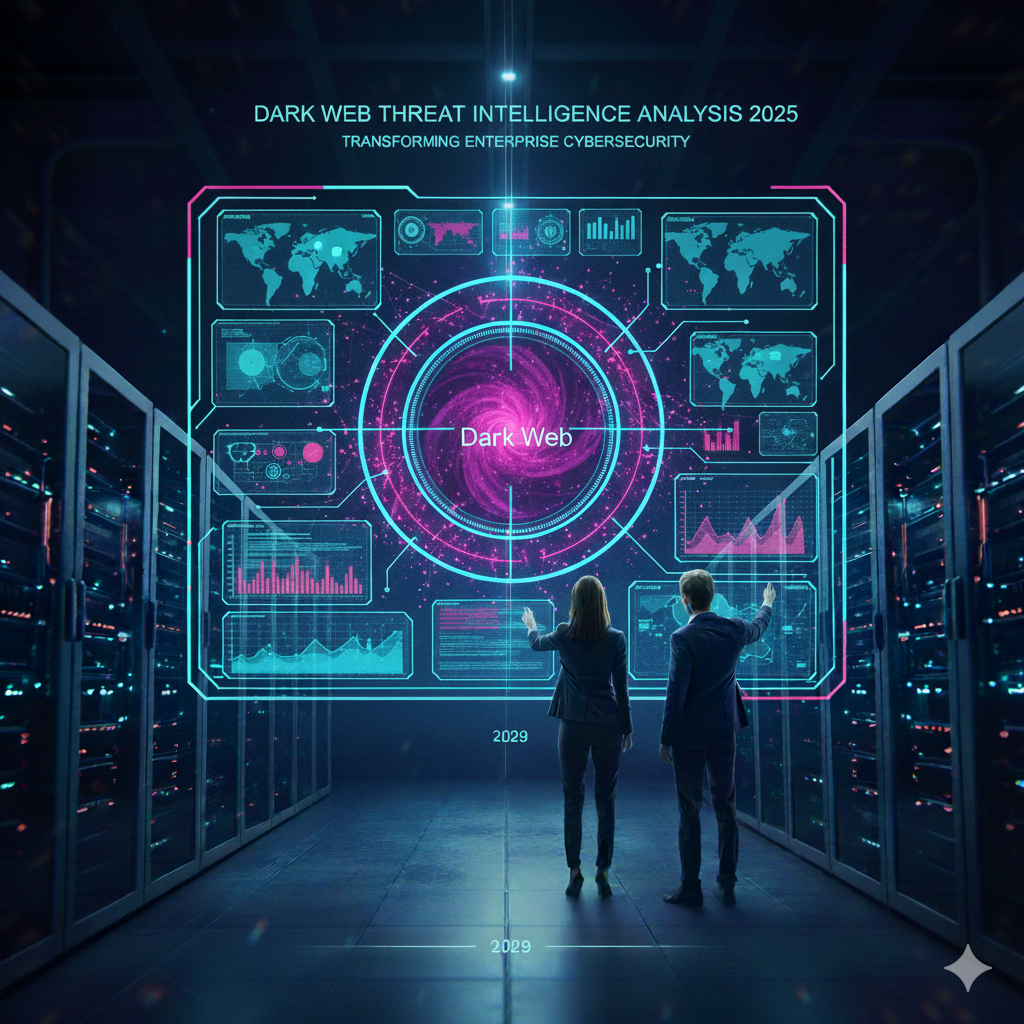
In the evolving landscape of cybersecurity, Dark Web Threat Intelligence (DWTI) has emerged as a vital tool for organizations that strive to stay ahead of cybercriminal networks and data breaches. The dark web—a hidden portion of the internet accessible only through specialized browsers like Tor—hosts underground forums, marketplaces, and encrypted communication channels where threat actors exchange stolen data, hacking tools, and exploit kits.
As of 2025, enterprise security has transitioned from being reactionary to predictive, leveraging AI-driven analytics to uncover patterns of malicious intent before adversaries launch an attack. The cost of a single data breach now surpasses USD 5 million for multinational companies, while small and medium enterprises (SMEs) face irreversible reputational harm. Early detection through Dark Web Threat Intelligence can save both time and money while mitigating operational risks.
At Informatix.Systems, we provide cutting-edge AI, Cloud, and DevOps solutions that empower enterprises to build secure, resilient digital ecosystems. Using advanced analytics and data fusion from dark web sources, organizations can now monitor emerging threats, detect compromised credentials, and uncover hidden connections between cybercrime actors and potential insider risks.
The year 2025 marks an important turning point. As cybercriminals increasingly use artificial intelligence, ransomware-as-a-service, and sophisticated zero-day exploits, Dark Web Threat Intelligence Analysis becomes an essential part of enterprise defense. This article explores how to harness actionable intelligence from the dark web, how AI is transforming DWTI, and how businesses can build next-generation cyber resilience frameworks.
What Is Dark Web Threat Intelligence?
Dark Web Threat Intelligence (DWTI) refers to the systematic collection, analysis, and interpretation of information gathered from hidden online spaces. Unlike the surface and deep web, the dark web isn’t indexed by search engines and is primarily used for anonymous operations.
Key Sources of DWTI:
- Underground hacker forums
- Marketplace listings for stolen credentials
- Ransomware group negotiations
- Leaked data repositories
- Encrypted messaging boards
Levels of Web Intelligence
- Surface Web: The portion accessible via search engines
- Deep Web: Data behind paywalls, databases, and internal systems
- Dark Web: Encrypted, anonymous domains used by criminals
Dark Web Threat Intelligence enables organizations to identify risks before they become incidents, offering proactive strategies to safeguard critical assets.
Why Dark Web Intelligence Matters in 2025
Cybersecurity strategy in 2025 demands visibility into every layer of the digital ecosystem. The dark web has evolved into a marketplace of opportunity for attackers and a predictive resource for defenders.
Top Reasons It Matters:
- Proactive Threat Mitigation: Detect attack indicators before incidents occur.
- Brand Reputation Protection: Uncover unauthorized use of corporate assets or credentials.
- Compliance and Legal Insights: Maintain adherence to privacy regulations such as GDPR and DPDPA.
- Strategic Decision Intelligence: Optimize cyber budgets and response workflows.
At Informatix.Systems, we integrate DWTI insights into enterprise risk management tools, helping clients streamline threat detection with machine learning models and automated forensic analysis.
How Dark Web Intelligence Works
Understanding the mechanics behind DWTI helps security teams adopt the right tools and workflows.
The Data Pipeline
- Collection: Automated crawlers harvest encrypted forum data.
- Decryption & Normalization: Extracted text is translated, structured, and deduplicated.
- Classification: AI models label content based on intent (e.g., credential theft, ransomware planning).
- Analysis: Threat data is correlated with enterprise systems.
- Reporting: Findings are transformed into actionable intelligence.
Analytical Techniques
- Natural Language Processing (NLP): Detects sentiment and emerging threat topics.
- Entity Extraction: Identifies usernames, IPs, and hashtags relevant to threat actors.
- Correlation Engines: Cross-map dark web chatter to corporate asset data.
With Informatix.Systems' AI-powered cybersecurity workflows, enterprises can automate over 80% of dark web data processing while minimizing false positives.
The Role of AI and Machine Learning in DWTI
AI and ML have redefined dark web intelligence collection through rapid data interpretation, predictive modeling, and anomaly detection.
Core AI Applications:
- Predictive Threat Modelling: Using ML to forecast targeted attacks.
- Behavioral Analytics: Tracking evolving hacker group operations.
- Automated Data Classification: Distinguishing false signals from valid threats.
- Generative AI Simulation: Modeling possible exploit deployment scenarios.
Benefits for Enterprises:
- Real-time alerting for exposed credentials
- Early ransomware detection
- Dynamic risk scoring for assets
At Informatix.Systems, we utilize advanced AI models trained on millions of dark web events, ensuring that enterprise clients gain an early-warning advantage across all network layers.
Common Dark Web Threats in 2025
Dark web marketplaces have expanded in sophistication, mirroring legitimate e-commerce ecosystems.
Most Common Threat Categories:
- Data Breaches: Leaked databases of login credentials.
- Ransomware-as-a-Service (RaaS): Outsourced attack kits for criminals.
- Exploit Trading: Zero-day vulnerabilities for sale.
- Phishing Kits: Pre-built campaigns ready for execution.
- Insider Access Sales: Employees offering system entry points.
Emerging Trends
- AI-Generated Malware: Autonomous malicious software.
- Cryptocurrency Laundering: Movement of illicit funds through mixers.
- Deepfake Attacks: Manipulated identities for espionage.
Informatix.Systems’ security experts analyze these signals continuously to provide enterprises with timely threat remediation strategies.
Industry Adoption: Use Cases Across Sectors
Financial Institutions
Banks rely on DWTI to track leaked credit cards, compromised banking credentials, and financial fraud schemes.
Healthcare
Dark web monitoring reveals sales of stolen medical records, critical for maintaining patient confidentiality.
Government
National defense agencies use intelligence feeds to counter cyberespionage.
E-commerce
Retailers protect against account takeovers and stolen payment data.
At Informatix.Systems, our cybersecurity frameworks integrate seamlessly across these industries using cloud-native SIEM and SOAR architectures, optimizing automation and compliance.
Integrating Dark Web Threat Intelligence into Enterprise Security
To fully maximize the value of DWTI, enterprises must integrate insights into operational workflows.
Key Integration Steps:
- Deploy a scalable Threat Intelligence Platform (TIP).
- Establish an Incident Response Plan (IRP) powered by real-time alerts.
- Correlate dark web data with internal network telemetry.
- Create automated notification systems for credential leaks.
- Train cybersecurity teams on DWTI usage.
Informatix.Systems Best Practice Framework
- Unified Data Lakes for threat correlation
- Automated alert triaging through AI workflows
- Incident enrichment for SOC analysts
Our AI-driven cybersecurity stack extends DWTI into DevOps pipelines, ensuring ongoing resilience in CI/CD environments.
Challenges in Dark Web Intelligence Collection
Despite its value, DWTI comes with inherent difficulties:
Technical Challenges:
- Constantly changing dark web URLs
- Multilingual threat actor discussions
- Encryption and obfuscation layers
Ethical & Legal Issues:
- Privacy concerns and cross-border surveillance laws
- Ethical collection practices to avoid human rights violations
At Informatix.Systems, we maintain strict compliance and ethical governance frameworks, partnering with clients to balance intelligence gathering with data privacy obligations.
Future Trends in Dark Web Analysis (2025–2030)
Looking ahead, dark web threat intelligence will continue evolving through automation, federated learning, and predictive modeling.
Key Future Trends:
- Quantum-Resistant Monitoring: Prevent encryption-based threats.
- Federated AI Models: Secure collaboration without centralizing data.
- Synthetic Threat Simulation: Testing enterprise readiness.
- Blockchain for Verification: Authenticating intelligence sources.
By 2030, hybrid AI-human analysis models will become the standard for enterprise threat management, and Informatix.Systems is leading initiatives in this domain.
Building a Resilient Threat Intelligence Program
Creating a long-term threat intelligence capability requires alignment between technology, process, and people.
Essential Components:
- Executive buy-in and budget allocation
- Collaboration between IT, risk, and compliance teams
- Integration of continuous learning loops
- Use of AI for adaptive intelligence updates
Informatix.Systems assists clients in designing scalable Threat Intelligence Operations Centers (TIOC) leveraging cloud-native infrastructure and automated ML workflows to maintain operational efficiency.
The dark web represents both a challenge and an opportunity. While it harbors the most advanced cybercriminal communities, it also provides the data enterprises need to forecast and mitigate future risks.
Dark Web Threat Intelligence Analysis 2025 is more than a cybersecurity strategy—it’s a new paradigm for digital trust. By combining AI-powered automation, ethical intelligence collection, and continuous monitoring, businesses can achieve 360-degree protection against data exposure, ransomware attacks, and insider threats.
At Informatix.Systems, we believe in transforming intelligence into action. Our AI, Cloud, and DevOps-driven security solutions enable enterprises to defend, adapt, and grow confidently in an increasingly complex digital environment.
Ready to strengthen your enterprise security posture?
Contact Informatix.Systems today to deploy end-to-end Dark Web Threat Intelligence solutions tailored to your organization’s needs.
FAQs
What exactly does Dark Web Threat Intelligence include?
It includes data and insights collected from hidden online spaces such as forums, encrypted chats, and marketplaces where hackers exchange stolen information.
How can AI improve dark web intelligence?
AI accelerates data processing, detects patterns, and forecasts attacks with predictive analytics to enhance proactive defense.
Is dark web monitoring legal?
Yes, when performed ethically and in compliance with local privacy laws and monitoring policies.
Which industries benefit most from DWTI?
Sectors like finance, government, healthcare, and e-commerce gain the most from early-warning intelligence and data protection.
Can SMEs afford dark web intelligence solutions?
Yes, AI-driven and cloud-native tools from providers like Informatix.Systems have made DWTI accessible and scalable for SMEs.
How often should organizations review dark web findings?
Continuous monitoring is ideal; at minimum, weekly assessments help detect credential exposures early.
What are the signs my data is on the dark web?
Alert notifications from DWTI systems showing leaked credentials, publicly shared customer databases, or chatter mentioning your brand.
How do Informatix.Systems solutions integrate with enterprise security?
Through API integrations, automation workflows, and AI-based analytics pipelines that unify dark web intelligence with existing SIEM tools.
Сообщения не найдены
Написать отзыв