Войти | Регистрация
Авторизуйтесь для получения расширенных возможностей
- г. Dhaka, 3/8, North Pirerbag, 60 Feet Main Road
- +880-967-8247365 (звонок бесплатный)
- Пн-Вс 9.00 - 18.00
- support@informatix.systems
- Посмотреть на карте

Best Tools for Firewall Configuration in 2025
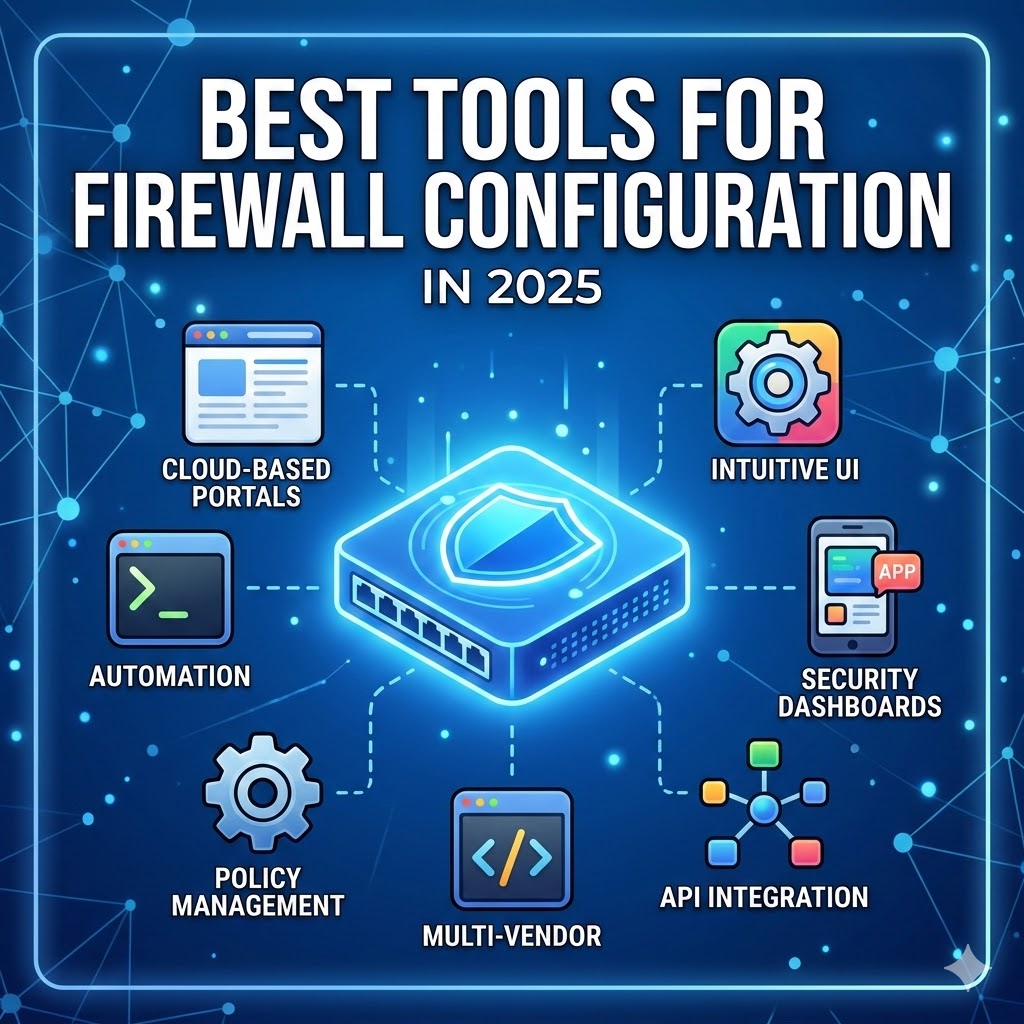
In the ever-evolving landscape of cybersecurity, firewalls remain one of the first lines of defense against unauthorized access, malware, and cyberattacks. A well-configured firewall is essential for businesses, governments, and individuals who want to protect their systems from external threats.In 2025, with advancements in network technologies, cloud services, and an increasingly complex threat landscape, the tools and techniques for configuring firewalls have evolved significantly. This blog post will explore the best tools available for firewall configuration in 2025, helping IT professionals, network administrators, and security teams stay ahead of the curve.
Why Firewall Configuration is Crucial in 2025
Firewalls are essential because they act as gatekeepers between a trusted internal network and potentially harmful external networks, such as the internet. A firewall monitors and controls incoming and outgoing network traffic based on predefined security rules.In 2025, firewalls have evolved from simple packet filtering systems to highly sophisticated security appliances capable of inspecting, blocking, and allowing network traffic based on deep packet analysis, application behavior, and even user identity.
The need for strong firewall configuration is critical for:
-
Preventing Unauthorized Access: Blocking unauthorized access attempts, including hacking, phishing, and brute-force attacks.
-
Data Privacy and Protection: Ensuring that sensitive data is protected from interception, theft, or compromise.
-
Securing Cloud and Hybrid Environments: With the rise of cloud computing and hybrid infrastructures, firewalls are more crucial than ever to secure data flowing in and out of the cloud.
-
Regulatory Compliance: Many industries, such as healthcare and finance, require strict adherence to data protection regulations, making proper firewall configuration essential.
Types of Firewalls
Before diving into the tools, it’s important to understand the types of firewalls you might encounter in 2025. Each tool is designed to support specific needs based on the type of firewall:
Packet-Filtering Firewalls
Packet-filtering firewalls analyze incoming and outgoing packets to see whether they meet a set of predefined rules. They are effective for basic network security but lack advanced filtering capabilities.
Stateful Inspection Firewalls
Stateful inspection firewalls track the state of active connections and determine whether a packet is part of an established connection. They are more secure than packet-filtering firewalls but still relatively simple.
Proxy Firewalls
Proxy firewalls act as intermediaries between the internal network and external systems. They inspect and filter requests, providing more detailed control over what traffic is allowed.
Next-Generation Firewalls (NGFW)
NGFWs go beyond traditional firewalls by integrating deep packet inspection, intrusion prevention, application control, and other advanced features. They are highly effective at detecting and preventing modern cyber threats.
Web Application Firewalls (WAF)
A WAF is specifically designed to monitor, filter, and protect web applications from HTTP-based attacks, such as SQL injection, cross-site scripting (XSS), and more.
Top Tools for Firewall Configuration in 2025
Cisco Firepower NGFW
Cisco Firepower is a widely trusted name in the networking and cybersecurity space. The Firepower NGFW is a next-generation firewall solution designed to integrate multiple layers of defense into a single appliance, offering:
-
Advanced Threat Protection: Includes intrusion prevention, URL filtering, and advanced malware protection.
-
Application Visibility and Control: Granular control over applications and users for better security policy enforcement.
-
Comprehensive Reporting: Real-time and historical reporting capabilities to track firewall activity, threats, and network behavior.
-
Scalability: Suitable for small businesses to large enterprise environments, with options for cloud, hybrid, and on-premises deployment.
Cisco’s solution stands out for its ability to provide comprehensive threat detection and advanced configurations, making it an excellent choice for businesses of all sizes.
pfSense
pfSense is an open-source firewall solution that has gained significant popularity due to its flexibility and scalability. It’s widely used in small to medium-sized businesses and by individuals who prefer a cost-effective yet highly customizable solution.
-
Highly Customizable: pfSense allows administrators to configure nearly every aspect of the firewall, from NAT (Network Address Translation) to VPN (Virtual Private Network) settings.
-
Advanced Security Features: Includes features like intrusion detection, deep packet inspection, and VPN support, which are crucial in a modern security landscape.
-
Web Interface: User-friendly web interface that makes managing complex configurations more accessible to those with limited technical expertise.
-
Community Support: Active community support and documentation make it easier to find troubleshooting help and advanced configuration guides.
Fortinet FortiGate
FortiGate firewalls from Fortinet are widely regarded for their performance, flexibility, and comprehensive security features. Known for their integration of security technologies into one platform, FortiGate firewalls provide robust protection against both internal and external threats.
-
Unified Threat Management (UTM): Combines next-gen firewall capabilities with advanced features like antivirus, VPN, intrusion prevention, web filtering, and more.
-
Automation and AI: FortiGate utilizes AI-driven security tools to automatically detect and respond to threats, improving efficiency and reducing manual intervention.
-
Secure SD-WAN: A software-defined wide area network (SD-WAN) that integrates with the firewall to offer improved connectivity and network security.
-
High Availability and Scalability: Ideal for businesses with growing or fluctuating network demands.
FortiGate firewalls are especially suitable for large enterprises that require advanced configurations and high-performance security.
Ubiquiti UniFi Security Gateway (USG)
For small businesses and home offices, Ubiquiti’s UniFi Security Gateway (USG) offers a simple yet powerful firewall solution. While it may not offer the advanced features of higher-end products, it provides essential firewall protection with an easy-to-use interface.
-
Integrated with UniFi Network: USG works seamlessly with the UniFi Controller, providing a unified management solution for both networking and security.
-
Content Filtering: The USG offers basic content filtering to protect users from inappropriate content.
-
VPN Support: Provides site-to-site and remote access VPN options, securing data between locations.
-
Affordable: A cost-effective solution for small businesses or home offices that need robust protection without breaking the bank.
Sophos XG Firewall
Sophos XG Firewall is a next-gen firewall solution that offers a comprehensive security suite designed to meet the needs of both small businesses and enterprises. Its key features include:
-
Advanced Threat Protection: Includes real-time threat intelligence, anti-malware, and deep packet inspection.
-
Centralized Management: Simplifies the management of security policies through a central dashboard for all network traffic.
-
Web and Email Protection: Offers web filtering and email protection, including anti-spam, anti-virus, and phishing protection.
-
User Identity Integration: Can integrate with Active Directory or LDAP for user-specific security policies.
Sophos XG is especially well-suited for businesses looking for an all-in-one, easy-to-manage solution for perimeter security.
Check Point Next-Gen Firewalls
Check Point is known for its cutting-edge cybersecurity technology, and their next-gen firewalls are no exception. These firewalls offer advanced features for securing both on-premises and cloud-based networks.
-
Threat Intelligence: Integrated with Check Point's ThreatCloud, a global threat intelligence network that helps identify and block new threats in real-time.
-
Advanced Application Control: Provides granular control over thousands of applications, helping to manage bandwidth and prevent unauthorized access.
-
Security Automation: Automates security processes and configurations to improve operational efficiency and minimize human error.
-
Cloud Security: Extends firewall protection to cloud services, providing hybrid cloud security for complex infrastructures.
For enterprises looking to secure multi-cloud environments and gain in-depth visibility into applications, Check Point provides a robust solution.
Cloudflare Firewall
Cloudflare is widely recognized for its CDN and web security solutions, but its firewall offering is also top-notch. Particularly well-suited for businesses that rely heavily on web traffic and need to protect against online threats like DDoS attacks and bot traffic.
-
Web Application Firewall (WAF): Protects websites from common attacks such as SQL injection, XSS, and others.
-
DDoS Protection: Cloudflare's firewall includes built-in DDoS protection to mitigate large-scale attacks before they affect the network.
-
Bot Management: Advanced bot mitigation features prevent automated attacks, such as credential stuffing or scraping, from harming your web assets.
-
Ease of Use: Cloudflare’s firewall is user-friendly and doesn’t require deep networking expertise to configure.
Cloudflare’s firewall solution is ideal for websites and online businesses seeking cloud-based protection against web-based attacks.
Firewall Configuration Best Practices in 2025
While tools are critical, it’s equally important to follow best practices when configuring firewalls:
-
Use the Principle of Least Privilege: Ensure that only the minimum necessary ports, services, and protocols are open.
-
Implement Logging and Monitoring: Regularly monitor firewall logs for unusual activity and configure alerts for any suspicious behavior.
-
Update Regularly: Ensure your firewall software is up to date to protect against the latest vulnerabilities and threats.
-
Segment Networks: Create separate network zones and apply different security policies to each zone to minimize the impact of any breach.
-
Test Configurations: Regularly test firewall configurations and simulate attack scenarios to ensure they’re effective.
Сообщения не найдены
Написать отзыв