Войти | Регистрация
Авторизуйтесь для получения расширенных возможностей
- г. Dhaka, 3/8, North Pirerbag, 60 Feet Main Road
- +880-967-8247365 (звонок бесплатный)
- Пн-Вс 9.00 - 18.00
- support@informatix.systems
- Посмотреть на карте

Common Technical SEO Mistakes and How to Avoid Them
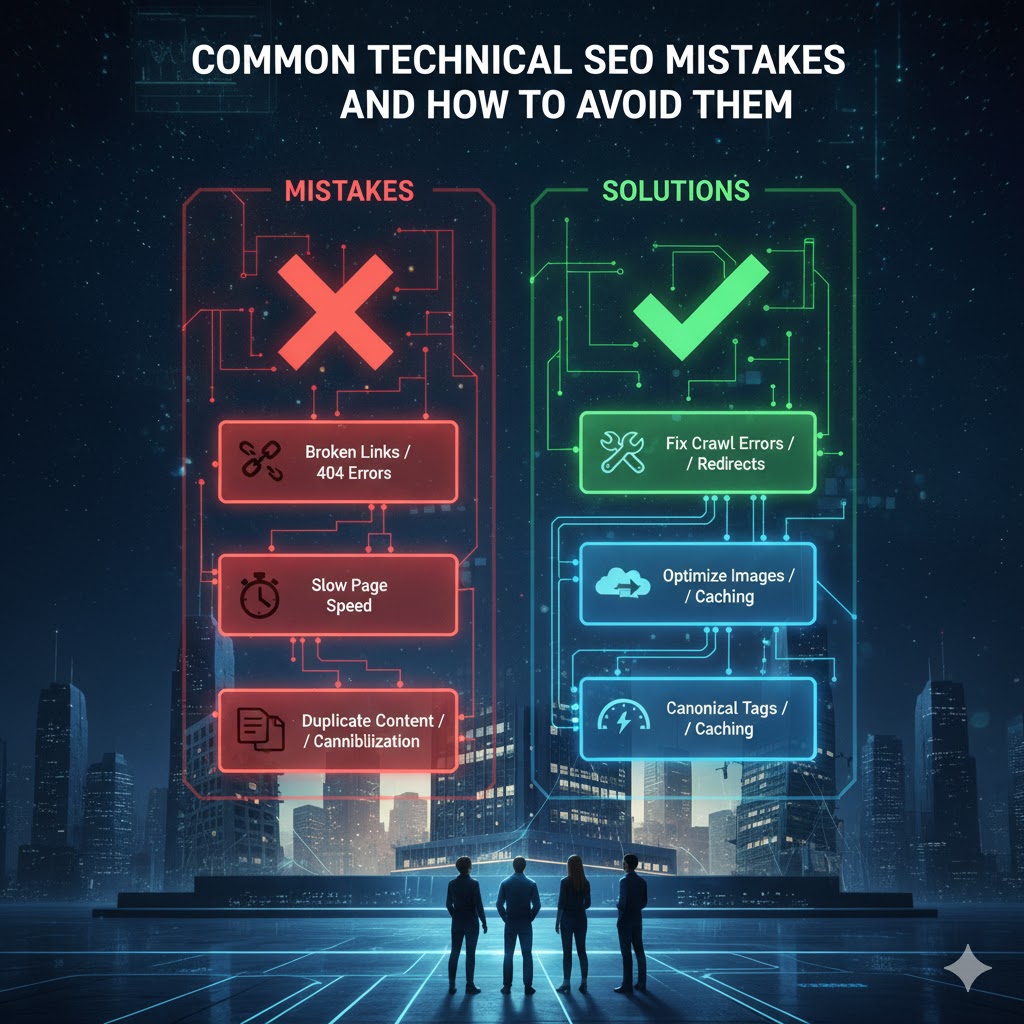
Technical SEO is the backbone of a successful online presence. It ensures that your website is easily crawlable, indexable, and optimized for search engines, leading to higher visibility and better user experiences. However, many website owners and developers make common technical SEO mistakes that can severely impact their search engine rankings and overall website performance.
This comprehensive guide will explore the most common technical SEO mistakes and provide actionable solutions to avoid them. Whether you are a website owner, a digital marketer, or an SEO specialist, understanding these mistakes will help you maintain a high-performing website.
Understanding Technical SEO
Technical SEO involves optimizing the technical aspects of your website to make it search engine-friendly. It goes beyond content optimization and focuses on the website’s structure, speed, security, and overall performance.
Key Aspects of Technical SEO
- Crawlability: Ensuring that search engine bots can access and understand your website.
- Indexability: Allowing search engines to index your website’s pages.
- Site Speed: Optimizing page load times for a better user experience.
- Mobile-Friendliness: Ensuring your site is responsive and works well on mobile devices.
- Security: Implementing HTTPS and other security measures.
- URL Structure: Using clean, SEO-friendly URLs.
- Structured Data: Utilizing schema markup for enhanced search visibility.
Common Technical SEO Mistakes and How to Fix Them
Poor Website Structure
- Issue: An unorganized website structure can confuse search engines and users.
- Solution: Use a clear hierarchy, with main categories and subcategories. Implement a logical menu structure.
Missing or Misconfigured Robots.txt
- Issue: An incorrectly configured robots.txt file can block search engines from indexing your site.
- Solution: Ensure your robots.txt file is configured to allow search engines to access important pages.
Slow Website Speed
- Issue: Slow-loading pages can lead to higher bounce rates and lower rankings.
- Solution: Optimize images, use caching, leverage a CDN, and minimize CSS/JS files.
Broken Links and 404 Errors
- Issue: Broken links create a poor user experience and can impact SEO.
- Solution: Regularly check for broken links and redirect them using 301 redirects.
Not Using HTTPS
- Issue: HTTP sites are flagged as “Not Secure” by browsers, affecting user trust.
- Solution: Install an SSL certificate and ensure your site uses HTTPS.
Duplicate Content
- Issue: Multiple pages with the same content can confuse search engines.
- Solution: Use canonical tags to indicate the primary version of the content.
Poor Mobile Optimization
- Issue: A non-responsive site leads to a poor user experience on mobile devices.
- Solution: Use a responsive design and test your site on various devices.
Improper Use of Canonical Tags
- Issue: Misconfigured canonical tags can lead to indexing issues.
- Solution: Use canonical tags correctly to specify the main version of each page.
Lack of XML Sitemap
- Issue: Without a sitemap, search engines may not index all your pages.
- Solution: Create and submit an XML sitemap to search engines.
Ignoring Structured Data
- Issue: Missing schema markup reduces your chances of rich results in search engines.
- Solution: Implement structured data using schema.org.
Advanced Technical SEO Mistakes
Poor Internal Linking Structure
- Issue: Inconsistent or random internal linking can confuse search engines.
- Solution: Use a logical internal linking strategy, connecting relevant pages.
Excessive Redirect Chains
- Issue: Multiple redirects slow down page load time and waste crawl budget.
- Solution: Regularly audit your site for unnecessary redirect chains.
Inconsistent URL Structures
- Issue: Mixed use of HTTP/HTTPS or www/non-www can create duplicate content.
- Solution: Use consistent URL formats across your site.
Failing to Optimize for Core Web Vitals
- Issue: Poor performance on Core Web Vitals can impact search rankings.
- Solution: Optimize page speed, interactivity, and visual stability.
Poor Image Optimization
- Issue: Large, unoptimized images slow down your website.
- Solution: Compress images, use next-gen formats (WebP), and implement lazy loading.
Сообщения не найдены
Написать отзыв