Войти | Регистрация
Авторизуйтесь для получения расширенных возможностей
- г. Dhaka, 3/8, North Pirerbag, 60 Feet Main Road
- +880-967-8247365 (звонок бесплатный)
- Пн-Вс 9.00 - 18.00
- support@informatix.systems
- Посмотреть на карте

The Ultimate Checklist for DevOp
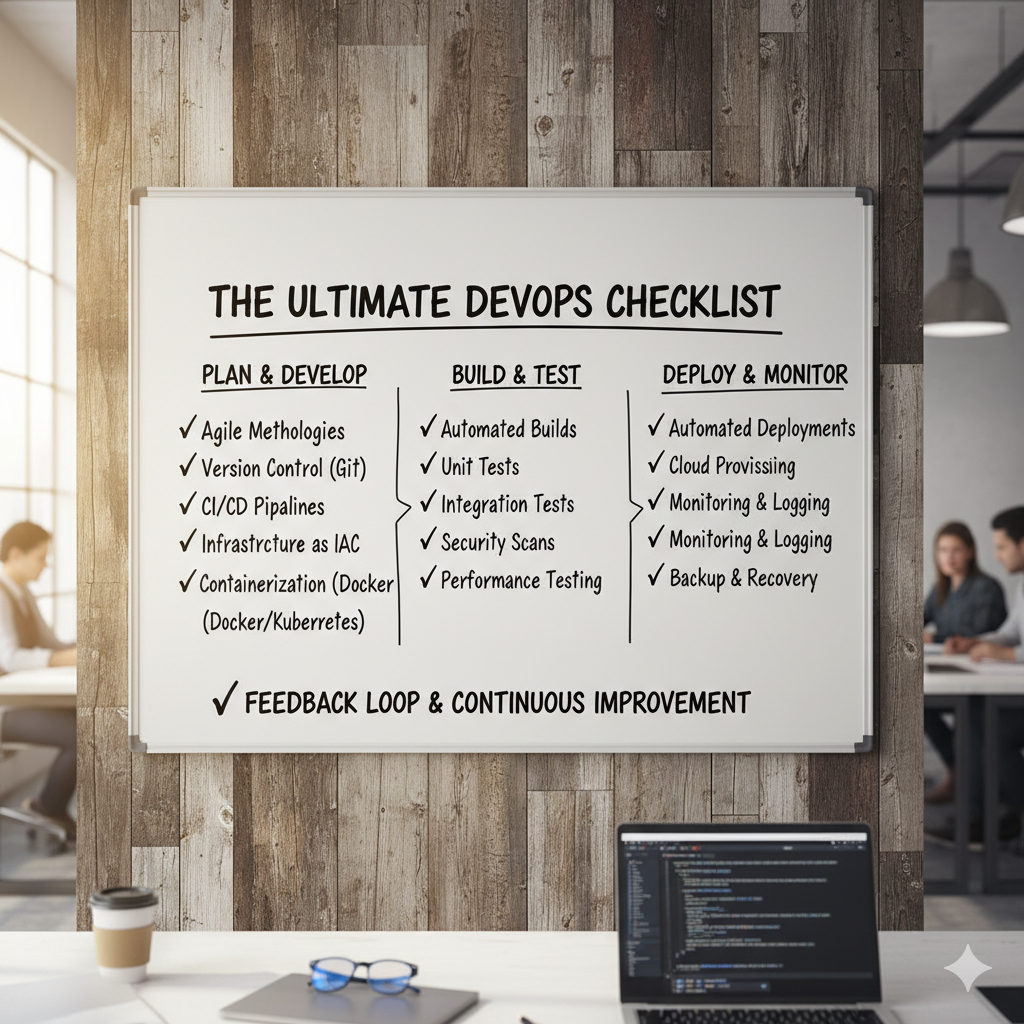
In today’s fast-paced digital landscape, businesses are continuously looking for ways to streamline their development processes, enhance collaboration between development and operations teams, and accelerate the delivery of new features and updates. DevOps — a combination of development (Dev) and operations (Ops) — has become the backbone of modern software development, ensuring efficient workflows, continuous integration, and automated delivery pipelines.However, adopting DevOps is not a one-size-fits-all solution. It requires careful planning, the right tools, and a culture of collaboration. Whether you are starting from scratch or refining your existing DevOps practices, this Ultimate Checklist for DevOps will guide you through the essential elements that need to be addressed to build a successful DevOps pipeline in 2025.
Why DevOps Matters
Before we dive into the checklist, let's briefly discuss why DevOps is so important for modern organizations:
-
Faster Development Cycles: By integrating development and operations, teams can release updates and features much faster, responding quickly to user needs and market demands.
-
Enhanced Collaboration: DevOps breaks down the silos between development and operations, fostering collaboration and improving communication.
-
Improved Quality and Reliability: Automation and continuous testing help identify bugs and issues early in the development process, ensuring better software quality and reducing the likelihood of downtime.
-
Scalability: DevOps practices ensure that your infrastructure is scalable, which is crucial as businesses expand and require more resources to support increased traffic.
-
Better Security: By integrating security into every stage of development (known as DevSecOps), you can ensure that security protocols are followed throughout the software development lifecycle.
The Ultimate DevOps Checklist for 2025
In this section, we will break down the essential components of a successful DevOps pipeline. The checklist is divided into categories covering infrastructure, automation, monitoring, security, and more.
Establish a Collaborative Culture
Before implementing any tools or automation processes, it’s essential to foster a DevOps culture within your organization. A culture that values collaboration, continuous learning, and mutual responsibility between developers and operations teams is crucial to the success of DevOps.
Checklist for DevOps Culture:
-
Promote Cross-Functional Teams: Encourage communication and collaboration between development, QA, operations, and security teams. Teams should work together from the start of the project until it is deployed and monitored.
-
Establish Clear Communication Channels: Use collaboration tools like Slack, Microsoft Teams, or other project management tools (e.g., Jira, Trello) to facilitate constant communication.
-
Define Roles and Responsibilities: Clearly define the roles and responsibilities of each team member within the DevOps pipeline, ensuring that there is a shared sense of ownership.
-
Encourage Continuous Feedback: Promote a feedback-driven environment where all team members continuously share input to improve processes, product quality, and overall efficiency.
Automate Everything
One of the core tenets of DevOps is automation. Automating repetitive tasks not only saves time but also ensures that processes are consistent and reliable.
Checklist for Automation:
-
Continuous Integration (CI): Automate the integration of code changes into the main codebase. Use tools like Jenkins, GitLab CI, or CircleCI to automatically build and test code whenever changes are pushed to the repository.
-
Continuous Delivery/Deployment (CD): Automate the deployment process to ensure that code changes can be released to production with minimal manual intervention. Tools like Jenkins, GitLab CI/CD, Spinnaker, or ArgoCD can help in deploying code across multiple environments.
-
Infrastructure as Code (IaC): Use IaC tools such as Terraform, AWS CloudFormation, or Ansible to automate the provisioning and management of infrastructure. This ensures that environments are consistent and easily reproducible.
-
Automated Testing: Incorporate automated unit tests, integration tests, and UI tests using frameworks like JUnit, Selenium, or TestNG to ensure quality throughout the development lifecycle.
Use Version Control Systems (VCS)
A good Version Control System (VCS) is foundational to DevOps. VCS allows teams to track code changes, collaborate efficiently, and maintain the integrity of the codebase.
Checklist for Version Control:
-
Use Git: Git is the most widely used VCS. Ensure that your teams are using Git for code versioning and collaboration. Platforms like GitHub, GitLab, or Bitbucket can help manage repositories and facilitate collaboration.
-
Branching Strategy: Implement a solid branching strategy such as GitFlow or GitHub Flow to manage feature development, bug fixes, and releases efficiently.
-
Pull Requests and Code Reviews: Encourage the use of pull requests and code reviews to maintain high-quality code. This ensures that new code is reviewed by team members before being merged into the main branch.
Set Up a Monitoring and Logging System
Once your code is deployed, it’s important to track how it performs in production. Continuous monitoring helps you quickly identify issues and respond to incidents, ensuring high availability and performance.
Checklist for Monitoring and Logging:
-
Real-Time Monitoring: Set up real-time monitoring using tools like Prometheus, Grafana, Datadog, or New Relic to track key performance indicators (KPIs) like uptime, load times, and system resource usage.
-
Log Aggregation: Use log aggregation tools like ELK Stack (Elasticsearch, Logstash, and Kibana), Splunk, or Graylog to collect and analyze logs from various sources, including application logs, server logs, and security logs.
-
Alerting Systems: Configure alerting systems to notify team members when performance thresholds are exceeded, or when issues arise. Tools like PagerDuty, Opsgenie, or VictorOps can help manage alerts and escalate issues to the appropriate personnel.
-
Use Distributed Tracing: Tools like Jaeger or Zipkin help trace requests across microservices and identify bottlenecks or failures within the architecture.
Implement Continuous Security (DevSecOps)
Security should be embedded throughout the DevOps pipeline, not just as a final step. DevSecOps ensures that security practices are part of every stage of development.
Checklist for Security:
-
Automate Security Testing: Incorporate static application security testing (SAST) and dynamic application security testing (DAST) into your CI/CD pipeline. Tools like SonarQube, OWASP ZAP, and Checkmarx can be used to scan code for vulnerabilities.
-
Infrastructure Security: Use tools like Terraform and Ansible to ensure that infrastructure is configured securely from the outset. Implement security best practices in your code for provisioning, managing, and decommissioning resources.
-
Security Auditing: Regularly audit your systems for security risks using tools like Nessus or OpenVAS. Set up vulnerability scanning and penetration testing to identify potential weaknesses.
-
Automate Patch Management: Ensure that all systems are regularly updated by automating patch management processes to reduce the risk of security breaches.
Focus on Continuous Testing
Testing is a crucial part of the DevOps pipeline. Continuous testing ensures that any code changes do not introduce bugs and that your application is always in a deployable state.
Checklist for Continuous Testing:
-
Unit Testing: Write unit tests for your code to ensure that individual functions or methods perform as expected. Tools like JUnit, NUnit, or Mocha can help you automate unit testing.
-
Integration Testing: Verify that different parts of your application work together by implementing integration tests. Postman or Selenium can be used for API testing and UI testing.
-
Performance Testing: Use tools like Apache JMeter, Gatling, or Locust to simulate traffic and load, ensuring that your application can handle user demand at scale.
-
Automate Regression Testing: Ensure that new code does not break existing features by implementing automated regression tests in your CI pipeline.
Ensure Scalable and Reliable Infrastructure
DevOps is not just about software; it's also about the infrastructure that supports it. Scalable and reliable infrastructure ensures that applications run smoothly even as demand fluctuates.
Checklist for Scalable Infrastructure:
-
Containerization: Use Docker to containerize your applications and ensure that they run consistently across different environments. Kubernetes can be used to orchestrate containers, scaling them automatically based on demand.
-
Cloud-Native Technologies: Consider using cloud-native services from providers like AWS, Azure, or Google Cloud to take advantage of auto-scaling, load balancing, and high availability.
-
Service Mesh: Implement a service mesh like Istio or Linkerd to manage microservices communication, ensuring that services can scale, recover from failures, and communicate securely.
Foster a Continuous Improvement Mindset
DevOps is a journey, not a destination. It’s essential to embrace a mindset of continuous improvement, where you’re always iterating on processes, tools, and practices to optimize your DevOps pipeline.
Checklist for Continuous Improvement:
-
Post-Mortem Analysis: After every major incident or failure, conduct a post-mortem analysis to identify what went wrong and how to prevent similar issues in the future.
-
Retrospectives: Regularly hold retrospectives to discuss what’s working and what needs improvement within your DevOps practices.
-
Training and Skill Development: Invest in continuous learning for your teams to keep up with new DevOps tools, practices, and technologies.
Сообщения не найдены
Написать отзыв