Войти | Регистрация
Авторизуйтесь для получения расширенных возможностей
- г. Dhaka, 3/8, North Pirerbag, 60 Feet Main Road
- +880-967-8247365 (звонок бесплатный)
- Пн-Вс 9.00 - 18.00
- support@informatix.systems
- Посмотреть на карте

Why SSL & HTTPS is Critical for Modern Businesses
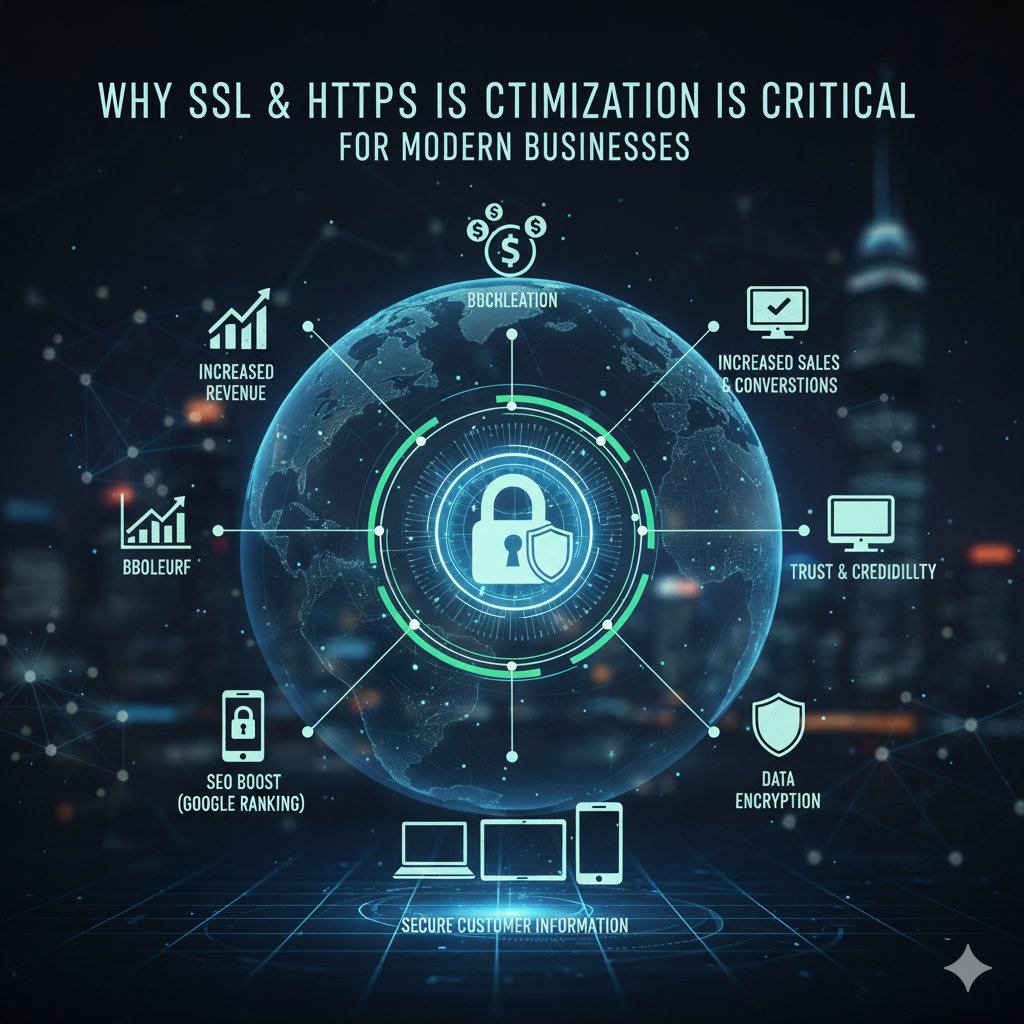
In today’s fast-paced, highly interconnected digital world, security is a top priority for businesses, especially when it comes to handling sensitive customer information. With rising cybersecurity threats, businesses must ensure that their websites and online platforms are secure to protect both their data and their customers. One of the most effective ways to safeguard data during online transactions is by implementing SSL (Secure Sockets Layer) and HTTPS (HyperText Transfer Protocol Secure).While the terms SSL and HTTPS are often used interchangeably, they are distinct technologies that work together to ensure secure communications between a user’s web browser and a website’s server. Understanding why these technologies are critical for modern businesses, and how they can enhance the security and trustworthiness of an online presence, is essential for any company looking to build credibility, protect user privacy, and stay ahead of security vulnerabilities.In this blog post, we will explore what SSL and HTTPS are, how they work, the critical role they play in protecting online transactions, and why they are vital for modern businesses. We will also delve into the potential risks of not using SSL/HTTPS and how these protocols contribute to better SEO, trust, and overall business growth.
What is SSL and HTTPS?
(Secure Sockets Layer)
SSL is a cryptographic protocol designed to provide secure communications over a computer network. Originally developed by Netscape in the mid-1990s, SSL ensures that any data transmitted between a web browser and a server is encrypted, protecting it from eavesdropping, tampering, and forgery. SSL uses a combination of public-key and symmetric-key encryption to create a secure communication channel.However, SSL has been succeeded by TLS (Transport Layer Security), which is a more secure and efficient version of SSL. Despite this, SSL is still often used as a blanket term to refer to secure communication protocols, even though most websites today use TLS.
HTTPS (HyperText Transfer Protocol Secure)
HTTPS is the secure version of HTTP (HyperText Transfer Protocol), the protocol used to transfer data over the internet. HTTPS combines HTTP with SSL/TLS to ensure that all data exchanged between a web browser and a server is encrypted. It ensures privacy, integrity, and authentication for online transactions, making it essential for modern business operations that involve sensitive customer data.When a website is secured with HTTPS, its URL begins with “https://” instead of “http://”, signaling to users that their connection is encrypted and secure. The presence of HTTPS is also indicated by a padlock icon in the browser’s address bar, enhancing trust.
The Role of SSL and HTTPS in Modern Business Security
Protecting Customer Data
One of the primary reasons SSL and HTTPS are critical for modern businesses is their ability to protect customer data. Businesses handle a significant amount of sensitive information, such as personal details, credit card numbers, login credentials, and financial transactions. Without encryption, this information is vulnerable to hackers and malicious third parties who may attempt to intercept or alter the data.SSL/TLS encryption ensures that the data being transmitted between the user and the server is scrambled and can only be decrypted by the intended recipient. This level of protection helps businesses avoid data breaches, which can result in devastating financial and reputational damage.
Preventing Man-in-the-Middle Attacks
A man-in-the-middle (MITM) attack occurs when a third party intercepts communication between a user and a website. Without SSL/TLS encryption, a hacker could potentially intercept sensitive information, such as login credentials or payment details, and misuse it.SSL and HTTPS protocols protect against MITM attacks by encrypting the data during transit. The encryption ensures that any data intercepted by a third party remains unreadable, rendering MITM attacks ineffective.
Authenticating Website Identity
In addition to encryption, SSL and HTTPS also provide authentication. This means that users can trust they are communicating with the correct website and not an imposter. SSL certificates are issued by trusted Certificate Authorities (CAs), which verify the identity of the website owner before issuing a certificate.When a website uses HTTPS, users can be confident that they are on the legitimate site and not a phishing website designed to steal personal information. The presence of HTTPS and the padlock icon in the browser address bar serves as a visual cue that a website is authentic and trustworthy.
The Business Benefits of SSL and HTTPS
Building Trust with Customers
In an age where data breaches are becoming increasingly common, trust is one of the most valuable assets a business can have. When users see the padlock icon and HTTPS in their browser’s address bar, they are reassured that their communication with the website is secure. This builds customer confidence and can directly influence their decision to make a purchase or interact with the website.Without HTTPS, customers may be hesitant to enter sensitive information, such as credit card details or personal data, for fear that their information might be compromised. A lack of HTTPS could result in higher bounce rates and lower conversion rates, ultimately hurting the business’s bottom line.
Improving Search Engine Ranking
Search engines like Google have made it clear that HTTPS is a ranking factor. Websites that are secured with HTTPS are given preference over those that use HTTP in search engine results. This means that businesses that implement HTTPS can improve their visibility and attract more organic traffic.Google has even taken steps to label websites without HTTPS as “Not Secure” in the address bar of Chrome, which could deter users from visiting your site. A secure website, on the other hand, is more likely to be trusted by both users and search engines, leading to improved SEO and higher search rankings.
Enhancing Compliance with Privacy Regulations
Data privacy regulations like the General Data Protection Regulation (GDPR), California Consumer Privacy Act (CCPA), and Health Insurance Portability and Accountability Act (HIPAA) impose strict requirements on businesses to protect user data. Failing to implement proper encryption, such as SSL and HTTPS, could result in non-compliance with these regulations and expose the business to hefty fines and reputational damage.SSL and HTTPS encryption help businesses meet the data protection requirements outlined in privacy laws by ensuring that sensitive data is securely transmitted and stored.
Preventing Phishing and Fraud
Phishing attacks have become increasingly sophisticated, with cybercriminals creating fraudulent websites that appear almost identical to legitimate business websites. These attacks are designed to steal sensitive information, such as login credentials and payment details.By securing your website with SSL and HTTPS, you make it much harder for attackers to impersonate your site. Since SSL certificates are issued by trusted CAs after verifying the website owner’s identity, fraudulent websites are less likely to obtain a valid SSL certificate. This helps protect your customers from phishing scams and reduces the risk of fraud.
Risks of Not Implementing SSL/HTTPS
Data Breaches and Cyberattacks
Without SSL/TLS encryption, any data transmitted between a website and its users is sent in plain text, making it vulnerable to interception by hackers. Cybercriminals can exploit this lack of encryption to steal sensitive data, such as passwords, credit card details, and other personal information.Data breaches can result in severe financial and reputational damage, especially if sensitive customer information is exposed. Businesses that fail to implement SSL/HTTPS are much more likely to become targets of data breaches and cyberattacks.
Loss of Customer Trust
Customers are becoming more aware of online security risks and are increasingly cautious when providing personal information on websites. If your website does not use HTTPS, users may see a warning from their browser that the site is not secure, which could prompt them to leave your site and seek a more trustworthy alternative.Insecure websites lose customer trust, which can result in lower conversion rates, reduced customer retention, and ultimately a loss of revenue.
Negative Impact on SEO
As mentioned earlier, Google and other search engines prioritize HTTPS websites in search rankings. Websites without SSL/HTTPS may experience lower visibility in search engine results, which could reduce organic traffic and limit business growth. Over time, the lack of HTTPS may make it harder for businesses to compete, especially as SSL adoption becomes more widespread.
Non-Compliance Penalties
With data privacy regulations becoming stricter, businesses that fail to implement SSL/HTTPS may be exposed to legal consequences. Non-compliance with laws like GDPR can lead to significant fines, lawsuits, and reputational damage.For example, GDPR requires businesses to ensure that user data is processed securely, and failing to encrypt data transmitted over the web may result in violations of these privacy standards.
How to Implement SSL & HTTPS for Your Business
Choosing the Right SSL Certificate
When implementing SSL, businesses must choose the appropriate SSL certificate for their needs. The options include:
-
Domain Validated (DV) SSL: Ideal for small websites that need basic encryption.
-
Organization Validated (OV) SSL: Suitable for businesses that want to validate their organization’s identity.
-
Extended Validation (EV) SSL: Best for businesses that require the highest level of security and trust, as it triggers the green address bar in browsers.
Installing SSL/TLS on Your Server
Once you’ve obtained an SSL certificate, the next step is to install it on your web server. Most web hosting services offer SSL installation as part of their service package. However, if you’re managing your own server, you’ll need to configure the server to enable SSL/TLS encryption.
Redirecting HTTP to HTTPS
After installing SSL, it’s essential to ensure that your website automatically redirects users from the non-secure HTTP version of your site to the HTTPS version. This ensures that all traffic is encrypted and protected.
Сообщения не найдены
Написать отзыв