Войти | Регистрация
Авторизуйтесь для получения расширенных возможностей
- г. Dhaka, 3/8, North Pirerbag, 60 Feet Main Road
- +880-967-8247365 (звонок бесплатный)
- Пн-Вс 9.00 - 18.00
- support@informatix.systems
- Посмотреть на карте

Emerging Hybrid Cloud Threat Detection Systems Strategies 2030
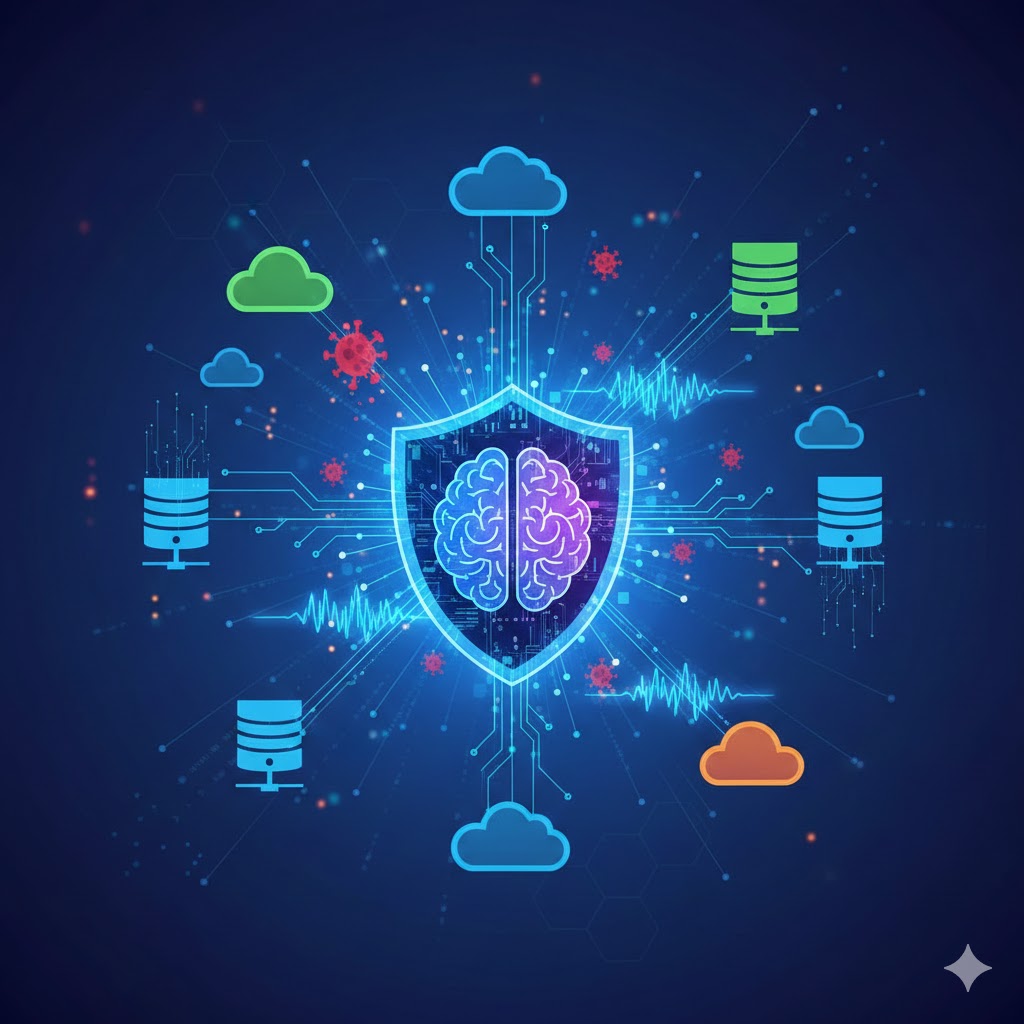
The global enterprise landscape has entered a new digital epoch powered by hybrid cloud architectures—integrating public and private cloud services with on-premises infrastructure. This hybrid ecosystem offers unmatched scalability and agility, yet it brings an equally complex challenge: securing distributed workloads from a growing army of sophisticated cyber adversaries.
As cloud adoption surges, security blind spots multiply. Threats now traverse hybrid environments undetected — exploiting insecure APIs, misconfigured resources, and data transit vulnerabilities. Traditional perimeter-based detection models no longer suffice when digital borders are blurred across multi-cloud and private datacenters.
By 2030, Hybrid Cloud Threat Detection Systems (HCTDS) will evolve to become self-learning, AI-embedded intelligence frameworks, capable of continuous defense orchestration across hybrid infrastructures. These systems will unify Cyber Threat Intelligence (CTI), machine learning (ML), zero trust architecture (ZTA), and automation to predict, detect, and mitigate threats in real time across all cloud planes.
At Informatix.Systems, we provide cutting-edge AI, Cloud, and DevOps solutions for enterprise digital transformation. Our expertise helps organizations deploy security-first hybrid cloud infrastructures, designed for adaptive visibility, predictive protection, and compliance readiness.
This detailed exploration outlines how hybrid cloud threat detection systems are transforming enterprise defense by 2030 — merging intelligence, automation, and AI analytics into a unified vision for smart, secure, and resilient digital operations.
The Rise of Hybrid Cloud Ecosystems
Understanding the Hybrid Cloud Model
A hybrid cloud merges private data centers, public cloud services (like AWS, Azure, and Google Cloud), and edge computing nodes into a unified IT environment.
Key Advantages
- Flexibility: Workloads dynamically shift between clouds based on demand.
- Cost Efficiency: Reduced capital expenditure and increased scalability.
- Business Continuity: Hybrid redundancy ensures uptime and disaster recovery.
However, such distributed models also create multi-domain attack surfaces. Every integration point, API, and data exchange becomes a potential threat vector.
The Growing Complexity of Threat Detection
Expanding Attack Surfaces
Cyber influencers are exploiting overlapping hybrid architectures through:
- Cloud API Exploitation
- Credential Misuse and Lateral Movement
- Unpatched Virtual Machines (VMs)
- Container and Kubernetes Vulnerabilities
Detection Challenges
Legacy monitoring tools often fail to correlate activity across different environments. By 2030, cross-cloud telemetry analysis and AI-driven correlation will dominate proactive detection strategies.
At Informatix.Systems, we integrate multi-cloud detection frameworks enhanced with AI correlation to maintain real-time awareness across complex infrastructures.
Evolution of Hybrid Cloud Threat Detection Systems
Reactive Defense (Before 2020)
Traditional systems relied solely on logs, firewalls, and manual intervention.
Centralized Visibility (2020–2025)
Hybrid SIEMs unified event collection, providing partial visibility but limited predictive power.
Predictive Automation (2026–2030)
AI and machine learning transform HCTDS into autonomous defense platforms, detecting anomalies before compromise.
By 2030, deep-learning-driven threat intelligence platforms will achieve real-time response speeds at global enterprise scale.
Core Components of Modern Hybrid Cloud Threat Detection
Hybrid Cloud Security Framework
- Unified visibility across clouds.
- AI-driven adaptive firewalls.
- Contextual threat scoring.
Threat Intelligence Integration
Integration with global CTI feeds automates correlation of malicious indicators across multiple cloud services.
AI Analytics Engine
Applies ML for anomaly detection, pattern analysis, and predictive forecasting.
Informatix.Systems designs end-to-end threat detection pipelines that merge AI analytics with automated SOC integration, enabling hybrid cloud visibility.
AI and Machine Learning: The Brain of HCTDS
Key Capabilities
- Supervised Learning: Recognizing known attack behaviors.
- Unsupervised Learning: Detecting unknown anomalies (zero-day exploits).
- Deep Reinforcement Learning: Continual improvement via feedback from security events.
Predictive Detection
AI models analyze multi-source telemetry including:
- Cloud APIs
- Network traffic
- Access logs
- Application performance metrics
By 2030, self-healing cyber defense systems will autonomously isolate threats, remediate systems, and reconfigure security policies in seconds.
Zero Trust Architecture in Hybrid Cloud Defense
Principle of Zero Trust
Zero Trust assumes no implicit trust — every request, device, or process must be continuously verified.
Application in Hybrid Context
- Authentication at every layer (cloud, network, and application).
- Continuous monitoring of identity and device posture.
- Micro-segmentation to isolate potential intruders.
Informatix.Systems Implementation
Our Zero Trust hybrid cloud ecosystems integrate behavioral analysis, encryption, and policy-based trust validation mechanisms to minimize risks across dynamic cloud operations.
Automation and SOAR in Hybrid Cloud Threat Detection
Why Automation Matters
Hybrid environments generate enormous amounts of security logs impossible for human analysts to process manually.
SOAR (Security Orchestration, Automation, and Response) Integration
- Automated Playbooks: Response workflows trigger instantly upon alert detection.
- Cross-Cloud Containment: Infected workloads are isolated automatically.
- Forensic Enrichment: Context added dynamically via API integrations.
Informatix.Systems deploys AI-driven SOAR automation that reduces threat response from hours to milliseconds.
The Role of Cloud-Native Security Architectures
Cloud-native detection leverages built-in security components of cloud platforms such as Microsoft Defender for Cloud, AWS GuardDuty, or Google Security Command Center.
Key Advantages
- Elastic Scaling: Detection grows with workload volume.
- Real-Time Analytics: AI accelerates anomaly correlation.
- Cost Optimization: Pay-per-usage models.
By 2030, cloud-native security will seamlessly integrate with edge detection, enabling full-spectrum protection across IoT-enabled medical, industrial, and financial systems.
Hybrid Threat Intelligence Sharing and Collaboration
Collective Intelligence Benefits
Shared CTI networks enhance defense by pooling cross-cloud insights.
Future Developments
- Federated Intelligence Sharing: Facilitates data collaboration without compromising privacy.
- Blockchain-Backed Integrity Checks: Prevent tampering in intelligence exchange.
- Decentralized Detection Networks: Allow multiple enterprises to co-monitor systems securely.
At Informatix.Systems, we advocate hybrid intelligence collaboration, creating interconnected cybersecurity ecosystems for integrated resilience.
Cloud Compliance and Governance in Threat Detection
Regulatory Imperatives
Multi-cloud enterprises face intricate compliance obligations across jurisdictions, including:
- GDPR (Europe)
- HIPAA (Healthcare)
- NIST (U.S. Federal)
Governance Strategies
- Automated compliance audits.
- Continuous posture assessment.
- Data residency mapping across hybrid clouds.
At Informatix.Systems, we embed compliance automation within hybrid threat detection platforms, ensuring security governance meets global standards.
Emerging Technologies Revolutionizing Hybrid Cloud Security
Quantum-Resistant Cryptography
Quantum computing threatens traditional encryption; hybrid systems will migrate toward quantum-safe protocols by 2030.
Federated AI Collaboration
Enables collective intelligence learning across enterprises while keeping data private.
Adaptive Deception Systems
AI-driven honeynets that lure attackers within hybrid clouds for controlled analysis.
These emerging technologies will make hybrid threat detection adaptive, predictive, and autonomous—closing the gap between detection and prevention.
The Informatix.Systems Advantage
At Informatix.Systems, we specialize in creating AI-augmented hybrid cloud threat detection frameworks built on three key pillars:
- AI-Powered Analytics: Self-learning algorithms that continuously evolve.
- Cloud-Native Integration: Real-time orchestration across multi-cloud workloads.
- DevSecOps Automation: Embedding security across every stage of development and deployment.
Our clients benefit from integrated hybrid defense ecosystems that balance agility with compliance, enabling smarter, faster, and more secure digital transformation.
As enterprises continue to migrate to distributed hybrid environments, threat detection must evolve into predictive, adaptive, and continuously learning systems. The convergence of AI, automation, and CTI will redefine cybersecurity, making Hybrid Cloud Threat Detection Systems not only reactive but autonomous and intelligent.By 2030, hybrid defenses will transition from visibility to foresight — harnessing data science, automation, and federated intelligence sharing to maintain global resilience.At Informatix.Systems, we empower enterprises to lead this transformation through AI-driven Cloud and DevOps innovation. Our goal is to help organizations achieve total hybrid visibility, predictive threat mitigation, and continuous compliance—the cornerstones of modern cybersecurity resiliency.
FAQ
What is hybrid cloud threat detection?
It’s a cybersecurity strategy that monitors and protects distributed workloads across private, public, and on-premises clouds using integrated intelligence.
Why is threat detection more complex in hybrid environments?
Because hybrid architectures create decentralized attack surfaces that require unified visibility and AI-powered analytics for correlated detection.
How does Informatix.Systems help implement hybrid threat detection?
We deliver AI, Cloud, and DevOps solutions that embed automated, predictive detection mechanisms across hybrid infrastructures.
What technologies power hybrid threat detection by 2030?
AI, automation, zero trust security, blockchain verification, and federated intelligence exchange.
How does AI improve hybrid cloud security?
AI continuously learns from cloud telemetry to detect abnormal patterns and initiate automated isolation or recovery actions.
Is compliance easier in hybrid security models?
Yes—with continuous compliance monitoring and integrated data governance systems.
What is Zero Trust for hybrid cloud security?
It enforces continuous authentication and least privilege access across distributed workloads, assuming no inherent trust.
What trends will define hybrid cloud threat detection by 2030?
Autonomous defense ecosystems, federated analytics, real-time AI correlation, and predictive remediation frameworks.
Сообщения не найдены
Написать отзыв