- 3/8, North Pirerbag
- 60 Feet Main Road
- Mirpur, Dhaka 1216
- +880-967-8247365
- support@informatix.systems

CTI and SOC Automation Strategies 2028
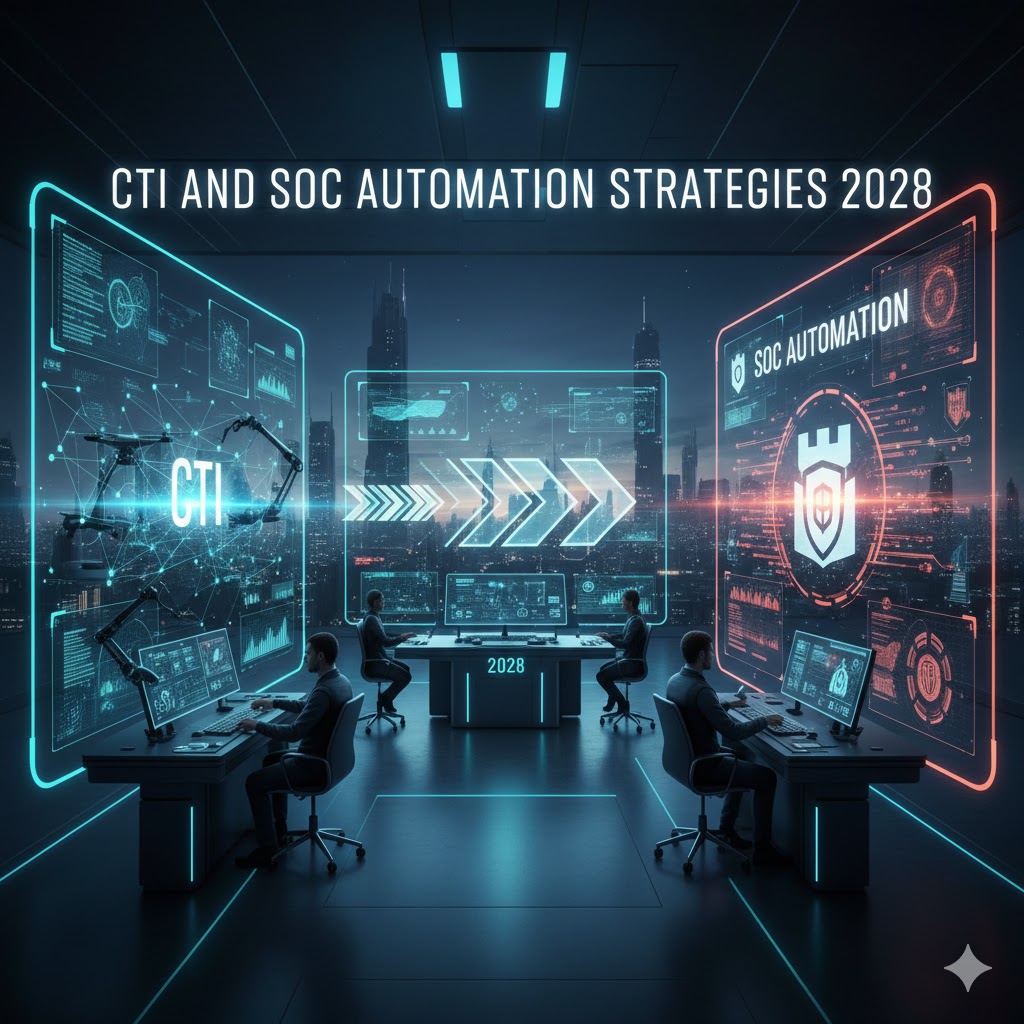
Over the past decade, the cybersecurity landscape has transformed dramatically, outpacing traditional defense strategies. As global enterprises move toward hyper-connected, digital-first operations, the threat environment has become more sophisticated and relentless. By 2028, organizations will be facing a complex array of digital risks ranging from advanced persistent threats (APTs) and multi-vector attacks to supply chain compromises and AI-driven attack techniques. In this shifting terrain, a Security Operations Center (SOC) can no longer rely on manual incident response or fragmented tools. The overwhelming volume of alerts, the rise of complex attack surfaces, and increasing regulatory demands require a new paradigm, one that unites Cyber Threat Intelligence (CTI) and SOC automation with advanced orchestration, machine learning, and continuous response. For the enterprise, the stakes are clear: effective CTI and SOC automation strategies in 2028 will directly determine business continuity, brand reputation, and regulatory compliance at Informatix.Systems, we provide cutting-edge AI, Cloud, and DevOps solutions to empower enterprise digital transformation. We’ve witnessed a critical market shift; forward-thinking organizations are investing in integrated security automation that not only detects and responds to threats with speed and accuracy but also anticipates attacker behavior through predictive analytics. In this comprehensive guide, we’ll explore the driving forces behind the revolution in CTI and SOC automation, dive deep into the key strategic elements shaping the future, and provide actionable recommendations for security leaders. Whether you’re a CISO, security architect, or operations leader, mastering these automation strategies is essential for safeguarding your digital enterprise in 2028 and beyond.
The Business Case for Advanced SOC and CTI Automation in 2028
Evolving Threat Landscape
- Rise of AI-powered cyberattacks and automated malware campaigns
- Proliferation of IoT, cloud-native, and edge deployments
- Increasing threat actor specialization and digital supply chain attacks
Business and Regulatory Drivers
- Stringent global data privacy laws (GDPR, CCPA 2.0, APPI, etc.)
- Growing cyber insurance and reputational requirements
- Explosion in customer data and real-time service expectations
ROI of SOC and CTI Automation
- 50–75% reduction in incident detection and response times
- Dramatically lower false positives and analyst alert fatigue
- 24/7 operational resilience with lower headcount dependency
Core Concepts: What is CTI and SOC Automation?
Defining Cyber Threat Intelligence (CTI)
- Aggregation, enrichment, and contextualization of external and internal threat data
- Tracking adversary tactics, threat indicators, and campaign attribution
What Is SOC Automation?
- Security Operations Center (SOC) Automation: Automating detection, investigation, and response to security events
- Encompasses playbooks, Security Orchestration Automation and Response (SOAR), and AI-driven decision support
The Fusion of CTI and SOC Automation
- Integrates threat intelligence feeds directly into automated SOC playbooks
- Supports predictive defense, threat hunting, and proactive response
Key Technologies Powering CTI and SOC Automation
SOAR Platforms
- Centralized orchestration of security workflows
- Automated triage, ticketing, escalation, and coordination across tools
AI and Machine Learning
- Deep learning for anomaly detection and behavioral analytics
- Natural language processing for threat intelligence parsing
SIEM Evolution
- Next-gen Security Information and Event Management (SIEM) with built-in automation and threat context
- Correlation of logs and threat indicators at scale
Threat Intelligence Platforms (TIPs)
- Real-time aggregation, validation, and scoring of threat data
- Direct API integration with detection and response tools
Cloud-Native Security
- Automated container, serverless, and edge security controls
- Scalable orchestration for global infrastructures
Strategic Pillars for Successful CTI and SOC Automation
Automated Threat Intelligence Ingestion
- Real-time enrichment of alerts with internal/external threat data
- Prioritization based on credibility, severity, and business impact
Orchestrated Response Playbooks
- End-to-end, automated incident workflows covering:
- Phishing response
- Ransomware containment
- Privilege escalation
- Lateral movement detection
AI-Augmented Threat Analysis
- Machine learning models flagging novel attack patterns
- Automated mapping of Indicators of Compromise (IoCs) to MITRE ATT&CK
Closed-Loop Threat Feedback
- Continuous improvement loops from response results back into CTI processes
- Automated learning from false positives/negatives
CTI & SOC Automation Use Cases for 2028
Real-Time Threat Detection & Response
- Automated analysis of millions of logs per second
- Real-time quarantining and workflow initiation
Predictive Threat Hunting
- Proactive scanning for initial access, persistence, and exfiltration tactics
- AI-driven root cause analysis and timeline reconstruction
Automated Insider Threat Detection
- User and entity behavior analytics (UEBA)
- Policy violation triggers and adaptive access controls
Supply Chain Attack Mitigation
- Automated risk scoring of vendors and third-party integrations
- Continuous monitoring of supply chain threat intelligence feeds
Integrating CTI and SOC Automation: Architectures and Frameworks
Best-Practice Reference Architectures
- Hub-and-spoke model for multi-location SOCs
- Federated intelligence sharing across business units
Open Standards and Interoperability
- STIX/TAXII for threat intelligence sharing
- Middleware for integrating SIEM, SOAR, EDR, and cloud security stacks
Automation Maturity Model
- Manual processes, basic alerting
- Rule-based response, semi-automated triage
- Full playbook automation, AI-driven enrichment
- Autonomous remediation and predictive threat prevention
Building and Operationalizing Predictive Security Playbooks
Components of a Mature Playbook
- Trigger conditions (alert, time, threat feed)
- Decision logic and context enrichment
- Automated action steps (quarantine, notify, escalate)
Playbook Lifecycle Management
- Versioning and approvals for continuous tuning
- Real-time test and rollback mechanisms
Example Automation Playbooks
- Phishing: Ingest → Analyze → Triage → User notification → Containment
- Ransomware: Detect encryption → Isolate asset → Block C2 → Initiate restore
AI-driven Analytics and Autonomous Response in 2028
Next-Gen Analytics Techniques
- Self-supervised learning, federated machine learning models
- Cross-environment correlation and anomaly detection
Autonomous Response Scenarios
- Machine-to-machine mitigation (auto-block, auto-isolate)
- Analyst-in-the-loop: AI suggestions with human approvals for high-stakes decisions
Limitations and Ethical Considerations
- Bias in ML decisioning
- Human oversight and fail-safe options
- Regulatory and privacy compliance
Talent Transformation and Skill Development for SOC 2028
New Analyst Roles
- Automation engineer, ML operations integrator, threat intelligence orchestrator
Upskilling and Reskilling Programs
- Cross-training in data engineering, cloud operations, and adversary simulation tools
Managing Change and Analyst Burnout
- Automation of repetitive tasks
- Emphasis on decision support and advanced threat hunting
Governance, Compliance, and Risk Management
Policy Automation
- Automated mapping of security controls to compliance frameworks
- Self-documenting incident response for audits
Data Privacy and Sovereignty
- Automated data masking, PII tagging, and GDPR/APPI compliance checks
Incident Reporting and Regulatory Response
- Automated legal/regulatory notification flows
- Dynamic reporting dashboards for executive visibility
Measuring Success: Metrics and KPIs for CTI and SOC Automation
Core Automation Metrics
- Mean time to detection (MTTD)
- Mean time to response (MTTR)
- Automation coverage (% of incidents handled automatically)
- Analyst satisfaction and retention rates
Business Impact Indicators
- Regulatory compliance scores
- Avoided incident costs and loss prevention
- Customer trust and brand resilience
The Informatix.Systems Edge: Next-Gen Security for Modern Enterprise
At Informatix.Systems, we provide cutting-edge AI, Cloud, and DevOps solutions for enterprise digital transformation. Our 2028 security automation frameworks are trusted by leading global enterprises, enabling:
- Seamless integration of threat intelligence, SOAR, SIEM, and orchestration platforms
- Tailored automation playbooks built for your business vertical and risk profile
- Real-time analytics and predictive response capabilities powered by advanced AI/ML
Partner with Informatix.Systems to accelerate your CTI and SOC automation journey, future-proof your enterprise, maximize ROI, and manage risk with confidence. In 2028, the most resilient and trusted enterprises will be defined by their ability to anticipate, detect, and respond to cyber threats autonomously. CTI and SOC automation strategies are no longer optional; they are the foundation for business protection, agility, and digital growth.
To thrive in this new era, enterprises must:
- Integrate threat intelligence directly into security operations workflows
- Invest in advanced automation, SOAR, and AI-driven analytics
- Continuously evolve playbooks, metrics, and analyst skills
- Adopt a governance-first approach to compliance and risk management
At Informatix.Systems, our expertise in AI, cloud, and DevOps enables you to harness the full power of CTI and SOC automation. Contact us today to assess your automation maturity, deploy next-gen security architectures, and secure your enterprise’s digital future.
What is CTI, and why is it vital in 2028?
CTI, or Cyber Threat Intelligence, is the process of collecting, analyzing, and contextualizing data about potential or ongoing cyber threats. In 2028, with threats growing more automated and sophisticated, CTI is essential for timely detection and response.
How does SOC automation improve security operations?
SOC automation streamlines time-consuming tasks, eliminates manual errors, reduces false positives, and accelerates incident response, allowing analysts to focus on complex threats.
What technologies power SOC automation strategies in 2028?
Key technologies include SOAR, next-gen SIEM, AI-driven analytics, advanced threat intelligence platforms, and cloud-native orchestration tools.
How do automation and AI reduce SOC analyst burnout?
By automating repetitive triage and response steps, AI and automation free up analysts for advanced threat hunting and strategic policy review, reducing fatigue and increasing job satisfaction.
Which KPIs are critical for measuring SOC automation?
Important metrics include mean time to detection (MTTD), mean time to response (MTTR), automation coverage (% of incidents handled automatically), and compliance scores.
Can automation manage complex multi-cloud or hybrid architectures?
Yes. With the rise of cloud-native SOC and orchestration platforms, automation now manages risk and incident response seamlessly across public, private, and hybrid environments.
Is there a risk of excessive automation or 'automation blind spots'?
While automation delivers speed and scale, human-in-the-loop oversight is critical for nuanced decision-making, compliance, and responding to novel threat types.
How can Informatix Systems help with SOC modernization?
At Informatix.Systems, we provide AI-powered security automation solutions, including playbook development, platform integration, and strategic advisory services tailored to your unique business context.
No posts found
Write a review