- 3/8, North Pirerbag
- 60 Feet Main Road
- Mirpur, Dhaka 1216
- +880-967-8247365
- support@informatix.systems

CTI and SOC Maturity Models
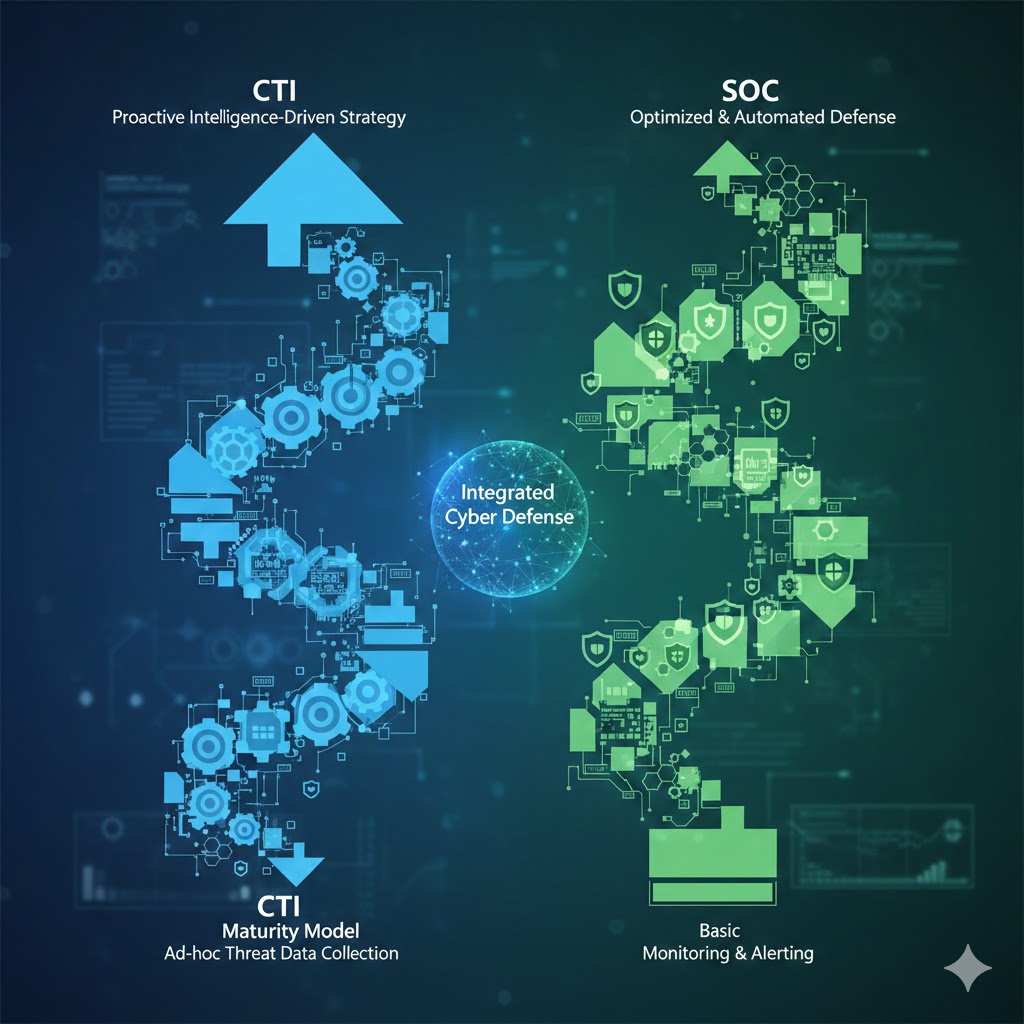
In today's hyper-connected enterprise landscape, cyber threats evolve at unprecedented speeds, costing organizations trillions annually. Cyber Threat Intelligence (CTI) and Security Operations Centers (SOCs) form the backbone of proactive defense, yet many enterprises struggle with immature programs that react rather than anticipate. CTI maturity models like the CTI-CMM provide structured roadmaps to transform ad-hoc intelligence gathering into strategic assets, while SOC maturity models such as SOC-CMM and Gartner's framework elevate operations from basic monitoring to AI-driven prediction. The business imperative is clear: mature CTI and SOC capabilities directly correlate with reduced breach costs, faster response times, and enhanced compliance. Organizations at advanced CTI levels (CTI2-CTI3) deliver prescriptive intelligence across tactical, operational, and strategic tiers, empowering stakeholders from SOC analysts to C-suite executives. Similarly, optimized SOCs leverage SOAR, threat hunting, and automation to achieve mean time to response (MTTR) under minutes, at Informatix.Systems, we provide cutting-edge AI, Cloud, and DevOps solutions for enterprise digital transformation, helping clients benchmark and advance their CTI and SOC maturity. This comprehensive guide explores CTI and SOC maturity models, their levels, integration strategies, and 2026 roadmaps. Enterprises adopting these frameworks report up to 40% improvement in threat detection efficacy. Whether you're assessing foundational gaps or targeting leading practices, these models offer measurable paths to resilience amid rising AI-powered attacks and regulatory pressures like GDPR and NIST updates.
CTI Maturity Models Overview
Cyber Threat Intelligence (CTI) maturity models standardize program development, focusing on stakeholder alignment and actionable outputs. The leading CTI Capability Maturity Model (CTI-CMM) defines four levels from pre-foundational to leading, across 11 domains like stakeholder engagement and intelligence production. These models shift CTI from reactive alerts to predictive insights, integrating tactical IoCs, operational TTPs, and strategic risk assessments. Organizations using CTI-CMM report better stakeholder buy-in and 30% faster decision-making.
Key benefits include:
- Benchmarking capabilities against industry peers.
- Roadmapping improvements with prioritized controls.
- Measuring ROI through stakeholder satisfaction metrics.
Core CTI-CMM Framework
The CTI-CMM, developed by industry experts from IBM X-Force and Mandiant, emphasizes a stakeholder-first approach. Version 1.2 includes 11 domains, refined assessment tools, and appendices on metrics and data sources.
CTI-CMM Domains Breakdown
Stakeholder Engagement Domain
Core to CTI-CMM, this domain maps intelligence to SOC, IR, and executive needs. At CTI3, programs co-develop requirements with stakeholders quarterly.
Intelligence Production Domain
Covers collection, processing, and dissemination across STRATEGIC/OPERATIONAL/TACTICAL tiers. Mature programs produce 360° threat profiles.
SOC Maturity Models Explained
SOC maturity models like SOC-CMM and Gartner's framework assess detection, response, and optimization. They guide evolution from reactive firefighting to predictive defense. Average enterprises operate at Level 2-3, with gaps in automation and hunting. Mature SOCs integrate CTI for 50% false positive reduction at Informatix.Systems, we provide cutting-edge AI, Cloud, and DevOps solutions for enterprise digital transformation, including SOC maturity audits.
Popular SOC Maturity Frameworks
Multiple models exist, each with unique emphases.
Gartner SOC Maturity Model
Gartner's four levels prioritize automation:
- Minimal: Basic tools.
- Reactive: SIEM-focused.
- Proactive: Threat intel integration.
- Predictive: AI threat hunting.
CTI Maturity Levels Deep Dive
Foundational CTI Practices
Focuses on basic collection from open sources. Outputs: IoC alerts to SOC. Challenges: Inconsistent quality, no context.
Improvement steps:
Advanced CTI Capabilities
Introduces TTP clustering and operational intel. Outputs: Campaign reports with MITRE ATT&CK mappings.
Leading CTI Excellence
Delivers prescriptive recommendations, e.g., Block via EDR playbook. Metrics: Stakeholder NPS >80%.
SOC Maturity Levels Detailed
Initial to Managed SOC (Levels 1-2)
Reactive mode with high MTTR (hours-days). Common pitfalls: Alert fatigue, siloed tools.
Quick wins:
Defined to Optimized SOC (Levels 3-5)
Proactive hunting, SOAR automation. Level 5 SOCs use AI for predictive analytics, achieving sub-minute MTTR.
Integrating CTI and SOC Maturity
Seamless integration multiplies value: CTI enriches SOC alerts with context, reducing noise by 60%.
Integration Best Practices
- Automate feeds into SIEM/SOAR via APIs.
- Align maturity targets (e.g., CTI2 + SOC3).
- Shared dashboards for TTP visibility.
Framework for 2026:
At Informatix.Systems, we provide cutting-edge AI, Cloud, and DevOps solutions for enterprise digital transformation, specializing in CTI-SOC pipelines.
Assessing Your CTI Maturity
Use CTI-CMM's Excel tool for self-assessment across domains. Score practices as Fully/Largely/Partially/Not Implemented.
Step-by-Step Assessment
- Prepare: Engage stakeholders.
- Assess: Rate 11 domains.
- Gap Analysis: Plot a spider diagram.
- Roadmap: Target +1 level/year.
Common Metrics:
Evaluating SOC Maturity
SOC-CMM tools benchmark across people/processes/tech. Gartner surveys reveal 70% SOCs below Level 3.
Roadmap to CTI Maturity 2026
Target CTI2 by mid-2026: Implement planning phase with vendor data sources. Budget: 20% of security spend.
Phased Approach:
Building SOC Maturity Path
From Level 2 to 4: Invest in SOAR and training. 2026 goal: Predictive capabilities via ML.
Investment Priorities:
Technology Stack for Maturity
CTI Tools: Platforms like EclecticIQ and MISP for sharing.
SOC Stack: Splunk/SOAR, EDR like CrowdStrike.
2026 Trends: AI-driven TIPs, zero-trust integration.
At Informatix.Systems, we provide cutting-edge AI, Cloud, and DevOps solutions for enterprise digital transformation.
Challenges in Maturity Progression
Common Barriers:
- Skills gaps: 50% analysts lack TTP expertise.
- Budget constraints: Prioritize high-ROI domains.
- Siloed teams: Foster CTI-SOC collaboration.
Solutions: Executive sponsorship, phased rollouts.
Success Stories
A financial firm advanced from CTI1 to CTI2, reducing incidents 35% via structured intel. Retail SOC at Level 4 cut MTTR 70% with CTI automation.
Future Trends 2026 and Beyond
AI will dominate: Predictive CTI via GenAI, autonomous SOCs. Expect hybrid models blending CTI-CMM with NIST CSF 2.0. Enterprises targeting Level 4+ will lead in the zero-trust era. CTI and SOC maturity models like CTI-CMM and SOC-CMM provide proven frameworks to evolve from reactive to predictive cybersecurity. By assessing gaps, integrating intelligence, and measuring progress, enterprises unlock resilience against 2026 threats. Prioritize stakeholder alignment and automation for measurable ROI. Ready to benchmark your programs? Contact Informatix.Systems today for a free CTI/SOC maturity assessment. Transform your security posture with our AI, Cloud, and DevOps expertise. Schedule a consultation now.
FAQs
What is the CTI-CMM?
The Cyber Threat Intelligence Capability Maturity Model (CTI-CMM) is a framework with four levels (CTI0-3) across 11 domains, focusing on stakeholder-aligned intelligence practices.
How many levels are in the SOC maturity models?
Most feature 5-6 levels, from Initial (ad-hoc) to Optimizing (AI-driven), assessing people, processes, and technology.
How to integrate CTI into SOC?
Automate feeds into SIEM/SOAR, enrich alerts with TTPs, and align maturity targets for faster detection.
What are CTI maturity levels?
CTI0 (none), CTI1 (foundational/reactive), CTI2 (advanced/proactive), CTI3 (leading/prescriptive).
Benefits of SOC maturity assessment?
Identifies gaps, standardizes processes, and boosts metrics like MTTR by up to 70%.
Which SOC model is best for enterprises?
SOC-CMM for detailed benchmarking; Gartner's for strategic planning.
How to measure CTI program success?
Use stakeholder NPS, adoption rates, and business impact metrics from CTI-CMM appendices.
What's next for CTI/SOC in 2026?
AI automation, predictive hunting, and integrated zero-trust frameworks.
No posts found
Write a review