- 3/8, North Pirerbag
- 60 Feet Main Road
- Mirpur, Dhaka 1216
- +880-967-8247365
- support@informatix.systems

Cyber Threat Intelligence and Advanced Analytics
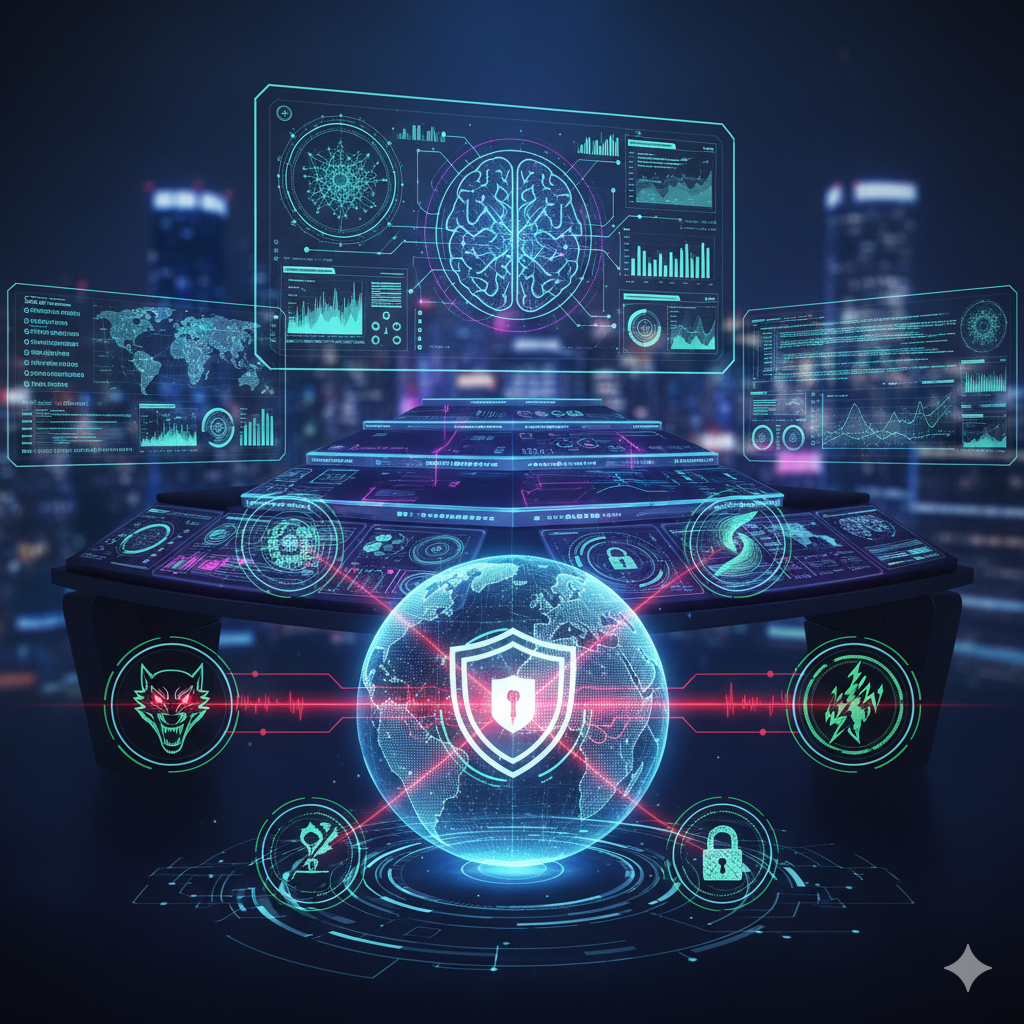
In the rapidly evolving digital landscape of 2026, cyber threats have become more sophisticated, with AI-powered attacks, ransomware-as-a-service, and nation-state actors targeting enterprise assets at unprecedented scales. Cyber threat intelligence (CTI) serves as the cornerstone of proactive cybersecurity, transforming raw data into actionable insights that reveal adversary motives, tactics, techniques, and procedures (TTPs). This intelligence, combined with advanced analytics, empowers organizations to anticipate breaches, prioritize vulnerabilities, and respond swiftly, shifting from reactive firefighting to strategic defense. Businesses face staggering risks: global cybercrime costs are projected to exceed $10 trillion annually by 2026, with supply chain attacks and deepfake-enabled phishing surging. CTI provides context-specific knowledge, strategic (high-level trends), operational (campaign planning), and tactical (IoCs like malware hashes), enabling CISOs to align security investments with real threats. For enterprises undergoing digital transformation, integrating CTI with analytics reduces mean time to detect (MTTD) and respond (MTTR) by up to 50%, yielding an ROI as high as 350% through avoided losses. At Informatix.Systems, we provide cutting-edge AI, Cloud, and DevOps solutions for enterprise digital transformation, helping clients deploy scalable CTI platforms that fuse machine learning with threat feeds for real-time protection. This article delves into CTI fundamentals, advanced analytics applications, integration strategies, and 2026 trends, equipping enterprise leaders with frameworks to fortify defenses.
CTI Fundamentals
Cyber threat intelligence collects, processes, and analyzes threat data to understand actors, methods, and targets, moving organizations from reactive to proactive security. Gartner defines it as evidence-based knowledge offering context, mechanisms, indicators, and action advice on threats.
Types of CTI
CTI categorizes into three core types:
- Strategic CTI: High-level reports on geopolitical risks and industry trends for executives.
- Operational CTI: Details adversary campaigns, resources, and objectives for threat hunters.
- Tactical CTI: Technical IoCs like IPs, hashes, and TTPs for SOC teams.
Threat Intelligence Lifecycle
The lifecycle spans six phases: planning requirements, data collection, processing/enrichment, analysis, dissemination, and feedback, ensuring aligned, actionable output.
- Planning: Define business-specific needs like sector threats.
- Collection: Aggregate from feeds, logs, dark web.
- Analysis: Use AI for pattern detection.
Advanced Analytics Role
Advanced analytics leverages AI, ML, and big data to process vast threat datasets, identifying anomalies that traditional tools miss. In 2026, analytics blends with CTI for predictive modeling, reducing false positives by 40%.
Key Analytics Techniques
- Behavioral Analysis: ML baselines normal activity to flag deviations.
- Pattern Recognition: Algorithms detect attack signatures in logs.
- NLP Integration: Parses unstructured data like phishing emails.
Tools like Elastic Security and Hunters AI-SIEM provide real-time visibility across hybrid environments.
AI in CTI
AI revolutionizes cyber threat intelligence by automating detection and scaling analysis amid exploding data volumes. ML correlates events for coordinated attacks, while NLP extracts insights from social media.
AI-Driven Benefits
- Automation: Real-time IoC processing and anomaly detection.
- Predictive Defense: Forecasts threats via historical patterns.
- Threat Hunting: Blends AI with human expertise for log sifting.
At Informatix.Systems, we provide cutting-edge AI, Cloud, and DevOps solutions for enterprise digital transformation, embedding AI into CTI workflows.
Threat Hunting Techniques
Threat hunting proactively searches networks for hidden threats using hypotheses, intelligence, or entity behavior. Methodologies include:
- Hypothesis-Based: Tests ML-driven risk scores.
- Intelligence-Based: Hunts IoCs from feeds.
- IoA-Driven: Aligns with MITRE ATT&CK for TTPs.
Hunting Frameworks
MITRE ATT&CK maps adversary behaviors across 14 tactics, aiding prioritization and simulations. Hunters use it to trace attacks and validate defenses.
CTI Sharing Platforms
Threat intelligence sharing via ISACs, MISP, or OTX amplifies collective defense, exchanging IoCs peer-to-peer.
- Benefits: Early warnings, reduced duplication.
- Tools: Anomali STAXX for STIX/TAXII; Keepnet for communities.
DevSecOps Integration
DevSecOps embeds CTI into pipelines for shift-left security. Automate scans (SAST/DAST), IaC checks, and threat feeds in CI/CD.
Best Practices
- Continuous Monitoring: SIEM correlates pipeline logs.
- Automated Alerts: Global threats trigger patches.
- Feedback Loops: Post-mortems refine playbooks.
At Informatix.Systems, we provide cutting-edge AI, Cloud, and DevOps solutions for enterprise digital transformation.
Cloud Security Analytics
Cloud threats in 2026 target misconfigs, APIs, and supply chains; analytics predicts via logs and traces.
- Trends: Zero Trust, confidential computing, and AI regulation.
- Tools: CSPM with CTI for drift detection.
CTI ROI Metrics
Quantify value through KPIs: MTTD/MTTR reductions, false positive drops, ALE savings (up to 350% ROI).
2026 Trends
Expect AI-dual use, supply chain focus, quantum-resilient CTI.
Case Studies
- Bridewell 2025 Report: Defensive strategies via landscape analysis.
- Cyble Deployments: Real-time intel thwarted campaigns.
- Deloitte Insights: Advanced actors mitigated via ATT&CK.
Enterprises using CTI saw 2x faster threat ID. Cyber threat intelligence and advanced analytics form the bedrock of 2026 cybersecurity, enabling proactive defense through AI, frameworks like MITRE ATT&CK, and integrations like DevSecOps. Enterprises mastering these reduce risks, optimize resources, and drive ROI. Ready to fortify your defenses? Contact Informatix.Systems today for tailored AI, Cloud, and DevOps solutions. Schedule a consultation at https://informatix.systems to transform your security posture.
FAQs
What is cyber threat intelligence?
CTI processes threat data into actionable insights on actors and TTPs, categorized as strategic, operational, and tactical.
How does AI enhance CTI?
AI automates detection, behavioral analysis, and prediction, cutting false positives and scaling for 2026 threats.
What are the top threat hunting methods?
Hypothesis, intelligence, and IoA-driven, aligned with MITRE ATT&CK.
Which CTI platforms lead in 2026?
Cortex XSOAR, CrowdStrike, Cyware for AI-orchestrated intel.
How to measure CTI ROI?
Track MTTD/MTTR, ALE reductions; expect 245-350% returns.
Why integrate CTI with DevSecOps?
Shifts security left, automates scans, and correlates threats in pipelines.
What cloud security trends matter for CTI?
AI analytics, Zero Trust, supply chain focus.
How does threat sharing benefit enterprises?
Amplifies intel via ISACs/MISP, enabling collective early warnings.
No posts found
Write a review