- 3/8, North Pirerbag
- 60 Feet Main Road
- Mirpur, Dhaka 1216
- +880-967-8247365
- support@informatix.systems

Cyber Threat Intelligence and Enterprise AI Defense
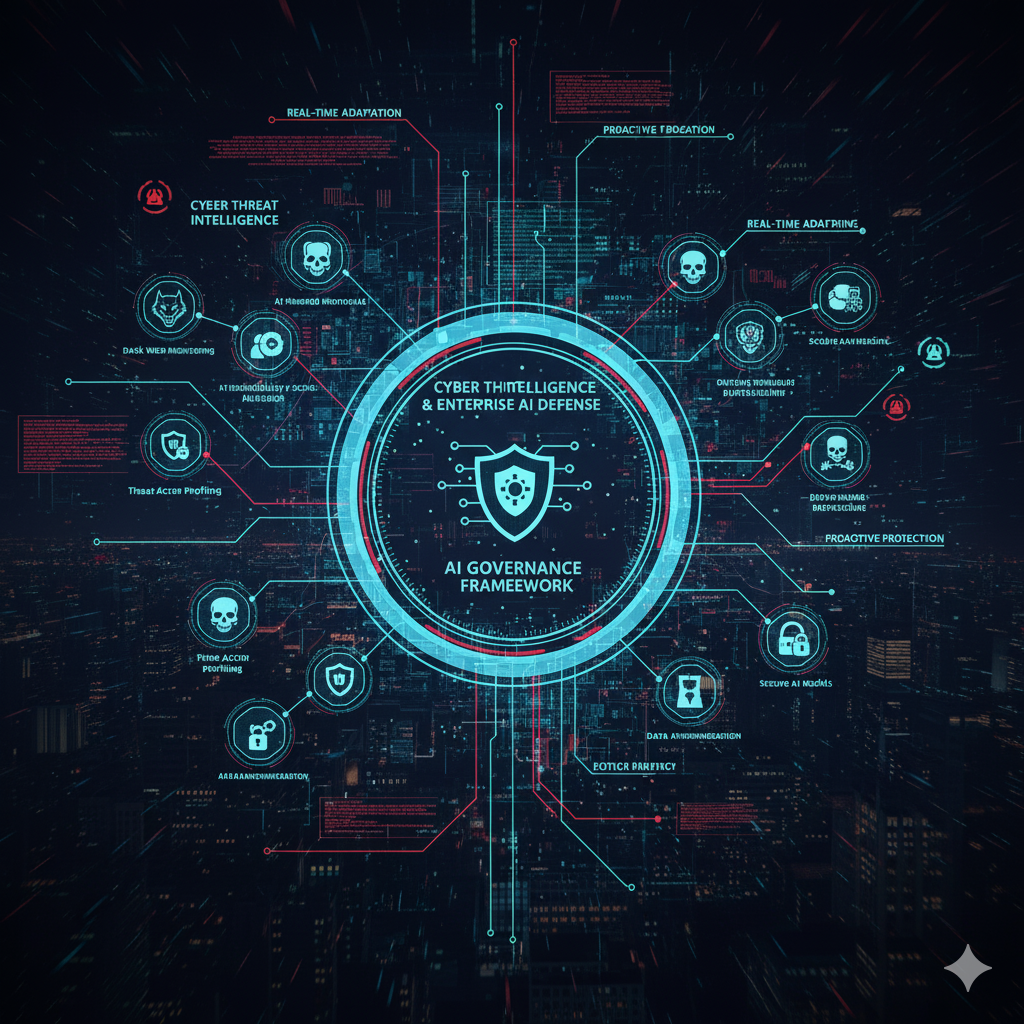
Enterprise AI adoption surges in 2026, powering everything from predictive analytics to autonomous operations, but unleashes a new era of sophisticated cyber threats where adversaries wield AI for hyper-targeted attacks. Cyber threat intelligence (CTI) stands as the vanguard, delivering real-time insights into AI-specific threats like model inversion, adversarial perturbations, and agentic malware that evade traditional defenses. This intelligence fusion empowers enterprises to defend AI assets proactively, transforming vulnerability into a strategic advantage amid projected $15 trillion in global AI-related cyber losses. The business imperative is stark: 78% of enterprises report AI security gaps, with breaches costing $5.2 million on average, and regulatory scrutiny from NIST AI RMF and EU AI Act intensifying. Without cyber threat intelligence, AI initiatives falter under prompt injections, data poisoning, and supply chain exploits by nation-states and cyber syndicates. CTI enables enterprise AI defense by mapping adversary TTPs to AI pipelines, slashing detection times by 80% and fortifying resilience through automated, intelligence-driven responses. Leading organizations integrate CTI into AI ops for zero-trust architectures that verify models, data, and agents continuously, at Informatix.Systems, we provide cutting-edge AI, Cloud, and DevOps solutions for enterprise digital transformation, embedding cyber threat intelligence into scalable defense platforms. This in-depth guide dissects frameworks, tools, trends, and roadmaps, equipping CISOs and AI leaders to neutralize threats and accelerate innovation securely.
Core Concepts of Cyber Threat Intelligence
Cyber threat intelligence aggregates, analyzes, and operationalizes threat data tailored to enterprise AI environments, focusing on adversarial AI behaviors.
AI-Specific Threat Categories
- Model Attacks: Extraction, inversion, revealing training data.
- Inference Threats: Evasion via adversarial samples.
- Training Compromises: Poisoning through tainted datasets.
Intelligence Types for AI Defense
| Type | Focus | Enterprise Application |
|---|---|---|
| Strategic | AI campaign trends | Board-level risk briefings |
| Tactical | AI TTPs | EDR model hardening |
| Technical | Exploits, payloads | Patch deployment |
CTI Lifecycle Adapted for AI Defense
The iterative CTI lifecycle, planning, collection, processing, analysis, dissemination, and feedback powers enterprise AI defense.
Planning: AI Asset Prioritization
Target high-value models (e.g., revenue-predicting LLMs) for intelligence focus.
Collection: Diverse AI Threat Sources
Analysis: AI-Powered Correlation
ML fuses IoCs with behavioral anomalies for predictive alerts. At Informatix.Systems, we provide cutting-edge AI, Cloud, and DevOps solutions for enterprise digital transformation.
MITRE Frameworks for AI Threats
MITRE ATLAS extends ATT&CK to AI, cataloging 50+ tactics for cyber threat intelligence mapping.
Key ATLAS Tactics
- Reconnaissance: Model fingerprinting.
- Resource Development: Custom adversarial tools.
- Execution: Prompt injections.
Framework Comparison:
| Framework | AI Coverage | Defense Use |
|---|---|---|
| MITRE ATLAS | Comprehensive AI TTPs | Hunting queries |
| ATT&CK | Traditional extension | Hybrid threats |
| D3FEND | Countermeasures | Playbook automation |
Autonomous AI Defense Systems
Enterprise AI defense leverages autonomous agents informed by CTI for self-healing responses.
Core Capabilities
- Real-Time Triage: 95% false positive reduction.
- Adaptive Blocking: Evolves against polymorphic AI attacks.
- Orchestration: Multi-tool response chains.
Implementation Steps:
- Ingest CTI feeds into AI controllers.
- Define autonomous thresholds.
- Human veto loops for escalation.
Leading CTI Platforms for AI Security
2026 platforms deliver AI-native intelligence.
- CrowdStrike FalconX: AI threat hunting.
- Recorded Future Insikt: 6-month AI forecasts.
- Protect AI: Model vulnerability scanning.
- Lasso Security: Agentic defense orchestration.
| Platform | AI Strengths | Integration |
|---|---|---|
| Protect AI | Model SBOMs | MLOps |
| Cyble Vision | Adversarial intel | SIEM |
Zero Trust Architecture in AI Ecosystems
Zero Trust mandates continuous verification of AI components, fueled by cyber threat intelligence.
AI Zero Trust Pillars
Policy Enforcement:
- CTI-driven dynamic access revocation.
- Behavioral anomaly quarantines.
At Informatix.Systems, we provide cutting-edge AI, Cloud, and DevOps solutions for enterprise digital transformation.
2026 Predictions: AI Threat Landscape
Agentic AI attackers dominate, countered by intelligence-led defenses.
- Weaponized LLMs: Custom malware generators.
- Swarm Attacks: Coordinated agent fleets.
- Quantum AI Hybrids: Breaking encryption.
Defense Countertrends:
| Prediction | CTI Response |
|---|---|
| Shadow AI Boom | Discovery intel |
| Supply Chain AI Risks | Vendor CTI vetting |
Integration Roadmaps and Best Practices
Phased deployment maximizes enterprise AI defense.
Maturity Assessment
Benchmark CTI coverage (current avg: 49%).
Technical Integration
- SIEM + AI EDR fusion.
- CTI APIs in CI/CD pipelines.
Best Practices Checklist:
Autonomous Operations
80% automation target for tier-1 alerts.
Challenges Overcoming Alert Fatigue
Integration silos (48%) and skill gaps persist.
Mitigation Framework
- AI Copilots: Natural language querying.
- Unified Platforms: End siloed tools.
- Continuous Training: MITRE-based certs.
KPIs and Measurement for AI Defense
Success metrics tie CTI to business outcomes.
- Detection Efficacy: >95% accuracy.
- Response Velocity: <60 seconds MTTR.
- Coverage Score: 100% critical AI assets.
Executive Dashboard:
Proven Deployments
A global bank used Recorded Future CTI to block AI-phishing campaigns, saving $12M. Healthcare leader with Protect AI prevented model poisoning across 500 deployments.
Key Learnings:
- 10x faster detection via fusion.
- 97% SIEM improvement.
At Informatix.Systems, we provide cutting-edge AI, Cloud, and DevOps solutions for enterprise digital transformation.
Regulatory Compliance Through CTI
Align with EU AI Act high-risk requirements using auditable intelligence trails.
- Automated risk registers.
- Threat-informed impact assessments.
Future-Proofing Strategies
Prepare for post-quantum AI threats with forward-looking CTI.
Cyber threat intelligence fortifies enterprise AI defense in 2026, countering intelligent adversaries with predictive, autonomous systems that ensure resilience, compliance, and innovation. From MITRE ATLAS mappings to zero-trust integrations, CTI delivers measurable ROI, positioning leaders ahead of the AI threat horizon. Secure your AI future with Informatix.Systems. Contact us today for customized deployments: https://informatix.systems.
FAQs
What role does cyber threat intelligence play in enterprise AI defense?
CTI provides TTP insights for proactive AI threat neutralization.
How does MITRE ATLAS enhance AI security?
Catalogs AI-specific tactics for targeted defenses.
What are the top CTI platforms for AI in 2026?
Recorded Future, Protect AI, Cyble Vision.
Why adopt Zero Trust for AI with CTI?
Enables continuous verification against dynamic threats.
What KPIs measure CTI-AI defense success?
MTTR, detection accuracy, and asset coverage.
How do autonomous systems use CTI?
For real-time triage and self-healing responses.
What 2026 AI threats require CTI focus?
Agentic attacks, model poisoning, swarm intelligence.
Can CTI reduce AI breach costs?
No posts found
Write a review