- 3/8, North Pirerbag
- 60 Feet Main Road
- Mirpur, Dhaka 1216
- +880-967-8247365
- support@informatix.systems

Cyber Threat Intelligence for APT Defense
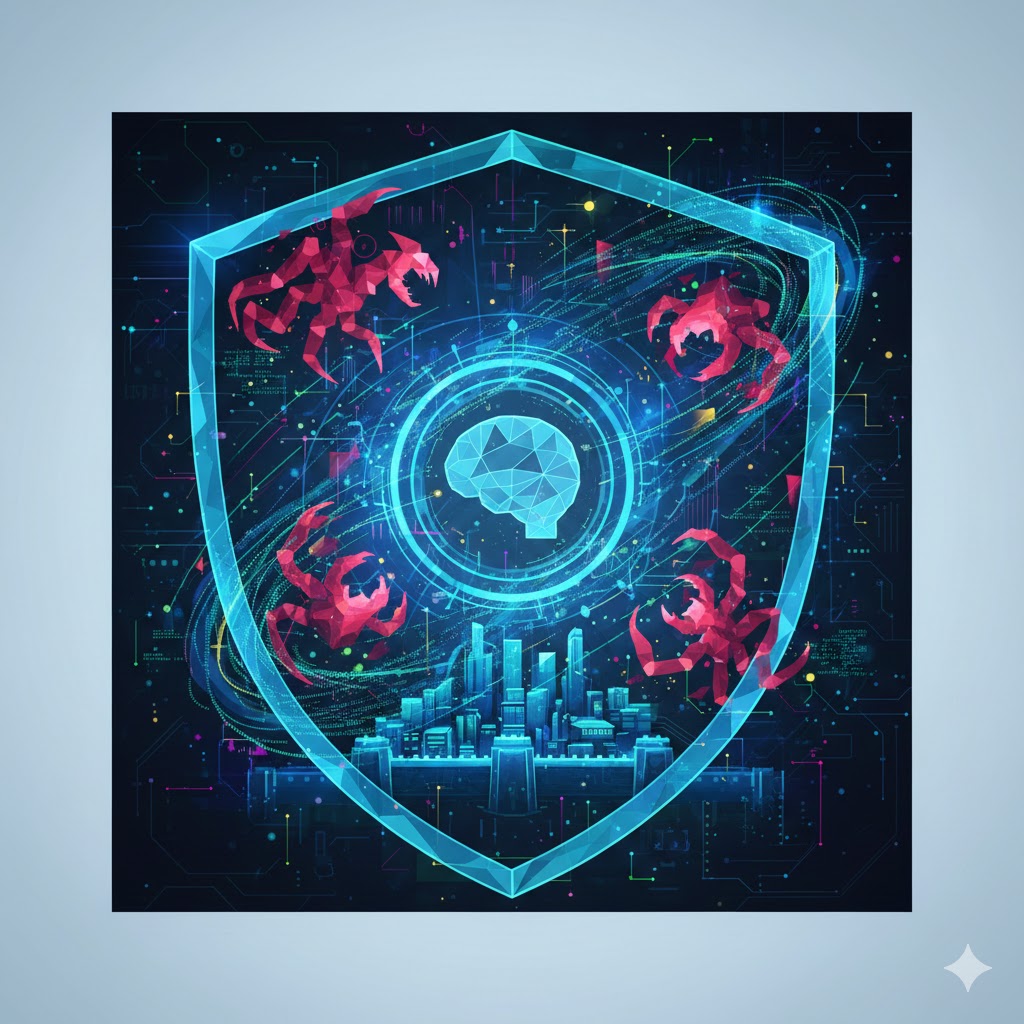
In today's hyper-connected enterprise landscape, Cyber Threat Intelligence (CTI) stands as the frontline defense against Advanced Persistent Threats (APTs), sophisticated attacks orchestrated by nation-states and cybercriminals targeting high-value assets. APTs differ from opportunistic hacks; they involve prolonged infiltration, stealthy lateral movement, and data exfiltration, often evading traditional signatures. As global cybercrime costs are projected to exceed $10 trillion annually by 2025, businesses face existential risks without proactive CTI integration. The business imperative is clear: CTI transforms raw threat data into actionable insights, enabling prediction, detection, and neutralization of APTs before impact. Enterprises leveraging CTI report up to 50% faster response times and reduced breach costs. For sectors like finance, healthcare, and critical infrastructure, ignoring CTI means vulnerability to groups like those tracked in MITRE ATT&CK, which evolve tactics yearly, at Informatix.Systems, we provide cutting-edge AI, Cloud, and DevOps solutions for enterprise digital transformation, empowering organizations to build resilient CTI programs tailored for 2026 threats. This article dives deep into CTI frameworks, tools, and strategies, equipping CISOs with blueprints for APT defense.
What is Cyber Threat Intelligence?
Cyber Threat Intelligence (CTI) collects, analyzes, and disseminates data on threats, adversaries, and tactics to inform security decisions. It categorizes into strategic (high-level trends), operational (campaign details), and tactical (IOCs like IPs/hashes) intelligence. CTI shifts defenses from reactive to proactive by contextualizing threats specific to industries or regions.
- Strategic CTI: Guides executive risk assessments.
- Operational CTI: Maps adversary campaigns.
- Tactical CTI: Feeds SIEM/EDR for real-time blocking.
Types of CTI for Enterprises
Enterprises prioritize actionable CTI enriched with behavioral analytics over raw feeds.
Understanding APTs
Advanced Persistent Threats (APTs) are prolonged, targeted attacks by well-resourced actors using multi-stage tactics to maintain access. Unlike ransomware, APTs focus on espionage or disruption, dwelling undetected for months. APTs exploit zero-days, supply chains, and insider vectors, with 2025 seeing AI-augmented evasion of EDR tools.
APT Lifecycle Stages
APTs follow structured phases:
- Reconnaissance: Target profiling via OSINT.
- Weaponization: Custom malware crafting.
- Delivery: Phishing/spearphishing.
- Exploitation: Vulnerability abuse.
- Installation: Persistence mechanisms.
- Command & Control (C2): Beaconing to handlers.
- Actions on Objectives: Exfiltration/disruption.
Why CTI is Crucial for APT Defense
CTI provides context to disrupt APT kill chains early, reducing dwell time from 21 days to hours. It uncovers TTPs (Tactics, Techniques, Procedures), enabling prioritization of defenses.
Without CTI, enterprises chase alerts blindly; with it, SOCs focus on high-fidelity threats.
- Risk Reduction: 70% fewer breaches via predictive analytics.
- Resource Optimization: Targets relevant IOCs.
At Informatix.Systems, we provide cutting-edge AI, Cloud, and DevOps solutions for enterprise digital transformation, integrating CTI into unified platforms.
Key CTI Frameworks
Frameworks standardize APT analysis for consistent defense mapping.
MITRE ATT&CK Framework
MITRE ATT&CK catalogs adversary behaviors across 14 tactics (e.g., Initial Access, Lateral Movement) with 200+ techniques. It drives gap analysis and threat hunting.
Diamond Model of Intrusion Analysis
The Diamond Model links Adversary, Capability, Infrastructure, and Victim via activity threads. Analysts pivot between nodes for holistic intrusion understanding.
Cyber Kill Chain
Lockheed Martin's Cyber Kill Chain breaks APTs into 7 phases for interruption points. Modern variants incorporate AI evasion.
Building a CTI Program
Successful CTI programs follow a lifecycle: Planning, Collection, Processing, Analysis, Dissemination, and Feedback.
Steps to Implementation
- Define PIRs: Align with business risks.
- Acquire Feeds: OSINT, commercial, internal.
- Build Team: Analysts, hunters, engineers.
- Integrate Tools: SIEM, TIPs.
- Measure ROI: Dwell time, false positives.
Budget 5-10% of security spend on CTI.
Top CTI Tools for 2026
2026 tools emphasize AI-driven platforms with ATT&CK mapping.
Select based on integration needs.
Open-Source Options
AI in CTI for APT Detection
AI revolutionizes CTI via anomaly detection, predictive modeling, and automation. ML baselines normal behavior, flagging APT beacons.
- Behavioral Analytics: Spots subtle deviations.
- Threat Hunting: Automates hunts.
- False Positive Reduction: 80% improvement.
AI-Driven Tools
SentinelOne Singularity uses AI for multi-stage APT detection. At Informatix.Systems, we provide cutting-edge AI, Cloud, and DevOps solutions for enterprise digital transformation.
Cloud Security and CTI
Cloud expands APT surfaces; CTI monitors misconfigs and east-west traffic. Integrate with CSP-native tools like AWS GuardDuty.
Best Practices
DevSecOps Integration
Embed CTI in pipelines for shift-left security.
- CI/CD Scanning: Snyk + threat feeds.
- Automated Alerts: Global threat matching.
- Predictive Modeling: Vulnerability forecasting.
Real-World APT Case Studies
NCSC New Zealand APT: Forensic analysis contained exfiltration via CTI correlation. No data was lost due to the rapid response.
Middle East Telecom: AI-CTI thwarted APT crisis.
State-Sponsored Breach: Timeline mapping via hacker servers prevented wider damage.
Lessons: Multi-party collaboration is key.
Future Trends in CTI and APT Defense (2026)
2026 trends: Agentic AI attacks, quantum threats, AI-fied APTs.
- LLM Exploitation: Phishing evolution.
- Quantum-Resistant CTI: Post-quantum crypto.
- Unified XDR: Cross-domain intelligence.
Best Practices for APT Defense
Layered strategies amplify CTI:
Defense Layers
- EDR/XDR: Behavioral detection.
- Network Segmentation: Limit lateral movement.
- Threat Hunting: Proactive searches.
- Incident Response: Playbooks with CTI.
Regular red-teaming validates. At Informatix.Systems, we provide cutting-edge AI, Cloud, and DevOps solutions for enterprise digital transformation.
Challenges in CTI Implementation
Common hurdles: Data overload, skill gaps, integration silos.
Mitigations:
Cyber Threat Intelligence equips enterprises to dismantle APT operations through frameworks like MITRE ATT&CK, AI tools, and integrated DevSecOps. From lifecycle mastery to 2026 trends, proactive CTI minimizes risks and fortifies resilience. Ready to secure your future? Contact Informatix.Systems today for a customized CTI assessment and deploy cutting-edge AI, Cloud, and DevOps solutions for enterprise digital transformation. Visit https://informatix.systems now.
FAQs
What is Cyber Threat Intelligence?
CTI processes threat data into actionable insights for proactive defense.
How does MITRE ATT&CK help APT defense?
It maps TTPs to identify coverage gaps and enhance hunting.
What are the top CTI tools for 2026?
Stellar Cyber, Anomali, and Recorded Future lead with AI integration.
Can AI detect unknown APTs?
Yes, via behavioral anomaly detection beyond signatures.
How to integrate CTI in DevSecOps?
Embed feeds in CI/CD for automated vulnerability scanning.
What are the 2026 APT trends?
AI-optimized kill chains and quantum threats.
Why use the Diamond Model?
It connects intrusion components for deeper analysis.
How long do APTs typically dwell?
Average 21 days without CTI; reduced with intelligence.
No posts found
Write a review