- 3/8, North Pirerbag
- 60 Feet Main Road
- Mirpur, Dhaka 1216
- +880-967-8247365
- support@informatix.systems

Cyber Threat Intelligence for Business Continuity Planning
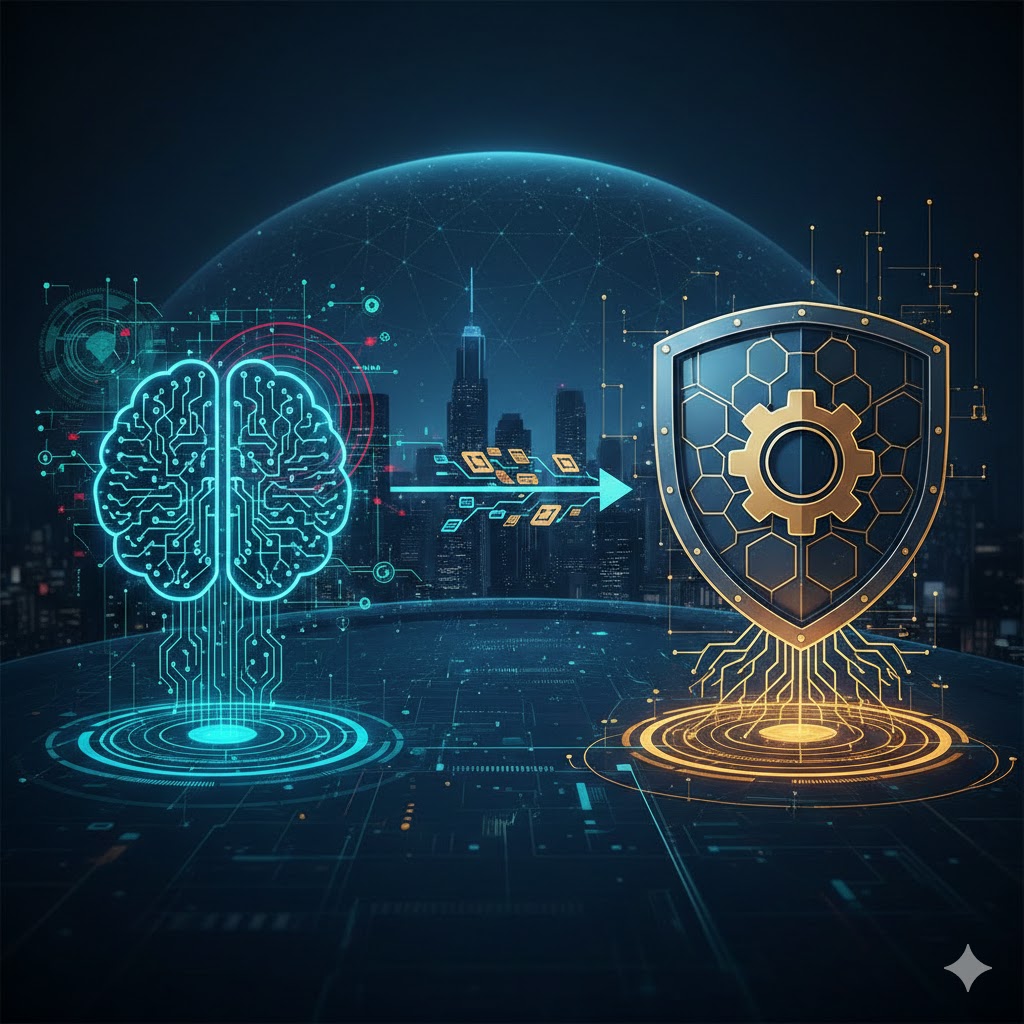
In today's hyper-connected digital landscape, cyber threats pose existential risks to enterprises worldwide. Cyber threat intelligence (CTI) emerges as a cornerstone for business continuity planning (BCP), transforming raw data on adversaries, tactics, and vulnerabilities into actionable foresight that prevents disruptions. Businesses face escalating attacks, including ransomware, supply chain breaches, and AI-powered phishing, which can halt operations, erode trust, and incur millions in losses. CTI equips organizations to anticipate these threats, integrating intelligence into BCP to maintain operations amid chaos. The stakes have never been higher. According to industry analyses, cyber incidents disrupt 60% of enterprises annually, with recovery times averaging 21 days and costs exceeding $4.5 million per breach. CTI addresses this by providing visibility into the threat landscape, enabling proactive defenses over reactive fixes. For business leaders, embedding CTI in BCP means aligning security with core objectives: revenue protection, regulatory compliance, and stakeholder confidence, at Informatix.Systems, we provide cutting-edge AI, Cloud, and DevOps solutions for enterprise digital transformation, helping clients build resilient infrastructures that withstand evolving threats. This comprehensive guide explores CTI's role in BCP, from foundational concepts to 2026 trends. Enterprises adopting CTI report 50% faster incident response and 30% reduced downtime, underscoring its value for continuity. Whether you're a CISO refining risk strategies or an executive prioritizing resilience, CTI delivers the intelligence needed for uninterrupted operations. Dive into frameworks, tools, best practices, and real-world applications to fortify your business against tomorrow's threats.
What Is Cyber Threat Intelligence?
Cyber threat intelligence (CTI) involves collecting, analyzing, and disseminating data on cyber threats, adversaries, and attack methods to bolster security. It goes beyond alerts, offering context on threat actors' motives, tactics, techniques, and procedures (TTPs).
Core Components of CTI
CTI comprises four pillars:
- Indicators of Compromise (IOCs): Malware signatures, IP addresses signaling attacks.
- Tactics, Techniques, Procedures (TTPs): Behavioral patterns like phishing or lateral movement.
- Threat Actor Profiles: Nation-states, ransomware groups, their histories.
- Strategic Intelligence: Industry-specific trends and geopolitical risks.
CTI Maturity Levels
Organizations progress from ad-hoc collection to mature programs with automated feeds and analytics. At Informatix.Systems, we provide cutting-edge AI, Cloud, and DevOps solutions for enterprise digital transformation, accelerating CTI maturity.
Why CTI Matters for Business Continuity
CTI directly enhances BCP by mapping threats to critical assets, enabling scenario planning for disruptions. Without it, BCP remains generic, ignoring dynamic cyber risks like zero-days or insider threats.
Linking Threats to Operations
- Risk Quantification: CTI prioritizes threats by business impact, using metrics like Recovery Time Objective (RTO).
- Proactive Resilience: Anticipate outages from DDoS or wipers, testing BCP playbooks accordingly.
- Cost Savings: Reduces breach costs by 40% through early detection.
Enterprises integrating CTI see 35% fewer disruptions, proving its ROI for continuity.
Types of Cyber Threat Intelligence
CTI is categorized into four types, each serving BCP uniquely.
At Informatix.Systems, we provide cutting-edge AI, Cloud, and DevOps solutions for enterprise digital transformation, customizing CTI types for your needs.
Key CTI Frameworks
Frameworks structure CTI for BCP effectiveness.
MITRE ATT&CK
Maps 14 tactics across attack lifecycles, ideal for threat hunting in BCP tests.
Diamond Model
Links, adversary, capability, infrastructure, and victim are perfect for intrusion analysis.
Cyber Kill Chain
Seven phases (recon to actions) guide layered defenses in continuity plans.
NIST Cybersecurity Framework overlays these for risk management.
Integrating CTI into BCP
Seamless integration starts with cross-functional teams assessing cyber risks alongside physical ones.
Step-by-Step Integration Process
- Conduct Cyber BIA: Identify assets tied to revenue, using CTI for threat mapping.
- Develop Scenarios: Simulate ransomware via CTI data.
- Embed in Playbooks: Update IRPs with IOCs.
- Test Annually: Tabletop exercises with live feeds.
- Automate Feeds: SIEM ingests CTI for real-time alerts.
Benefits:
Common Cyber Threats to BCP
Ransomware encrypts data, halting ops; DDoS floods networks; supply chain attacks cascade failures.
High-Impact Threats
- Ransomware: 2026 evolution includes AI evasion.
- APIs/IoT Exploits: Edge devices bypass perimeters.
- Insider Threats: Amplified by shadow IT.
CTI profiles these, enabling targeted BCP hardening.
Best Practices for CTI-Driven BCP
Adopt these for resilience:
- Multi-Source Feeds: Blend OSINT, commercial intel.
- AI Pattern Recognition: Detect anomalies early.
- Vendor Risk Assessments: CTI-vetted third parties.
- Training: Simulate threats quarterly.
- Metrics Tracking: Monitor KPIs like threat coverage.
Pro Tip: Automate with SOAR for playbook execution.
Real-World Case Studies
Financial firm used CTI to block phishing, averting credential theft. Healthcare mitigated ransomware via actor profiling, restoring ops in hours. Retail detected a supply chain breach early. Energy firm protected infrastructure with TTP mapping.
Lessons: Proactive CTI cuts downtime 70%.
Future Trends in CTI for 2026
AI agents automate attacks/defenses; zero-trust mandates; quantum-safe crypto; unified SOCs.
Emerging Tech
- Agentic AI: Predictive modeling.
- Exposure Management: Pre-breach prioritization.
- GenAI Threats: Deepfake phishing.
Prepare BCP for these via continuous CTI evolution. At Informatix.Systems, we provide cutting-edge AI, Cloud, and DevOps solutions for enterprise digital transformation.
Building a CTI Team and Culture
Assemble analysts, data scientists, and BCP experts. Foster awareness via training.
Training Roadmap
- CTI basics for all.
- Advanced TTP analysis for SOC.
- BCP simulations enterprise-wide.
Culture shift: Security as shared responsibility.
Challenges and Mitigation Strategies
Challenge: Data overload. Mitigate: AI triage.
Challenge: Silos. Mitigate: Cross-team dashboards.
Challenge: Evolving threats. Mitigate: Agile CTI updates.
Cyber threat intelligence fortifies business continuity planning by delivering foresight against disruptions, from ransomware to AI threats. Integrating CTI frameworks, tools, metrics, and best practices ensures resilience in 2026 and beyond. Enterprises mastering this achieve faster recovery, lower costs, and sustained operations. Secure your future today. Contact Informatix.Systems for a free CTI-BCP assessment. Visit https://informatix.systems to deploy AI-driven solutions now and transform threats into opportunities.
FAQs
What is cyber threat intelligence in BCP?
CTI provides threat data to preempt disruptions in continuity plans.
How does CTI improve business resilience?
By enabling proactive defenses and faster response, reducing downtime 50%.
What are the top CTI tools for 2026?
ThreatConnect, IBM X-Force, and CyberSilo for integrations and AI.
How to measure CTI effectiveness in BCP?
Track MTTD, MTTR, and coverage KPIs quarterly.
What future trends impact CTI-BCP?
AI agents, zero-trust, quantum threats.
Can small businesses use CTI?
Yes, via affordable feeds and MSSPs.
How often test CTI-integrated BCP?
Quarterly simulations, annual full drills.
Role of AI in CTI for continuity?
No posts found
Write a review