- 3/8, North Pirerbag
- 60 Feet Main Road
- Mirpur, Dhaka 1216
- +880-967-8247365
- support@informatix.systems

Cyber Threat Intelligence for Cloud Security 2030
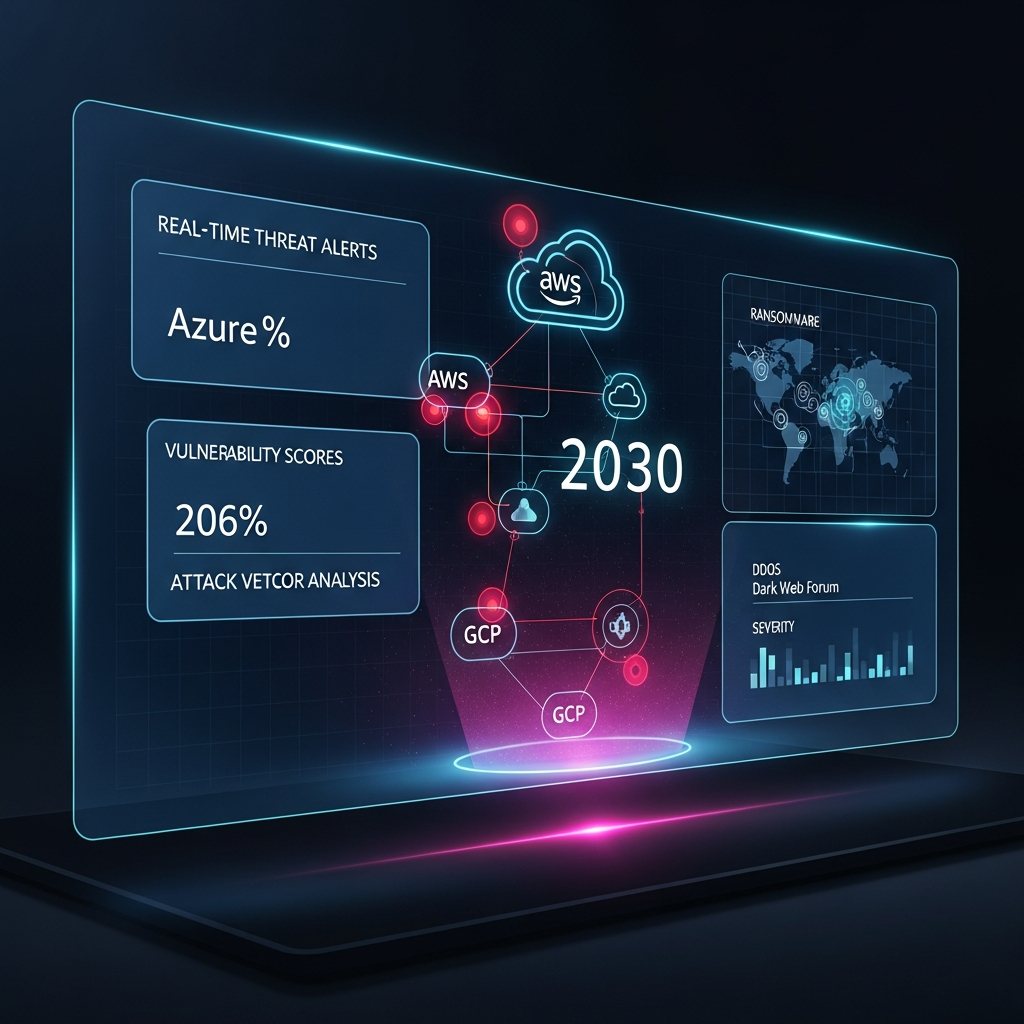
Cloud computing has become the backbone of digital transformation, powering enterprises with unprecedented flexibility, scalability, and innovation. However, by 2030, the same technology revolutionizing business operations is also redefining the threat landscape. From state-sponsored cyberattacks to AI-powered breaches and deepfake-based phishing campaigns, the sophistication of digital threats is escalating at an exponential speed. The global cloud security market, valued at over $68 billion in 2025, is forecasted to surpass $200 billion by 2030. This growth signals not only adoption but also increased risk as data, applications, and infrastructure migrate across hybrid and multi-cloud environments; organizations must evolve their defense strategies. This is where Cyber Threat Intelligence (CTI) plays a pivotal role. CTI leverages data-driven insights, AI-driven analytics, and predictive modeling to proactively identify, assess, and neutralize security threats before they impact business continuity. In an age of hyper-connectivity and AI-driven operations, threat intelligence for cloud ecosystems is not optional; it’s mission-critical. At Informatix.Systems, we provide cutting-edge AI, Cloud, and DevOps solutions that help enterprises build resilient cybersecurity architectures. As we look toward 2030, integrating adaptive CTI into cloud infrastructures is the cornerstone of future-ready digital enterprises.
Understanding Cyber Threat Intelligence (CTI)
The Fundamentals of CTI
Cyber Threat Intelligence is the process of collecting, analyzing, and applying data about potential or active cyber threats. CTI helps organizations understand attacker motives, tactics, and techniques, enabling proactive defense rather than reactive response.
Types of CTI
- Strategic Intelligence: High-level analysis for executives and policymakers.
- Tactical Intelligence: Focused on threat actor behavior and campaign patterns.
- Operational Intelligence: Real-time insights into active cyberattack indicators.
- Technical Intelligence: IP data, domain signatures, malware hashes, and exploit details.
CTI Lifecycle
- Data Collection
- Processing and Validation
- Analysis and Correlation
- Dissemination to Security Systems
- Continuous Feedback and Improvement
The Evolution of Cloud Security Threats by 2030
Emerging Threat Vectors
- AI-Powered Attacks: Machine learning is used to automate exploit detection.
- Quantum Computing Risks: Encryption vulnerabilities at unprecedented scales.
- Shadow IT Infiltration: Unmonitored third-party services are increasing exposure.
- Data Poisoning & Model Manipulation: Attacks on AI training datasets.
Cloud Security Paradigm Shift
By 2030, identity and context-driven security will dominate. Traditional perimeter models will dissolve into zero-trust and adaptive intelligence ecosystems.
The Intersection of Cloud Security and Cyber Threat Intelligence
Why Integration Matters
Integrating CTI into cloud architecture enables dynamic defense mechanisms such as:
- Automated anomaly detection
- Active vulnerability scanning
- Predictive threat modeling
- Cloud workload protection across hybrid environments
Key Benefits
- Enhanced situational awareness
- Reduced response time
- Cost optimization in Security Operations Centers (SOCs)
- Better compliance alignment (GDPR, NIST, ISO 27001)
At Informatix.Systems, our advanced CTI frameworks leverage AI and DevOps integration to protect cloud-native environments proactively.
AI and Machine Learning in Threat Intelligence
Predictive Security Analytics
AI and ML models analyze massive threat datasets to predict potential breaches using behavioral baselines and anomaly correlations.
Key Applications
- Automated threat classification
- Intelligent incident prioritization
- Self-healing cloud infrastructure
- Real-time behavioral biometrics
Informatix.Systems AI Integration
Our AI-driven threat intelligence tools combine neural network models and natural language processing (NLP) to detect emerging trends before they reach enterprise infrastructure.
Building Cloud Security Architectures with Embedded CTI
Essential Components
- Cloud Access Security Brokers (CASB) for data control
- Security Information and Event Management (SIEM) for centralized visibility
- Extended Detection and Response (XDR) for integrated analytics
- Identity and Access Management (IAM) for governance
Integration Strategy
- Identify CTI data sources aligned to business assets.
- Integrate intelligence feeds into SIEM platforms.
- Automate incident response through SOAR systems.
- Continuously assess threat feed quality and machine-learning accuracy.
The Role of DevSecOps in Cloud Intelligence
Shifting Left with Integrated Security
By 2030, DevSecOps will be foundational. Security must be embedded into every stage of development, from code generation to deployment.
CI/CD Pipeline Integration
- Integrate vulnerability scanning tools like Snyk or Aqua Security.
- Embed CTI feeds for contextual risk assessment.
- Automate compliance reporting and change validation.
At Informatix.Systems, our DevSecOps solutions seamlessly integrate with CI/CD pipelines to ensure continuous security orchestration and maintain enterprise agility.
Zero Trust and Threat Intelligence Convergence
The Zero Trust Framework
Zero Trust operates under a never trust, always verify principle. Integration with CTI enhances this model by:
- Validating user & device behavior in real-time.
- Blocking malicious IPs dynamically.
- Adjusting trust scores based on live threat intel.
Core Components of Zero Trust 2030
- Identity-centric encryption
- Dynamic access control
- Continuous monitoring with AI-driven validation
Cloud Compliance and Data Sovereignty Challenges
Evolving Global Regulations
By 2030, data privacy and cross-border governance will intensify. Key frameworks include:
- GDPR2.0 (EU reforms)
- Global Digital Ethics Act
- Data Residency Laws in Asia-Pacific
CTI’s Role in Compliance
- Mapping and monitoring regulatory data flows.
- Detecting non-compliance incidents.
- Automating audit trails using immutable ledgers (blockchain).
Informatix.Systems supports global enterprises with compliance automation tools powered by AI and robust cloud governance frameworks.
Future Technologies Powering CTI by 2030
Quantum-Resistant Encryption
Quantum computing will break current cryptography; quantum-safe algorithms will redefine key management.
Edge AI and Federated Threat Analytics
Federated models allow threat detection closer to data sources without transferring sensitive data.
Autonomous Security Agents
AI-driven bots that dynamically quarantine, patch, or remediate threats autonomously within seconds.
Best Practices for Implementing Cyber Threat Intelligence
- Develop a threat intelligence strategy aligned with business risk objectives.
- Create cross-functional collaboration between SOC, cloud, and DevOps teams.
- Leverage AI-based CTI platforms for threat prediction.
- Maintain integration with major intelligence sources (MITRE ATT&CK, VirusTotal, OTX).
- Conduct regular simulation exercises for threat validation.
- Evaluate vendor reliability in CTI data updates.
- Use automation to reduce human error in analysis workflows.
At Informatix.Systems, we encourage a culture of intelligence-driven defense, combining automation, context, and collaboration to secure enterprise cloud infrastructures.
The Business Value of CTI-Driven Cloud Security
Strategic Advantages
- Reduced the cost of breach response
- Increased customer trust and brand integrity
- Improved risk management ROI
- Competitive differentiation in digital ecosystems
Economic Impact
By 2030, organizations fully integrating CTI can reduce average breach damage by over 45%, yielding an estimated $6.7 million in annual savings across enterprise cloud operations.
Future Outlook: Cloud Security Beyond 2030
By the early 2030s, self-adaptive cybersecurity ecosystems will dominate cloud environments. With AI co-pilots monitoring, predicting, and remediating threats, cybersecurity will evolve from reactive defense to proactive, autonomous resilience.
At Informatix.Systems, our 2030 strategy focuses on:
- AI-native predictive cloud defenses
- Quantum-ready encryption models
- Continuous compliance analytics for hybrid clouds
- Human-AI collaboration frameworks for real-time threat orchestration
The future of cybersecurity lies not in stronger walls, but in smarter intelligence. As the cloud becomes the digital core of global enterprise, cyber threat intelligence transforms from an optional defense layer into a strategic lifeline for business continuity. Through AI-driven insights, automation, and adaptive architectures, CTI empowers organizations to predict and neutralize threats before they escalate. By 2030, security success will belong to enterprises that integrate intelligence into every facet of their cloud journey. At Informatix.Systems, we help global enterprises strengthen their cloud infrastructures through AI, Cloud, and DevOps excellence, building the pillars of tomorrow’s secure digital economy.
FAQs
What is the main difference between CTI and traditional cybersecurity?
CTI uses predictive and contextual analysis to anticipate threats, while traditional models rely on reactive defense after an attack.
How does AI enhance cloud threat intelligence?
AI accelerates detection, automates remediation, and provides real-time threat insights using machine learning algorithms.
What role does DevSecOps play in CTI?
DevSecOps embeds CTI into CI/CD workflows, ensuring vulnerabilities are detected and mitigated early in the development process.
Will quantum computing make current encryption obsolete?
Yes. Current cryptographic standards will face risk, necessitating quantum-safe algorithms by 2030.
What industries benefit most from CTI-driven cloud security?
Finance, healthcare, manufacturing, and critical infrastructure sectors gain the greatest value due to regulatory and operational risk sensitivity.
Does CTI help with compliance management?
Absolutely. CTI enables continuous monitoring and automated auditing aligned with evolving global data protection laws.
How can enterprises start integrating CTI today?
Begin by auditing existing cloud assets, selecting the right CTI platforms, integrating feeds into SIEM/SOAR tools, and training incident response teams.
Why partner with Informatix.Systems for CTI?
Because we combine AI innovation, strategic cybersecurity consulting, and world-class DevOps integration to future-proof your digital infrastructure.
No posts found
Write a review