- 3/8, North Pirerbag
- 60 Feet Main Road
- Mirpur, Dhaka 1216
- +880-967-8247365
- support@informatix.systems

Emerging AI-Powered Cyber Risk Forecasting Strategies 2025
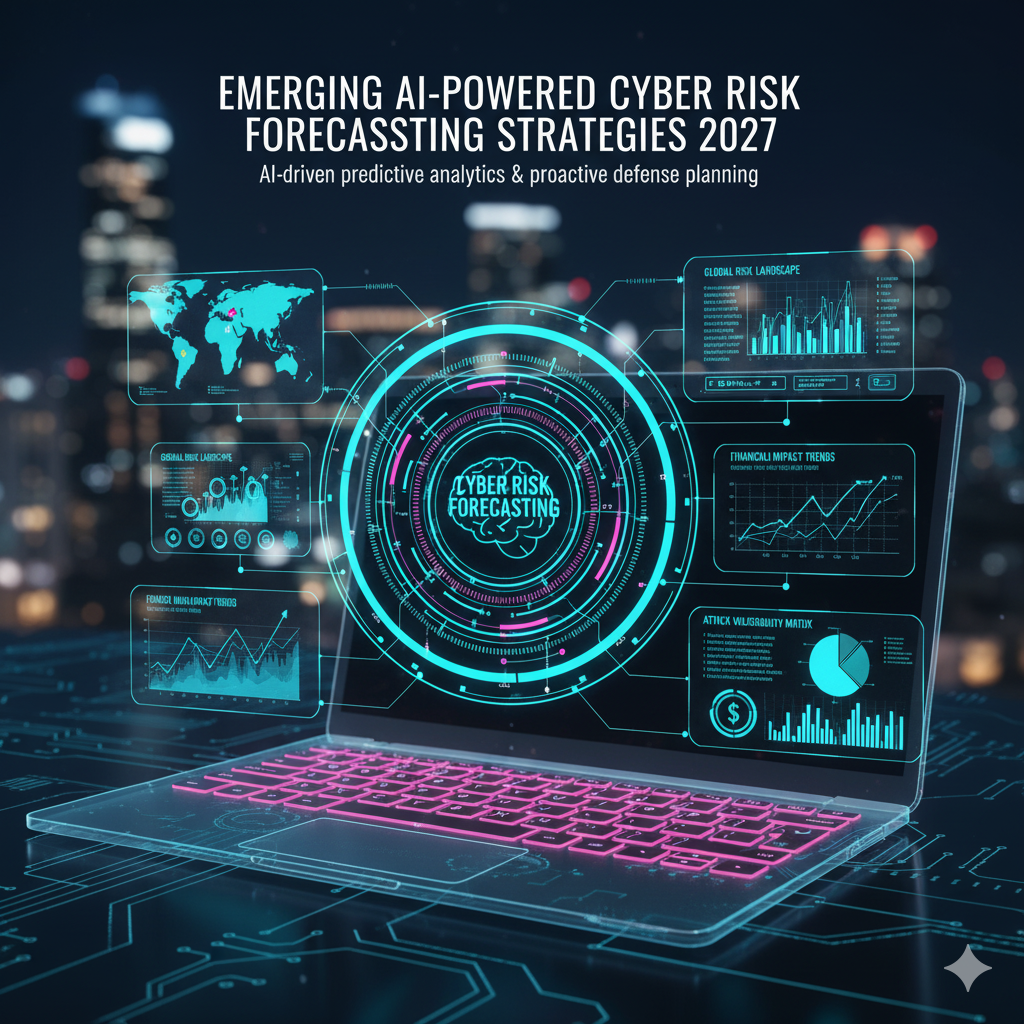
The global cybersecurity landscape in 2025 is defined by unprecedented scale, speed, and sophistication. Cyber threats have evolved beyond conventional tactics, adopting automation, artificial intelligence (AI), and polymorphic coding that allows them to adapt faster than most organizations can detect. With the increasing complexity of cloud-native ecosystems, IoT infrastructures, and hybrid networks, enterprises face a critical challenge in forecasting and preempting cyber risks before they escalate into crises. AI-powered Cyber Risk Forecasting has emerged as the cornerstone of this new defense paradigm. By analyzing patterns, anomalies, and contextual data from billions of network events, AI algorithms can predict vulnerabilities, evaluate potential attack vectors, and prioritize investments around emerging risks. These intelligent systems move beyond detection; they enable businesses to quantify, predict, and mitigate cyber risks with precision, speed, and foresight. Traditional cybersecurity strategies have largely been reactive, focusing on identifying and responding after attacks have occurred. In contrast, AI risk forecasting introduces continuous intelligence through predictive analytics, machine learning (ML), and automated modeling. This transformation revolutionizes how enterprises measure exposure, manage compliance, and build resilience. In 2025, organizations across sectors are embedding predictive AI into their security operations to anticipate events such as ransomware outbreaks, data breaches, and zero-day exploits weeks in advance. This capability allows leaders not only to maintain business continuity but also to stay compliant with rapidly evolving governance frameworks, at Informatix.Systems, we provide cutting-edge AI, Cloud, and DevOps solutions for enterprise digital transformation. Our AI-powered Cyber Risk Forecasting Frameworks empower enterprises with predictive analytics, automation, and threat modeling to transform defense strategies from reactive protection to preventive intelligence. This article explores the emerging AI-powered cyber risk forecasting strategies for 2025, outlining technologies, methodologies, and applications shaping the next era of predictive cybersecurity.
Understanding AI-Powered Cyber Risk Forecasting
What Is Cyber Risk Forecasting?
Cyber risk forecasting is the process of predicting the likelihood, impact, and trajectory of potential cyber threats using a combination of AI, ML, and statistical modeling. The objective is to anticipate risks before exploitation occurs and apply preventative measures across digital ecosystems.
Why AI Matters
Risk forecasting using AI enhances intelligence analysis by:
- Continuously learning from evolving threat data.
- Automating detection and response based on probabilistic outcomes.
- Quantifying risks into actionable insights.
- Predicting anomalies and attacks before their execution.
For modern enterprises, AI-powered risk forecasting is not an enhancement, it is an operational necessity.
The Importance of AI Forecasting in 2025 Cybersecurity Frameworks
By 2025, the digital landscape will be dominated by IoT devices, smart automation, and AI-driven technologies, expanding the attack surface exponentially.
Key Drivers for AI Cyber Forecasting:
- Global Cyber Escalation: Geopolitical instability fuels state-sponsored digital warfare.
- Data Explosion: With petabytes of daily network data, manual risk analysis is impossible.
- AI-Driven Threats: Attackers use adaptive ML for faster exploit generation.
- Financial Impact: Cybercrime costs are projected to reach $10.5 trillion annually.
- Regulatory Expansions: Compliance structures mandate transparency and predictive security.
AI forecasting helps enterprises achieve proactive risk awareness and regulatory compliance alignment in real time.
Core Technologies Enabling AI-Powered Cyber Forecasting
Machine Learning (ML)
ML algorithms underlie forecasting models, enabling systems to observe, learn, and improve from dynamic data patterns.
Predictive Analytics
Analyzes historical and real-time threat events to identify probable future exploits.
Natural Language Processing (NLP)
Extracts intelligence from global data sources, including social media, dark web, and unstructured reports.
Big Data Predictive Engines
Processes terabytes of data across cloud systems to recognize early indicators of compromise (IoCs).
Federated AI Models
Collaborative intelligence systems share threat learning across sectors while maintaining privacy and compliance. At Informatix.Systems, our AI cyber forecasting systems integrate these technologies to deliver accurate risk prediction and real-time mitigation strategies.
AI Forecasting Workflow: From Data to Prediction
- Data Ingestion: Collects logs, telemetry, and threat feeds across corporate and cloud environments.
- Feature Selection: Extracts attributes contributing to threat probability using ML algorithms.
- Pattern Recognition: AI identifies correlations and anomalies in behavior.
- Predictive Modeling: Training models estimate potential risks based on prior activity.
- Automated Response: Orchestrated actions proactively neutralize risks before escalation.
This process transforms cybersecurity into an intelligence-driven, automated ecosystem that continuously evolves.
Integration of AI Forecasting with SOC Operations
Security Operations Centers (SOCs) form the command hub of enterprise cybersecurity. Integrating AI risk forecasting reshapes SOC performance and strategy.
Benefits of AI-SOC Integration:
- Faster Detection: Forecasting shortens Mean Time to Detect (MTTD).
- Proactive Orchestration: Predictive playbooks automate countermeasures.
- Anomaly Tracking: Detects low-profile insider threats.
- Incident Correlation: Machine learning aggregates cross-layer threat intelligence.
At Informatix.Systems, our AI-powered SOC automation frameworks combine CTI (Cyber Threat Intelligence) and risk prediction tools for continuous monitoring and autonomous mitigation.
Predictive Intelligence and Business Risk Management
Traditional risk management often quantifies financial or operational threats, but cyber forecasting integrates technology risk into strategic planning.
Applications in Enterprise Risk Frameworks:
- Attack Probability Modeling: Predicts exploitation potential for vulnerabilities.
- Automated Risk Scoring: Assigns priority levels to cyber events.
- Business Continuity Forecasting: Simulates potential attack impacts on operations.
- Investment Optimization: AI-guided forecasts help allocate security budgets efficiently.
Predictive forecasting bridges the gap between technical defense and financial risk modeling, enabling holistic risk visibility.
Cloud-Native AI Forecasting Infrastructures
Cloud-native platforms deliver the scalability required for large-scale data analysis, especially across hybrid and multi-cloud ecosystems.
Core Capabilities:
- Elastic Processing: Expands analytics capacity for high-volume data ingestion.
- Cross-Cloud Visibility: Unifies monitoring across AWS, Azure, and private networks.
- Zero-Trust Enablement: Enforces continuous authentication and data validation.
- Compliance Automation: Real-time mapping of ISO 42001, NIST, and GDPR protocols.
At Informatix.Systems, we deploy cloud-native AI forecasting engines that combine security orchestration and autonomous analytics for enterprise-wide resilience.
DevSecOps Integration: Predictive Security in Development
DevSecOps ensures continuous security integration throughout application lifecycles. With AI forecasting, DevSecOps models evolve from prevention to anticipatory protection.
DevSecOps-CTI Integration Benefits:
- Predict potential vulnerabilities during code development.
- Forecast patch management timelines based on exploit likelihood.
- Automate compliance testing before deployment.
- Reduce release-cycle risks with real-time predictive security checks.
Predictive DevSecOps merges AI-driven defense intelligence into Agile workflows, strengthening software governance and security continuity.
The Role of Federated Learning in Collaborative Risk Forecasting
Federated AI networks allow multiple organizations to strengthen forecasting models collectively without sharing raw data.
Benefits of Federated AI Systems:
- Privacy Protection: Sensitive datasets remain localized.
- Shared Intelligence: Multi-sector threat learning accelerates model accuracy.
- Global Threat Detection: Real-time data exchange enhances attack prediction.
- Compliance Alignment: Efficiently meets legal and jurisdictional boundaries.
These collaborative AI ecosystems form the backbone of cross-industry intelligence infrastructure, creating global cyber resilience.
Ethical AI and Explainability in Cyber Forecasting
Importance of Ethical Governance
AI forecasting must balance protection with transparency, ensuring algorithms are governed ethically and explainable for auditors and decision-makers.
Best Practices Include:
- Training bias-free, representative datasets.
- Establishing transparent accountability protocols.
- Continuous AI performance audits and revalidation.
- Implementing Explainable AI (XAI) dashboards for decision traceability.
At Informatix.Systems, we design Explainable AI governance models that ensure compliance, accountability, and human oversight while maintaining automation efficiency.
Metrics to Measure Forecasting Efficiency
| Metric | Description | Importance |
|---|---|---|
| Prediction Accuracy (PA%) | Rate of correct cyber risk predictions. | Evaluates AI reliability. |
| False Positive Reduction (FPR) | Minimization of inaccurate alerts. | Increases SOC productivity. |
| Mean Time to Mitigate (MTTM) | Speed of orchestrated responses. | Reflects automation capacity. |
| Risk Prioritization Index (RPI) | Ranking threat severity based on impact potential. | Supports resource planning. |
| Compliance Consistency Index (CCI) | Tracks automation alignment with standards. | Proves governance efficiency. |
Tracking these KPIs ensures enterprises achieve measurable improvements in predictive defense effectiveness.
Key Challenges in AI Cyber Forecasting
- Data Integrity Risks: Poor-quality training data reduces prediction reliability.
- AI Bias: Skewed datasets can distort outcomes, leading to false intelligence.
- Adversarial AI Threats: Attackers train malware models to exploit AI vulnerabilities.
- Integration Costs: High computational demands increase infrastructure investments.
- Transparency Gaps: Black-box AI models raise compliance and explainability issues.
At Informatix.Systems, we overcome these challenges using federated learning, ethical AI governance frameworks, and high-performance cloud optimization to ensure both scalability and trust.
Future Outlook: Cyber Risk Forecasting Beyond 2025
- Quantum AI Security Forecasting: Next-gen AI defenses leveraging quantum algorithms for threat simulation.
- Self-Healing Autonomous Networks: AI-driven systems capable of predicting and repairing vulnerabilities in real time.
- Global Predictive Risk Exchanges: Federated platforms for cross-industry threat forecasts.
- Continuous AI-Oriented Governance: Integration of real-time auditing into AI compliance.
- Synthetic Threat Modeling: Simulation of hypothetical adversarial scenarios using generative AI.
The evolution of predictive AI will redefine cyber risk forecasting as a continuous, autonomous process spanning analytics, orchestration, and recovery.
Informatix.Systems: Leading the AI Cyber Risk Forecasting Revolution
At Informatix.Systems, we provide cutting-edge AI, Cloud, and DevOps solutions for enterprise digital transformation. Our AI-Powered Cyber Risk Forecasting Platforms merge predictive analytics, federated learning, and automation orchestration to empower enterprises to foresee and neutralize threats with unmatched accuracy.
Our Expertise Includes:
- AI-Driven Risk Intelligence Platforms
- Predictive SOC Automation and Forecasting Systems
- Cloud-Native Risk Analytics Frameworks
- Federated Threat Intelligence Networks
- Explainable AI and Governance Compliance Systems
We enable enterprises to convert data into decisions and foresight into security. By 2025, cybersecurity strategy will be defined by intelligence, not reaction. AI-powered cyber risk forecasting enables organizations to convert uncertainty into insight, empowering leaders to act before disruption. From autonomous SOCs to quantum-safe prediction models, the future of cybersecurity lies in self-learning systems capable of foreseeing risks with speed and precision. Adopting predictive intelligence ensures resilience, compliance, and trust in an era where digital transformation and cyber adversaries advance simultaneously. At Informatix.Systems, we drive this transformation through AI, Cloud, and DevOps solutions engineered for the next generation of cyber readiness. Predict tomorrow’s risks today with Informatix.Systems.
FAQs
What is AI-powered cyber risk forecasting?
It uses artificial intelligence and predictive analytics to anticipate cyber threats based on historical and real-time data trends.
How does AI improve risk forecasting?
AI and machine learning automate threat detection and probability modeling, providing insight into potential vulnerabilities before exploitation.
Why is risk forecasting essential for enterprises in 2025?
Predictive analytics allows organizations to reduce exposure, enhance resilience, and comply with stricter regulations.
Can risk forecasting integrate with existing security tools?
Yes, advanced AI systems integrate seamlessly with SIEM, SOAR, and cloud management platforms.
What industries benefit most from predictive cyber intelligence?
Finance, healthcare, government, and manufacturing gain the most due to their data-centric operations.
How does Informatix.Systems support AI risk forecasting?
We design cloud-native, AI-driven platforms that deliver predictive insights, automation, and compliance for enterprise risk mitigation.
What challenges accompany AI cyber forecasting?
Integration complexity, data privacy compliance, bias control, and compute cost management.
What’s next for AI in cybersecurity beyond 2025?
Emerging quantum-AI models, federated global defenses, and autonomous systems capable of continuous self-optimization.
No posts found
Write a review