- 3/8, North Pirerbag
- 60 Feet Main Road
- Mirpur, Dhaka 1216
- +880-967-8247365
- support@informatix.systems

Emerging Cloud-Native CTI Operations Strategies 2029
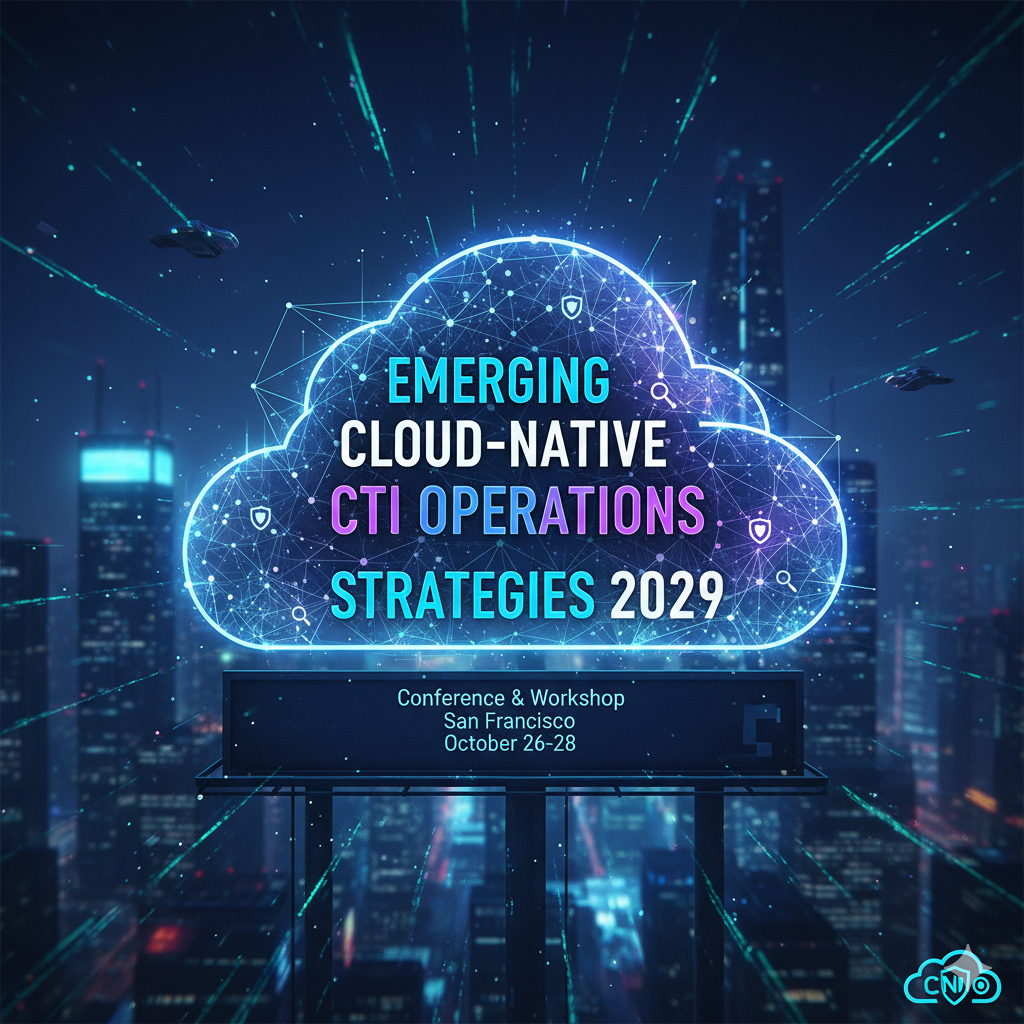
The digital transformation era has restructured enterprise security from isolated systems to interconnected, data-driven ecosystems. As organizations scale globally through hybrid and multi-cloud environments, their security visibility and control boundaries have evolved. By 2029, Cloud-Native Cyber Threat Intelligence (CTI) will stand at the forefront of enterprise defense, integrating automation, AI, and real-time threat collaboration into scalable cloud infrastructures. Cloud-native CTI operations bring flexibility, speed, and adaptive intelligence to modern businesses struggling to combat sophisticated threats. Unlike traditional on-premises CTI systems, cloud-native frameworks are built for distributed architectures where intelligence is collected, processed, and shared in real time across cloud environments. These models leverage containerization, microservices, and serverless computing to deliver continuous, predictive security that grows alongside the enterprise. Organizations now understand that security must evolve alongside digital architecture. The convergence of AI, Cloud, and DevOps technologies has turned the CTI field into a real-time, collaborative discipline where dynamic intelligence pipelines link SOC teams, automation tools, and predictive analytics engines. At Informatix.Systems, we provide cutting-edge AI, Cloud, and DevOps solutions for enterprise digital transformation. Our cloud-native CTI frameworks empower organizations to shift from reactive defense to autonomous resilience, scaling threat intelligence at cloud speed. This article explores Emerging Cloud-Native CTI Operations Strategies for 2029, outlining how enterprises can harness cloud innovation to enhance security agility, predict upcoming attacks, and orchestrate proactive defenses in a data-driven world.
Understanding Cloud-Native Cyber Threat Intelligence
What Is Cloud-Native CTI?
Cloud-native Cyber Threat Intelligence (CTI) is an intelligence-driven ecosystem designed to collect, analyze, and share threat data directly from cloud-native environments. It focuses on predictive, automated, and distributed intelligence workflows that adapt to the cloud’s dynamic nature.
Core Features:
- Real-time integration with AWS, Azure, and Google Cloud
- Containerized microservices for flexible deployment
- Machine learning algorithms for behavioral threat analysis
- Continuous intelligence streaming via APIs and SIEMs
- Federated data-sharing frameworks between enterprises
Why Cloud-Nativity Matters
Traditional CTI systems rely on static infrastructures. In contrast, cloud-native CTI thrives on elastic scalability, automation, and collaboration essential for handling today’s rapidly mutating cyber threat landscape.
Key Benefits of Cloud-Native CTI Operations
Scalability and Flexibility
Leverages the elasticity of the cloud to automatically expand computing resources for massive threat intelligence workloads.
Real-Time Intelligence Delivery
Instantaneous data correlation ensures faster identification and prioritization of high-risk incidents.
Integration and Automation
Cloud-native CTI platforms seamlessly integrate with SOAR, SIEM, and DevOps workflows, automating analysis and response.
Global Threat Collaboration
Facilitates multi-region intelligence sharing through secure cloud data fabrics and federated learning models.
Cost and Resource Efficiency
Reduces infrastructure costs by employing pay-per-use cloud models that scale dynamically with cyber demand. In 2029, cloud-native CTI operations redefine agility, insight, and automation as the foundation of proactive digital security.
Core Components of Cloud-Native CTI Frameworks
AI-Augmented Intelligence Pipelines
Artificial Intelligence automates key intelligence stages, including collection, correlation, and contextual analysis across distributed cloud networks.
API-Driven Data Fusion
API integrations unify heterogeneous data sources like OSINT, threat feeds, network telemetry, and cloud configuration logs.
Microservices and Containers
Containerized CTI modules deliver elasticity and portability across hybrid environments while ensuring continuous uptime.
Threat Hunting and Forensics Automation
Built-in automation workflows identify anomalies, trigger predictive alerts, and initiate evidence collection across cloud resources.
Zero-Trust Architecture Foundation
Integrates identity-centric access controls and segmentation for intelligence data governance. These core functions enable organizations to respond smarter, faster, and globally through decentralized yet cohesive intelligence ecosystems.
Emerging Cloud-Native CTI Strategies for 2029
Federated Threat Intelligence Networks
Creates shared, privacy-preserving AI models across industries to strengthen global risk insight.
Predictive CTI Automation
Uses ML algorithms to forecast emerging risks and automate preventive countermeasures before incidents unfold.
CI/CD Integration for CTI Pipelines
Incorporates CTI development within DevOps, ensuring vulnerabilities are identified and mitigated pre-deployment.
Cloud-Native Threat Simulation
AI-run digital twins replicate live enterprise environments to simulate attack vectors and validate defenses.
Cognitive Intelligence Layer
Integrates Natural Language Processing (NLP) to interpret unstructured dark web and geopolitical threat data. Each strategy aligns intelligence automation with hybrid cloud agility, ensuring cross-regional industrial resilience.
Integration of CTI with SOC and DevSecOps
A Unified Security Fabric
Cloud-native CTI merges with Security Operations Centers (SOCs) to deliver continuous insights into threat landscapes, enabling autonomous protection and incident orchestration.
Continuous Monitoring through DevSecOps
Integrating CTI with DevSecOps ensures every software iteration is threat-proof, empowering continuous compliance and risk mitigation.
Benefits of Integration:
- Dynamic patch management through real-time CTI updates
- Automated attack response via DevOps pipelines
- End-to-end security visibility from code to production
At Informatix.Systems, our Cloud SOC and DevSecOps frameworks bridge intelligence, speed, and automation, optimizing operational cybersecurity efficiency.
Data Analytics and Machine Learning in Cloud CTI Operations
Predictive Threat Modeling
Machine learning algorithms analyze behavioral patterns, predict future compromise events, and identify zero-day vulnerabilities ahead of publication.
Deep Learning for Anomaly Detection
Neural networks detect micro-deviations in API calls, cloud traffic, or access logs, tackling polymorphic or obfuscated attacks.
Federated Machine Learning
Combines intelligence from multiple organizations without centralizing data, enhancing precision while maintaining privacy. These AI-empowered models transform raw cloud data into actionable threat foresight at near-instant speed.
Cloud-Native CTI Architecture: A Technical Overview
Data Collection Layer
Integrates telemetry, firewalls, and SaaS applications for all-source intelligence ingestion.
Analysis Layer
AI-driven engines conduct data normalization, enrichment, and correlation to produce contextual insights.
Orchestration and Automation Layer
Automates communication between CTI solutions, SOCs, incident response tools, and compliance systems.
Visualization and Reporting Layer
Real-time dashboards and analytics present prioritized insights for decision-makers.This architecture ensures continuous detection, prediction, and protection in shifting enterprise environments.
Examples of Cloud-Native CTI Applications
Financial Sector
Detects fraudulent transactions and crypto laundering risks by mapping blockchain anomalies.
Government and Defense
Aggregates intelligence from diverse sources to predict nation-state attacks and espionage attempts.
Healthcare
Uses machine learning to secure cloud-hosted patient records and monitor ransomware behavior.
Energy Sector
Monitors industrial IoT network patterns and predicts disruptions across smart grids. Industry adoption of cloud-native CTI platforms creates a unified intelligence-driven global cybersecurity ecosystem.
Challenges Facing Cloud-Native CTI Adoption
- Data Sovereignty: Cloud-hosted threat data must comply with multi-regional legal frameworks.
- Cost Complexity: Initial deployment requires investment in skilled professionals and scalable architectures.
- Ethical AI Concerns: Models must ensure fairness and transparency while processing sensitive threat data.
- Integration with Legacy Systems: Bridging legacy and cloud-native CTI remains a primary challenge for traditional enterprises.
- Cloud Misconfiguration Risks: Automated intelligence pipelines must ensure baseline security of virtual assets.
At Informatix.Systems, we address these challenges through cloud governance frameworks and secure data orchestration models, ensuring compliance and transparency.
Future Directions: CTI Operations Beyond 2029
- Quantum-Ready CTI Frameworks: Future systems will integrate quantum-resilient encryption models.
- Autonomous Cloud Intelligence Agents: Decentralized AI systems will autonomously collect and share threat intelligence.
- Global Data Mesh for CTI Collaboration: Industry-spanning architectures promoting secure, multi-cloud CTI exchange.
- Cognitive Graph Intelligence (CGI): Unifying structured and unstructured data visualization into context-aware intelligence.
- AI-Augmented Decision Engines: Predictive AI co-pilots for human analysts, improving accuracy and strategic response rates.
By 2030, cloud-native CTI operations will form the backbone of global digital trust.
Informatix.Systems: Accelerating Cloud-Native Intelligence Transformation
At Informatix.Systems, we provide cutting-edge AI, Cloud, and DevOps solutions for enterprise digital transformation. Our Cloud-Native CTI platforms integrate predictive analytics, federated learning, and automated orchestration for scalable and resilient cyber defense.
Our Key Expertise Includes:
- Cloud-native threat detection and prevention ecosystems
- Predictive AI integration into SOC environments
- Multi-cloud orchestration for intelligence pipelines
- DevOps and CI/CD security automation
- Compliance-aligned federated intelligence sharing models
We empower organizations to modernize their operational security frameworks, bridging automation, intelligence, and resilience across every cloud layer. The evolution toward cloud-native CTI operations represents a defining moment in global cybersecurity. As infrastructures expand beyond physical perimeters, enterprises that adopt cloud-first intelligence models will gain the capability to predict, detect, and mitigate threats before they fully materialize.Informatix.Systems leads this transformation by integrating AI-driven intelligence, predictive modeling, and automated security controls into every stage of enterprise defense. Through continuous innovation and automation, we help businesses secure their cloud-driven futures. Predict intelligently. Automate seamlessly. Secure globally with Informatix.Systems.
FAQs
What is cloud-native CTI?
It refers to threat intelligence frameworks designed for cloud environments using AI, automation, and scalable cloud architecture.
How does cloud-native CTI differ from traditional CTI?
Traditional CTI relies on static on-premises systems, while cloud-native CTI dynamically adapts, scales, and automates intelligence across distributed environments.
Why are cloud-native CTI operations essential in 2029?
They deliver real-time threat prediction, compliance automation, and cost-effective defense aligned with global business digitization.
How is AI used in cloud-native CTI?
AI enhances automation, identifies patterns in massive datasets, and predicts attacks through behavioral analytics.
Can CTI be integrated with SOC automation?
Yes. Cloud-native CTI easily integrates with SOC, SIEM, and SOAR tools to automate the full threat life cycle.
What industries benefit most from cloud-native CTI?
Finance, healthcare, energy, government, and e-commerce sectors benefit due to dynamic and highly sensitive cloud-driven data.
How does Informatix.Systems enhance enterprise CTI?
We deliver AI-augmented, cloud-native intelligence platforms designed to automate operations, ensure compliance, and strengthen predictive resilience.
What is the future of CTI operations beyond 2029?
Autonomous AI agents, quantum-ready defense models, and federated global collaboration will redefine intelligence ecosystems by 2030.
No posts found
Write a review