Anmelden | Registrieren
Sign in to get more opportunities
- 3/8, North Pirerbag
- 60 Feet Main Road
- Mirpur, Dhaka 1216
- +880-967-8247365
- support@informatix.systems

Emerging Future of Ransomware Intelligence Strategies 2028
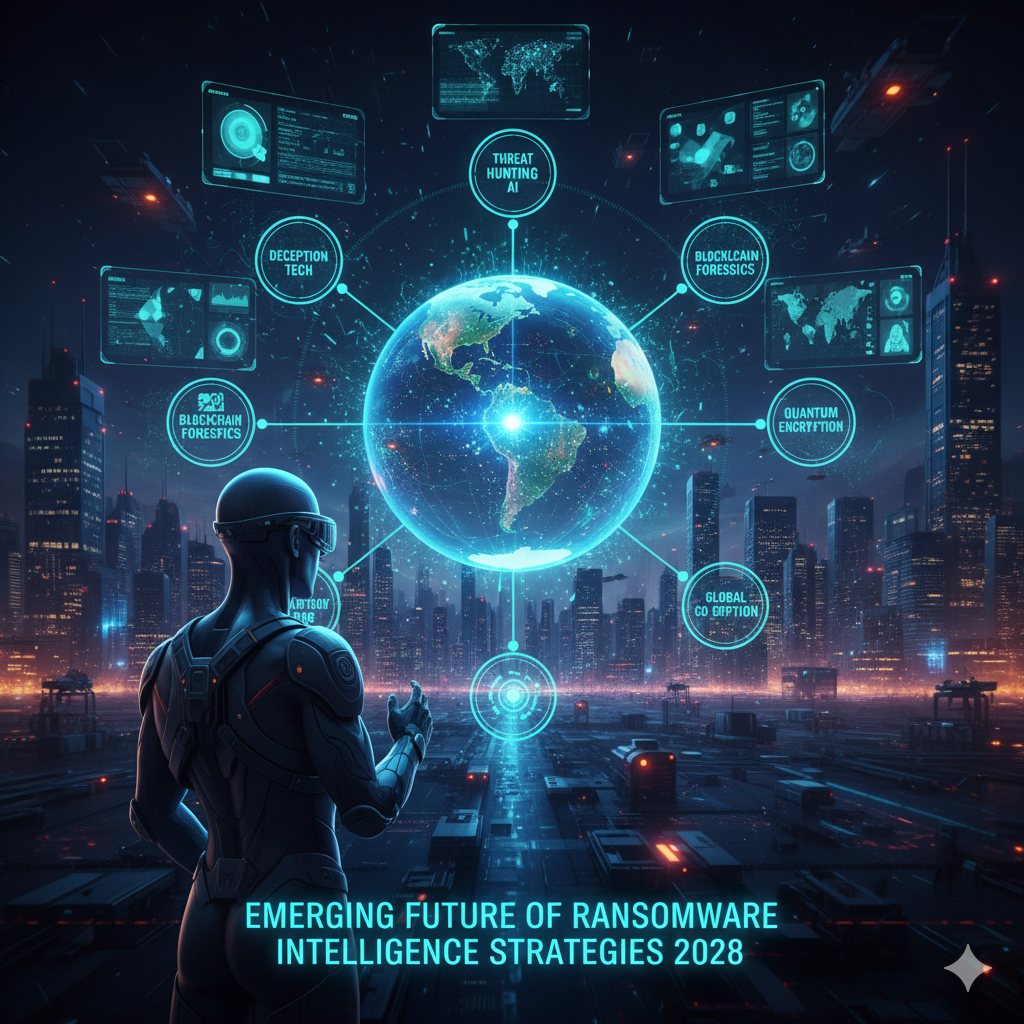
In the global cybersecurity ecosystem of 2028, ransomware continues to evolve as one of the most devastating and profitable forms of cyber extortion. Its sophistication—enhanced by automation, Artificial Intelligence (AI), and global cybercrime collaboration—has transformed ransomware from isolated malware incidents into coordinated, multi-layered ransomware-as-a-service (RaaS) ecosystems. The cost of ransomware attacks now extends beyond financial losses, impacting digital trust, brand reputation, and national resilience.
Enter Ransomware Intelligence (RWI)—a predictive, data-driven discipline that combines artificial intelligence, behavioral analytics, and deep threat correlation to detect, forecast, and neutralize ransomware before execution. While legacy defense methods relied on reactive detection, new intelligence strategies use automation and AI to understand adversarial behavior, assess vulnerabilities, and implement anticipatory countermeasures at scale.
By 2028, ransomware prevention no longer means simply blocking a signature. It requires behavioral interpretation, cloud-native orchestration, and predictive intelligence to disrupt attack lifecycles proactively. From adaptive encryption analysis to AI-enabled dark web surveillance, emerging RWI strategies have reshaped how enterprises stay ahead of ransomware innovation.
At Informatix.Systems, we provide cutting-edge AI, Cloud, and DevOps solutions for enterprise digital transformation. Our ransomware intelligence frameworks combine Machine Learning (ML), threat analytics, and automation orchestration to deliver predictive, autonomous defense capable of learning faster than the threat actors it protects against.
This comprehensive article explores the emerging future of ransomware intelligence strategies in 2028—technologies, architectures, and methodologies that empower global businesses to anticipate, mitigate, and recover from ransomware with resilience.
Ransomware in 2028: The Next Cyber Battlefield
Ransomware attacks in 2028 are more organized, distributed, and automated than ever before. They leverage AI models to bypass traditional defense mechanisms.
Key Characteristics
- AI-Driven Payloads: Adaptive ransomware dynamically modifies its code during infiltration.
- Double and Triple Extortion Tactics: Attackers demand payment for decryption, prevention of data leaks, and even non-disclosure of victim identity.
- Autonomous Propagation: Worm-like malware moves across hybrid infrastructures autonomously.
- Cloud and API Exploitation: Targeting federated cloud connectors and SaaS supply chains.
- Data Exfiltration Intelligence: Prioritizes critical enterprise data for maximum leverage.
Traditional models fail to address these shifts, driving the need for Ransomware Intelligence as a Service (RWIaaS)—a cloud-integrated predictive intelligence infrastructure for enterprise defense.
The Rise of Ransomware Intelligence (RWI)
Ransomware Intelligence (RWI) is the process of collecting, analyzing, and forecasting ransomware behaviors to enable proactive defense planning.
Core Objectives of RWI
- Prediction: Using AI to forecast the probability and form of ransomware operations.
- Prevention: Blocking attack vectors through automation, policy reinforcement, and deception.
- Correlation: Connecting indicators of compromise (IoCs) across multi-layer datasets.
- Resilience: Ensuring backup integrity and operational continuity during post-attack recovery.
At Informatix.Systems, we align RWI with AI analytics, SOC automation, and machine learning algorithms, transforming static network defense into a continuous learning ecosystem.
AI and Machine Learning in Ransomware Defense
AI and ML redefine ransomware defense by analyzing abnormal patterns instead of known malware signatures.
Key AI-Powered Capabilities
- Anomaly Detection: Identifies file encryption events and lateral movement in real time.
- Behavior Prediction: AI anticipates ransomware pre-stages by analyzing system commands and memory processes.
- Deep Reinforcement Learning (DRL): Learns from evolving threats to automate prevention.
- NLP for Threat Monitoring: Interprets dark web chatter for intelligence on upcoming ransomware campaigns.
- Adversarial AI Countermeasures: Detects AI-generated ransomware using generative models.
Informatix.Systems’ AI frameworks use predictive deep learning models that adapt autonomously, reducing ransomware incident response times by over 70%.
Predictive Analytics and Behavioral Modeling
The Role of Predictive Analytics
Predictive analytics aggregates telemetry data across cloud, endpoint, and network sources. It provides a risk-oriented perspective on where ransomware may strike next.
Core Predictive Techniques
- Time-Series Forecasting: Identifies repetition patterns in ransomware deployment.
- Attacker Profiling: Predicts attack toolsets and geolocated patterns.
- Behavioral Deviation Monitoring: Detects shifts in data access thresholds.
- Threat Correlation Graphs: Connects known ransomware families with upcoming variants.
Behavioral modeling allows enterprises to understand not just how ransomware happens—but why, when, and where.
The Cloud-Native RWI Architecture
By 2028, ransomware defense has moved to cloud-native predictive ecosystems capable of cross-platform coordination.
Key Components
- Data Collection Layer: Logs from endpoints, mail servers, and dark web dashboards.
- AI Intelligence Layer: Real-time analytics to recognize attack precursors and payload delivery.
- Automation and Response Layer: Immediate containment through quarantining and decryption modeling.
- Visualization Layer: Central dashboards for threat status, risk scoring, and response health.
At Informatix.Systems, we build cloud-native ransomware detection pipelines that integrate seamlessly into DevSecOps architectures—providing continuous, adaptive protection.
Dark Web and Threat Intelligence Integration
The dark web is the intelligence nerve center for ransomware operations. AI crawling tools constantly monitor these spaces to reveal critical indicators.
RWI Intelligence Sources
- Ransomware Marketplace Surveillance: Detecting new RaaS affiliate listings.
- Leaked Target Lists: Identifying sectors under planned attack.
- Cryptocurrency Forensics: Tracking ransom payments and wallets through blockchain analytics.
- AI Chatbot Monitoring: Detecting criminal communication threads promising exploit campaigns.
At Informatix.Systems, we deploy Dark Web AI Agents feeding contextual intelligence directly into our cloud-native security orchestration layer.
SOC Automation and Incident Response Evolution
SOC teams in 2028 increasingly depend on Ransomware-Aware Security Orchestration, Automation, and Response (SOAR) frameworks.
SOC 2.0 Capabilities for Ransomware Defense
- Automated Containment: Quarantines infected machines instantly.
- Predictive Hunting: AI identifies indicators before encryption execution.
- Forensic Orchestration: AI collects digital evidence automatically for compliance.
- Autonomous Remediation: Neural threat models trigger proactive system restoration.
At Informatix.Systems, our intelligent SOC integration ensures full-cycle ransomware prediction, detection, and recovery across hybrid infrastructure.
Data Integrity and Quantum-Resilient Encryption
Ransomware’s success relies on corrupting or controlling data encryption itself. Future-proof defense relies on quantum-resilient techniques and immutable storage protection.
Innovations in 2028
- Quantum-Safe Cryptography: Resistant algorithms safeguarding healthcare and financial data.
- Immutable Backup Vaults: AI verifies integrity and isolation.
- Blockchain Validation: Smart contracts ensure tamper-proof encryption logs.
- Post-Breach Recovery Models: Predictive backups rebuilt through version history analysis.
AI validation ensures data immutability, protecting recovery assets from encryption manipulation.
Ethics, Governance, and Compliance in AI-Driven Defense
Ransomware intelligence must align predictive actions with ethical governance standards to ensure privacy preservation and lawful operations.
Key Governance Frameworks
- Explainable AI (XAI): Human-auditable prediction logic.
- AICDS 2028: Regulating global AI-assisted cybersecurity.
- Automated Privacy Controls: Data segmentation using federated AI.
- Regulatory Alignment: Ensures GDPR++, DORA+, and HIPAA++ compliance.
At Informatix.Systems, our AI defense models operate within transparent governance structures, ensuring accountability alongside intelligence.
Building Resilience: The Human-AI Collaboration
Despite automation’s rise, human oversight remains essential for interpreting contextual anomalies.
Collaborative Intelligence Model
- AI Augmentation: AI identifies, humans interpret.
- Gamified Learning Environments: AI simulation exercises for human training.
- Feedback Integration: Analysts refine model accuracy post-response.
- Ethical Oversight Panels: Supervising red-teaming and AI escalation triggers.
Informatix.Systems unites cognitive systems with expert analysts, delivering a seamless collaboration between automation and accountability.
Future Outlook: Autonomous AI Cyber Defense by 2030
By the early 2030s, ransomware intelligence will evolve into fully autonomous, cognitive defense systems.
Visionary Trends
- AI-Generated Honeypots: Trap ransomware bots through synthetic bait networks.
- Neuro-Swarm Automation: AI agents coordinate across global enterprise perimeters.
- Generative Simulation Engines: Create ransomware replicas to train predictions.
- Quantum Cyber Forensics: Using quantum computing to trace source chain-of-attack reconstruction.
At Informatix.Systems, we are pioneering AI orchestration platforms that shift cybersecurity from reaction to intelligent prevention.
The ransomware era demands predictive precision, adaptable automation, and collective intelligence. By 2028, AI-powered ransomware intelligence will define global cyber readiness, enhancing fraud prevention, incident response, and strategic foresight.At Informatix.Systems, we deliver AI, Cloud, and DevOps-integrated cyber resilience frameworks that protect data, maintain compliance, and ensure operational continuity.In the future of ransomware defense—anticipation is survival, and intelligence is the new perimeter.
FAQ
What is Ransomware Intelligence (RWI)?
Ransomware Intelligence uses AI and analytics to predict, monitor, and prevent ransomware by analyzing behaviors across global cyber ecosystems.
How does AI improve ransomware detection?
AI detects anomalies and attack precursors faster than human-led analysis, providing early-stage detection and containment.
What are the dominant ransomware trends of 2028
AI-enhanced malware, cloud compromise, data extortion layers, and quantum-based encryption manipulation
How does predictive analytics support ransomware defense?
Predictive models forecast attack likelihood and identify weak network areas before infiltration.
Why is governance important in AI defense?
Transparent, explainable AI ensures compliance and prevents autonomous systems from compromising ethics or privacy.
Can ransomware be prevented entirely?
While prevention is challenging, AI forecasting and automation significantly reduce the probability and damage potential of attacks.
What role does Informatix.Systems play in ransomware defense?
We design AI-powered, cloud-native ransomware intelligence systems that predict, prevent, and mitigate ransomware across enterprise-level networks.
What is the next innovation in ransomware defense post-2028?
Fully autonomous cognitive SOCs, quantum-safe encryption standards, and self-healing data infrastructures will define the next generation of defense.
Keine Beiträge gefunden.
Rezension verfassen