- 3/8, North Pirerbag
- 60 Feet Main Road
- Mirpur, Dhaka 1216
- +880-967-8247365
- support@informatix.systems

Emerging Machine Learning in Threat Prediction Strategies 2026
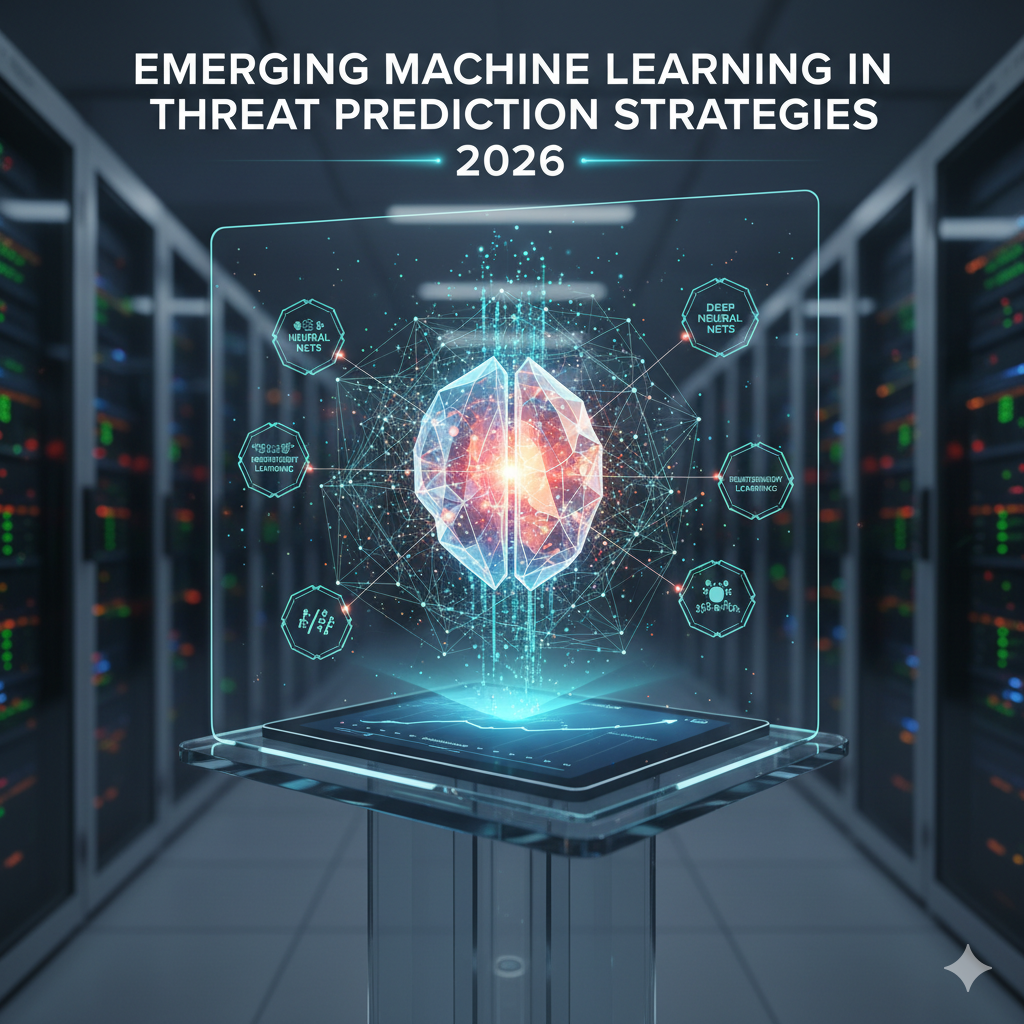
The cybersecurity landscape is entering a historic inflection point as machine learning (ML) transforms threat prediction and prevention dynamics. By 2026, cyberattacks are expected to surpass previous records, driven by highly automated and adaptive tactics powered by artificial intelligence (AI). Traditional perimeter-based security and reactive defense models can no longer keep pace with evolving threat actors, leaving enterprises vulnerable to advanced persistent threats (APTs), zero-day exploits, and polymorphic malware. Machine learning introduces unprecedented capability to predict, preempt, and neutralize security threats before they inflict damage. By continually learning from historical data, behavioral patterns, and contextual indicators, ML models can identify subtle digital anomalies that humans and traditional systems often miss. At Informatix.Systems, we provide cutting-edge AI, Cloud, and DevOps solutions for enterprise digital transformation, including predictive cybersecurity initiatives that intelligently integrate machine learning into every layer of digital defense. Our commitment aligns with global cybersecurity priorities for 2026: proactive risk mitigation, real-time analytics, and autonomous threat response. This article explores how emerging machine learning technologies are redefining threat prediction strategies for the enterprise world in 2026, from advanced model architectures and data-driven threat intelligence to strategic implementations that empower organizations to secure their digital foundations.
The Rise of Machine Learning in Threat Prediction
From Reactive to Predictive Cybersecurity
Historically, cybersecurity relied heavily on signature-based detection. While effective against known attacks, it failed to anticipate unknown or emerging threats. Machine learning brings a paradigm shift, moving beyond detection to prediction by identifying risk indicators before exploitation occurs.
How ML Bridges Gaps in Traditional Security Models
- Learns from large-scale attack datasets
- Detects nonlinear threat patterns
- Automates anomaly recognition
- Continuously evolves as threats adapt
Statistical Advantage of Machine Learning Models
Modern ML frameworks such as Random Forests, Neural Networks, and Graph Convolutional Models significantly increase detection accuracy by analyzing millions of signals per second, reducing false positives and improving mean time to detect (MTTD) by over 40%.
Key Machine Learning Models Shaping Threat Prediction 2026
Supervised Learning for Signature Augmentation
Supervised ML models can classify threats based on labeled historical data — enabling automated updates to threat intelligence databases with greater precision.
Unsupervised Learning for Anomaly Detection
At Informatix.Systems, we implement unsupervised clustering algorithms that pinpoint out-of-pattern network activity, identifying shadow IT devices, hidden payloads, and lateral movements before compromise.
Reinforcement Learning for Adaptive Cyber Defense
Reinforcement learning agents simulate attacker-defender scenarios to improve defensive strategies, dynamically making it possible to anticipate evolving adversarial behaviors in real time.
Deep Learning for Contextual Threat Analysis
Deep Neural Networks (DNNs) analyze rich data layers: user behavior analytics (UBA), endpoint telemetry, and network metadata. This holistic approach empowers SOC analysts to interpret contextually aware security insights.
Data: The Core of Predictive Threat Intelligence
Big Data as a Security Enabler
Data serves as the "fuel" that powers every machine learning-driven defense ecosystem. Enterprise networks generate terabytes of logs daily, representing valuable intelligence for training ML models.
Critical Data Sources for Training
- Endpoint sensor data
- Firewall and proxy logs
- User authentication patterns
- Application and process telemetry
- External threat feeds and darknet intelligence
Data Governance and Quality Assurance
At Informatix.Systems, we emphasize regulatory-compliant data pipelines with strict privacy protocols. Proper data labeling, feature engineering, and bias mitigation directly influence model reliability.
Real-Time Threat Prediction Platforms
Cloud-Native ML Security Platforms
Cloud-based infrastructures empower agile deployment of ML-driven threat detection systems. Containerized architectures provide scalability for real-time analytics.
Integrating ML into SIEM and SOAR
By embedding ML layers within Security Information and Event Management (SIEM) and Security Orchestration, Automation, and Response (SOAR) platforms, Informatix.Systems enable predictive insights that feed automated playbooks.
Predictive Scoring and Continuous Monitoring
Each digital asset receives a dynamic risk score powered by ML algorithms. This continuous scoring model predicts failure points and strengthens proactive defense postures.
Applications of ML in Cyber Threat Intelligence (CTI)
Predicting Emerging Attack Campaigns
Forecasting future threat actor activities based on correlated behaviors in underground forums and malware repositories.
Automating Vulnerability Analysis
ML can identify exploitable system components before attackers do, reducing patching lag by predicting potential exploit paths.
Enhancing Incident Response Readiness
Automated incident scoring and contextual correlation reduce analyst fatigue, prioritizing high-severity events for immediate action.
Augmenting Human Analysts
Machine learning acts as a digital co-analyst, augmenting human capability with automation speed while retaining expert oversight.
ML-Driven Behavioral Analytics
Understanding User and Entity Behavior Analytics (UEBA)
UEBA platforms enhanced by ML detect deviations in identity use, login timing, and resource access, flagging potential insider threats or compromised credentials.
Behavioral Baselines
Each user or device maintains an adaptive behavioral profile that self-updates as legitimate patterns evolve.
Detecting Subtle Malicious Behaviors
- Credential sharing
- Account privilege misuse
- Lateral movement in internal networks
- Cloud account impersonation
Informatix.Systems Implementation Example
Our Informatix ML Security Framework utilizes federated learning and encryption-preserving analytics to deliver behavioral analysis with high privacy integrity.
Adversarial Machine Learning and Defense Strategies
The Rise of Adversarial AI
Attackers are leveraging adversarial AI to deceive ML models through data poisoning and evasion techniques.
Defensive Counter-Measures
- Model hardening
- Adversarial training loops
- Gradient masking
- Continuous input sanitization
Informatix.Systems’ Resilient AI Framework
We incorporate explainable AI (XAI) and adversarial robustness scoring into enterprise models to maintain stability even under manipulative attacks.
Machine Learning Ethics and Governance in Security
Responsible ML Implementation
Ethical AI ensures decision fairness, data privacy, and accountability fundamental for trust in enterprise environments.
Compliance Frameworks
ML threat prediction must align with global standards such as GDPR, ISO 27001, and NIST AI Risk Management Framework (AI RMF 1.0).
Informatix.Systems’ Commitment
We enforce governance policies ensuring bias auditing, data minimization, and traceable model decisioning.
Future Trends: ML-Enhanced Threat Prediction by 2026
Predictive Quantum-Ready Models
Quantum-enhanced ML algorithms will process complex cryptographic scenarios faster, improving intrusion anticipation mechanisms.
Autonomous Cyber Agents
AI-driven security bots leveraging reinforcement learning will autonomously execute containment tasks without human initiation.
Zero-Trust Meets Predictive AI
Integration of ML-enabled zero-trust architectures will make implicit trust obsolete, continuously validating access behaviors.
Federated Cyber Intelligence Sharing
Multi-enterprise collaboration networks powered by ML will share anonymized threat intelligence while respecting privacy laws.
Implementing ML Threat Prediction in Your Enterprise
Strategic Readiness Assessment
Before ML adoption, assess current infrastructure maturity, data readiness, and cybersecurity workforce capabilities.
Developing a Pilot Framework
Start with controlled environments, integrating small-scale ML models that gradually expand across organizational systems.
Building Cross-Functional Teams
Combine cybersecurity analysts, data scientists, and DevOps engineers to co-build predictive frameworks.
Partnering with Informatix.Systems
At Informatix.Systems, we help global enterprises implement adaptive ML threat prediction models that scale securely across hybrid environments.
Our approach includes:
- AI model training with enterprise data sets
- Automated pipeline orchestration
- 24/7 behavioral analytics monitoring
- Compliance and data protection alignment
As 2026 approaches, machine learning stands as the cornerstone of next-generation threat prediction. Enterprises that adopt proactive, predictive frameworks powered by ML will establish resilient cyber postures capable of mitigating complex attacks before escalation. Organizations must invest in ethical AI frameworks, real-time analytics, and interdisciplinary collaboration to unlock full ML-driven cybersecurity potential. At Informatix.Systems, we deliver future-proof AI, Cloud, and DevOps solutions that enable enterprises to anticipate, defend, and transform their digital future. The time to act is now. Transform your cybersecurity operations from reactive defense to intelligent prevention.
FAQs
What is machine learning in threat prediction?
Machine learning applies pattern recognition algorithms to anticipate cyber threats before they occur by analyzing network behaviors and data anomalies.
How does ML improve cybersecurity efficiency?
By automating detection and reducing manual workload, ML shortens detection-to-response times and enhances the accuracy of threat alerts.
Are ML threat prediction systems expensive to implement?
Initial adoption costs vary, but ML-driven automation reduces long-term operational expenses through efficiency and early detection benefits.
How is reinforcement learning used in cyber defense?
It simulates attacker-defender dynamics to refine predictive responses, developing adaptive and autonomous defense strategies.
What industries benefit most from ML-based security?
Finance, healthcare, government, and e-commerce sectors see the greatest value due to sensitive data and complex IT infrastructures.
How does Informatix Systems support ML threat prediction deployment?
Our team offers full-cycle implementation from AI architecture design to post-deployment monitoring within secure, compliant environments.
What is adversarial AI in cybersecurity?
It refers to techniques where attackers manipulate data inputs to deceive ML models. Defensive adversarial training helps neutralize such risks.
How can enterprises ensure ethical ML in cybersecurity?
By applying transparent algorithms, bias controls, and compliance-driven governance frameworks aligned with global data protection regulations.
No posts found
Write a review