- 3/8, North Pirerbag
- 60 Feet Main Road
- Mirpur, Dhaka 1216
- +880-967-8247365
- support@informatix.systems

Emerging Next-Gen Threat Intelligence Platforms Strategies 2025
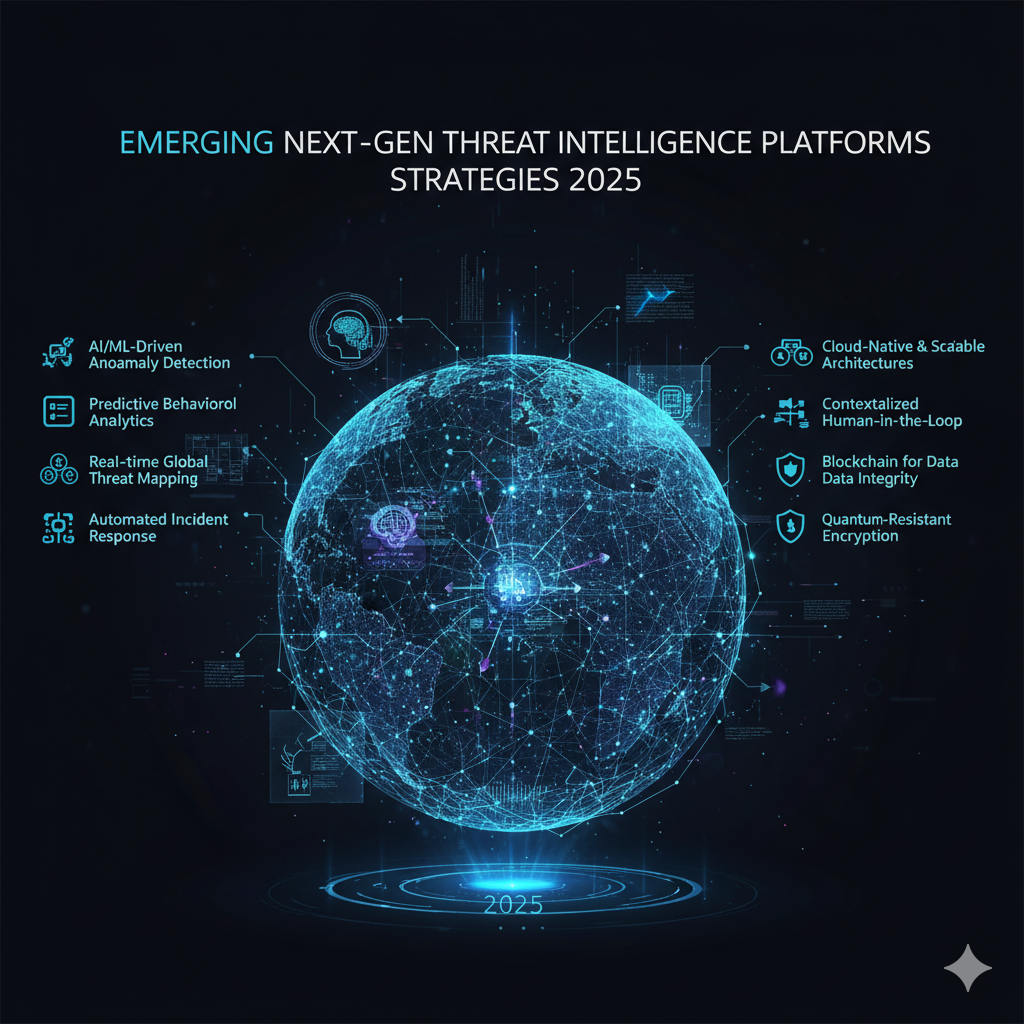
By 2025, the threat intelligence ecosystem will have undergone a complete transformation. With the rapid digitalization of industries, enterprises face an overwhelming amount of data generated across hybrid infrastructures, cloud architectures, IoT devices, and AI-powered systems. This ever-growing digital ecosystem has also amplified the attack surface, creating fertile ground for advanced and automated threat campaigns. To safeguard enterprises in this new landscape, the industry’s focus has shifted from reactive detection to proactive, data-driven threat intelligence. Traditional systems can no longer provide timely or actionable insights amidst the tsunami of cybersecurity telemetry. Thus, organizations are turning to Next-Generation Threat Intelligence Platforms (NGTIPs) powered by artificial intelligence (AI), machine learning (ML), and automation frameworks capable of transforming raw data into real-time defense strategies. Next-gen platforms leverage predictive analytics, automation, and federated cyber intelligence to anticipate attacks before they happen. They integrate seamlessly into enterprise Cloud, DevOps, and SOC (Security Operations Center) workflows, aligning defense strategies with operational agility. By 2025, these platforms will have become the nerve centers of modern cybersecurity, enabling end-to-end intelligence collection, analysis, and orchestration. At Informatix.Systems, we provide cutting-edge AI, Cloud, and DevOps solutions for enterprise digital transformation. Our Next-Gen Cyber Threat Intelligence Platforms combine advanced analytics, real-time orchestration, and federated AI networks to help organizations shift from reactive protection to intelligent prevention. This article explores the emerging strategies behind next-gen threat intelligence platforms in 2025, delving into innovations, architectures, and automation models that redefine the future of enterprise security.
Understanding Next-Generation Threat Intelligence Platforms
What Is a Threat Intelligence Platform (TIP)?
A Threat Intelligence Platform (TIP) is a software ecosystem that automates the process of monitoring, analyzing, and distributing threat data across infrastructures.
What Makes Next-Gen Threat Intelligence Unique
Unlike traditional systems that rely on signature-based detection, Next-Gen TIPs integrate:
- Artificial Intelligence and Machine Learning for predictive analytics.
- Big Data engines for real-time correlation across global threat networks.
- Automation for SOC decision acceleration.
- Cloud-native architectures for scalability and resilience.
- Federated intelligence for cross-industry collaboration.
These innovations make Next-Gen TIPs essential for securing enterprises against the speed and sophistication of modern cyber warfare.
The Business Imperative for Next-Gen Threat Intelligence in 2025
The stakes have never been higher. Financial institutions, governments, healthcare providers, and digital enterprises face attacks that can halt operations in seconds.
Business Value of Next-Gen CTI Platforms:
- Faster Detection and Response: AI reduces Mean Time to Detect (MTTD) by over 70%.
- Enhanced Visibility: Single-pane dashboards provide cross-cloud insight into assets.
- Intelligent Automation: Machine learning augments analyst capabilities.
- Compliance Readiness: Automated reporting aligns with international standards like ISO 42001, GDPR 3.0, and NIST 800-207.
- Cost Efficiency: Reduces manual intervention, SOC fatigue, and operational overhead.
Adopting AI-powered CTI platforms transforms cybersecurity from a cost center into a strategic enabler for business resilience.
Core Technologies Defining Next-Gen Threat Intelligence Platforms
Artificial Intelligence and Machine Learning (AI/ML)
AI and ML algorithms power automated detection, behavioral analysis, and predictive modeling, identifying potential attacks in their earliest stages.
Big Data and Analytics
High-speed analytics engines process billions of data points, from network telemetry to dark web intelligence, to deliver contextual insights.
Automation and Orchestration (SOAR)
Security Orchestration, Automation, and Response systems enable real-time incident containment, alert triage, and workflow acceleration.
Cloud-Native Architectures
Cloud-based intelligence platforms ensure scalability, real-time updates, and hybrid deployment compatibility.
Federated Learning Frameworks
Multi-organization collaboration allows shared intelligence without violating privacy or compliance laws.
At Informatix.Systems, our AI-integrated CTI architecture combines these elements to ensure predictive intelligence and adaptive cybersecurity responsiveness at scale.
How Next-Gen Threat Intelligence Works
- Data Aggregation: Collects threat feeds, logs, and external intelligence from diverse global sources.
- Normalization and Correlation: AI structures raw data into standardized formats for real-time processing.
- Analytics Layer: ML identifies anomalies, adversarial behaviors, and correlations across systems.
- Actionable Insights: Dashboards visualize prioritized threats with detailed contextual explanations.
- Automated Response Integration: SOAR frameworks respond autonomously to high-level alerts.
Through continuous feedback loops, NGTIPs improve accuracy over time, delivering self-learning security ecosystems.
Predictive Intelligence: The Future of Threat Detection
Predictive analytics forecasts cyberattacks before execution by correlating geopolitical, economic, and behavioral indicators.
Predictive Features in 2025:
- AI models trained on billions of global incident data points.
- Real-time anomaly detection for zero-day vulnerabilities.
- Early intrusion pattern prediction for Advanced Persistent Threats (APTs).
- Automated defense simulations for scenario testing.
Predictive cyber intelligence ensures organizations move from reaction to prevention, forecasting risks weeks or even months ahead.
Integration of Next-Gen TIPs with DevSecOps Frameworks
DevSecOps integrates security into every stage of software development and deployment.
AI-Augmented DevSecOps Strategy:
- Automated Code Scanning: Identifies vulnerabilities during build processes.
- Risk-Aware CI/CD Pipelines: AI enforces compliance and vulnerability checks before deployment.
- Continuous Monitoring: SOAR intelligence links with DevOps to detect configuration drift.
- Governance Alignment: Maintains ISO and NIST-certified integration standards.
At Informatix.Systems, we integrate AI-enhanced DevSecOps pipelines with next-gen threat intelligence infrastructures to ensure secure, agile software development lifecycles.
Federated Intelligence Collaboration Across Industries
Next-Gen TIPs foster community-driven defense strategies through anonymized collaboration.
Benefits of Federated Intelligence Models:
- Cross-Industry Data Correlation: Banks, healthcare, and governments share emerging threat data securely.
- Privacy Preservation: Federated learning ensures compliance with regional privacy regulations.
- Attack Attribution: Multi-party intelligence identifies global attacker networks.
This collaborative approach transforms isolated cybersecurity postures into global collective defense ecosystems.
Cloud-Native Threat Intelligence Infrastructure
Multi-Cloud Security Integration
Next-gen TIPs operate across AWS, Azure, and private cloud infrastructures, offering unified, AI-driven visibility.
Infrastructure Highlights
- Seamless cross-platform data ingestion.
- Dynamic scaling for high-volume data analysis.
- Zero-trust enforcement integrated with IAM frameworks.
Informatix.Systems’ Cloud Intelligence Platform integrates CTI capabilities directly into cloud-native architectures, providing enterprise-grade resiliency and continuous compliance.
Ethical AI and Explainability in Threat Intelligence
Importance of Explainable AI (XAI)
AI must remain accountable, transparent, and auditable, especially in regulated sectors like finance and healthcare.
Key Ethical AI Mandates:
- Traceability: Every AI-led defense decision must have explainable logic.
- Bias Mitigation: Ensure diverse training data to avoid skewed predictions.
- Compliance-Driven Design: Align models with ISO 42001 and AI governance policies.
At Informatix.Systems, we implement Explainable AI frameworks for responsible automation, ensuring human oversight remains central to cyber decision-making.
Key Challenges in Implementing Next-Gen Threat Intelligence
- Data Overload: Massive intelligence data increases complexity for AI correlation.
- Integration Complexity: Merging legacy systems with AI-driven architectures.
- Transparency and Trust: Ensuring explainability in automated decision-making.
- Cost-Axis Compromises: Balancing innovation with operational budgets.
- Adversarial AI: Countering attackers who manipulate AI algorithms.
At Informatix.Systems, we address these limitations through federated learning, explainable AI, and modular security architectures adaptable to evolving threats.
The Future of Threat Intelligence Beyond 2025
- Autonomous Cyber Ecosystems: AI-driven defense cloud grids operating without human input.
- Quantum-Resistant Threat Models: Security architectures built to counter post-quantum attacks.
- Cognitive SOCs: SOCs enhanced with conversational AI interfaces for proactive mitigation.
- Synthetic Intelligence: AI systems capable of simulating adversarial behaviors to train predictive models.
- Global Threat Intelligence Meshes: Collaborative real-time defense grids uniting industries worldwide.
Cybersecurity will evolve into self-healing, predictive ecosystems, where intelligence continuously adapts to defend against unknown attack forms.
Informatix.Systems: Pioneering Next-Gen Threat Intelligence Innovation
At Informatix.Systems, we provide cutting-edge AI, Cloud, and DevOps solutions for enterprise digital transformation. Our Next-Gen Threat Intelligence Platforms combine predictive analytics, orchestration, and automation to deliver global cyber resilience.
Our Key Offerings Include:
- Cloud-Native CTI Platform Integration
- Predictive AI/ML Threat Detection Frameworks
- SOAR Automation for SOC Optimization
- DevSecOps-Integrated AI Cyber Defense
- Federated and Quantum-Safe Intelligence Models
We help enterprises move from detection to prediction, ensuring global visibility, compliance, and operational superiority. In a world where cyber adversaries evolve faster than regulation, intelligence is the defining advantage. By 2025, next-gen threat intelligence platforms will fuel predictive ecosystems that empower organizations to act before compromise. These AI-driven, cloud-native systems elevate cybersecurity from a reactive defense measure to a predictive enabler of business continuity and innovation. At Informatix.Systems, we lead the transformation with AI, Cloud, and DevOps-powered intelligence platforms that enable enterprises to predict risk, mitigate faster, and build trust across global accelerators. Predict. Act. Evolve with Informatix.Systems.
FAQs
What are next-gen threat intelligence platforms?
They are advanced, AI-powered systems that automate the collection, analysis, and mitigation of cyber threats in real time.
How do AI and ML enhance threat intelligence?
AI and ML identify patterns, forecast threats, and provide predictive insights for faster, accurate decision-making.
Why is federated intelligence crucial in 2025?
It enables global intelligence sharing without privacy violations, ensuring collective cyber resilience.
Can next-gen CTI integrate into existing SOC workflows?
Yes, these platforms seamlessly integrate with SOAR and SIEM tools, enhancing automation and visualization.
What role does the cloud play in CTI?
Cloud-native architectures ensure scalability, centralized visibility, and real-time threat detection across hybrid environments.
How is Informatix.Systems driving CTI innovation?
We provide AI, Cloud, and DevOps-based CTI solutions for predictive analytics, automation, and data collaboration.
What challenges accompany CTI adoption?
Data quality, integration complexity, AI explainability, and high operational costs.
What trends define threat intelligence beyond 2025?
Quantum-ready AI, cognitive SOCs, and fully autonomous global defense ecosystems.
No posts found
Write a review