- 3/8, North Pirerbag
- 60 Feet Main Road
- Mirpur, Dhaka 1216
- +880-967-8247365
- support@informatix.systems

Emerging Predictive Threat Intelligence Innovations Strategies 2029
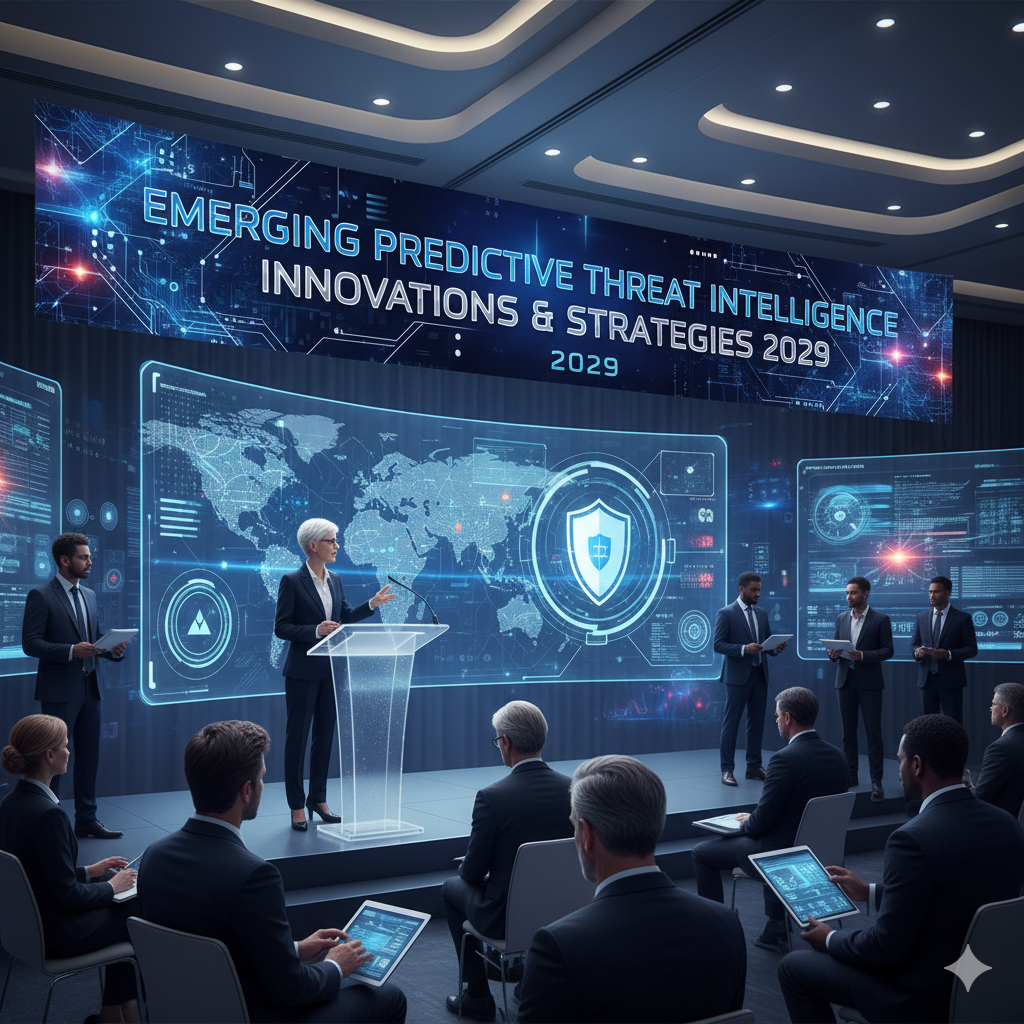
In an age where every digital action generates data, predictive threat intelligence (PTI) has become the nucleus of modern cybersecurity operations. With networks, endpoints, and cloud environments expanding exponentially, enterprises face a deluge of threats, ransomware, deepfake phishing, insider attacks, and nation-state espionage. Traditional reactive defenses are no longer sufficient. Enterprises must now predict threats before they hit, transforming cyber defense from detection to foresight. Predictive Threat Intelligence, powered by artificial intelligence (AI), machine learning (ML), and advanced analytics, allows security systems to identify potential vulnerabilities, analyze adversarial patterns, and forecast cyberattack probabilities. PTI engines interpret behavioral signals across global digital ecosystems, highlighting indicators long before malicious activities manifest. This predictive layer transforms security posture from passive defense into dynamic resilience. As 2029 approaches, AI-driven predictive systems will revolutionize enterprise defense, enabling real-time correlation of millions of threat indicators, self-learning analysis, and context-aware prioritization of alerts. PTI not only reduces costs and incident times but also empowers decision-makers with actionable intelligence derived from massive data lakes at Informatix.Systems, we provide cutting-edge AI, Cloud, and DevOps solutions for enterprise digital transformation. Our predictive threat intelligence frameworks integrate automation, analytics, and adaptive AI to help businesses stay ahead of evolving cyber threats. This article explores how emerging predictive threat intelligence innovations will reshape cyber defense strategies through 2029, and how enterprises can harness AI-driven insights to predict, prevent, and outsmart modern adversaries.
Understanding Predictive Threat Intelligence (PTI)
What Is Predictive Threat Intelligence?
Predictive Threat Intelligence (PTI) uses artificial intelligence, pattern recognition, and big data analytics to forecast potential cyber threats before exploitation occurs. It automates the observation and evaluation of security telemetry across multiple layers of enterprise infrastructure.
Core Functions:
- Identifying anomalies through behavioral modeling
- Forecasting attack campaigns using predictive algorithms
- Correlating global Indicators of Compromise (IOCs)
- Prioritizing risks through contextual scoring models
Why PTI Is Vital for Modern Enterprises
- Reduces dwell time by detecting early attack indicators
- Enhances proactive risk management with AI predictions
- Eliminates alert fatigue through intelligence-driven prioritization
- Improves compliance by automating threat visibility across networks
By integrating PTI systems, enterprises replace static defense layers with adaptive, intelligent security ecosystems designed for evolution and resilience.
The Evolution of Predictive Threat Intelligence: From 2024 to 2029
Early Automation and Threat Detection (2024–2026)
- Initial predictive models relied on signature-based detection with machine learning augmentations.
- Emphasis on integrating threat feeds and behavioral analytics.
AI-Enhanced Predictive Systems (2027–2028)
- Introduction of deep reinforcement learning in threat prediction.
- Establishment of federated learning systems across multi-regional organizations for privacy-conscious intelligence sharing.
Cognitive Predictive Intelligence (2029 and Beyond)
- AI converges with natural language reasoning to decode adversarial intent.
- Graph-based data correlation creates comprehensive attack path visualizations in real time.
Core Technologies Powering Predictive Intelligence Innovations
Machine Learning (ML) and Deep Learning
Machine learning models analyze vast datasets to uncover non-obvious relationships between entities, while deep learning architectures enhance precision.
Key Applications:
- Phishing pattern prediction
- Malware evolution detection
- Anomaly-based intrusion forecasting
Natural Language Processing (NLP)
NLP models decode unstructured text from dark web chatter, social media, and hacker forums to detect early signs of organized attacks.
Graph Neural Networks (GNN)
GNN maps relationships among users, systems, and events, detecting interconnected anomalies representing coordinated attack sequences.
Reinforcement Learning (RL)
Reinforcement learning models continuously refine their defense decisions based on simulated attack outcomes.
Federated Learning Frameworks
These frameworks enable secure, collaborative intelligence sharing across global systems without centralizing sensitive data.
Emerging Predictive Threat Intelligence Strategies
Behavior-Driven Threat Forecasting
Predictive algorithms analyze user patterns, network baselines, and endpoint activities to forecast abnormal behaviors leading to compromise.
AI-Integrated Cyber Risk Scoring
AI models dynamically assess risk levels by evaluating threat severity, exploitability, and impact probability, prioritizing mitigation steps for critical assets.
Multi-Domain Threat Correlation
PTI unites intelligence from cloud, mobile, IoT, and edge networks, producing unified risk visibility across enterprise environments.
Proactive Vulnerability Management
Predictive AI identifies vulnerabilities before exploits are published, recommending patches based on Bayesian and regression models.
Adaptive Threat Hunting as a Service (THaaS)
Cloud-driven threat intelligence services augment SOC operations with real-time predictive capabilities accessible via APIs.
Integrating Predictive Intelligence into SOC Operations
Smart SOC Ecosystems
Modern security operations centers (SOCs) integrate PTI models to automate incident prediction, enabling accelerated detection and root cause analysis.
SOC Automation Benefits
- Reduction in manual triage operations
- Enhanced intelligence enrichment pipelines
- Real-time decision automation through AI agents
DevSecOps Integration
Predictive threat data feeds directly into CI/CD pipelines, securing development lifecycles with automated code risk assessments and predictive patching routines. At Informatix.Systems, we align AI and DevOps methodologies to create next-gen SOC solutions designed for autonomous cybersecurity evolution.
Predictive Analytics: Turning Data Into Actionable Foresight
Data Sources for Predictive Intelligence
- Security logs and event telemetry
- Dark web and open-source intelligence (OSINT)
- Network flows and device telemetry
- Social and geopolitical indicators
Analytical Pipeline
- Data ingestion from diverse sources
- Normalization and enrichment
- Pattern learning and behavioral baselining
- Predictive scoring and automated alerting
Predictive analytics converts granular data points into high-value foresight, empowering rapid executive decision-making.
Cloud and Edge Integration for Predictive Defense
Cloud-Enabled Predictive Models
- Real-time correlation across global multi-cloud ecosystems
- AI-driven auto-scaling to match monitoring demands
- Enhanced collaboration through shared intelligence architectures
Edge Intelligence Prediction
Edge-driven PTI ensures ultra-low latency by deploying inference engines close to data sources, ideal for IoT and critical infrastructure.
Cloud–Edge Harmony
Future systems will combine cloud-based computation with edge-local response, achieving instant decisioning across hybrid infrastructures.
Automating Threat Intelligence with AI and DevOps
AI + DevOps Convergence
Predictive intelligence seamlessly integrates into automation pipelines, where AI models continuously feed into vulnerability scans, patch deployments, and CI/CD workflows.
Benefits for Enterprises
- Continuous risk reduction
- Automated validation during code releases
- Adaptive configuration management based on predictive logic
At Informatix.Systems, we engineer AI-driven CI/CD security automation, ensuring DevOps pipelines reinforce predictive threat preparedness.
Industry Use Cases for Predictive Threat Intelligence
Financial Sector
Predictive AI mitigates risks from fraud networks, phishing campaigns, and transaction anomalies before financial losses occur.
Healthcare
Threat forecasting prevents attacks targeting patient data systems, ensuring compliance with medical data governance frameworks.
Energy and Utilities
Predictive intelligence identifies APT signals targeting operational technology (OT) and energy grids.
Government and Defense
AI-powered forecasting safeguards against espionage and enhances critical infrastructure cyber readiness.
Challenges and Ethical Implications
Data Quality and Model Bias
Poor-quality data and unverified intelligence sources can distort predictive outcomes, requiring AI bias management and validation cycles.
Privacy and Compliance
Predictive data analytics must align with:
- GDPR
- CCPA
- Bangladesh Data Security Act 2027
Human Oversight
Human expertise remains essential to interpret AI outcomes, maintain ethical transparency, and ensure mission-critical judgment.
Future Outlook: Predictive Threat Intelligence Beyond 2029
The road ahead envisions increasingly self-learning cybersecurity ecosystems. By 2030:
- Quantum-safe predictive systems will defend encryption against quantum computing exploits.
- Autonomous CTI agents will collaborate across clouds to block threats preemptively.
- Cognitive risk modeling will enable executive dashboards to predict global threat trends months in advance.
Enterprises that invest early in predictive intelligence gain a strategic edge in both operational survival and market reputation.
Informatix.Systems: Powering the Future of Predictive Defense
At Informatix.Systems, we provide cutting-edge AI, Cloud, and DevOps solutions for enterprise digital transformation. Our integrated Predictive Threat Intelligence platform empowers organizations to accelerate detection, strengthen resilience, and achieve continuous foresight.
Our specialized solutions include:
- AI-powered cyber risk forecasting engines
- Autonomous SOC design and automation
- Cloud-native intelligence integration frameworks
- Predictive analytics dashboards for executive intelligence teams
We future-proof enterprise defense, delivering AI automation that evolves as fast as threats do, because resilience should never stand still. Predictive Threat Intelligence marks a new age where security systems no longer wait for attacks but anticipate them. The rise of AI innovations, automation pipelines, and cognitive analytics has pushed cybersecurity into a proactive era of foresight-driven decision-making. By 2029, predictive models will become the global standard, enabling autonomous defense architectures that continually learn, adapt, and protect. At Informatix.Systems, we help enterprises embrace this future through.
FAQs
What is Predictive Threat Intelligence?
It is the use of AI, machine learning, and analytics to forecast cyber threats before they occur by identifying patterns and attack signals early.
How does Predictive Threat Intelligence differ from traditional CTI?
While CTI is reactive, PTI is proactive, forecasting potential attacks instead of merely detecting existing ones.
What technologies enable predictive intelligence in 2029?
Key technologies include AI, deep learning, graph analytics, federated learning, NLP, and cloud-edge collaboration systems.
Which industries benefit most from predictive threat models?
Finance, government, healthcare, and manufacturing gain the highest ROI due to the nature of sensitive and high-value assets.
What challenges exist in deploying predictive intelligence systems?
Challenges include managing data privacy, AI model bias, integration costs, and maintaining ethical oversight.
How does Informatix.Systems help enterprises implement PTI solutions?
We design enterprise-scale predictive intelligence systems integrating AI-driven analytics, cloud orchestration, and DevOps automation.
Are predictive threat intelligence systems compliant with privacy laws?
Yes. Frameworks are designed to comply with GDPR, CCPA, and national data governance standards.
What is the future of predictive cyber defense beyond 2029?
Future systems will rely on autonomous AI, self-learning models, and quantum-safe architecture to counter ultra-advanced threats.
No posts found
Write a review