- 3/8, North Pirerbag
- 60 Feet Main Road
- Mirpur, Dhaka 1216
- +880-967-8247365
- support@informatix.systems

How CTI Helps Detect Insider Threats
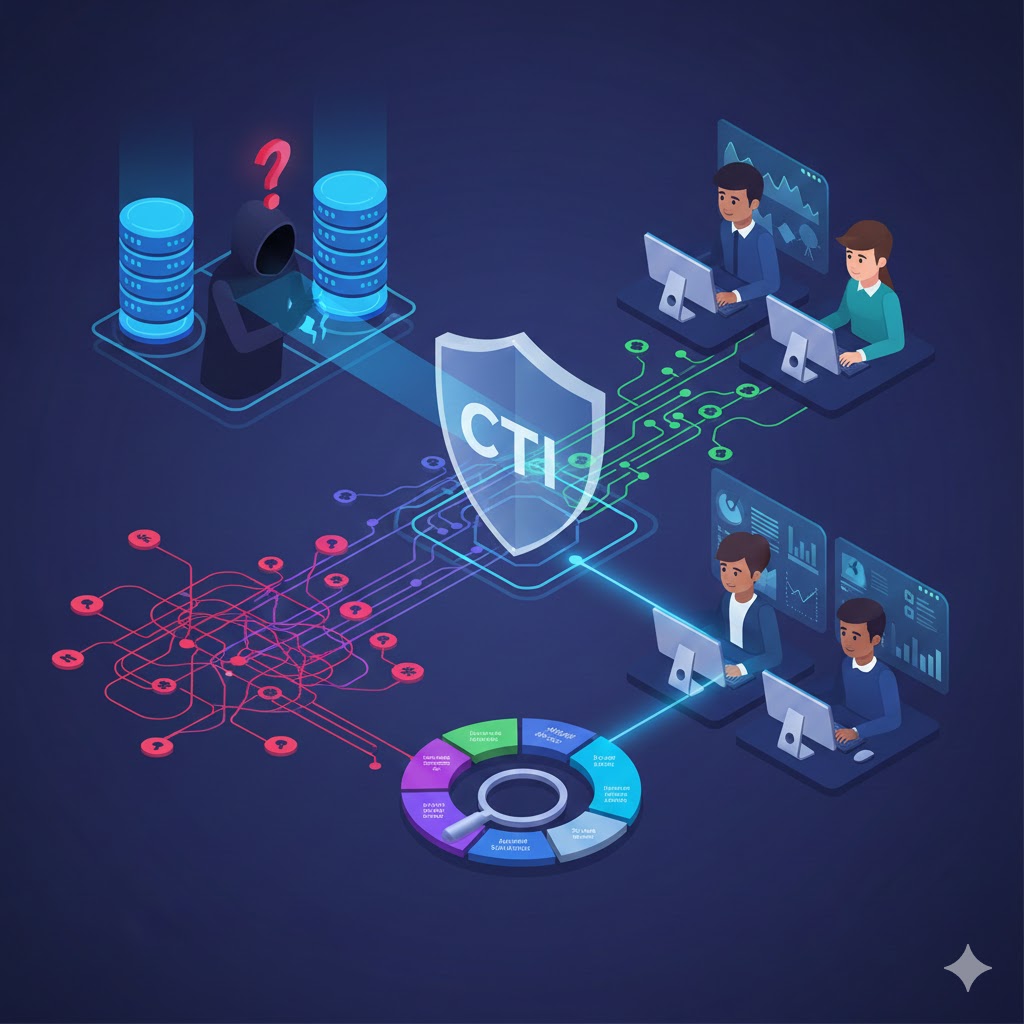
Insider threats represent one of the most challenging cybersecurity risks facing enterprises today, often evading traditional perimeter defenses due to their internal origin. Cyber Threat Intelligence (CTI) transforms raw threat data into actionable insights, enabling organizations to detect malicious insiders before significant damage occurs. In 2025, statistics reveal that 76% of organizations experienced increased insider threat activity, with average breach costs reaching $17.4 million annually per incident. Businesses cannot afford to overlook these threats, as malicious insiders account for 25% of incidents, while negligent employees contribute to 74% of security leaders' concerns. CTI addresses this by correlating external threat feeds with internal behaviors, spotting anomalies like unusual data exfiltration or privilege escalation at Informatix.Systems, we provide cutting-edge AI, Cloud, and DevOps solutions for enterprise digital transformation, helping clients integrate CTI to safeguard sensitive assets. This comprehensive guide explores how CTI helps detect insider threats through frameworks, tools, and real-world applications. Enterprises leveraging CTI reduce detection times by up to 60% when combined with UEBA and SIEM systems. From behavioral analytics to predictive modeling, CTI shifts security from reactive to proactive. As threats evolve in 2026, understanding CTI's role becomes essential for compliance, cost savings, and resilience. Key benefits include early anomaly detection, reduced false positives via AI-driven scoring, and streamlined incident response.
What is Cyber Threat Intelligence?
Cyber Threat Intelligence (CTI) involves collecting, analyzing, and disseminating evidence-based knowledge about cyber threats, including adversaries, tactics, and indicators of compromise (IOCs). Unlike basic threat data, CTI provides context-specific insights tailored to an organization's environment.
Types of CTI
CTI categorizes into four main types, each vital for insider threat detection:
- Strategic CTI: High-level overviews of threat actors and campaigns, informing executive risk decisions.
- Operational CTI: Details ongoing attacks, such as insider collusion patterns from dark web forums.
- Tactical CTI: Technical IOCs like malware signatures used by insiders.
- Technical CTI: Raw data feeds for automated detection tools.
CTI Lifecycle
The CTI lifecycle planning, collection, processing, analysis, dissemination, and feedback ensure continuous threat visibility. For insiders, this means real-time monitoring of behavioral deviations against global threat patterns. At Informatix.Systems, we provide cutting-edge AI, Cloud, and DevOps solutions for enterprise digital transformation, embedding CTI lifecycles into client security stacks.
Understanding Insider Threats
Insider threats stem from employees, contractors, or partners who misuse authorized access, either maliciously or negligently. Insider threat detection requires distinguishing normal behavior from risky actions like mass data downloads or off-hours access.
Types of Insider Threats
- Malicious Insiders: Intentionally steal data for profit, as in the Trend Micro case, where an employee sold 68,000 customer records.
- Negligent Insiders: Accidentally expose data, like the Calgary employee emailing 3,700 staff records.
- Compromised Insiders: Accounts hijacked via phishing, amplified by generative AI deepfakes.
2025 Insider Threat Statistics
- 71% of companies faced 21-40 incidents yearly, up 67% from 2022.
- 28% rise in data exposure events from 2023-2024.
- 73% expect further increases in data loss.
Why CTI is Essential for Insider Detection
Traditional tools fail against insiders who bypass firewalls. CTI helps detect insider threats by enriching internal logs with external intelligence, revealing subtle risks like TTPs matching nation-state insiders.
Bridging Internal and External Data
Internal CTI from logs creates contextual baselines, while external feeds flag emerging tactics. Combined, they detect 60% faster via SIEM+UEBA+CTI.
Proactive vs. Reactive Security
CTI enables anticipation, reducing response times by 58% per Ponemon studies. Enterprises gain visibility into supply chain risks and shadow IT used by insiders.
How CTI Detects Insider Threats
CTI insider threat detection leverages intelligence to baseline behaviors and flag deviations. Key mechanisms include IOC matching and pattern recognition.
Behavioral Anomaly Detection
CTI correlates user actions with threat actor profiles:
- Activity Spikes: Sudden file accesses trigger alerts.
- Unusual Locations: Logins from high-risk IPs via OSINT.
UEBA-CTI Integration
UEBA analyzes entities, enhanced by CTI for context. Darktrace flags deviations autonomously. At Informatix.Systems, we provide cutting-edge AI, Cloud, and DevOps solutions for enterprise digital transformation, specializing in UEBA-CTI fusions.
Key CTI Frameworks for Insiders
Structured frameworks standardize CTI techniques for insider threat detection.
Popular Frameworks
Implementing Frameworks
Start with Crown Jewel Analysis to prioritize assets, then apply CTI for tailored defenses.
Real-World Case Studies
CTI shines in practice.
Trend Micro Breach
Employee sold data; CTI feeds could have flagged dark web sales early.
Capital One Incident
Ex-contractor exploited configs; CTI-UEBA detected anomalies.
OPM Compromise
21.5M records lost; modern CTI reduces such risks via continuous monitoring.
Top CTI Tools for 2026
Select tools excel in insider threat prevention.
- Exabeam: Behavioral analytics with CTI correlation.
- Darktrace: AI anomaly detection.
- Forcepoint: User fingerprinting.
- Stellarcyber: Top-ranked platform.
| Tool | Key Feature | Detection Speed |
|---|---|---|
| Exabeam | ML Baselines | Real-time |
| Darktrace | Autonomous Response | Subtle insiders |
| Forcepoint | Data Loss Prevention | High-risk actions |
Integrating CTI with Existing Systems
Seamless integration amplifies value.
SIEM and SOAR Synergy
CTI feeds SIEM for enriched alerts; SOAR automates responses.
Steps for Integration
- Assess current stack.
- Map CTI sources to UEBA.
- Test with simulations.
- Scale with AI tuning.
At Informatix.Systems, we provide cutting-edge AI, Cloud, and DevOps solutions for enterprise digital transformation, ensuring smooth CTI deployments.
Best Practices for CTI Implementation
Maximize ROI with proven strategies.
- Diversify Sources: OSINT, feeds, internal logs.
- Continuous Monitoring: AI-scored OSINT for risks.
- Train Teams: Focus on insider-specific TTPs.
- Reduce False Positives: ML risk scoring.
Benefits of CTI for Enterprises
- Cost Savings: $17.4M average breach avoidance.
- Compliance: Meets finance/healthcare regs.
- Faster Response: 58-60% reduction.
Future Trends in 2026
GenAI amplifies risks; CTI counters with predictive analytics and cloud-native tools. Expect hybrid UEBA-CTI dominance. CTI helps detect insider threats by fusing external intelligence with internal vigilance, slashing risks in an era of rising incidents. Enterprises adopting CTI frameworks, tools like Exabeam/Darktrace, and UEBA integrations achieve proactive security. At Informatix.Systems, we provide cutting-edge AI, Cloud, and DevOps solutions for enterprise digital transformation, empowering your defenses today. Ready to fortify against insiders? Contact Informatix.Systems at https://informatix.systems for a free CTI assessment and customized roadmap. Secure your future now.
FAQs
What is the role of CTI in insider threat detection?
CTI enriches behavioral analytics with threat actor insights, enabling early anomaly spotting.
How does UEBA complement CTI?
UEBA baseline behaviors; CTI provides context, boosting accuracy by 60%.
What are common insider threat examples?
Data theft (Capital One), leaks (Trend Micro), accidental exposure (Calgary).
Which CTI tools best detect insiders in 2026?
Exabeam, Darktrace, and Forcepoint lead with AI-driven detection.
Can CTI reduce insider breach costs?
Yes, averting $17.4M averages via proactive measures.
How to start a CTI program?
Follow the lifecycle: plan, collect, analyze, iterate.
What statistics highlight insider risks?
No posts found
Write a review