- 3/8, North Pirerbag
- 60 Feet Main Road
- Mirpur, Dhaka 1216
- +880-967-8247365
- support@informatix.systems

How CTI Identifies High-Risk Threat Actors
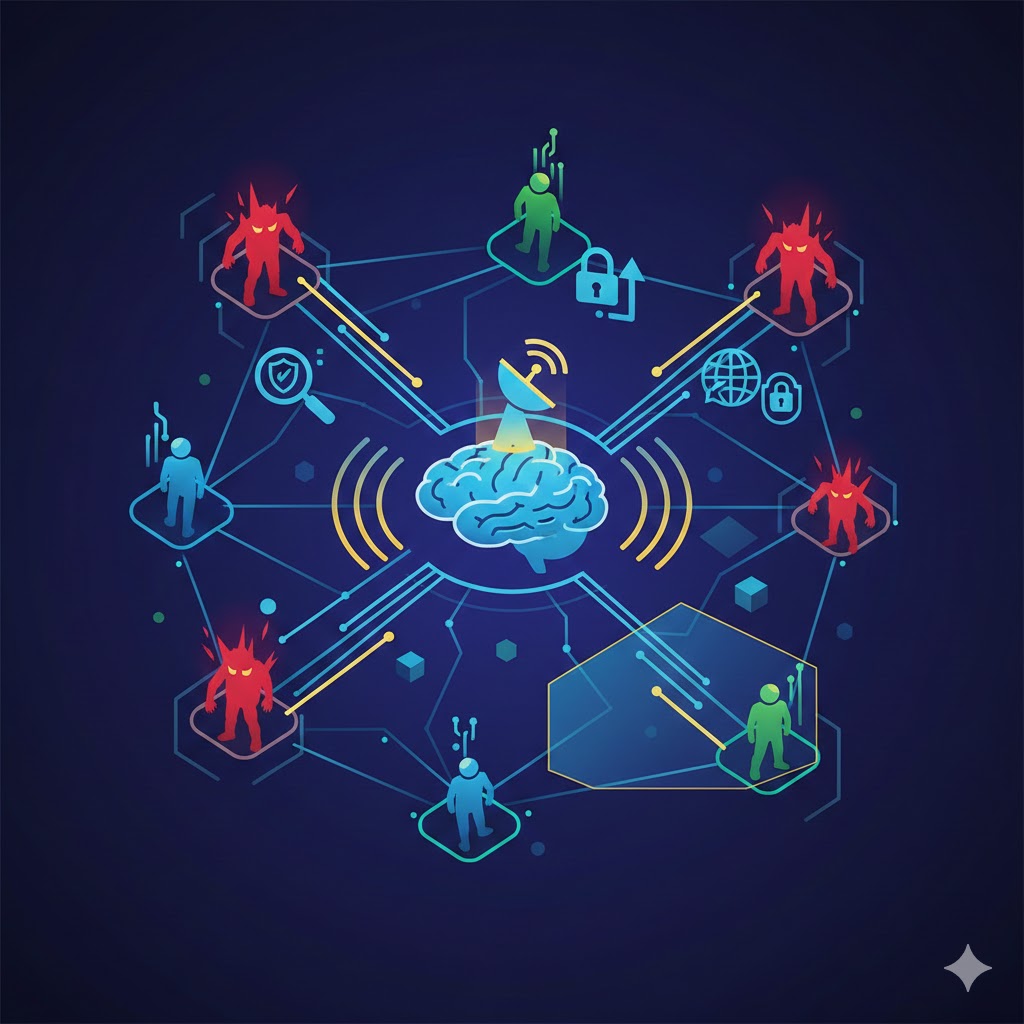
In today's rapidly evolving cybersecurity landscape, organizations face increasingly sophisticated high-risk threat actors who can devastate operations, steal sensitive data, and disrupt critical infrastructure. Cyber Threat Intelligence (CTI) serves as the frontline defense, systematically identifying these adversaries by analyzing their tactics, techniques, and procedures (TTPs), motivations, and behavioral patterns. High-risk threat actors, such as state-sponsored APT groups like those aligned with North Korea or China, ransomware operators like Clop, and cyber extortionists, pose existential threats due to their advanced capabilities, persistence, and targeted attacks on enterprises. The business importance of CTI cannot be overstated. In 2025, ransomware victims exceeded 3,662 in the first half alone, with manufacturing and professional services hit hardest, underscoring the financial and reputational costs of delayed detection. CTI enables proactive risk prioritization, reducing mean time to detect (MTTD) and investigate (MTTI), which directly translates to millions in saved revenue and compliance penalties avoided. By leveraging frameworks like MITRE ATT&CK and the Diamond Model, CTI teams profile actors' infrastructure, capabilities, and victim preferences, turning raw data into actionable defenses at Informatix.Systems, we provide cutting-edge AI, Cloud, and DevOps solutions for enterprise digital transformation, empowering clients to integrate CTI seamlessly into their security operations. This article explores how CTI identifies high-risk threat actors, from foundational processes to advanced 2026-targeted strategies. Enterprises adopting these methods can shift from reactive firefighting to predictive resilience, safeguarding assets against evolving threats like supply chain compromises and AI-enhanced attacks.
CTI Fundamentals
Cyber Threat Intelligence (CTI) collects, analyzes, and disseminates data on potential cyber threats to enhance organizational security. It categorizes into strategic (high-level trends), tactical (TTPs and malware), operational (campaign targeting), and technical (IoCs like IPs and hashes). CTI identifies high-risk threat actors by contextualizing threats against specific industries, refining risk views with real-world TTPs observed in the wild. This prioritization prevents alert fatigue in SOCs, focusing resources on imminent dangers like ransomware or espionage.
Key CTI Benefits for Enterprises:
- Proactive Detection: Anticipates attacks via actor profiling.
- Risk Reduction: Layer intelligence over vulnerability management.
- Incident Response Acceleration: Maps behaviors to known groups.
Threat Actor Types
Threat actors vary by motivation, capability, and sophistication, with high-risk ones exhibiting persistence and advanced tooling. Common categories include nation-state actors (e.g., North Korea's UNC5342 for espionage), ransomware groups (e.g., Clop exploiting Cleo vulnerabilities), and cyber extortionists holding data hostage.
High-Risk Indicators:
- State-sponsored: Target defense, aerospace via Log4j exploits.
- Financially motivated: Multi-extortion with data leaks and DDoS.
- Opportunistic: Infostealers like RedLine from Eastern Europe.
Distinguishing these enables tailored defenses, such as hardening supply chains against DPRK actors.
Nation-State Actors
These advanced persistent threats (APTs) prioritize espionage, using custom malware and long-term persistence.
Ransomware Groups
Clop's 2,300% activity spike in 2025 highlights their supply chain focus.
Identification Frameworks
MITRE ATT&CK Framework
MITRE ATT&CK maps the attack lifecycle, reconnaissance to impact, tracking 100+ threat actors via TTPs. Layers in ATT&CK Navigator visualize actor-specific techniques, aiding detection rule creation. Enterprises use it for threat-informed defenses, aligning logs to techniques like resource hijacking (T1496).
Diamond Model of Intrusion Analysis
The Diamond Model dissects intrusions via four vertices: Adversary (threat actor), Capability (tools), Infrastructure (C2 servers), and Victim. Events link these, revealing patterns for attribution.
Application Steps:
- Map events to vertices.
- Pivot for relationships (e.g., IP to actor).
- Predict future activity.
This model excels in threat actor profiling, answering who is behind attacks.
Risk Scoring Methods
CTI employs quantitative models to score threat actors, combining factors like TTP sophistication, target relevance, and exploit likelihood. Metrics include Dynamic Vulnerability Exploit (DVE) scores and credential leak analysis.
Scoring Components:
- Capability Level: Custom vs. commodity malware.
- Intent: Financial, ideological, destructive.
- Historical Success: Breach frequency.
High-risk scores (>80%) trigger prioritized remediation, reducing MTTD by contextualizing IoCs.
Quantitative Metrics
Formulas like weighted sums fuse multimodal data:
Risk Score=w1⋅TTP Match+w2⋅Target Overlap+w3⋅Exploit Recency
Data Sources in CTI
CTI aggregates from OSINT, dark web forums, leak sites, and internal logs. Dark web monitoring reveals actor aliases, tool sales, and victim claims early.
Primary Sources:
- Dark Web: Recruiting ads, infostealer logs.
- IoCs: IPs, hashes via STIX.
- Commercial Feeds: Normalized via platforms like OpenCTI.
Flashpoint and SOCRadar tools process high-risk environments safely.
Behavioral Analysis
Threat actor profiling analyzes behavioral patterns: login anomalies, timing, and social engineering triggers. Frameworks like ABAM fuse human factors with TTPs.
Detection Signals:
- Document reuse in phishing.
- Escalation patterns post-breach.
- Monetization via Telegram.
This predicts moves, e.g., North Korean actors' "Contagious Interview" campaigns.
Attribution Techniques
Attribution links activity to actors via TTP overlap, infrastructure pivots, and STIX modeling. Threat Actor SDOs capture identity, motivations, and associations.
Multi-Layer Process:
- Extract IOC attributes/relations.
- ML classification on CTI reports.
- Confidence scoring via frameworks like PwC's comparative attribution.
APT-MMF fuses heterogeneous data for precise linking.
Tools and Platforms
Top 2025 CTI platforms like Stellar Cyber and OpenCTI normalize feeds, enrich events with actor context, and automate responses. MITRE Navigator layers actor TTPs for visualization.
Enterprise Recommendations:
- OpenCTI: Tactical/strategic sharing.
- CrowdStrike: Real-time enrichment.
- Bitsight: Industry-specific TTPs.
At Informatix.Systems, we provide cutting-edge AI, Cloud, and DevOps solutions for enterprise digital transformation, integrating these tools seamlessly.
High-Risk Indicators
CTI flags high-risk via target preferences (e.g., manufacturing for Clop), resource hijacking, and defense evasion, like log deletion.
2025 Examples:
These drive proactive blocking.
Integration Strategies
Embed CTI in SIEM/EDR via API feeds, using MITRE mappings for playbooks. Threat-informed defenses simulate actor behaviors.
Implementation Steps:
- Ingest multi-source intel.
- Score events by actor relevance.
- Automate hunts/blocklists.
Yields 81% higher resilience vs. standalone approaches.
Clop Ransomware 2025: Exploited Cleo vuln, hitting 18% manufacturing victims. CTI via leak sites enabled preemptive TPRM.
DPRK Espionage: UNC5342's job phishing stole tech data; Diamond Model pivoted C2 infra to the actor.
China Supply Chain: Edge device exploits detected via ATT&CK layers. These demonstrate CTI's ROI in dwell time reduction.
Future Trends 2026
AI-driven scoring and multimodal fusion (APT-MMF) will dominate, predicting actors via behavioral ontologies. Expect quantum-resistant TTPs and a deeper supply chain focus. At Informatix.Systems, we provide cutting-edge AI, Cloud, and DevOps solutions for enterprise digital transformation, preparing clients for these shifts.
Metrics for Success
Track Intelligence Effectiveness: MTTD/MTTI drops, true positive rates. Business metrics: Risk reduction, compliance support.
Key KPIs:
- 50% MTTD reduction.
- 30% fewer breaches via prioritization.
CTI identifies high-risk threat actors through frameworks like MITRE ATT&CK and Diamond Model, risk scoring, and behavioral profiling, enabling enterprises to prioritize and mitigate threats effectively. By integrating diverse data sources and tools, organizations achieve proactive resilience against 2026's evolving landscape, from ransomware surges to state-sponsored espionage. Partner with Informatix.Systems today for tailored CTI implementations. Contact us at https://informatix.systems to transform your security posture and stay ahead of high-risk threats.
FAQs
What distinguishes high-risk threat actors in CTI?
High-risk actors show advanced TTPs, persistence, and sector targeting, scored via capability/intent metrics.
How does MITRE ATT&CK aid threat identification?
It maps actor TTPs across attack stages, enabling detection and simulation.
What is the Diamond Model in CTI?
A framework linking adversary, capability, infrastructure, and victim for intrusion analysis.
Can CTI predict future attacks?
Yes, via behavioral patterns and predictive intel from dark web monitoring.
What tools best support CTI for enterprises?
OpenCTI, Stellar Cyber, and MITRE Navigator for enrichment and visualization.
How does CTI integrate with SOC operations?
Via SIEM feeds and automated enrichment, reducing MTTI.
Are there 2025 examples of high-risk actors?
Clop ransomware and DPRK UNC5342 via supply chains and phishing.
How to measure CTI program success?
Track MTTD/MTTI, positive rates, and business risk reduction.
No posts found
Write a review