- 3/8, North Pirerbag
- 60 Feet Main Road
- Mirpur, Dhaka 1216
- +880-967-8247365
- support@informatix.systems

Cyber Threat Intelligence Services
We deliver actionable threat intelligence to identify risks before they become incidents.
Our services analyze adversaries, attack vectors, and indicators in real time.
Built to strengthen proactive defense, informed decision-making, and security resilience.
CTI Services for Critical Business Assets
In today's hyper-connected digital landscape, businesses rely on critical assets like proprietary data, cloud infrastructure, industrial control systems, and intellectual property to drive operations and competitive advantage. These assets face escalating cyber threats from sophisticated actors, including nation-states, ransomware groups, and insider...
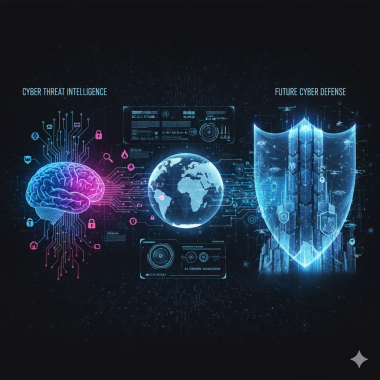
Cyber Threat Intelligence and Future Cyber Defense
As 2026 unfolds, cyber threats evolve at warp speed, propelled by quantum computing breakthroughs, generative AI weaponization, and hyper-scale digital infrastructures. Cyber threat intelligence (CTI) stands as the vanguard of future cyber defense, converting raw adversarial data into prescient strategies that anticipate attacks before they...
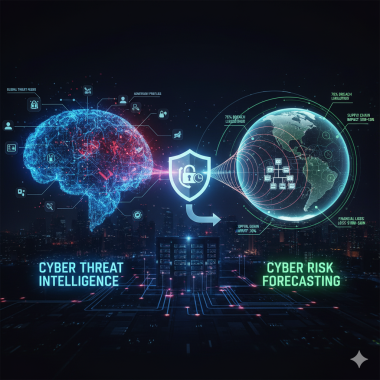
Cyber Threat Intelligence and Cyber Risk Forecasting
Cyber threats in 2026 demand prescience, not reaction. Cyber threat intelligence (CTI) fused with advanced forecasting transforms raw indicators into probabilistic risk models that predict breaches before execution. Traditional security reacts to exploits; cyber risk forecasting anticipates adversary intent through time-series analysis of TTPs,...
Nation-State Threat Intelligence Explained
Nation-state threat intelligence represents the frontline defense in today's geopolitical cyber battlefield. As governments weaponize cyber capabilities for espionage, sabotage, and influence operations, enterprises face unprecedented risks from sophisticated actors backed by unlimited resources. These threats transcend traditional cyberattacks, blending...
Cyber Threat Intelligence for AI-Powered Platforms
AI-powered platforms dominate 2026 enterprise landscapes: large language models (LLMs) driving customer service, agentic systems orchestrating supply chains, generative AI creating content at scale, and ML pipelines powering predictive analytics. Cyber threat intelligence (CTI) emerges as the critical safeguard, providing specialized...

CTI for Credential Leak Detection
In today's hyper-connected digital landscape, credential leaks represent one of the most pervasive threats to enterprise security. Cybercriminals harvest billions of usernames, passwords, and access tokens from data breaches, dark web marketplaces, and infostealer malware, weaponizing them for account takeovers, ransomware, and lateral movement within...
Cyber Threat Intelligence and Next-Gen Cybersecurity
Next-generation cybersecurity in 2026 confronts AI-orchestrated attack swarms, quantum decryption threats, and autonomous malware that evolve faster than human response cycles. Cyber threat intelligence (CTI) redefines defense as predictive warfare, fusing agentic AI analysis, global telemetry correlation, and adversary intent modeling to...
Cyber Threat Intelligence and AI Risk Management
AI risk management defines 2026 enterprise survival as organizations deploy large language models, autonomous agents, and generative systems controlling critical decisions from financial trading to medical diagnostics. Cyber threat intelligence (CTI) emerges as the essential framework for quantifying AI-specific risks: model poisoning...
No posts found
Write a review