- 3/8, North Pirerbag
- 60 Feet Main Road
- Mirpur, Dhaka 1216
- +880-967-8247365
- support@informatix.systems

Threat Intelligence Sharing Networks Evolution 2026
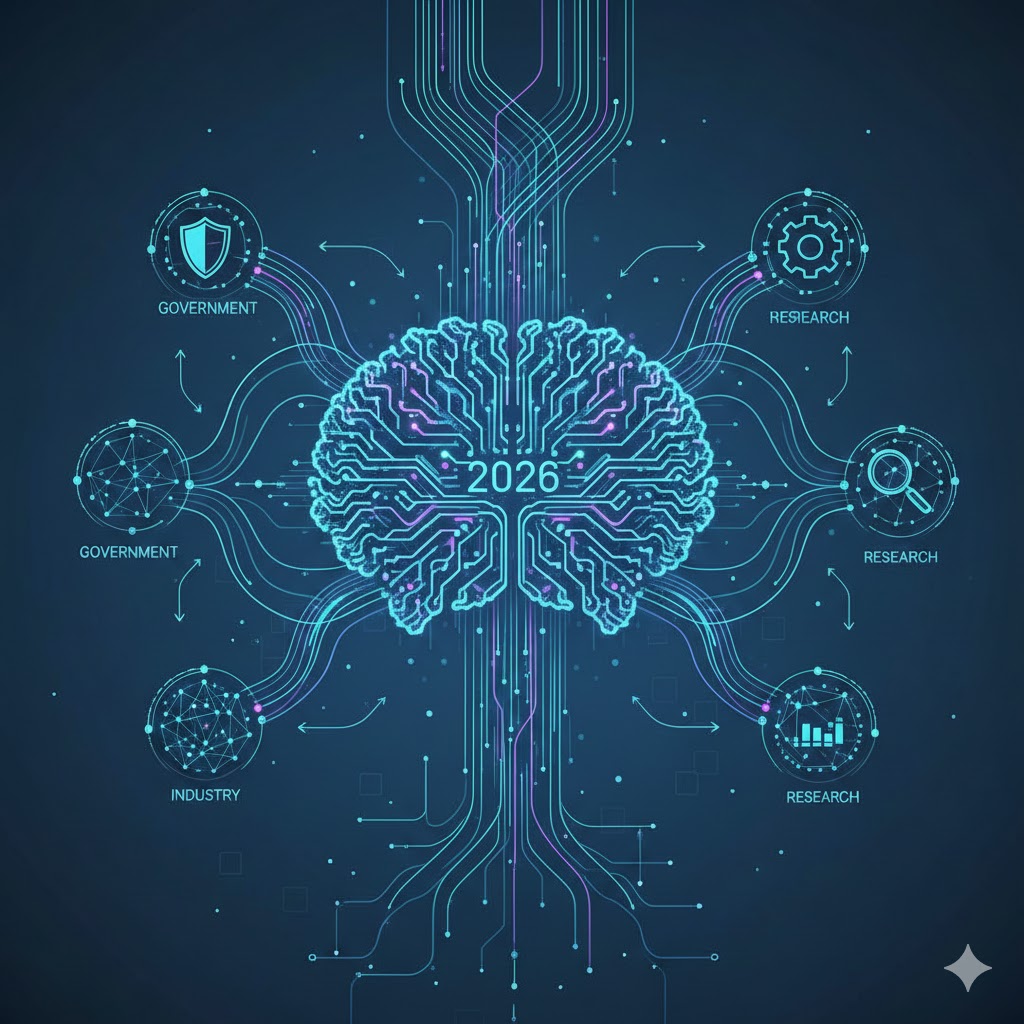
The cyber landscape of 2026 is marked by one defining shift: collaborative intelligence. As cyber threats become increasingly complex, decentralized, and machine-driven, individual organizational defenses are no longer sufficient. Attackers exploit automation, Artificial Intelligence (AI), and cross-border coordination to execute advanced intrusions. To combat this, global enterprises, governments, and cybersecurity institutions have transformed isolated threat analysis models into AI-powered threat intelligence sharing networks that thrive on transparency, collaboration, and real-time defense. In 2026, these interconnected frameworks form the backbone of predictive cybersecurity. They enable stakeholders across industries and nations to exchange live threat data, behavioral analytics, and attack signatures at unmatched speed and scale. The result is an era of collective cyber resilience, where defense ecosystems learn, adapt, and respond faster than threat actors. At Informatix.Systems, we provide cutting-edge AI, Cloud, and DevOps solutions that help enterprises participate in secure, intelligence-driven ecosystems. Our mission is to empower businesses with data-driven threat intelligence architectures that align with global collaboration protocols and AI ethics. The evolution of threat intelligence sharing in 2026 is not only about information exchange, but it’s also about building digital trust, autonomous coordination, and algorithmic transparency in the face of continuously mutating digital threats.
From Isolation to Collaboration: The Shifting Paradigm
Before 2025, threat intelligence systems were confined within organizational silos. Limited trust, inconsistent data formats, and privacy concerns prevented true collaboration.
Key Historical Challenges
- Data Fragmentation: Disconnected intelligence platforms lacking shared standards.
- Reactive Security Postures: Responding after attacks instead of predicting them.
- Trust Gaps: Fear of exposing sensitive or proprietary data.
- Manual Processing: Lengthy correlation efforts are slowing mitigation speed.
By 2026, the model flipped. Enterprises integrated machine-readable, AI-verified, real-time threat intelligence networks under global frameworks, allowing trusted automation and shared situational awareness.
Defining Threat Intelligence Sharing Networks (TISNs)
Threat Intelligence Sharing Networks (TISNs) are collaborative ecosystems connecting enterprises, research bodies, and law enforcement agencies to exchange cyber threat information.
Core Principles
- Interoperability: Standardized communication protocols (e.g., STIX, TAXII).
- Automation: AI and ML ensure real-time analysis and decision-making.
- Trust Frameworks: Cryptographic validation ensures integrity and authenticity.
- Scalability: Networks expand dynamically across sectors and geographies.
TISNs form the digital immune system of tomorrow: adaptive, predictive, and interconnected.
Catalysts Driving the 2026 Evolution
Several global and technological forces have accelerated the expansion of threat intelligence networks in 2026.
Major Catalysts
- AI Convergence: Deep learning models perform autonomous threat classification.
- Global Policy Alignment: Cross-government cooperation under digital resilience acts.
- Increased Ransomware Volume: Criminal collaboration led to reciprocal defense collaboration.
- Quantum-era Cryptography: Zero-trust and quantum-resistant exchanges.
- Cloud-native Infrastructure: Seamless integration across hybrid and multicloud systems.
The evolution symbolizes a maturity phase in cybersecurity, from isolated protection to synchronized anticipation.
The Role of AI in Modern Threat Intelligence
Artificial Intelligence reinvents how intelligence-sharing networks detect and prioritize risks.
AI-Powered Capabilities
- Automated Correlation: Aggregates patterns across millions of indicators.
- Behavioral Predictive Engines: Identify unknown attack vectors through contextual understanding.
- Natural Language Processing (NLP): Interprets unstructured threat reports in real-time.
- Federated Learning: Shares insights without transferring raw data, preserving confidentiality.
At Informatix.Systems, we embed these AI-driven technologies within enterprise security ecosystems, turning data into foresight and foresight into preventive action.
Global Collaboration Frameworks Emerging in 2026
To sustain scalable, cross-border sharing, global Cyber Collaboration Frameworks (CCFs) took shape in 2026.
Key Frameworks
- Cyber Resilience Partnership (CRP 2026): Multinational government-private consortium enhancing interoperability.
- AI Threat Transparency Protocol (AITTP): Standard for explainable AI in security intelligence.
- Zero-Trust Distributed Ledger (ZTDL): Blockchain-based global intelligence exchange registry.
- Federal Enterprise Exchange Grid (FEXG): U.S.-led cross-sector data fusion network.
These frameworks help unify technical, legal, and ethical dimensions of global security collaboration.
Architecture of Modern Threat Intelligence Networks
Core Structural Layers
- Data Collection Layer: Ingests real-time indicators (logs, anomalies, IoCs).
- Processing Layer: Uses AI analytics for enrichment and validation.
- Distribution Layer: Disseminates verified intelligence to stakeholders.
- Feedback Loop: Continuous learning to refine detection accuracy.
Key Technical Enablers
- Secure APIs and Cloud Integration.
- Federated Node Governance.
- Zero-Knowledge Verification.
- Threat Scoring Algorithms (TSA).
At Informatix.Systems, our modular security architecture integrates seamlessly across these layers—empowering enterprises with holistic cyber visibility.
Overcoming Trust and Privacy Challenges
Trust remains central to intelligence collaboration. Networks must balance transparency with data protection.
Emerging Solutions
- Homomorphic Encryption: Enables computation on encrypted data.
- Decentralized Blockchain Validation: Ensures tamper-proof reputation scoring.
- Data Tokenization: Protects PII in shared intelligence exchanges.
- AI Trust Agents: Algorithms that assess the credibility of shared data sources.
Global cybersecurity success depends on information integrity combined with ethical sharing, a principle Informatix.Systems are emphasized in all AI-driven frameworks.
Industry-Wide Adoption and Sectoral Applications
Finance
Predicts cross-bank fraud patterns before they materialize.
Healthcare
Facilitates medical data breach prevention and integrity monitoring.
Manufacturing & OT
Prevents disruptions in Industry 4.0 supply chains via shared anomaly detection.
Energy Sector
Protects smart grids using shared sensor intelligence.
Government Agencies
Coordinate incident response for nation-state cyber threats.
Each sector benefits from collective knowledge acceleration, reducing detection windows from months to minutes.
Integrating Threat Intelligence Into DevSecOps
As enterprises embed cybersecurity deeper into development pipelines, shared threat intelligence becomes a core DevSecOps enabler.
Integration Tactics
- Automated CI/CD Security Checks tied to real-time threat feeds.
- Vulnerability Prioritization based on shared risk scoring models.
- Dynamic Code Hardening through predictive intelligence.
- Security Playbook Automation using AI correlation across shared intelligence inputs.
At Informatix.Systems, we merge DevSecOps automation with global intelligence layers to accelerate secure digital transformation.
Policy, Governance, and Ethical Considerations
Effective governance ensures a balance between usability and privacy.
Governance Focus Areas
- AI Explainability: Ensures that predictive outcomes are auditable.
- Regulatory Alignment: Harmonizes cross-border compliance (GDPR+, DORA+, AICDS 2026).
- Ethical Data Sharing: Defines consent-based intelligence use.
- Standardized KPIs: Measure accuracy, timeliness, and impact of shared intelligence.
The ethical architecture of AI security, as championed by Informatix.Systems, underpin trustworthy and responsible intelligence sharing.
Technical Innovations Shaping 2026 and Beyond
Key Innovations
- Quantum-Enhanced Threat Analysis: Enables ultra-fast vulnerability modeling.
- AI Orchestration Engines: Automate threat correlation across regions.
- Neural Similarity Graphs: Link attack vectors across industries.
- Cyber Twins: Virtual simulation of enterprise threat environments.
- Adaptive Blockchain Security Frameworks: Authenticate intelligence at velocity.
These innovations mark the arrival of autonomous global defense ecosystems, where intelligence flows faster than threats evolve.
Challenges and Risk Mitigation Strategies
Despite advancements, effective intelligence sharing faces operational challenges.
Common Challenges
- Data Overload: Excess signals without context.
- Bias in Machine Learning: Inaccurate predictions from skewed datasets.
- Information Attribution: Difficulty verifying source authenticity.
- Jurisdiction Barriers: Conflicting international data sovereignty laws.
Mitigation Pathways
- Federated Risk Modeling: Decentralized model training to preserve privacy.
- AI Bias Auditing: Regular algorithmic fairness checks.
- Cross-Government Liaison Boards: Regulatory bridge for data harmonization.
Strategies focus on sustainable collaboration through trusted automation.
Future Outlook: Autonomous Cyber Intelligence Networks
By 2030, threat intelligence sharing networks will evolve into self-governing AI ecosystems capable of collective risk response.
Future Trajectories
- Autonomous Threat Reaction Systems performing network-wide mitigation.
- Hybrid AI+Quantum Coordination Layers linking global defense grids.
- Inter-organizational Cyber Mesh Architectures.
- Sentient Intelligence Ecosystems dynamically maintain trust and integrity.
These developments position Informatix.Systems as a catalyst in building the next era of proactive, self-healing cybersecurity infrastructures. By 2026, cybersecurity excellence is no longer defined by secrecy; it’s defined by collaboration, intelligence, and shared foresight. Threat intelligence sharing networks empower organizations to turn fragmented knowledge into unified action, driving faster, stronger, and more ethical cyber defense globally. At Informatix.Systems, we are leading this revolution by integrating AI-powered intelligence sharing, cloud-native automation, and DevSecOps security pipelines into enterprise ecosystems. The true evolution of cybersecurity lies not in isolation but in shared insight and unified response.
FAQs
What are threat intelligence sharing networks?
Collaborative systems enabling organizations to share, validate, and act upon real-time cyber threat data.
Why will these networks become essential in 2026?
Because AI-scale attacks demand collective, automated responses that single organizations can’t manage in isolation.
How does AI enhance threat intelligence sharing?
AI accelerates interpretation, prioritization, and correlation across massive, distributed data pools.
What technologies secure threat-sharing environments?
Blockchain, homomorphic encryption, zero-trust protocols, and quantum-resistant authentication.
Can small enterprises participate in these networks?
Yes. Scalable frameworks from Informatix.Systems allow SMEs to join intelligence ecosystems proportionate to their needs.
How do threat-sharing networks address data privacy?
Through techniques like anonymization, federated learning, and tokenized data representation.
What are the benefits of global collaboration in cybersecurity?
Faster detection, reduced breach windows, and collective situational awareness across industries.
What’s next beyond 2026 for intelligence sharing?
Fully autonomous, AI-coordinated ecosystems capable of predictive and self-healing defense operations.
No posts found
Write a review