- 3/8, North Pirerbag
- 60 Feet Main Road
- Mirpur, Dhaka 1216
- +880-967-8247365
- support@informatix.systems

ERP Modernization Solutions for Automotive in 2026 | Informatix.Systems
In today's rapidly evolving automotive landscape, companies face unprecedented challenges ranging from increasingly complex supply chains and regulatory compliance to the rising demand for electric and autonomous vehicles. These pressures require enterprises to adopt more agile, scalable, and intelligent systems that can keep pace with innovation and consumer expectations. At the heart of this transformation lies ERP modernization. Revamping legacy Enterprise Resource Planning (ERP) systems is not merely an IT upgrade; it’s a strategic imperative that empowers automotive manufacturers and suppliers to streamline operations, enhance productivity, and achieve real-time visibility across the value chain. The automotive industry in 2026 will be defined by technological convergence: Artificial Intelligence (AI), Internet of Things (IoT), blockchain, and cloud computing are integrated into ERP systems to deliver predictive analytics, improve supply chain transparency, and enable faster decision-making. With these modern ERP solutions, companies are poised to reduce costs, optimize inventory management, accelerate production scheduling, and maintain compliance with evolving environmental and safety standards. At Informatix.Systems, we provide cutting-edge AI, Cloud, and DevOps solutions for enterprise digital transformation, driving ERP modernization that is customized for the unique demands of automotive businesses. As the sector embraces Industry 4.0, the modernization of ERP systems will be a key enabler of sustainable growth and competitive advantage in 2026. This article explores the critical components, current trends, and future outlook for ERP modernization in the automotive industry.
Key ERP Modernization Trends in Automotive for 2026
AI-Powered Predictive Analytics
Advanced AI modules integrated into ERP solutions enable manufacturers to predict equipment failures, optimize maintenance schedules, and anticipate market demand with high accuracy. This reduces unplanned downtime and streamlines operations.
Cloud-Based ERP Deployment
Cloud ERP solutions offer unparalleled scalability and flexibility, allowing automotive firms to reduce infrastructure costs, enhance data accessibility, and support remote collaboration for global teams.
IoT and IIoT Integration
IoT sensors embedded in manufacturing equipment and logistics systems feed real-time data into ERP platforms, enabling proactive monitoring and efficient resource utilization.
Blockchain for Supply Chain Transparency
Blockchain integration provides secure and transparent tracking of automotive parts and materials, combating counterfeit components and ensuring compliance within complex global supply networks.
Enhanced User Experience via Mobility
Mobile ERP applications allow automotive professionals to access critical data from anywhere, improving responsiveness and workflow continuity.
Custom ERP Solutions for Automotive Segments
Tailored ERP for OEMs and Tier Suppliers
Original Equipment Manufacturers (OEMs) and Tier suppliers require ERP solutions customized for their complex workflows, regulatory demands, and quality controls to optimize production lines and logistics.
ERP for Specialty Vehicle Manufacturers
Bespoke ERP systems support niche automotive producers, from electric vehicles to commercial trucks, addressing specific operational and compliance challenges unique to these markets.
Supporting EV and Autonomous Vehicle Production
Modern ERP platforms include specialized modules to manage electric vehicle components, battery supply chains, and software integration for autonomous driving technology.
Driving Efficiency with Advanced Automation
Intelligent Process Automation
Automation of routine tasks (inventory updates, purchase orders, compliance documentation) within ERP systems frees human resources for higher-value activities.
Robotic Process Automation (RPA) Integration
RPA drives efficiency by handling repetitive workflows, reducing errors, and speeding up processes such as invoice processing and parts tracking.
Data-Driven Decision Making with Real-Time Insights
Business Intelligence Dashboards
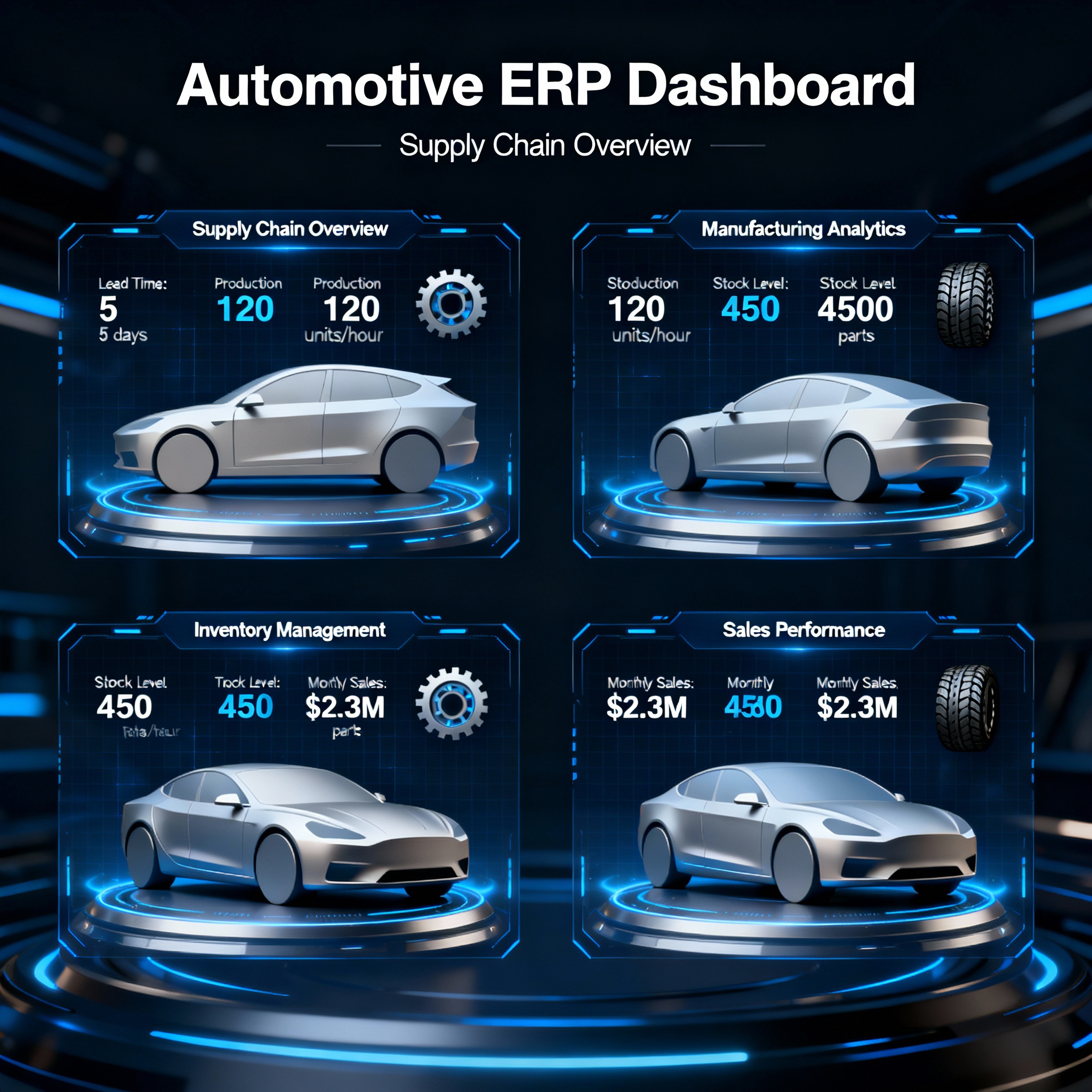
ERP systems offer comprehensive dashboards that display key performance indicators (KPIs) for manufacturing, logistics, and sales in real time.
Predictive Maintenance and Quality Control
Real-time data analytics forecast potential equipment issues and quality deviations, enabling prompt corrective actions to maintain production standards.
Ensuring Compliance and Sustainability
Regulatory Compliance Automation
ERP solutions help automotive manufacturers comply with safety, environmental, and trade regulations through automated documentation and reporting features.
Sustainability Monitoring
Tracking resource consumption and waste reduction through ERP fosters greener manufacturing practices, aligning with global sustainability goals.
Enhancing Supply Chain Management
End-to-End Visibility
Modern ERP platforms provide transparent tracking of materials and parts from suppliers to end customers, improving coordination and reducing delays.
Supplier Collaboration Portals
Integrated portals enable better communication, contractual management, and performance monitoring with suppliers.
Cloud ERP Security and Scalability
Securing Sensitive Data
Automotive ERP modernization includes advanced cybersecurity protocols to protect intellectual property and customer data.
Scalability for Growth
Cloud-based ERP systems scale effortlessly with business growth, supporting new product lines, markets, and increased transaction volumes.
DevOps and Continuous Improvement in ERP
Agile ERP Enhancements
Leveraging DevOps practices allows continuous integration and delivery of ERP updates that meet changing business needs without operational disruptions.
Improved Testing and Deployment
Automation in testing ensures new ERP features are reliable and deployed with minimal downtime.
Informatix.Systems’ Approach to Automotive ERP Modernization
At Informatix.Systems, we understand that every automotive enterprise has unique challenges and goals. Our ERP modernization solutions combine industry expertise with cutting-edge technologies such as AI, IoT, cloud, and blockchain. We work closely to tailor systems that optimize production, strengthen supply chains, and boost overall enterprise agility. Our seamless integration and support services enable our clients worldwide to achieve enhanced profitability and competitive advantage in an accelerating market environment.ERP modernization is a pivotal driver of transformation for the automotive industry in 2026. The integration of AI, cloud computing, IoT, and blockchain within ERP systems enriches production processes, supply chain management, and regulatory compliance. Automotive enterprises that adopt modern ERP solutions gain real-time insights, increased operational efficiency, and greater innovation agility. At Informatix.Systems, we provide cutting-edge AI, Cloud, and DevOps solutions for enterprise digital transformation to empower automotive businesses on this journey.
FAQs
What is ERP modernization in the automotive industry?
ERP modernization involves upgrading legacy ERP systems with new technologies such as AI, cloud, and IoT to better support automotive manufacturing and supply chain processes.
How does AI enhance automotive ERP systems?
AI enables predictive analytics for maintenance, demand forecasting, quality control, and process automation, reducing downtime and improving efficiency.
Why is cloud ERP important for automotive companies?
Cloud ERP offers scalability, accessibility, and reduced IT infrastructure costs, enabling automotive businesses to adapt quickly to market changes.
How can blockchain improve automotive supply chains?
Blockchain provides secure, transparent tracking of parts and materials, reducing fraud and ensuring compliance across global suppliers.
What role does IoT play in modern ERP for automotive?
IoT devices collect real-time data from production equipment and logistics, enabling immediate monitoring and proactive maintenance.
Can ERP systems support electric and autonomous vehicle production?
Yes, specialized ERP modules help manage the complexities of EV components, batteries, and autonomous technology integration.
How does Informatix Systems support ERP modernization?
We provide customized ERP modernization solutions leveraging AI, cloud, DevOps, and IoT to meet unique automotive business needs.
What are the benefits of ERP modernization for automotive companies?
Benefits include improved operational efficiency, enhanced supply chain transparency, regulatory compliance, and increased innovation capacity.
No posts found
Write a review