- 3/8, North Pirerbag
- 60 Feet Main Road
- Mirpur, Dhaka 1216
- +880-967-8247365
- support@informatix.systems

Kubernetes Platform Engineering for Gaming in 2026 | Informatix.Systems
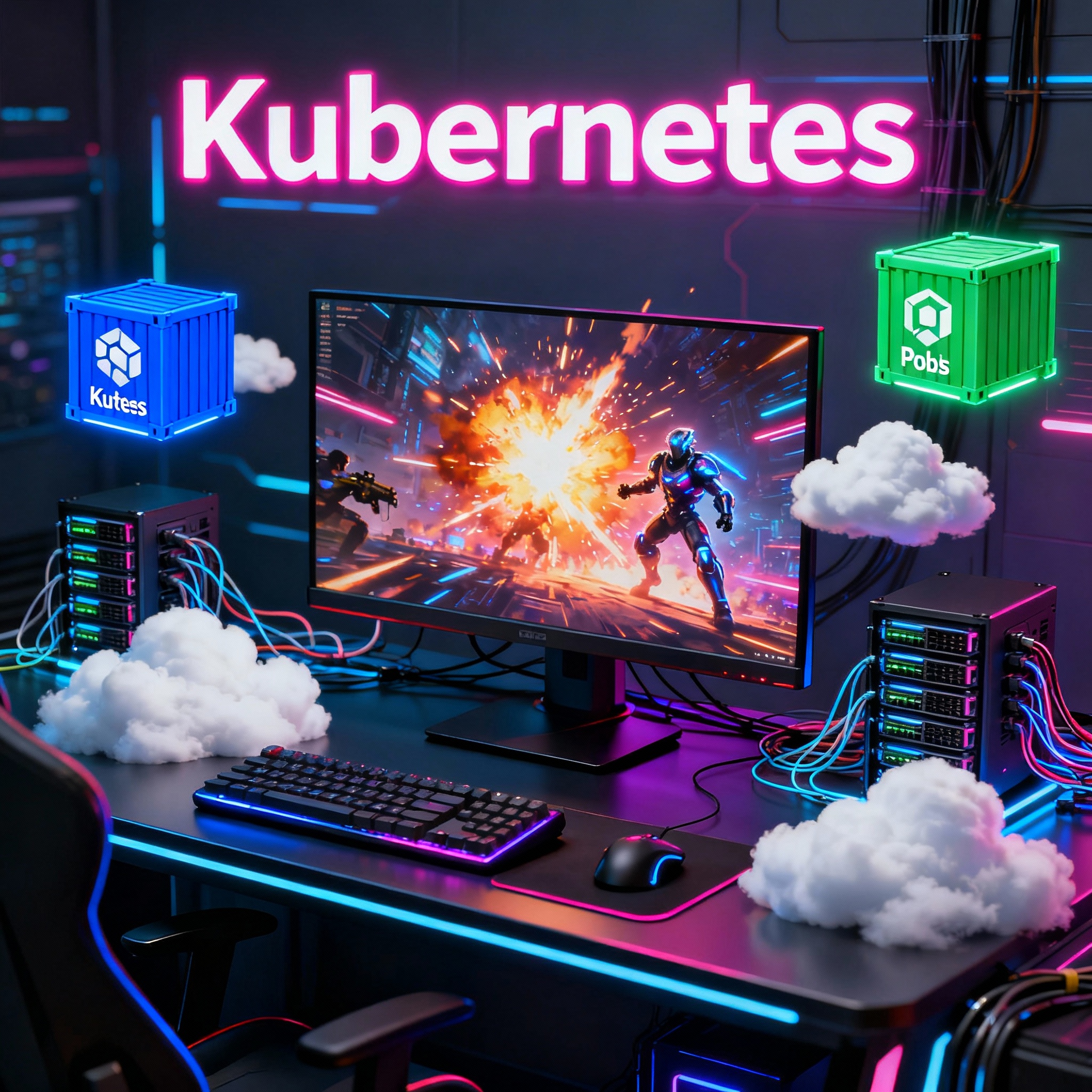
The gaming industry in 2026 is rapidly evolving, driven by emerging technologies that redefine player experiences and developer capabilities alike. Central to this transformation is Kubernetes platform engineering, which has become a cornerstone for managing the complex infrastructure that modern gaming demands. Kubernetes, an open-source system for automating deployment, scaling, and management of containerized applications, is revolutionizing the way game developers and publishers build, deploy, and maintain scalable gaming environments. With cloud gaming becoming ubiquitous and gaming workloads requiring seamless scalability, high availability, and low latency, Kubernetes enables gaming companies to optimize resource utilization and support millions of concurrent players worldwide. It empowers rapid development cycles, automated operational tasks, and microservices architectures that are critical for next-gen AAA titles and indie games alike. Additionally, Kubernetes' capacity to integrate cutting-edge DevOps practices and AI-driven automation enhances the performance and security of gaming platforms. At Informatix.Systems, we provide cutting-edge AI, Cloud, and DevOps solutions for enterprise digital transformation, offering gaming companies the technology expertise needed to harness Kubernetes for superior game delivery and innovative experiences. This article explores how Kubernetes platform engineering is shaping the gaming landscape in 2026, outlining technical strategies, emerging trends, and best practices for gaming enterprises aiming to thrive in this competitive market.
The Role of Kubernetes in Gaming Infrastructure
What is Kubernetes and Why It Matters for Gaming?
Kubernetes, often abbreviated as K8s, is an open-source container orchestration system that automates the deployment, scaling, and management of containerized applications. In gaming, where infrastructure needs fluctuate dramatically due to user activity, Kubernetes offers:
- Elastic scalability: Automatic scaling to support player surges during peak hours or game launches.
- High availability: Self-healing capabilities that reduce downtime, ensuring games remain accessible.
- Resource efficiency: Smart bin packing to maximize utilization of cloud resources, cutting costs.
- Cross-platform compatibility: Runs on-premise, public cloud, or hybrid setups, offering flexibility.
Gaming Workload Characteristics Suitable for Kubernetes
Games today require distributed architectures, including:
- Multiplayer server clusters
- Real-time analytics and telemetry services
- Continuous integration/continuous deployment (CI/CD) pipelines for patches and updates
- AI-driven game logic and personalization
Kubernetes manages these heterogeneous components efficiently, orchestrating containerized services across a cluster of machines, supporting complex gaming ecosystems.
Key Trends in Kubernetes Platform Engineering for Gaming in 2026
AI-Driven Automation in Platform Engineering
AI and machine learning optimize Kubernetes operations by automating scaling decisions, predictive maintenance, and anomaly detection. This reduces manual overhead and improves player experience through stable, performant environments.
Shift to Platform Engineering from DevOps
Platform engineering standardizes Kubernetes tooling, reducing fragmentation and simplifying developer workflows. It provides a unified platform-as-a-service (PaaS) experience for game developers, boosting innovation and time-to-market.
Edge Computing Integration
Kubernetes-based platforms now increasingly deploy gaming services to edge data centers close to players, minimizing latency, which is critical in competitive gaming and cloud streaming.
Security and Compliance Enhancements
Gaming platforms are fortified with integrated secrets management, automated compliance audits, and zero-trust networking within Kubernetes clusters.
Designing a Gaming Platform with Kubernetes
Microservices Architecture Benefits
- Modular game components allow independent updates and scalability.
- Fault isolation reduces the impact of failures.
- Enables multi-language, multi-framework development flexibility.
Containerizing Game Servers and Services
- Using Docker containers to package game servers ensures consistency across environments.
- Kubernetes orchestrates replicas to manage player loads dynamically.
Persistent Storage for Game State
- Kubernetes supports cloud-native storage solutions to preserve player progress and game state reliably.
Service Discovery and Load Balancing
- Kubernetes’s internal DNS and load balancing distribute player traffic evenly across game servers, ensuring smooth gameplay.
Scaling Multiplayer Games with Kubernetes
Horizontal Pod Autoscaling
Automatically adjust the number of game server pods based on traffic metrics, maintaining responsiveness during peak play.
Cluster Autoscaling for Cost Efficiency
Scale underlying node infrastructure dynamically in cloud environments, preventing over-provisioning.
Global Availability with Multi-Cluster Deployments
Use Kubernetes federation or service meshes to deploy gaming clusters regionally for worldwide player coverage.
DevOps and CI/CD Pipelines for Gaming on Kubernetes
Automated Game Build and Deployment
Integrate Jenkins, GitLab CI, or other tools to automate game build pipelines, enabling frequent updates and testing.
Canary Deployments for Risk Mitigation
Roll out updates progressively using Kubernetes' built-in support for canary releases, minimizing the impact of faulty patches.
Monitoring and Observability
- Use Prometheus, Grafana, and Dynatrace for real-time insights into game server health and player experience.
- Detect anomalies early and automate remediation.
Cloud Platforms and Kubernetes for Gaming
Major Cloud Providers Supporting Kubernetes
- AWS, Google Cloud, and Azure offer managed Kubernetes services (EKS, GKE, AKS) optimized for gaming workloads.
Hybrid and Multi-Cloud Strategies
Gaming companies leverage hybrid cloud deployments for data residency and latency optimization.
Cost Optimization Techniques
- Rightsize workloads with Kubernetes autoscaling.
- Use spot instances and reserved capacity.
- Optimize storage and network egress costs.
Challenges of Kubernetes Platform Engineering in Gaming
Complexity Management
Kubernetes’s steep learning curve requires skilled platform engineering teams to build tailored internal developer platforms.
Latency and Network Performance
Gaming requires ultra-low latency, which demands edge computing integration and network optimizations within Kubernetes clusters.
Security Risks
Protect against DDoS, unauthorized access, and data breaches through Kubernetes network policies and robust identity controls.
Kubernetes in Gaming
Cloud Gaming Platforms
Leading cloud gaming providers use Kubernetes for scalable GPU server orchestration, real-time streaming, and session management.
AAA Game Publishers
Game studios leverage Kubernetes for managing backend microservices, ensuring scalable matchmaking and game analytics.
Best Practices for Kubernetes Platform Engineering in Gaming
- Develop internal developer platforms to abstract Kubernetes complexity.
- Prioritize observability and automation.
- Implement proactive security measures.
- Collaborate cross-functionally between dev, ops, and platform teams.
- Continually optimize cost and performance metrics.
Future Outlook: Kubernetes and Gaming Beyond 2026
- Increasing AI integration for personalized gaming experiences.
- Further edge deployment proliferation.
- Growth in multiplayer and metaverse platforms powered by Kubernetes.
- Evolution towards platform engineering as a standard for gaming IT operations.
Kubernetes platform engineering is fundamentally reshaping how gaming companies build, deploy, and operate their platforms in 2026 and beyond. Its powerful orchestration capabilities, coupled with AI-driven automation and cloud-native scalability, equip gaming enterprises to meet unprecedented demand and complexity with agility and precision. At Informatix.Systems, we provide cutting-edge AI, Cloud, and DevOps solutions for enterprise digital transformation, helping gaming companies leverage Kubernetes for next-generation platform excellence. By embracing Kubernetes platform engineering, gaming businesses can deliver exceptional player experiences while optimizing costs and innovation velocity.
FAQs
What is Kubernetes platform engineering in gaming?
It is the practice of designing, building, and managing Kubernetes-based platforms tailored to gaming workloads, enabling scalable and automated game deployment and operations.
How does Kubernetes improve cloud gaming?
Kubernetes automates resource scaling, manages containerized game servers, and reduces downtime, ensuring smooth and responsive cloud gaming experiences.
What are the common Kubernetes challenges for gaming?
Complexity in orchestration, latency sensitivity, security concerns, and cost control are primary challenges when implementing Kubernetes for gaming.
Can small indie game studios benefit from Kubernetes?
Yes, Kubernetes supports efficient resource use and rapid deployment, helping studios scale games without significant infrastructure investments.
How does Informatix Can systems support gaming companies with Kubernetes?
We deliver comprehensive AI, cloud, and DevOps services, including managed Kubernetes, platform engineering, automation, and security, tailored for the gaming industry.
What role does AI play in Kubernetes platform engineering for gaming?
AI enhances automation, predictive scaling, anomaly detection, and personalized gaming features within Kubernetes environments.
Is Kubernetes suitable for multiplayer game scaling?
Absolutely, Kubernetes enables horizontal scaling of multiplayer game servers to handle fluctuating player loads dynamically.
What cloud providers offer Kubernetes services for gaming?
AWS (EKS), Google Cloud (GKE), and Azure (AKS) provide managed Kubernetes platforms optimized for gaming workloads.
No posts found
Write a review