- 3/8, North Pirerbag
- 60 Feet Main Road
- Mirpur, Dhaka 1216
- +880-967-8247365
- support@informatix.systems

LMS Modernization Solutions for Universities in 2026 | Informatix.Systems
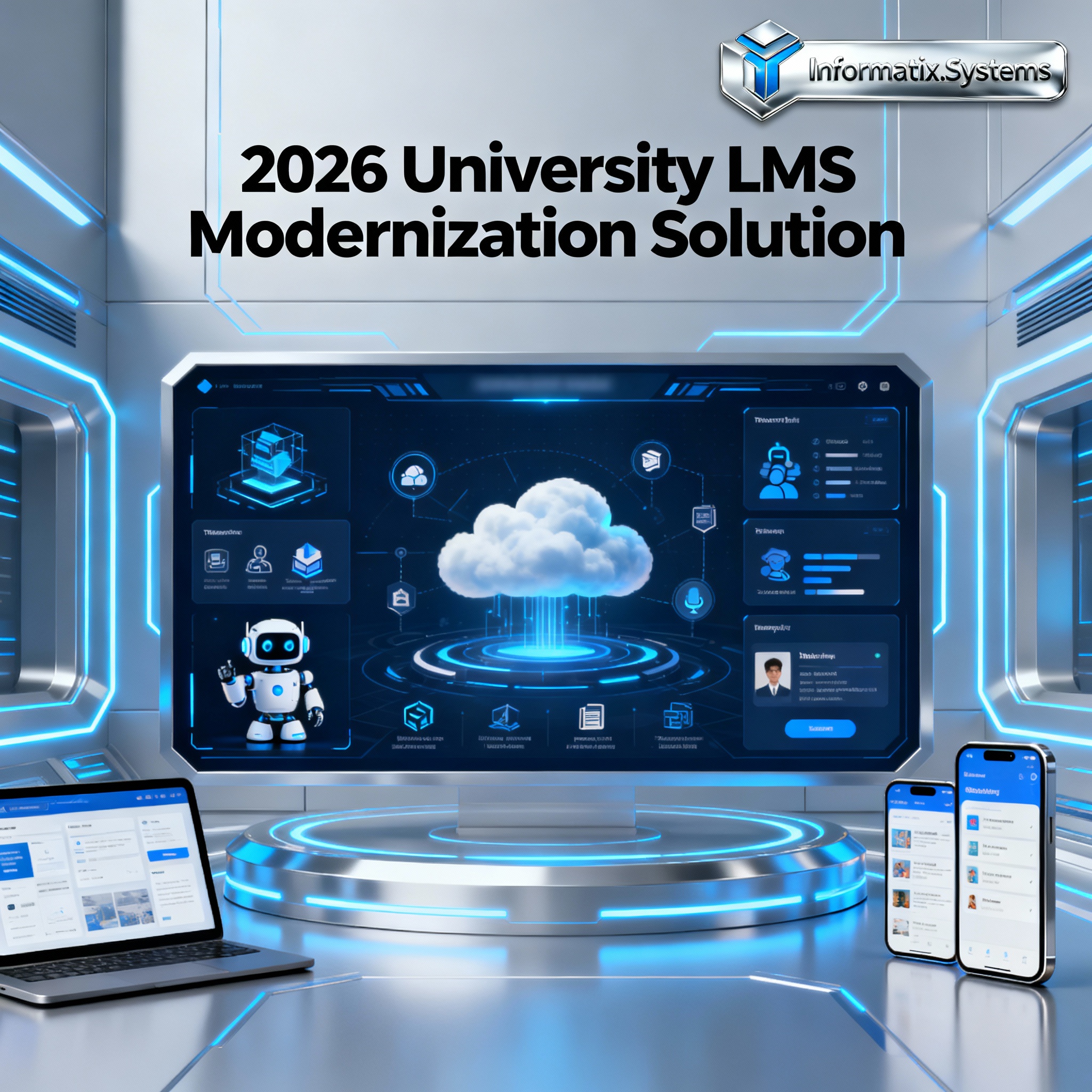
Universities around the world are at a pivotal crossroads in 2026 as digital transformation continues to reshape every corner of the education landscape. The demand for flexible, engaging, and data-driven learning experiences has never been greater. Traditional Learning Management Systems (LMS), once the backbone of online education, are now being redefined by new technologies marked by agility, artificial intelligence (AI), and cloud scale. The modern learner expects more than static content uploads and login portals. Personalized courses, mobile-friendly interfaces, AI-driven tutoring, and integrated analytics are key expectations in today’s universities. This rapid evolution places immense pressure on academic institutions to modernize their LMS infrastructure and deliver learning ecosystems that are smarter, scalable, secure, and hybrid-ready. With advances in machine learning, cloud computing, and immersive learning tools, the next-generation LMS is becoming a central command hub for digital education, streamlining curriculum management, engagement tracking, and performance analysis while uniting faculty and students in real time. At Informatix.Systems, we provide cutting-edge AI, Cloud, and DevOps solutions for enterprise digital transformation, empowering universities to embrace the new era of smart education. Our LMS modernization frameworks transform outdated learning platforms into adaptive, cloud-native systems equipped for future growth, security, and innovation. In this comprehensive article, we’ll explore the drivers, technologies, and best practices behind LMS Modernization Solutions for Universities in 2026 revealing how institutions can enhance learning outcomes, optimize operations, and secure their digital futures with Informatix.Systems.
What is LMS Modernization?
LMS modernization is the process of upgrading legacy learning management platforms to leverage cloud computing, artificial intelligence, advanced analytics, and UX-driven design for improved digital learning performance.
Core Objectives:
- Enhance student engagement through intelligent interfaces
- Enable mobility and multi-device accessibility
- Integrate real-time analytics and automation
- Ensure compliance with global data and education standards
Informatix.Systems specializes in developing modular, interoperable LMS ecosystems that evolve alongside campus innovation needs.
Why Universities Need LMS Modernization in 2026
The 2026 education ecosystem is characterized by rapid digital evolution, hybrid academies, and student personalization demands.
Emerging Needs and Drivers:
- Post-pandemic digital momentum: Institutions now see virtual learning as a permanent necessity.
- Hybrid learning frameworks: Blending physical and online experiences seamlessly.
- Competition in online programs: Universities must differentiate with a superior user experience.
- Regulatory and data compliance: GDPA, FERPA, and local legislation require robust systems.
Modernization delivers not only improved technology but also long-term sustainability and educational impact.
The Limitations of Legacy LMS Platforms
Outdated LMS systems often limit innovation and struggle to meet the modern learner’s expectations.
Common Issues:
- Static content and outdated UI/UX designs
- Lack of integration with mobile and AI tools
- Security vulnerabilities and compliance gaps
- Rigid infrastructure that hinders scalability
- Limited analytics for performance tracking
Informatix.Systems modernization services target these gaps, combining smart automation, modular design, and embedded analytics to revitalize existing systems.
Key Technologies Driving LMS Modernization in 2026
Digital learning modernization is powered by a synergy of AI, Cloud, DevOps, and Data Analytics, ensuring continuous improvements and seamless accessibility.
Artificial Intelligence and Machine Learning
AI introduces adaptive learning experiences:
- Smart course recommendations
- Intelligent assessments and grading automation
- AI chatbots for real-time academic assistance
Cloud Computing
Cloud enhances scalability and uptime:
- Multi-tenant SaaS hosting for global access
- Centralized content updates with minimal manual effort
- Secure, compliant data exchange
DevOps Integration
DevOps ensures agile development cycles:
- Continuous integration/deployment for new features
- Automated performance monitoring
- Streamlined bug fixes and version management
At Informatix.Systems, these technologies work in unison to produce resilient, future-proof LMS architectures tailored for universities of all sizes.
Benefits of Modern LMS Platforms for Universities
Modernizing an LMS impacts every stakeholder, students, faculty, and administrators alike.
Key Benefits:
- Engagement: Interactive, gamified content enhances motivation.
- Efficiency: Automation reduces admin workload through AI workflows.
- Personalization: Adaptive learning paths for every student.
- Analytics: Real-time dashboards for attendance, grades, and outcomes.
- Scalability: Cloud infrastructure handles thousands of concurrent users.
Through robust modernization solutions from Informatix.Systems, universities experience greater continuity, collaboration, and educational efficiency.
Integration and Interoperability: Building a Connected Ecosystem
An effective LMS must connect seamlessly with third-party applications such as ERP systems, digital libraries, and video conferencing tools.
Integration Features:
- APIs and webhooks for interoperability
- Integration with tools like Zoom, Teams, and Google Workspace
- Financial and enrollment system sync
- Cloud analytics layers for KPI measurement
Informatix.Systems frameworks ensure solutions comply with IMS Global and SCORM standards—maximizing flexibility and long-term sustainability.
Next-Gen LMS Features: What Defines a Modern Platform?
To stay relevant in the post-digital academic world, universities must incorporate these modern LMS functionalities:
Core Features:
- AI-based course recommendation engines
- Voice- and chat-enabled student support
- Unified mobile and desktop experiences
- Gamification and social learning modules
- Predictive analytics for student retention
- Cloud-native microservices for high performance
Each modernization project is led by Informatix.Systems are built for customization, user experience, and powerful academic outcomes.
Cybersecurity and Compliance in LMS Modernization
As universities adopt digital-first approaches, protecting sensitive student and institutional data is paramount.
Security Imperatives:
- End-to-end encryption of student records
- Multi-factor authentication (MFA) for users
- Compliance with FERPA, GDPR, HIPAA (for health disciplines)
- Cloud-native DevSecOps implementation
At Informatix.Systems, secure design isn’t an afterthought; it’s embedded at every level of system architecture to protect modern universities against digital risks.
Accessibility, Inclusivity, and Scalability in Education
Universities serve diverse student populations, so inclusive design and accessibility are core modernization priorities.
Inclusive Design Standards:
- WCAG 2.1 and ADA Section 508 compliance
- Multilingual support for global campuses
- Text-to-speech and alternative navigation systems
- Adaptive interfaces for visually or hearing-impaired learners
Informatix.Systems ensure LMS architecture empowers education equity, bridging learning gaps through digital design.
The Role of Data Analytics and Predictive Intelligence
Data analytics transforms LMS platforms from content hosts into decision-making engines.
Applications:
- Predictive retention modeling: Flags at-risk students.
- Learning behavior intelligence: Tracks engagement and completion rates.
- Performance forecasting: Aligns learning patterns with institutional goals.
- AI dashboards: Visual insights for faculty and department heads.
With Informatix.Systems data frameworks enable universities convert data silos into actionable educational insights.
Migration and Implementation Roadmap
Transitioning from legacy LMS to modern platforms requires careful planning. Informatix.Systems executes modernization through structured, low-risk frameworks.
Key Migration Phases:
- Assessment: Evaluate existing LMS capabilities.
- Mapping: Define data flows and integration points.
- Cloud Set-Up: Establish scalable hosting with redundancy.
- Testing & Deployment: Validate performance and user experience.
- Training & Support: Enable staff for post-launch adoption.
Each modernization lifecycle ensures zero disruption and maximum user satisfaction.
Future Trends in LMS for Universities (2026–2030)
The decade ahead will see LMS platforms evolve into cognitive learning ecosystems that merge personalization, automation, and analytics.
Key Trends:
- AI Tutors and Virtual Advisors for interactive guidance
- XR Learning Experiences through AR/VR-assisted simulations
- Blockchain Credentialing for secure certification storage
- Edge AI Analytics for instant performance evaluation
Informatix.Systems are already innovating in these areas, building smarter, faster, and more adaptive learning technologies to future-proof education. Higher education in 2026 is powered by intelligence, automation, and connectivity. LMS modernization is no longer optional; it’s essential to academic excellence, global competitiveness, and sustainable growth. At Informatix.Systems, our mission is to reimagine digital education through AI, Cloud, and DevOps-driven modernization frameworks that empower universities to master the challenges of tomorrow’s learning landscape. From seamless migrations and secure cloud deployments to predictive analytics and accessibility, we create LMS systems that redefine how knowledge is shared in the digital age. Ready to elevate your university’s digital learning ecosystem?Partner with Informatix.Systems today to modernize, scale, and transform your LMS platform for the intelligent university of the future.
FAQs
What is LMS modernization for universities?
It’s the process of upgrading existing learning systems to cloud-based, AI-driven platforms offering scalability, analytics, and improved UX.
How does Informatix.Systems modernize legacy LMS platforms?
We combine AI, Cloud, and DevOps practices to ensure a seamless architecture migration, enhanced functionality, and optimized learner engagement.
What are the main challenges in LMS modernization?
Legacy data migration, user retraining, and system interoperability. Informatix.Systems address these through structured implementation roadmaps.
How secure are modern LMS solutions?
Our solutions employ data encryption, DevSecOps architecture, and multi-factor authentication for maximum data protection.
Can Informatix.Systems integrate LMS with other campus systems?
Yes. We provide API-first integration that connects LMS platforms with ERP, CRM, SIS, and third-party applications effortlessly.
What’s the ROI for modernizing university LMS platforms?
Modern systems enhance engagement, reduce operational costs, and improve institutional analytics, delivering measurable ROI.
How long does LMS modernization take?
Depending on system complexity, full deployment typically ranges from 3 to 6 months with Informatix.Systems' agile methodology.
What’s next for LMS after 2026?
Expect increased use of AI tutors, immersive AR/VR learning, and blockchain-based credential management, transforming education globally.
No posts found
Write a review