- 3/8, North Pirerbag
- 60 Feet Main Road
- Mirpur, Dhaka 1216
- +880-967-8247365
- support@informatix.systems

Threat Modeling & Risk Assessment for Banking in 2025 | Informatix Systems
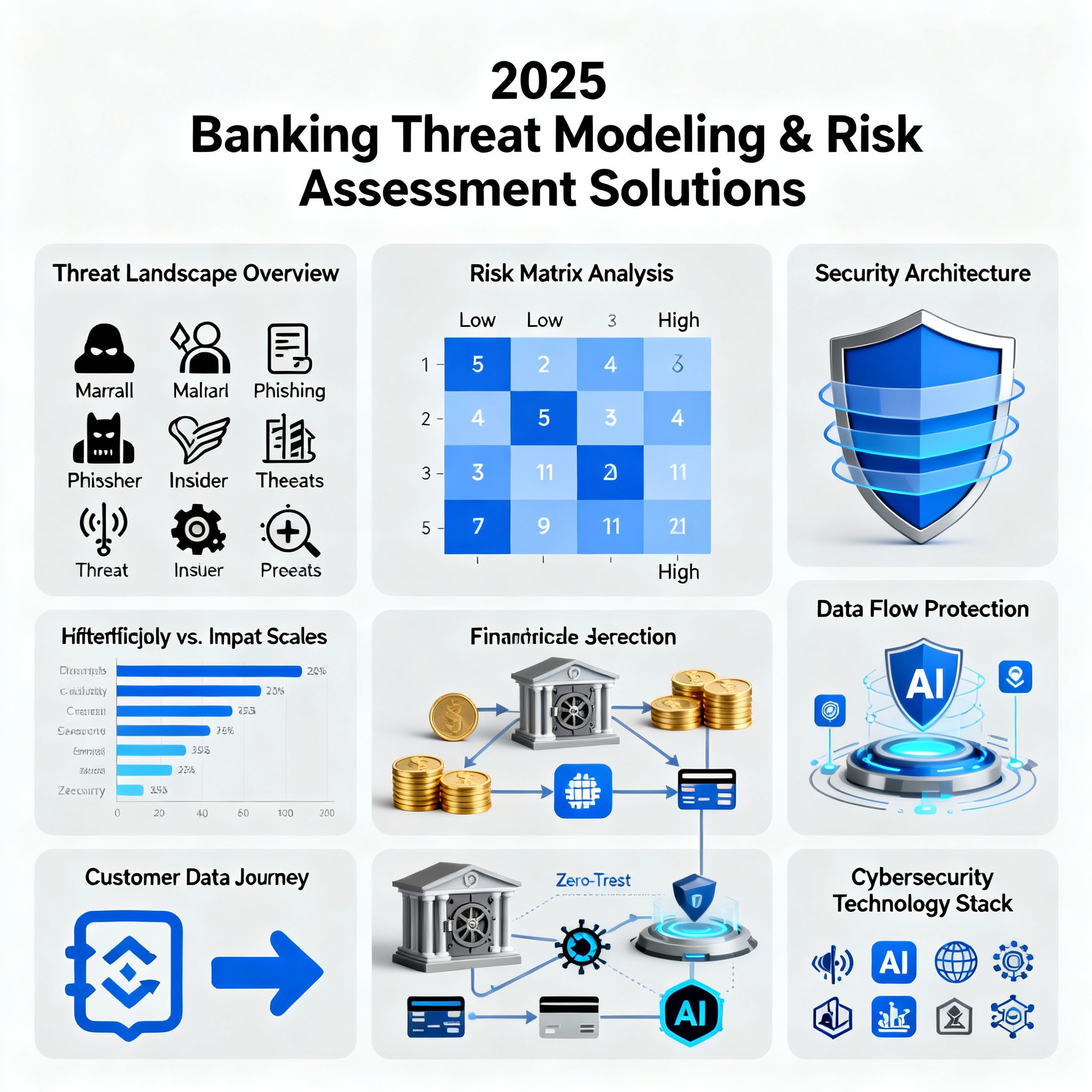
Banking in 2025 has transformed into a hyper-digital ecosystem powered by AI, predictive analytics, and cloud-native architectures. Yet, this transformation brings unprecedented exposure to emerging threats, from deepfake-powered fraud to AI-generated phishing campaigns and quantum-level cryptographic challenges. As digital banks, fintech startups, and traditional institutions embrace real-time data connectivity, cybersecurity frameworks are under immense pressure to evolve. Threat modeling and risk assessment have become the cornerstones of strategic defense in the financial sector. These practices shift cybersecurity from a reactive to a proactive discipline, identifying potential vulnerabilities before they can be exploited. For financial institutions, this evolution is not optional; it’s essential for regulatory compliance, customer trust, and business continuity. At Informatix Systems, we provide cutting-edge AI, Cloud, and DevOps solutions for enterprise digital transformation, empowering banks to strengthen their security posture while accelerating innovation. In this competitive landscape, threat modeling and risk assessment for banking in 2025 are not just about compliance; they are about survival, resilience, and growth. This article explores the new paradigms of financial threat modeling, risk quantification, compliance automation, AI-driven defense, and digital trust frameworks that define secure banking operations in 2025.
Understanding Threat Modeling in Modern Banking
What Is Threat Modeling?
Threat modeling is the systematic process of identifying, evaluating, and mitigating potential security threats to systems and data before they are exploited.
In banking, threat modeling involves:
- Mapping digital assets such as payment APIs, mobile banking apps, and customer data.
- Identifying threat vectors, including insider attacks, phishing, DDoS, and fraudulent transactions.
- Analyzing potential attack impact and probability.
- Designing control measures to prevent exploitation.
Why Threat Modeling Matters in Banking
Banks deal with highly sensitive customer data, enormous financial assets, and complex third-party integrations. Effective threat modeling helps:
- Prevent data breaches.
- Ensure PCI DSS and ISO 27001 compliance.
- Reduce operational downtime.
- Enhance customer confidence.
Key Cyber Threats Facing Banks in 2025
Emerging Threat Vectors
The banking sector faces dynamic risks across multiple fronts:
- AI-powered Financial Fraud: Automated bots launching credential-stuffing attacks.
- Deepfake Identity Scams: Synthetic video verification threats in digital banking.
- Quantum Decryption Risks: Post-quantum cryptography vulnerabilities.
- API Misconfigurations: Poor API governance leading to data exposure.
- Insider Threats: Compromised employees misusing privileged data.
Sector-Wide Threat Trends
- Increased use of Ransomware as a Service (RaaS).
- Phishing micro-campaigns targeting specific bank employees.
- Automated supply chain attacks on fintech vendors.
- Zero-day vulnerabilities in cloud integrations.
At Informatix.Systems, our risk intelligence frameworks continually update to detect and address these fast-evolving threats in real time.
Risk Assessment Frameworks for Banks
Foundational Approach
Risk assessment in banking involves systematically identifying, analyzing, and prioritizing risks affecting financial operations, compliance, and data assets.
Key stages include:
- Risk Identification: Mapping potential cyber and operational risks.
- Risk Analysis: Assessing likelihood and business impact.
- Risk Evaluation: Ranking risks based on severity.
- Risk Mitigation: Implementing controls and continuous monitoring.
Common Frameworks Used
- NIST SP 800-30 for risk management guidance.
- ISO/IEC 27005 for information security risk management.
- OWASP Top 10 for application threat profiling.
- FFIEC Cybersecurity Assessment Tool for U.S.-regulated banks.
Integrating Threat Modeling with Risk Assessment
Modern cybersecurity strategies merge threat modeling and risk assessment under a unified framework.
Integration Benefits
- Comprehensive Visibility: Aligns threat detection with business impact.
- Optimized Decision-Making: Prioritizes the highest-risk attack surfaces.
- Adaptive Mitigation: Continuously refines defenses based on new intelligence.
Informatix.Systems Unified Risk Framework
At Informatix.Systems, we combine AI analytics with threat intelligence modeling to offer an integrated defense posture. Our proprietary tools correlate internal security telemetry with external threat feeds, empowering banks to detect, simulate, and preempt attacks with predictive accuracy.
The Role of Artificial Intelligence in Threat Modeling
Predictive Analytics for Cyber Defense
AI now predicts, rather than just reacts to, potential threats. It enables:
- Correlation of vast datasets to uncover hidden threats.
- Detection of anomalies in transaction patterns and access behaviors.
- Prediction of future risk probabilities using machine learning.
Informatix AIdge™ Security Engine
Our Informatix AIdge™ platform automates threat mapping using ML-driven algorithms trained on historical breach data. It generates adaptive protection strategies, reducing manual workload and detection time.
Regulatory Compliance in Risk Assessment
Global Compliance Standards Affecting Banks
As of 2025, banks must adhere to complex regulatory landscapes:
- GDPR (EU Data Protection Regulation)
- Basel III & IV for financial risk management.
- PCI DSS 4.0 for payment security.
- Bangladesh Bank ICT Security Guidelines 2025
- NIST Cybersecurity Framework
How Informatix Systems Ensures Compliance
We integrate compliance-as-code within our DevSecOps pipelines, ensuring every deployment aligns with required standards. Automated policy enforcement reduces compliance risks and accelerates audits.
Cloud and DevOps Security Risks in Banking
Cloud Security Considerations
Banks migrating to cloud ecosystems face significant risk exposure due to:
- Misconfigured IAM roles.
- Cross-region data compliance conflicts.
- Unsecured third-party integrations.
Securing DevOps Pipelines
Informatix.Systems ensure DevSecOps integration, embedding security validation at every pipeline stage:
- Static and dynamic code scans.
- Secret management and privileged access prevention.
- Automated vulnerability remediation.
This approach reduces deployment risks without slowing innovation.
Quantitative vs Qualitative Risk Assessment
Key Differences
| Aspect | Quantitative | Qualitative |
|---|---|---|
| Focus | Numerical values and probabilities | Descriptive severity and likelihood |
| Tools Used | Monte Carlo simulation, FAIR, risk scoring | Expert judgment, risk matrices |
| Output | Financial metrics, loss estimation | Risk prioritization and categorization |
| Use Case | Enterprise risk quantification | Operational decision-making |
Hybrid Models in 2025
Modern banks use hybrid models that merge quantitative precision with qualitative insights. Informatix.Systems’ Hybrid Risk Matrix™ generates numerical probabilities alongside contextual analysis for executive reporting.
Building a Proactive Risk Culture in Banking
Culture of Security Awareness
Building an organizational culture where every employee identifies, reports, and mitigates risks is essential.
Best practices include:
- Continuous training with simulated phishing campaigns.
- Executive-level risk dashboards.
- Department-level KPIs for incident prevention.
Informatix Systems Training Programs
We conduct specialized Threat Awareness and Risk Management programs tailored for bank training teams on cyber hygiene, cloud risk handling, and AI-driven fraud detection.
Future of Threat Modeling & Risk Assessment in Banking
Trends Shaping the Future
- Zero Trust Architectures are dominating network defense.
- Real-Time Risk Scoring Engines integrated into banking platforms.
- Quantum-Resistant Encryption is becoming mandatory post-2025.
- AI-Augmented Compliance Auditing.
Informatix Systems Vision
At Informatix.Systems, our vision for banking cybersecurity is holistic digital resilience. We develop AI-powered tools that not only defend against threats but also optimize operational performance through secure innovation pipelines. Threat modeling and risk assessment for banking in 2025 have transcended traditional audit checklists; they are strategic imperatives driving cyber resilience, compliance, and business trust . Banks must deploy AI-driven analytics, integrated threat modeling, and automated compliance frameworks to stay competitive in the rapidly evolving regulatory environment. At Informatix.Systems, we partner with financial institutions to architect secure, intelligent, and adaptive banking ecosystems. Our AI, Cloud, and DevOps expertise ensures your digital transformation journey remains secure from day one. Contact Informatix Systems today to learn how we can fortify your bank’s cybersecurity posture for 2025 and beyond.
FAQs
What is threat modeling in banking?
It is a systematic method of identifying and mitigating potential security threats before they impact banking systems or data.
Why is risk assessment crucial for banks in 2025?
It ensures resilience against modern threats, compliance with evolving regulations, and sustained customer trust.
How does AI improve threat detection in banking?
AI automates pattern recognition, anomaly detection, and predictive analysis to identify and prevent sophisticated cyberattacks.
What regulations affect banking cybersecurity today?
Banks must comply with GDPR, PCI DSS 4.0, Basel frameworks, and local regulations such as Bangladesh Bank’s ICT Security Guidelines 2025.
What is the difference between qualitative and quantitative risk assessment?
Qualitative focuses on descriptive evaluations, while quantitative focuses on numerical probability and impact values.
How does Informatix Systems support financial institutions?
We deliver AI-powered, cloud-secure, and DevSecOps-integrated cybersecurity frameworks for next-generation banking resilience.
What are the top 2025 cybersecurity threats to banks?
AI-driven fraud, quantum cryptography attacks, insider misuse, and API vulnerabilities are among the top threats.
How can banks build a proactive risk culture?
By combining executive oversight with continuous staff training and integrating automated monitoring tools across operations.
No posts found
Write a review