Войти | Регистрация
Авторизуйтесь для получения расширенных возможностей
- г. Dhaka, 3/8, North Pirerbag, 60 Feet Main Road
- +880-967-8247365 (звонок бесплатный)
- Пн-Вс 9.00 - 18.00
- support@informatix.systems
- Посмотреть на карте

Common Nginx vs Apache Mistakes and How to Avoid Them
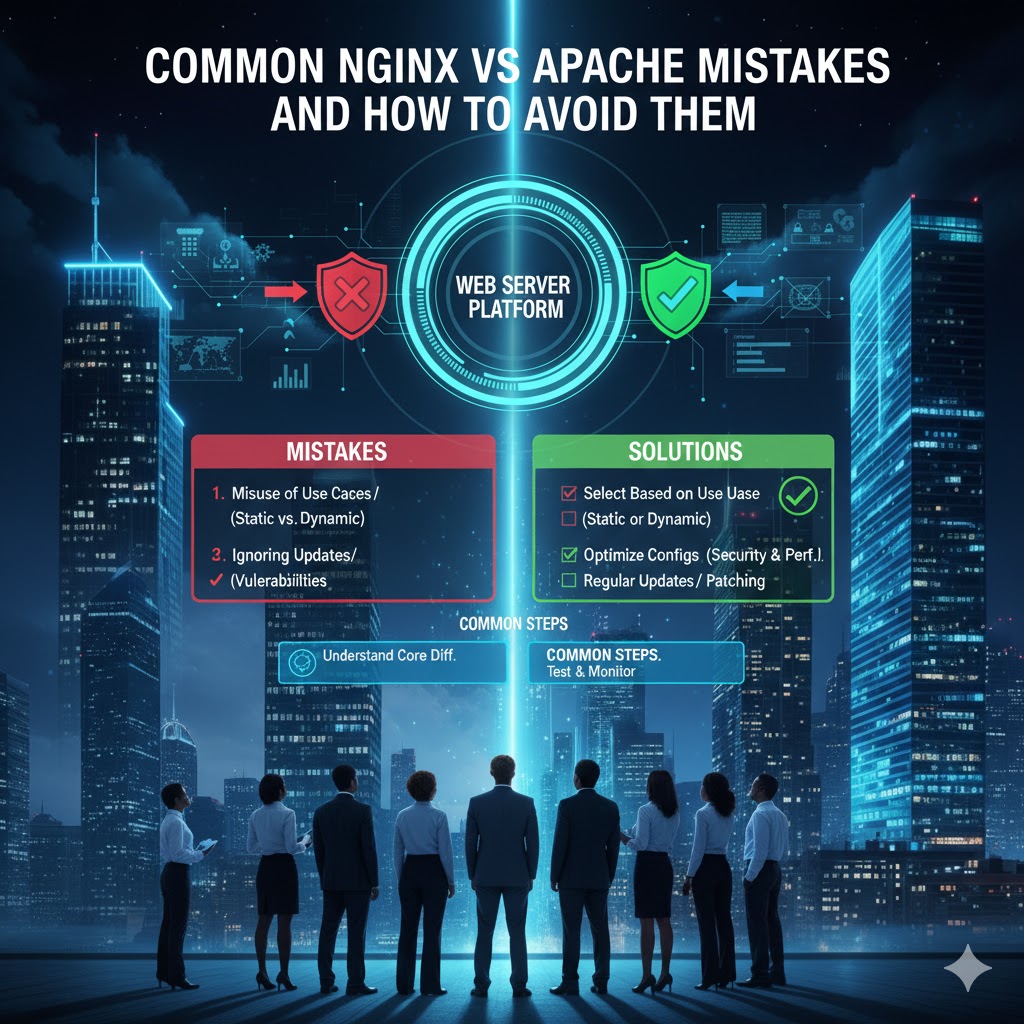
When it comes to choosing a web server, Nginx and Apache are two of the most popular options. Each has its strengths and weaknesses, and understanding these can help you avoid common pitfalls. In this guide, we'll explore frequent mistakes made when configuring Nginx and Apache and provide best practices to ensure optimal performance and security.
Misunderstanding the Architecture
Mistake: Assuming Nginx and Apache function identically.TecAdmin
Explanation: Nginx operates on an event-driven, asynchronous model, allowing it to handle multiple requests within a single thread. Apache, on the other hand, uses a process-based or thread-based model, creating a new process or thread for each request.Kloudstack Hosting
Best Practice: Understand the architectural differences to make informed decisions about which server to use based on your specific needs.
Incorrect Module Usage
Mistake: Misconfiguring or overloading servers with unnecessary modules.Alibaba Cloud+5Ishosting Blog+5VPSServer.com+5
Explanation: Both Nginx and Apache support modules to extend functionality. However, loading unnecessary modules can lead to performance degradation.TecAdmin+1Lease Packet+1
Best Practice: Only load essential modules and regularly review and remove unused ones to maintain optimal server performance.
Ignoring Security Configurations
Mistake: Neglecting to implement proper security measures.
Explanation: Both servers require specific configurations to ensure security, such as limiting HTTP methods and disabling unused modules.Ishosting Blog
Best Practice: Regularly update your server software, disable unnecessary modules, and configure security settings to protect against potential vulnerabilities.
Mismanaging .htaccess Files (Apache)
Mistake: Overusing or misconfiguring .htaccess files.VPSServer.com+4Hostinger+4Lease Packet+4
Explanation: While .htaccess files provide flexibility, excessive use can lead to performance issues as Apache must read these files on every request.Lease Packet+1Hostinger+1
Best Practice: Limit the use of .htaccess files and consider moving configurations to the main server configuration files for better performance.
Failing to Optimize Static Content Delivery
Mistake: Not properly configuring servers to handle static content efficiently.RoseHosting+3bouncing.org+3LiteSpeed Blog+3
Explanation: Nginx is particularly well-suited for serving static content due to its efficient handling of static files.
Best Practice: Configure your server to serve static content directly, reducing the load on application servers and improving response times.
Overlooking Logging and Monitoring
Mistake: Neglecting to set up proper logging and monitoring systems.
Explanation: Without proper logging and monitoring, it becomes challenging to diagnose issues and track server performance.
Best Practice: Implement centralized logging and monitoring solutions to gain insights into server performance and quickly identify and resolve issues.
Misconfiguring Reverse Proxy Settings
Mistake: Incorrectly setting up reverse proxy configurations.
Explanation: Both Nginx and Apache can act as reverse proxies, but misconfigurations can lead to issues like failed connections or security vulnerabilities.
Best Practice: Carefully configure reverse proxy settings, ensuring proper handling of headers and timeouts to maintain secure and efficient communication between servers.
Ignoring Performance Tuning
Mistake: Not optimizing server settings for performance.Ishosting Blog+1>span class="-me-1 flex h-full items-center rounded-full px-1 text-[#8F8F8F]">+1
Explanation: Default configurations may not be suitable for all environments, leading to suboptimal performance.
Best Practice: Regularly review and adjust server settings based on traffic patterns and application requirements to ensure optimal performance.
Failing to Implement Caching Strategies
Mistake: Not utilizing caching mechanisms effectively.
Explanation: Caching can significantly reduce server load and improve response times.
Best Practice: Implement appropriate caching strategies, such as HTTP caching headers and reverse proxy caching, to enhance performance.
Not Considering Long-Term Scalability
Mistake: Designing server configurations without considering future growth.Wikipedia+8Alibaba Cloud+8VPSServer.com+8
Explanation: Without planning for scalability, servers may become overwhelmed as traffic increases, leading to downtime or degraded performance.
Best Practice: Design server architectures with scalability in mind, utilizing load balancing and modular configurations to accommodate future growth.
Сообщения не найдены
Написать отзыв