Anmelden | Registrieren
Sign in to get more opportunities
- 3/8, North Pirerbag
- 60 Feet Main Road
- Mirpur, Dhaka 1216
- +880-967-8247365
- support@informatix.systems

Top 10 Technical SEO Tips for 2025
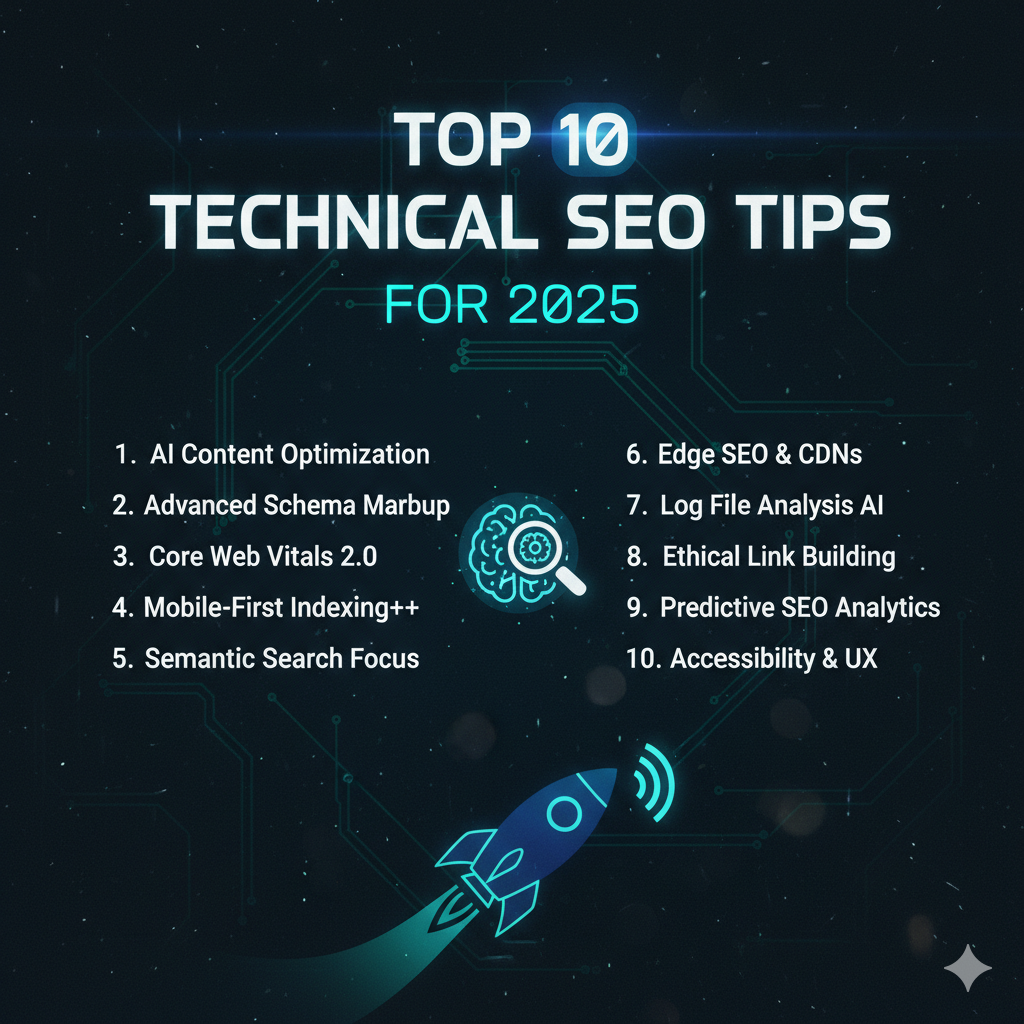
Technical SEO is one of the most critical components of a successful digital marketing strategy. As search engines evolve, technical SEO becomes more sophisticated, requiring marketers and webmasters to adapt to new trends and best practices. In 2025, understanding the technical aspects of SEO will play a pivotal role in improving website rankings, user experience, and overall performance.
This comprehensive guide will dive deep into the top 10 technical SEO tips for 2025, helping you optimize your website and stay ahead of the competition. Whether you are a beginner or an experienced SEO professional, these strategies will ensure that your site meets the latest technical standards for SEO success.
Ensure Mobile-First Indexing
Mobile-first indexing is a significant shift in SEO, and it will only become more critical in 2025. Google primarily uses the mobile version of your website for indexing and ranking. If your website isn’t optimized for mobile, it could suffer in rankings, even if it’s fully optimized for desktop.
Best Practices:
-
Responsive Design: Ensure your site is mobile-friendly and uses responsive design, meaning the layout adjusts depending on the screen size.
-
Mobile Page Speed: Optimize mobile page loading times as slower websites negatively impact rankings.
-
Content Visibility: Ensure your mobile site displays all the important content, such as text, images, and navigation elements, without hiding them behind tabs or pop-ups.
-
Tip: Use Google’s Mobile-Friendly Test tool to check if your site is mobile-optimized.
Improve Page Speed and Core Web Vitals
Page speed and Core Web Vitals are essential ranking factors in 2025. Google uses these metrics to assess the user experience of your site. Slow-loading pages can increase bounce rates and negatively impact your SEO rankings.
Core Web Vitals:
-
Largest Contentful Paint (LCP): Measures loading performance. Aim for an LCP of 2.5 seconds or less.
-
First Input Delay (FID): Measures interactivity. Aim for an FID of 100 milliseconds or less.
-
Cumulative Layout Shift (CLS): Measures visual stability. Aim for a CLS score of less than 0.1.
Best Practices:
-
Image Optimization: Compress images and use modern formats like WebP.
-
Lazy Loading: Implement lazy loading for images and videos to improve loading times.
-
Minify CSS, JavaScript, and HTML: Reduce the size of your website files to improve load times.
-
Tip: Use tools like Google PageSpeed Insights and Lighthouse to identify issues affecting your site’s performance.
Optimize for Voice Search
Voice search continues to rise in popularity with the increasing use of smart devices like Alexa, Siri, and Google Assistant. Optimizing for voice search in 2025 is essential, as it changes how people interact with search engines.
Voice search queries are usually longer and more conversational than traditional typed queries. They often include question phrases like "How," "What," or "Where."
Best Practices:
-
Use Natural Language: Write content that answers questions clearly and naturally. Incorporate long-tail keywords and conversational phrases.
-
Focus on Featured Snippets: Voice assistants often pull information from featured snippets. Aim to optimize your content to appear in these snippets.
-
Local SEO: Many voice searches are location-based. Ensure that your website is optimized for local SEO by including location-based keywords and maintaining an accurate Google My Business profile.
-
Tip: Leverage structured data to increase the likelihood of your content appearing in featured snippets.
Implement Structured Data and Schema Markup
Structured data and schema markup are essential for helping search engines understand the content of your website. By implementing schema markup, you provide explicit information about your content, such as product details, reviews, events, and more. This helps search engines display rich snippets, enhancing your website’s visibility in search results.
Best Practices:
-
Add Schema Markup: Use Schema.org to add relevant structured data to your website.
-
Review Snippets: Markup your product and review pages with rating and review schema to boost visibility in search.
-
Breadcrumb Schema: Use breadcrumb schema to improve navigation and user experience.
-
Tip: Use Google’s Structured Data Testing Tool to ensure your schema markup is correctly implemented.
Prioritize Secure and HTTPS Websites
In 2025, security remains a top priority, not only for user safety but also for SEO. Google has made HTTPS a ranking factor, and websites with SSL certificates (which provide HTTPS security) are ranked higher in search results.
Best Practices:
-
Obtain an SSL Certificate: Make sure your website has an SSL certificate installed and that all pages are served over HTTPS.
-
Redirect HTTP to HTTPS: If your site was previously HTTP, set up 301 redirects from HTTP to HTTPS to preserve SEO value.
-
Update Internal Links: Ensure all internal links point to the HTTPS version of your website.
-
Tip: Regularly check for mixed content issues on your website (i.e., HTTP content on HTTPS pages) using online tools.
Fix Crawl Errors and Improve Crawlability
Search engines use web crawlers to discover and index your site’s content. If search engines are unable to crawl your pages, it could negatively impact your rankings. Keeping an eye on crawl errors and improving your website's crawlability is essential.
Best Practices:
-
Google Search Console: Use Google Search Console to identify crawl errors and fix them as soon as possible.
-
Sitemaps: Ensure you have an XML sitemap that lists all the important pages on your website.
-
Robots.txt File: Update your robots.txt file to allow search engines to crawl and index important pages.
-
Tip: Regularly review and update your crawl settings to ensure search engines can crawl and index the most relevant pages on your site.
Optimize Your Website’s URL Structure
Having a clean and optimized URL structure makes it easier for search engines to crawl and index your pages. URLs should be descriptive, concise, and user-friendly.
Best Practices:
-
Descriptive URLs: Use clear, keyword-rich URLs that reflect the content of the page. Avoid long strings of random numbers or symbols.
-
Hyphenation: Use hyphens (-) to separate words in URLs, as search engines treat them as spaces.
-
Avoid Duplicate URLs: Ensure you have proper canonical tags to avoid duplicate content issues.
-
Tip: Keep URLs short and descriptive, as shorter URLs tend to perform better in search rankings.
Enhance Internal Linking Structure
Internal linking is an essential component of on-page SEO, as it helps search engines discover and index your pages more efficiently. A strong internal linking structure also helps distribute link equity (authority) across your site.
Best Practices:
-
Link to Important Pages: Ensure that important pages on your site, such as cornerstone content or product pages, are linked frequently within your content.
-
Use Descriptive Anchor Text: Use relevant and descriptive anchor text when linking to internal pages. This helps search engines understand the context of the linked page.
-
Avoid Overuse: Don’t overdo internal linking; keep it natural and relevant to the content.
-
Tip: Use tools like Ahrefs or SEMrush to audit your internal linking structure and identify pages that need more internal links.
Optimize for Local SEO
Local SEO is crucial for businesses that serve specific geographic areas. Optimizing your website for local search helps your business appear in local search results when users search for products or services near them.
Best Practices:
-
Google My Business: Claim and optimize your Google My Business profile to improve local search visibility.
-
Local Keywords: Use location-based keywords throughout your website content, meta tags, and URLs.
-
NAP Consistency: Ensure your Name, Address, and Phone number (NAP) are consistent across your website and local listings.
-
Tip: Encourage customers to leave reviews on Google My Business to improve local rankings.
Regularly Audit and Update Your Content
Content quality is crucial for SEO, but so is content freshness. Regularly auditing and updating your content ensures that it remains relevant, accurate, and optimized for search engines.
Best Practices:
-
Content Review: Regularly audit your content for outdated information or broken links.
-
Update Content: Refresh older content to keep it relevant and up-to-date with current trends and keywords.
-
Repurpose Content: Turn blog posts into other formats, such as videos or infographics, to engage different audiences.
-
Tip: Use tools like Google Analytics and SEMrush to identify underperforming content and optimize it for better SEO performance.
Technical SEO is an essential part of any successful SEO strategy, and as we move into 2025, it’s more important than ever to ensure your website is optimized for search engines. By following these top 10 technical SEO tips, you can improve your site’s performance, enhance user experience, and boost your search engine rankings.
Adapting to these changes and staying up-to-date with the latest best practices will give you a competitive edge in the ever-evolving SEO landscape. Whether you're optimizing for mobile, improving page speed, or ensuring your site is secure, technical SEO should be a top priority for anyone looking to succeed in 2025 and beyond.
Keine Beiträge gefunden.
Rezension verfassen