- 3/8, North Pirerbag
- 60 Feet Main Road
- Mirpur, Dhaka 1216
- +880-967-8247365
- support@informatix.systems

Why Redis Caching is Critical for Modern Businesses
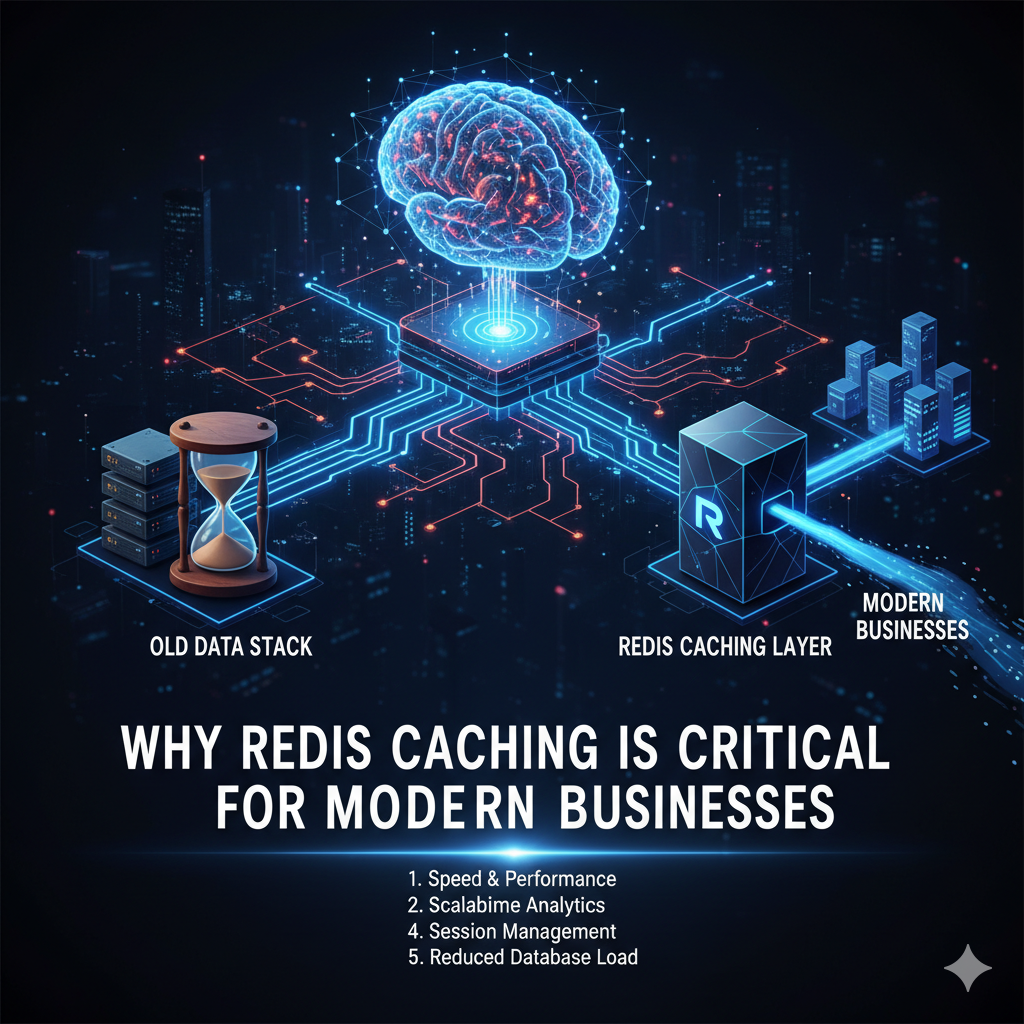
In today's fast-paced digital world, businesses must prioritize speed, scalability, and reliability in their web applications. With the growing number of online users and the increasing demand for real-time data, ensuring that your applications perform efficiently is crucial. One of the most effective ways to achieve high performance is by using caching.Among various caching technologies, Redis has emerged as one of the most popular and powerful solutions. It is an in-memory data structure store that can be used as a cache, message broker, and data store. Redis caching plays a critical role in improving website and application performance by reducing latency, increasing speed, and optimizing resource usage. For modern businesses, Redis caching is not just a performance enhancement; it is a business necessity.In this blog post, we will explore the reasons why Redis caching is critical for modern businesses. We will delve into its advantages, key use cases, integration strategies, and how Redis contributes to the overall efficiency and scalability of modern applications.
What is Redis Caching?
Redis is an open-source, in-memory key-value store that can be used as a cache and a data store. Unlike traditional disk-based storage systems, Redis operates entirely in memory, which allows it to deliver extremely fast data retrieval times. Redis is often used to cache data that is frequently requested but not frequently modified, reducing the load on primary databases and improving the overall response time of applications.The primary benefits of Redis caching include:
-
Low latency: Redis stores data in RAM, making data retrieval extremely fast (often in microseconds).
-
High availability: Redis supports replication, persistence, and automatic failover, ensuring that cached data is available even in the event of server failure.
-
Scalability: Redis can be horizontally scaled, enabling businesses to handle growing amounts of data and traffic.
The Importance of Caching in Modern Applications
Caching is a technique that involves temporarily storing data in a location that can be accessed more quickly than the original source. For modern applications, caching is a critical performance optimization strategy. Without caching, every request to an application would require fetching data from the database or external API, which can significantly slow down response times and impact the user experience.
Benefits of Caching in Modern Applications:
-
Improved Performance: By storing frequently accessed data in a cache, the application can retrieve it faster than querying the database or other data sources.
-
Reduced Latency: Caching reduces the time it takes for users to receive data, which is especially important for real-time applications (e.g., financial apps, e-commerce sites).
-
Lower Database Load: By caching query results, Redis reduces the load on your database, preventing performance bottlenecks and resource exhaustion.
-
Cost Efficiency: Caching reduces the number of database queries and expensive operations, lowering the overall infrastructure costs associated with processing requests.
Redis Caching vs. Other Caching Solutions
Redis is one of the most widely used caching technologies, but it is not the only one. Let's compare Redis with some other common caching solutions, such as Memcached and Varnish.
Redis vs. Memcached
-
Data Structure Support: Redis supports a variety of complex data structures like strings, hashes, lists, sets, and sorted sets, whereas Memcached only supports simple key-value pairs.
-
Persistence: Redis provides options for data persistence (RDB snapshots and AOF logs), while Memcached is strictly in-memory and does not persist data after a restart.
-
Performance: While both Redis and Memcached provide high-speed caching, Redis is often faster in handling complex data operations due to its rich data structure support.
Redis vs. Varnish
-
Use Case: Varnish is a web application accelerator and HTTP caching reverse proxy, designed primarily for web content caching. Redis, on the other hand, is a general-purpose cache and can be used for many purposes beyond web content caching.
-
Data Storage: Varnish stores cached content on disk, while Redis stores data entirely in memory, making Redis better suited for low-latency use cases.
-
Flexibility: Redis offers more flexibility, as it is not limited to HTTP-based caching but can be used as a general-purpose data store and message broker.
Why Redis Caching is Critical for Modern Businesses
Redis caching is vital for businesses in various industries, including e-commerce, financial services, gaming, media, and more. Below are some of the key reasons why Redis caching is critical for modern businesses:
Speed and Latency Reduction
In the digital era, users expect near-instantaneous responses from web applications. Whether it's an e-commerce website loading product information, a financial application displaying real-time stock prices, or a gaming platform updating user stats, speed is crucial.
Redis delivers low-latency data retrieval due to its in-memory design. By caching frequently requested data in Redis, businesses can drastically reduce response times and improve the user experience. Redis is capable of handling millions of requests per second with sub-millisecond latency, making it ideal for high-traffic websites and applications.
Scalability
As businesses grow, their digital platforms need to scale to handle more users, transactions, and data. Redis provides horizontal scalability, meaning it can be distributed across multiple servers to handle increasing workloads without performance degradation.For businesses experiencing rapid growth or sudden traffic spikes (e.g., during a product launch or seasonal event), Redis offers automatic partitioning (sharding), ensuring that the system can scale horizontally by adding more nodes. This scalability ensures that businesses can manage increased traffic without needing to overhaul their infrastructure.
Improved User Experience
In today’s competitive landscape, user experience is one of the most important factors for business success. A website or application that is slow to load or experiences downtime can result in lost customers and revenue.Redis helps businesses improve user experience by providing quick access to data. Cached data reduces the need to repeatedly fetch data from the database, which is especially important for high-traffic websites. By ensuring that pages load quickly and reliably, Redis enhances user satisfaction and engagement.
Cost Efficiency
Operating and maintaining databases and infrastructure can be costly, especially when dealing with large amounts of traffic. Every database query and operation consumes valuable resources, including CPU and storage.By using Redis caching, businesses can reduce the load on databases and other systems. Redis ensures that frequently accessed data is retrieved from the cache instead of making expensive database queries, leading to a reduction in infrastructure costs. Additionally, since Redis can handle millions of requests per second, businesses can use fewer resources while maintaining high performance.
Real-Time Data Processing
For many modern businesses, the need for real-time data processing is critical. Applications such as financial trading platforms, live-streaming services, and messaging apps require immediate access to data in real time.Redis provides robust support for real-time data processing through its support for pub/sub messaging and its ability to handle high-throughput, low-latency operations. Businesses can leverage Redis to implement features like live notifications, real-time analytics, and instant updates.
Enhanced Availability and Reliability
Business continuity is vital, and downtime can result in lost revenue and reputational damage. Redis provides high availability through its built-in replication, persistence options, and automatic failover capabilities.Redis ensures that cached data is always available, even during server failures, which increases the reliability of the application. Redis clusters can be configured to automatically failover to another node if the primary node goes down, ensuring that the application remains online and functional at all times.
Key Use Cases for Redis Caching in Modern Businesses
Redis is incredibly versatile and can be used in a wide range of business applications. Some of the most common use cases include:
Web Application Caching
Caching is often the first use case that comes to mind when discussing Redis. By storing HTML fragments, API responses, and database queries in Redis, businesses can significantly improve the performance of their web applications.
Example: An e-commerce website can use Redis to cache product information, category listings, and user session data, ensuring that these frequently accessed resources are served quickly.
Session Management
Storing session data in Redis ensures fast and reliable access, particularly in environments where users are interacting with the application frequently. Redis' ability to handle a high volume of read and write operations makes it ideal for managing user sessions.
Example: Online platforms like social media apps, where users need to maintain session information across multiple devices or browsers, can rely on Redis to store session tokens and authentication data.
Real-Time Analytics
Redis is well-suited for real-time analytics due to its ability to handle large volumes of data with low latency. Businesses can use Redis to track user behavior, monitor performance, and analyze clickstream data in real-time.
Example: A marketing platform can use Redis to track user interactions, measure engagement, and provide real-time reports to advertisers.
Leaderboards and Counting
Redis excels in scenarios that require fast counting and ranking operations, such as leaderboards and counters. It supports atomic operations, allowing businesses to manage scores, rankings, and real-time stats efficiently.
Example: Gaming platforms can use Redis to manage leaderboards, where player scores are constantly updated and displayed in real-time.
How to Integrate Redis Caching in Your Business
Integrating Redis into your existing infrastructure is relatively straightforward. There are several libraries and tools available for integrating Redis with different programming languages and frameworks.
Redis Integration in Web Frameworks
-
Node.js: The
ioredislibrary is commonly used to integrate Redis with Node.js applications. -
Python: The
redis-pylibrary allows easy integration of Redis with Python-based applications. -
Java: Redis can be integrated into Java applications using the Jedis or Lettuce clients.
Redis and Content Management Systems
For businesses using content management systems (CMS) like WordPress, Drupal, or Magento, Redis can be integrated as a caching layer for faster page loads and reduced database queries.
Redis and Cloud Providers
Many cloud providers, such as AWS, Azure, and Google Cloud, offer managed Redis services (e.g., Amazon ElastiCache or Google Cloud Memorystore) that simplify the deployment and management of Redis clusters.
Need Help? For This Content
Contact our team at support@informatix.systems
No posts found
Write a review