- 3/8, North Pirerbag
- 60 Feet Main Road
- Mirpur, Dhaka 1216
- +880-967-8247365
- support@informatix.systems

CTI and Security Investment Planning
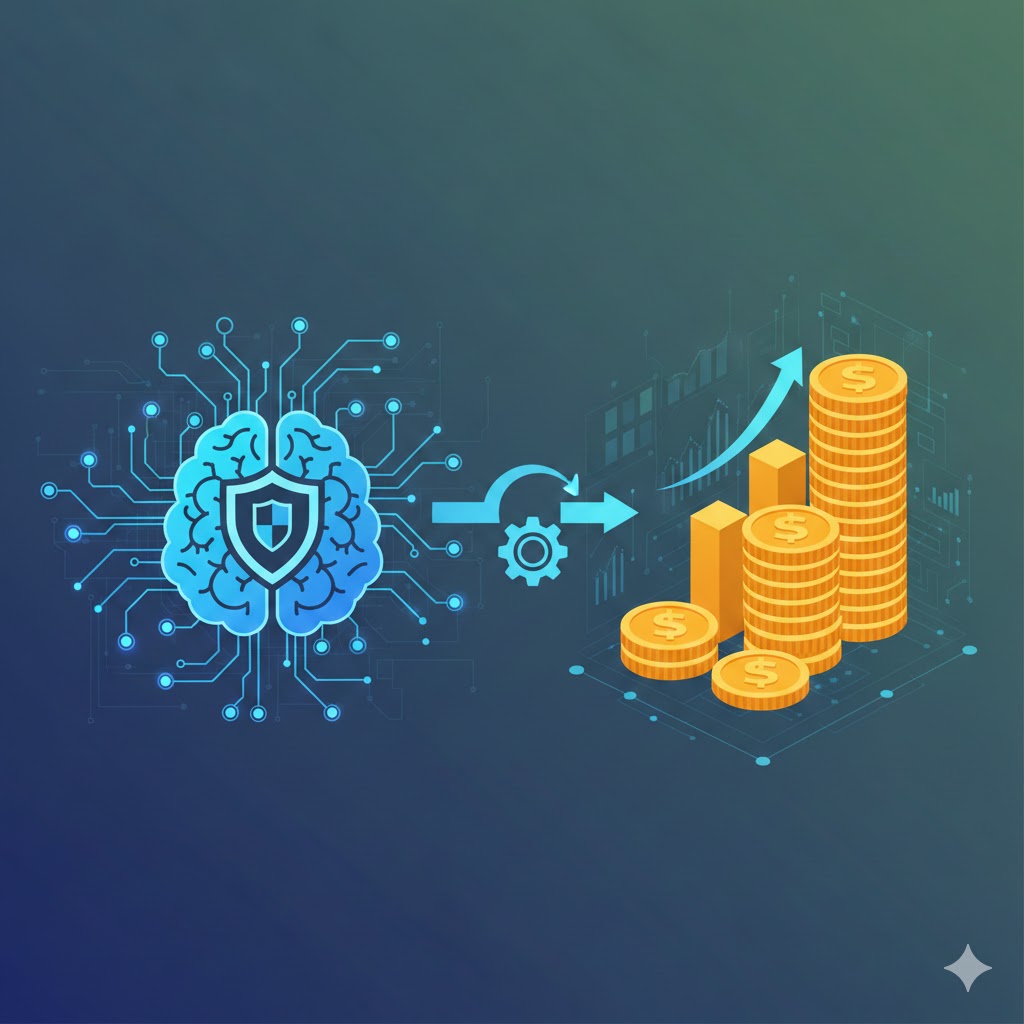
Cyber Threat Intelligence (CTI) has evolved into a cornerstone of modern cybersecurity, transforming reactive defenses into proactive strategies that anticipate threats before they strike. In an era where cyber attacks cost enterprises an average of $4.88 million per breach, CTI provides the evidence-based insights needed to understand adversaries, their tactics, techniques, and procedures (TTPs), and the broader threat landscape. For business leaders planning 2026 security investments, integrating CTI isn't optional; it's essential for aligning cybersecurity spending with organizational risk profiles and achieving measurable ROI. The business importance of CTI and security investment planning cannot be overstated. Enterprises face sophisticated threats like ransomware, supply chain attacks, and AI-driven phishing, with dwell times averaging 21 days for detected breaches. CTI enables organizations to prioritize vulnerabilities, automate responses, and reduce mean time to detect (MTTD) and respond (MTTR) by up to 40-50%. This directly translates to financial protection: studies show CTI investments yield 245-350% ROI by slashing annual loss expectancy (ALE) through risk mitigation. At Informatix.Systems, we provide cutting-edge AI, Cloud, and DevOps solutions for enterprise digital transformation, helping clients operationalize CTI into resilient security architectures. As 2026 approaches, with vendor consolidation and AI-augmented platforms dominating trends, strategic investment planning ensures budgets deliver proactive defense rather than fragmented tools. This comprehensive guide equips enterprise readers with frameworks, best practices, and actionable steps to build CTI-driven security strategies that safeguard assets, ensure compliance, and drive business continuity.
CTI Fundamentals
Cyber Threat Intelligence (CTI) encompasses the collection, analysis, and dissemination of data on cyber threats, including indicators of compromise (IoCs), attacker motivations, and emerging risks. It shifts security from detection-only to prediction and prevention, providing context on who is attacking, how, and why.
Core Components
- Data Collection: Gathers from threat feeds, logs, and dark web sources.
- Threat Analysis: Real-time surveillance of network traffic and alerts.
- Classification and Dissemination: Prioritizes threats by severity and shares actionable insights.
CTI's value lies in informed decision-making, enabling teams to assess risks specific to their industry, like phishing in aerospace or ransomware in healthcare.
Types of CTI
CTI falls into four primary categories, each serving distinct enterprise needs. Strategic CTI offers high-level threat landscape overviews for executives, while tactical focuses on malware and TTPs.
Organizations benefit most from a blended approach, combining all types for comprehensive coverage.
Business Case for CTI
CTI delivers tangible benefits beyond compliance, including reduced downtime and proactive defense. It informs risk management by prioritizing high-impact threats, cutting investigation efforts by 40%.
Key advantages include:
- Faster Threat Identification: 2x quicker detection via enriched data.
- Resource Prioritization: Focus on relevant risks, avoiding alert fatigue.
- Incident Response Acceleration: Contextual TTPs enable precise countermeasures.
In 2026, with rising attack sophistication, CTI positions security as a business enabler, not a cost center.
Security Frameworks Integration
Leading frameworks like MITRE ATT&CK, NIST, and Cyber Kill Chain structure CTI applications. MITRE maps adversary TTPs for targeted defenses.
NIST Cybersecurity Framework
NIST's Identify, Protect, Detect, Respond, and Recover functions align CTI with risk management. Use Gordon-Loeb models to select cost-effective tiers based on asset value and vulnerability. At Informatix.Systems, we provide cutting-edge AI, Cloud, and DevOps solutions for enterprise digital transformation, streamlining NIST-CTI integration.
CTI Maturity Models
Assess program effectiveness with models like CTI-CMM, featuring five levels across eight capabilities: from ad-hoc (Level 1) to optimized (Level 5).
Progression themes:
- Shift from reactive to proactive intelligence.
- Expand from tactical IoCs to strategic insights.
Self-Assessment Steps:
- Evaluate each domain (e.g., collection, analysis).
- Calculate the average maturity score.
- Roadmap incremental improvements.
Investment Planning Strategies
Effective 2026 security investment planning adopts risk-based budgeting, allocating 10-15% to CTI amid 2-5% overall growth. Prioritize cloud security (12% increase planned) and Zero Trust.
Budget Allocation Best Practices:
- Risk Assessment First: Based on current vulnerabilities.
- Tool Consolidation: Reduce sprawl for 10-15% efficiency.
- 5-10% Refresh Fund: For upgrades and hardening.
ROI Calculation Methods
Quantify CTI ROI using extended Gordon-Loeb and FAIR models, factoring MTTD/MTTR reductions and ALE drops. Formula: ROI = (Risk Reduction / CTI Cost) x 100.
| Metric | Pre-CTI | Post-CTI | Impact |
|---|---|---|---|
| MTTD | 14 days | 7 days | 50% faster |
| ALE | $6M/year | $1.17M/year | 80% reduction |
| Investigation Effort | Baseline | -40% | Cost savings |
TIEI index weights quality, integration, and impact for holistic measurement.
Top CTI Platforms 2026
2026 leaders emphasize AI prediction and unified feeds. Stellar Cyber integrates natively; Anomali excels in correlation.
Comparison Table:
Select based on maturity and ecosystem fit.
AI and ML in CTI
2026 sees agentic AI transforming CTI: autonomous data curation, predictive modeling, and supply chain defense. 36% of enterprises fuse internal/external data.
Benefits:
- Real-Time Analysis: ML sifts petabytes for patterns.
- Proactive Defense: Predicts attacks via TTP evolution.
Challenges include AI model tampering; CTI counters with behavioral flagging. At Informatix.Systems, we provide cutting-edge AI, Cloud, and DevOps solutions for enterprise digital transformation, powering next-gen CTI.
Finance Sector: CTI reduced dwell time 50%, yielding 350% ROI via faster MTTR.
Healthcare: Phishing campaigns blocked pre-impact, saving millions in ALE.
Retail: Supply chain threats mitigated, cutting breach probability 30%.
Warner Bros. used CTI for seamless IAM, boosting efficiency.
Regulatory Compliance Role
CTI ensures GDPR (72-hour notifications), NIST, HIPAA, and CMMC adherence by accelerating detection. Map threats to controls for audits.
Compliance Mapping:
Future Trends 2026
Expect vendor consolidation (single truth sources), 25% workflow embedding (IAM/GRC), and AI agents for autonomous CTI. Collective defense and TTP operationalization dominate.
Predictions:
Implementation Roadmap
Phased Approach:
- Assess Maturity: Use CTI-CMM.
- Integrate Tools: API feeds to SIEM.
- Train Teams: Workflow documentation.
- Measure ROI: Track TIEI quarterly.
- Scale: Automate with AI.
At Informatix.Systems, we provide cutting-edge AI, Cloud, and DevOps solutions for enterprise digital transformation. CTI and security investment planning form the backbone of resilient 2026 cybersecurity, delivering 200-350% ROI through risk reduction, faster responses, and strategic alignment. Enterprises mastering maturity models, AI integration, and frameworks like NIST will outpace threats while optimizing budgets. Transform your security posture today. Contact Informatix.Systems for a free CTI maturity assessment and customized 2026 investment roadmap. Secure your future schedule now at https://informatix.systems.
FAQs
What is Cyber Threat Intelligence (CTI)?
CTI is evidence-based knowledge on threats, including context, IoCs, and action advice for proactive defense.
How does CTI improve ROI on security investments?
By reducing ALE 80%+ and MTTR 40-50% via targeted risk mitigation.
What are the four types of CTI?
Strategic (executive), Tactical (analyst), Operational (real-time), Technical (IoCs).
Which CTI maturity model should enterprises use?
CTI-CMM has five levels across eight capabilities for comprehensive assessment.
How to calculate CTI ROI for 2026 budgets?
Use (Risk Reduction Benefits - Costs) / Costs x 100, tracking MTTD/MTTR.
What AI trends shape CTI in 2026?
Agentic AI for prediction, data fusion, and autonomous workflows.
How does CTI support NIST compliance?
Maps threats to Identify-Protect-Detect-Respond-Recover functions.
Best practices for CTI platform selection?
Prioritize AI integration, feed aggregation, and SOC compatibility.
No posts found
Write a review