- 3/8, North Pirerbag
- 60 Feet Main Road
- Mirpur, Dhaka 1216
- +880-967-8247365
- support@informatix.systems

How CTI Helps Stop Zero-Day Attacks
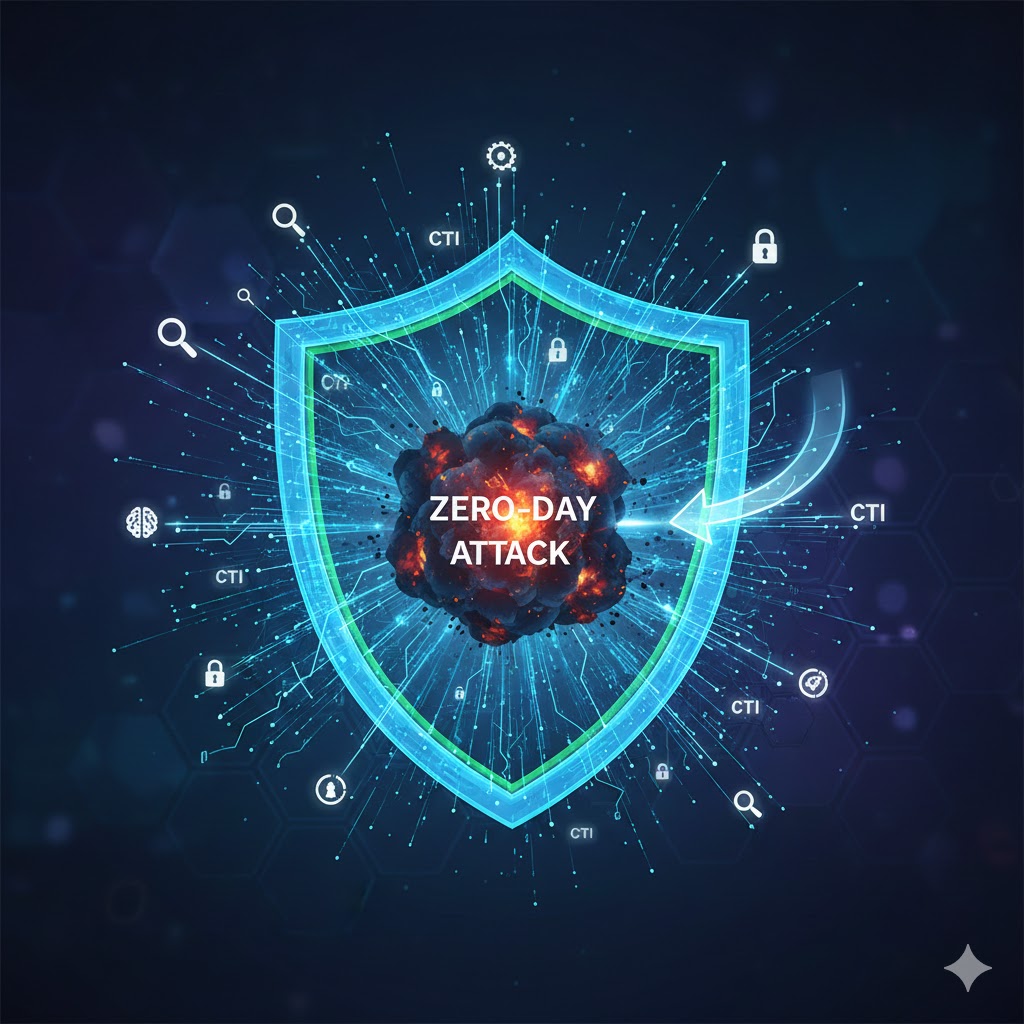
Zero-day attacks represent one of the most dangerous threats in modern cybersecurity, exploiting unknown vulnerabilities before patches exist. These attacks strike without warning, often bypassing traditional defenses and causing massive damage to enterprises. Cyber Threat Intelligence (CTI) emerges as a critical defense, transforming raw threat data into actionable insights that enable proactive protection. In 2025 alone, zero-day exploits surged, with organizations facing an average of 21 such attacks annually, more than double previous years. Enterprises lose millions from data breaches, downtime, and regulatory fines when zero-days succeed. CTI changes this dynamic by monitoring global threat landscapes, identifying early indicators, and guiding rapid response. At Informatix.Systems, we provide cutting-edge AI, Cloud, and DevOps solutions for enterprise digital transformation, helping businesses integrate CTI to stay ahead of zero-day threats. Business leaders must prioritize CTI because reactive security fails against sophisticated actors like nation-states and ransomware groups. CTI delivers context on attacker tactics, techniques, and procedures (TTPs), enabling threat hunting and anomaly detection. This article explores how CTI stops zero-day attacks through frameworks, tools, and real-world strategies, targeting 2026 enterprise needs.
What is CTI?
Cyber Threat Intelligence (CTI) involves collecting, analyzing, and disseminating data on cyber threats to inform security decisions. It is categorized into strategic, operational, tactical, and technical types, each addressing different zero-day aspects. Strategic CTI provides high-level trends, like rising zero-day use by APT groups. Operational CTI details active campaigns, while tactical focuses on TTPs. Technical CTI delivers IOCs and malware samples for immediate blocking.
Key CTI Components:
- Indicators of Compromise (IOCs): IPs, hashes, domains signaling zero-day activity.
- Threat Actors: Attribution to groups exploiting unknowns.
- Vulnerability Intel: Early warnings on potential zero-days.
At Informatix.Systems, we provide cutting-edge AI, Cloud, and DevOps solutions for enterprise digital transformation, embedding CTI into SIEM systems.
Understanding Zero-Day Attacks
Zero-day attacks exploit software flaws unknown to vendors, leaving no patches available. Attackers weaponize these rapidly, often via supply chains or phishing.
Famous Zero-Day Examples:
- Stuxnet (2010): Targeted industrial controls with four zero-days.
- Log4Shell (2021): Affected millions via Java logging.
- Kaseya (2021): Ransomware hit 1,500 firms through VSA flaws.
In 2025, zero-days cost $4.5M per breach on average, with dwell times over 200 days. Enterprises in finance and healthcare face the highest risks. CTI detects precursors like anomalous traffic before full exploitation.
CTI Lifecycle for Zero-Days
The CTI lifecycle planning, collection, processing, analysis, dissemination, and feedback adapts to zero-days.
Planning Phase
Identify zero-day risks based on industry and assets. Prioritize via MITRE ATT&CK mapping.
Collection Phase
Gather from feeds, dark web, and endpoints.
Sources:
Analysis and Dissemination
Correlate data for zero-day signatures; share via dashboards. Feedback refines models. At Informatix.Systems, we provide cutting-edge AI, Cloud, and DevOps solutions for enterprise digital transformation.
Types of CTI for Zero-Day Defense
CTI types complement zero-day protection uniquely.
| Type | Focus | Zero-Day Role |
|---|---|---|
| Strategic | Trends | Predicts zero-day surges |
| Operational | Campaigns | Tracks active exploits |
| Tactical | TTPs | Guides hunting |
| Technical | IOCs | Blocks early indicators |
Technical CTI shines against zero-days by providing fuzzy hashes and behavioral IOCs.
Indicators of Compromise in Zero-Days
IOCs signal zero-day activity despite unknown signatures.
Common Zero-Day IOCs:
CTI enriches IOCs with context, reducing false positives by 58%.
Threat Hunting with CTI
Threat hunting uses CTI hypotheses to proactively find zero-days.
Hunting Process
- Formulate CTI-driven hypotheses.
- Collect telemetry.
- Analyze for anomalies.
- Respond to findings.
Techniques:
- Behavioral analytics
- Network baselining
Integrate CTI into SIEM for automated hunts.
AI and ML in CTI Zero-Day Detection
AI/ML enhances CTI by detecting zero-day anomalies without signatures.
AI Benefits:
- Anomaly detection via unsupervised learning
- Predictive modeling of exploits
- 98% accuracy in some models
Ensemble methods combine models for robustness. At Informatix.Systems, we provide cutting-edge AI, Cloud, and DevOps solutions for enterprise digital transformation.
CTI Frameworks and Models
Frameworks structure CTI against zero-days.
Diamond Model
Maps adversary, infrastructure, victim, capability. Tracks activity threads for zero-day patterns.
MITRE ATT&CK
Details TTPs; CTI maps zero-days to techniques.
Other Frameworks:
Integrating CTI with SIEM and EDR
CTI feeds SIEM/EDR for zero-day defense.
Integration Steps:
- Automate IOC ingestion.
- Enable real-time correlation.
- Trigger automated responses.
Reduces detection time by 60-75%.
Real-World Case Studies
CTI prevented major zero-days.
- Critical Start: CTI team issued advisories and built detections within hours.
- Ransomware Prevention: Blocked IOCs from campaigns.
Enterprises using CTI cut response times by 58%.
Top CTI Tools for Zero-Day Protection
| Tool | Strengths | Zero-Day Focus |
|---|---|---|
| Stellar Cyber | Automation | Anomaly detection |
| VMRay | Sandboxing | Behavioral analysis |
| Cynet | ML protection | Fuzzy hashing |
Free sources: AlienVault OTX, MISP.
Benefits of CTI for Enterprises
Key Benefits:
Supports compliance and Zero Trust. At Informatix.Systems, we provide cutting-edge AI, Cloud, and DevOps solutions for enterprise digital transformation.
Building a CTI Program
Steps to Implement:
- Define requirements.
- Build collection pipelines.
- Train analysts.
- Measure via KPIs like MTTD.
Start small, scale with cloud. Budget: 1-2% of IT spend.
Challenges and Solutions
Challenges:
Solutions:
Future of CTI and Zero-Days (2026)
2026 trends: AI-driven predictive CTI, quantum-resistant intel. Zero-days rise with AI exploits. Proactive sharing via ISACs is critical. CTI transforms zero-day defense from reactive to proactive, using IOCs, hunting, and AI to stop attacks early. Enterprises gain faster detection, lower costs, and resilience. Secure your organization against zero-days today. Contact Informatix.Systems at https://informatix.systems for expert CTI integration, AI-driven solutions, and enterprise transformation. Schedule a free consultation now to protect your future.
FAQs
What exactly is a zero-day attack?
A zero-day attack exploits unknown software vulnerabilities before patches exist, often causing widespread damage.
How does CTI detect unknown zero-days?
CTI uses behavioral analysis, IOCs, and ML to spot anomalies without signatures.
What are the best CTI tools for zero-day protection?
Tools like Stellar Cyber and Cynet excel via AI and automation.
Can small enterprises afford CTI programs?
Yes, free sources and managed services make CTI accessible.
How long does CTI take to implement?
Basic setup in days; full maturity in weeks.
What's the ROI of CTI for zero-days?
Up to 58% faster response, millions saved per breach.
Does CTI work with existing SIEM?
Yes, via API integrations for real-time feeds.
How does AI enhance CTI against zero-days?
AI detects novel patterns with 98% accuracy in tests.
No posts found
Write a review