- 3/8, North Pirerbag
- 60 Feet Main Road
- Mirpur, Dhaka 1216
- +880-967-8247365
- support@informatix.systems

Predictive Threat Intelligence Innovations 2026
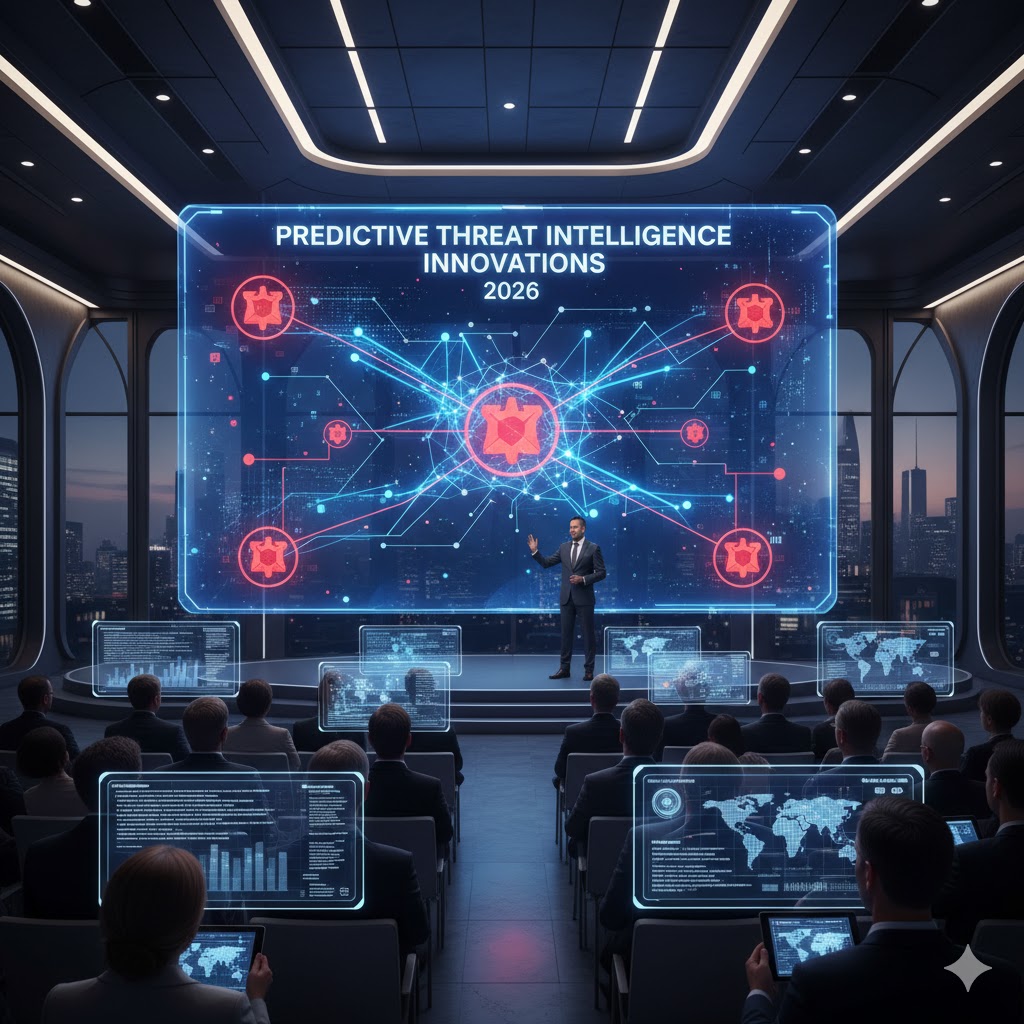
As the global cybersecurity landscape evolves, so does the complexity and velocity of threats facing enterprises. By 2026, cyber defense is no longer about reaction; it’s about prediction. Organizations are leveraging predictive threat intelligence (PTI) to anticipate attacks before they materialize, transforming static defenses into adaptive, AI-driven ecosystems capable of real-time foresight. Predictive threat intelligence integrates artificial intelligence (AI), machine learning (ML), behavioral analytics, and data science to identify anomalies, forecast vulnerable entry points, and simulate future attack vectors. This evolution represents more than technology; it’s a strategic redefinition of how enterprises manage risk, turning cybersecurity into a cognitive, self-learning discipline. Global industries like financial services, healthcare, government, and manufacturing already rely on predictive models to preempt ransomware, insider threats, and Advanced Persistent Threats (APTs). Meanwhile, Security Operations Centers (SOCs) integrate autonomous analytics and AI-driven orchestration for proactive monitoring. The result: reduced downtimes, enhanced accuracy, and faster mitigation cycles. At Informatix.Systems, we provide cutting-edge AI, Cloud, and DevOps solutions for enterprise digital transformation. Our predictive threat intelligence platforms leverage AI and automation to correlate global insights, delivering real-time visibility, risk scoring, and defense precision for enterprises operating across hybrid and multi-cloud infrastructures. This article explores the innovations shaping predictive threat intelligence in 2026, from AI-enhanced analytics and quantum-resilient models to autonomous SOC frameworks and ethical AI governance.
The Shift Toward Predictive Cybersecurity
From Reactive Defense to Predictive Awareness
Traditional cybersecurity relies on post-incident detection, but predictive models invert this paradigm.
Key Characteristics of Predictive Threat Intelligence:
- Anticipates attacks before they occur through probabilistic risk modeling.
- Leverages AI to detect micro-anomalies indicating malicious behavior.
- Employs global threat telemetry to identify patterns in real-time.
- Automates mitigation using AI-driven SOC orchestration.
Predictive cybersecurity takes learning from past threats and projects it into preventive strategy formulation, enabling enterprises to preempt vulnerabilities.
AI’s Central Role in Predictive Intelligence
AI is the foundation of next-generation threat intelligence. It bridges data and defense by automating contextual understanding of threats.
Core AI Functions:
- Behavioral Modeling: Tracks deviations from normal system interactions.
- Predictive Analytics: Scores likely attack scenarios based on historical and live data.
- Deep Learning: Enables recognition of evolving threat patterns beyond signatures.
- Natural Language Processing (NLP): Extracts intelligence from unstructured threat reports, Dark Web chatter, and malware discussions.
At Informatix.Systems, we implement deep neural networks (DNNs) and transformer-based AI architectures that empower CTI with cognitive analytics, converting raw data into predictive insight.
Machine Learning and Adaptive Threat Detection
Machine learning improves over time, learning from every threat encounter to enhance prediction accuracy.
ML-Based Prediction Methods:
- Supervised Learning: Uses past threat data to recognize recurring attack signatures.
- Unsupervised Learning: Detects new, unseen anomalies through behavioral clustering.
- Reinforcement Learning: Continuously adapts models based on outcomes, rewards, and evolving attack tactics.
2026 Milestone: Predictive ML models now correlate IoCs (Indicators of Compromise) and IoAs (Indicators of Attack) dynamically across endpoints, networks, and cloud services in real time.
Predictive Risk Modeling and Quantification
Predictive CTI transforms qualitative threat reports into quantitative, actionable risk intelligence.
Key Metrics Used:
- Probability of Occurrence: Likelihood of attack vectors manifesting.
- Potential Business Impact: Predicted financial and operational repercussions.
- Exposure Indicators: Ranking of assets by vulnerability level.
- Remediation Index: Automated prioritization of mitigation actions.
At Informatix.Systems, our platforms employ AI-driven statistical models to quantify risk and help security teams allocate resources based on probable impact.
Autonomous SOCs and Predictive Automation
By 2026, Security Operations Centers (SOCs) will be morphing into self-learning ecosystems.
Predictive SOC Capabilities:
- Real-Time Anomaly Forecasting: AI detects suspicious trends across infrastructures.
- Autonomous Response Playbooks: SOAR systems execute incident containment automatically.
- Risk Prioritization: AI ranks threats by severity using behavioral scoring models.
- Self-Healing Systems: Networks autonomously patch or reconfigure to prevent breaches.
Informatix.Systems enable AI-powered SOCs that operate at the intersection of automation and human intelligence, reducing Mean Time to Detect (MTTD) and Mean Time to Respond (MTTR) dramatically.
Data-Driven Threat Intelligence Architecture
Predictive defense thrives on advanced data pipelines capable of synthesizing massive security datasets efficiently.
Architecture Layers:
- Data Collection: Feeds from CTI sources, Dark Web intelligence, and IoT telemetry.
- Data Enrichment: AI filters relevant insights and contextualizes them.
- Machine Learning Layer: Learns correlations between network events and attacks.
- Analytics & Visualization: Dashboards display predictive heatmaps and decision metrics.
This fusion of cloud-based intelligence and local analytics allows enterprises to achieve continuous cyber situational awareness.
Ethical and Explainable AI in Predictive CTI
As AI influences high-stakes decision-making, Explainable AI (XAI) has become mandatory for accountability.
Principles of Ethical Predictive AI:
- Transparency: Every model decision must be interpretable.
- Auditability: AI predictions undergo continuous validation.
- Bias Prevention: Ensures equitable treatment of all data sources and actors.
- Compliance Alignment: Meets GDPR, ISO/IEC 42001, and NIST AI governance frameworks.
Informatix.Systems’ AI governance framework guarantees every automated action is measurable, explainable, and compliant with international cybersecurity standards.
Dark Web and Open-Source Intelligence (OSINT) Integration
The Dark Web is a primary intelligence hub for predictive CTI in 2026.
AI-Enhanced DW and OSINT Integration:
- Automated Actors Profiling: AI correlates emerging attack campaigns with known entities.
- Deep Analytics: Decryption and semantic analysis of encrypted forums and databases.
- Predictive Leak Detection: Anticipates data exposure based on underground trading patterns.
By fusing Dark Web Data Intelligence and predictive CTI, security teams can pre-emptively isolate compromised digital footprints.
Quantum-Ready Predictive Intelligence
With the impending era of quantum computing, predictive CTI is evolving toward post-quantum resilience.
Innovations in Quantum-Resilient Security:
- Quantum-Safe Cryptographic Forecasting: Predicts decryption threats using quantum simulation.
- Hybrid Models: Combines classical AI with quantum-enhanced ANN architectures.
- Quantum Entropy Analytics: Measures randomness to detect cryptographic compromise early.
Informatix.Systems is preparing enterprises for the quantum shift, designing predictive algorithms optimized for defense against emerging computation threats.
Federated Intelligence Networks and Global Collaboration
By 2026, predictive CTI relies heavily on federated intelligence models, where organizations collaboratively train AI without sharing sensitive data.
Collaborative Advantages:
- Data Sovereignty: Compliance with jurisdictional data policies.
- Cross-Sector Predictive Insight: Shared learning across domains like finance, defense, and healthcare.
- Secure Interchange: Blockchain-backed identity and trust verification among intelligence partners.
This collective intelligence model accelerates adaptive learning cycles, ensuring global awareness against evolving, multi-vector attacks.
Industry Applications of Predictive Threat Intelligence
| Industry | Predictive CTI Use Case |
|---|---|
| Finance | Fraud risk scoring and real-time data exfiltration alerts. |
| Healthcare | Predicts ransomware campaigns targeting medical devices and EHRs. |
| Manufacturing | Anticipates vulnerabilities in IIoT and SCADA systems. |
| Government | Forecasts politically motivated intrusion attempts. |
| Retail & E-Commerce | Detects phishing and synthetic identity fraud patterns. |
Every industry benefits from predictive foresight, enhancing infrastructure protection and compliance readiness.
Key Benefits of Predictive Threat Intelligence
Tangible Results:
- Reduced Breach Probability: Early detection limits exposure windows.
- Faster Time-to-Resolution: Automated mitigation shortens incident recovery.
- Strategic Visibility: C-Suite executives make informed business risk decisions.
- Operational Efficiency: Reduced analyst fatigue via intelligent automation.
Informatix.Systems empowers enterprises with real-time, actionable insights through advanced AI-driven CTI automation and predictive analytics.
Future Outlook (2026–2030)
What’s Next:
- Fully Autonomous Cyber Defense Ecosystems.
- Global Predictive Threat Alliances.
- Self-Evolving AI Defense Orchestration.
- Quantum-Predictive SOCs.
- Generative AI for Proactive Attack Simulation and Neutralization.
The convergence of AI, automation, and predictive intelligence will give rise to autonomous, self-healing cybersecurity systems that continually evolve alongside adversaries. Predictive Threat Intelligence in 2026 marks the transition from detection-based defense to proactive, intelligent cyber resilience. Leveraging AI, machine learning, and federated collaboration, predictive CTI enables organizations to anticipate attack vectors, automate incident resolution, and ensure adaptive security continuity. At Informatix.Systems, we fuse AI cybersecurity, Cloud infrastructure, and DevOps integration into powerful predictive CTI frameworks that transform how enterprises see, understand, and defend digital ecosystems. Partner with Informatix.Systems today to empower your organization with predictive intelligence that converts foresight into strategy and automation into resilience.
FAQs
What is predictive threat intelligence?
It’s an AI and data-driven system that anticipates cyber threats using real-time analytics and behavioral pattern recognition.
How does AI improve threat forecasting?
AI automates detection, analyzes anomalies, and continuously refines models for accurate future risk assessments.
What’s the difference between predictive CTI and traditional CTI?
Traditional CTI focuses on historical analysis; predictive CTI forecasts new attack vectors and enables proactive mitigation.
Can predictive CTI stop ransomware or zero-day attacks?
Yes, AI-based predictive systems detect subtle pre-attack indicators, reducing exposure before exploitation.
How does Informatix. Systems enhance predictive CTI?
We develop AI, Cloud, and DevOps-driven cybersecurity frameworks that deliver predictive analytics, automation, and real-time visibility.
Is predictive CTI suitable for small enterprises?
Yes, cloud and API-driven CTI solutions make predictive intelligence scalable and accessible for every business size.
What’s next for CTI innovation beyond 2026?
Post-2026, expect autonomous AI ecosystems, quantum-safe models, and cross-sector federated collaboration leading global cyber defense.
No posts found
Write a review