Anmelden | Registrieren
Sign in to get more opportunities
- 3/8, North Pirerbag
- 60 Feet Main Road
- Mirpur, Dhaka 1216
- +880-967-8247365
- support@informatix.systems

Best Tools for DevOps in 2025
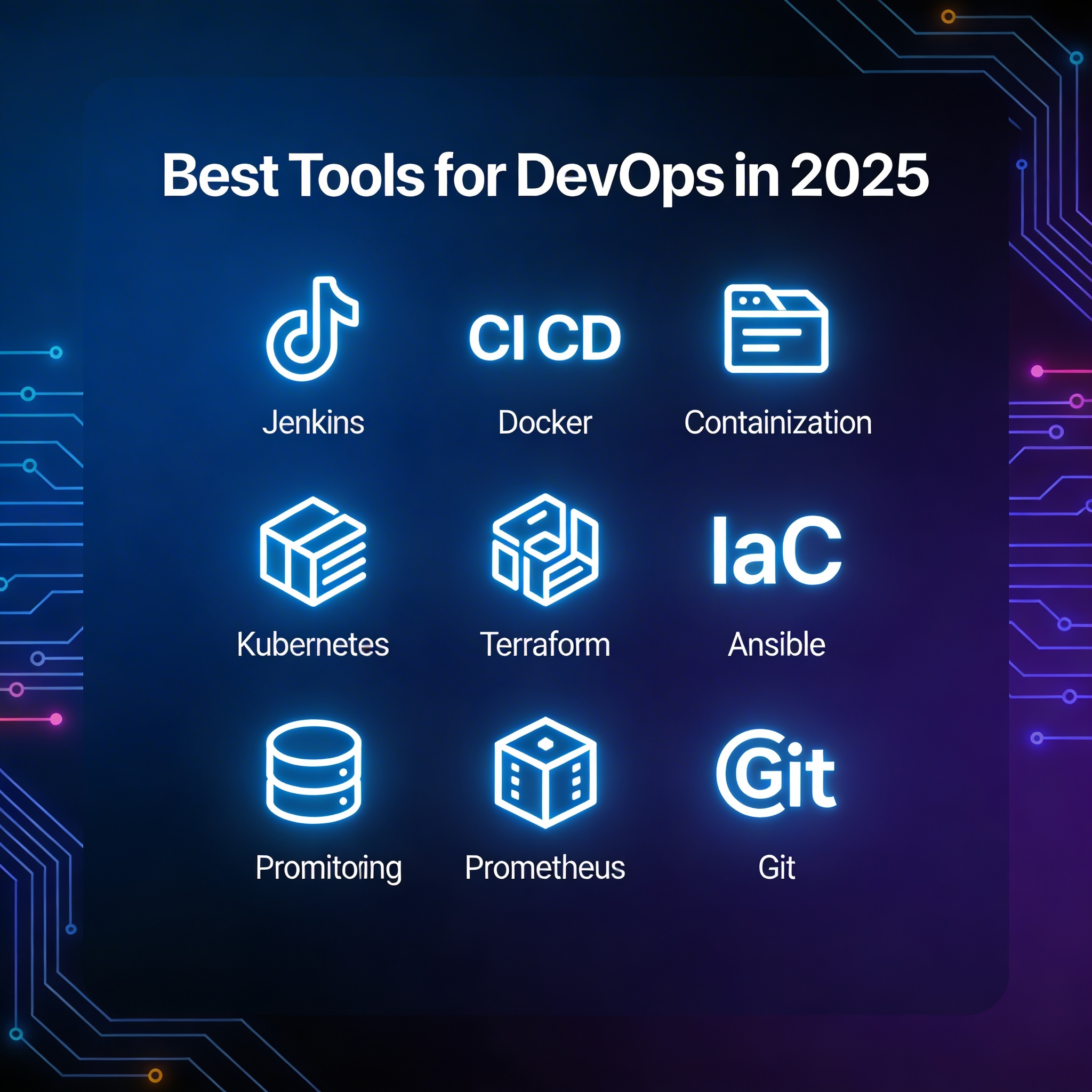
DevOps, a practice that blends software development (Dev) and IT operations (Ops), has revolutionized how software is built, tested, and deployed. It emphasizes automation, continuous integration, collaboration, and fast delivery, ensuring high-quality, reliable products. As we enter 2025, the DevOps landscape continues to evolve, and with it comes a new set of tools that are enabling teams to accelerate delivery, increase collaboration, and drive efficiencies.In this blog post, we will explore the best DevOps tools of 2025, offering an overview of the tools that every organization in the modern development world should consider for building a highly efficient DevOps pipeline.
DevOps Tools
The DevOps methodology emphasizes the collaboration between software developers and IT operations teams to streamline the development lifecycle. DevOps tools are key to automating tasks and improving efficiency within the software development pipeline. In 2025, DevOps continues to evolve, adopting AI, machine learning, and more advanced automation technologies.The following sections explore the most popular and cutting-edge DevOps tools in use today, highlighting their capabilities, features, and how they fit into modern workflows.
Top DevOps Tools for 2025
Version Control Systems (VCS)
Version control is essential for managing code changes in any software development process. It allows teams to track and manage changes to code, facilitating collaboration and ensuring that teams are always working with the latest version of the software.
-
Git: Git remains the most widely used version control system due to its distributed nature, enabling teams to work offline and manage repositories efficiently. It allows for collaboration, tracking of changes, and branching for feature development.
-
GitHub: GitHub builds on Git's capabilities by providing a platform for developers to collaborate on open-source and private projects. It offers additional features like pull requests, issues, and an integrated CI/CD pipeline, making it ideal for team-based development.
-
GitLab: GitLab has become a powerful platform in 2025, offering not only version control but also an integrated CI/CD pipeline, project management tools, and monitoring solutions. It's a complete DevOps platform that integrates with various cloud services and tools.
Continuous Integration and Continuous Delivery (CI/CD)
CI/CD is central to the DevOps methodology, as it enables developers to continuously integrate their code into a shared repository and automate the deployment process. CI/CD tools provide the automation needed to speed up the release of features, reduce human errors, and improve the consistency of deployments.
-
Jenkins: As one of the most popular open-source automation servers, Jenkins enables developers to automate the building, testing, and deployment of applications. With an extensive plugin ecosystem, Jenkins integrates with most tools in the DevOps pipeline, making it a cornerstone of modern CI/CD workflows.
-
CircleCI: CircleCI is a cloud-based CI/CD tool known for its speed, scalability, and flexibility. It supports Docker, Kubernetes, and other cloud-native technologies, making it a top choice for modern software development workflows.
-
GitLab CI/CD: GitLab's CI/CD functionality is embedded directly into its platform, enabling seamless continuous integration and delivery. With native integrations, it allows for automatic testing and deployment of code changes, streamlining the release process.
-
Travis CI: Travis CI is another cloud-based CI/CD tool that's particularly popular among open-source projects. It integrates seamlessly with GitHub and is known for its simplicity and ease of setup, making it ideal for smaller teams or new projects.
-
Argo CD: Argo CD is a Kubernetes-native continuous delivery tool. It's designed to deploy applications to Kubernetes clusters and allows for declarative GitOps workflows. Its integration with Git repositories allows for automated deployment of Kubernetes-based applications.
Containerization and Orchestration
Containerization enables developers to package applications and their dependencies into isolated environments called containers, ensuring consistent performance across different environments. Orchestration tools help automate the deployment, scaling, and management of containerized applications.
-
Docker: Docker is the go-to platform for containerization, allowing developers to create, deploy, and manage containers. Docker provides lightweight, portable, and consistent environments that work across different environments, making it a cornerstone of modern software development.
-
Kubernetes: Kubernetes (K8s) is the industry-standard for container orchestration. It automates the deployment, scaling, and management of containerized applications, enabling organizations to run their applications reliably at scale in production environments.
-
Amazon ECS and EKS: Amazon Elastic Container Service (ECS) and Elastic Kubernetes Service (EKS) are managed container orchestration services provided by AWS. ECS is designed for Docker containers, while EKS supports Kubernetes, giving teams a fully managed environment for deploying containerized applications in the cloud.
Infrastructure as Code (IaC)
Infrastructure as Code (IaC) enables developers and operations teams to define infrastructure using code, which can be version-controlled, tested, and deployed in an automated way. This eliminates the need for manual intervention and ensures a consistent infrastructure setup across environments.
-
Terraform: Terraform is one of the most widely used IaC tools, supporting multiple cloud providers like AWS, Azure, and Google Cloud. It allows users to define infrastructure using declarative configuration files, making it easy to provision and manage cloud resources in a repeatable manner.
-
AWS CloudFormation: AWS CloudFormation enables developers to define and provision AWS infrastructure using JSON or YAML templates. It's an essential tool for teams heavily invested in the AWS ecosystem.
-
Pulumi: Pulumi is an IaC tool that allows users to define infrastructure using general-purpose programming languages such as JavaScript, TypeScript, Python, and Go. It provides more flexibility compared to other IaC tools, which often rely on domain-specific languages.
Monitoring and Logging Tools
Effective monitoring and logging are crucial for tracking the health and performance of applications. In 2025, organizations need tools that provide insights into their systems, helping them quickly identify issues and ensure the system operates smoothly.
-
Prometheus: Prometheus is an open-source monitoring system and time-series database designed for reliability and scalability. It integrates with Kubernetes, Docker, and other modern technologies, making it a go-to choice for monitoring containerized applications.
-
Grafana: Grafana is a powerful open-source platform for data visualization and monitoring. It works seamlessly with Prometheus and other data sources, allowing teams to create customized dashboards that provide real-time insights into their systems.
-
ELK Stack (Elasticsearch, Logstash, Kibana): The ELK Stack is a set of tools for logging, searching, and visualizing large volumes of data. It helps teams analyze logs, track application performance, and troubleshoot issues effectively.
-
Splunk: Splunk is a data analytics and monitoring platform that allows organizations to collect, analyze, and visualize machine data. It provides insights into application and system behavior, making it a popular choice for enterprises with large-scale operations.
6. Configuration Management Tools
Configuration management tools automate the process of managing and maintaining software and infrastructure configurations. These tools help teams manage system configurations in an efficient, repeatable, and scalable way.
-
Ansible: Ansible is an open-source automation tool used for configuration management, application deployment, and task automation. Its simplicity and agentless nature make it a popular choice for teams looking to automate infrastructure management.
-
Chef: Chef is a robust configuration management tool designed for automating the deployment of infrastructure and applications. It provides a highly flexible framework for managing infrastructure across multiple environments.
-
Puppet: Puppet is another popular configuration management tool that helps automate the configuration of servers and applications. It allows for the management of infrastructure as code, ensuring that systems are configured consistently.
Collaboration and Communication Tools
Collaboration and communication tools are vital in modern DevOps environments. These tools help teams work together, share information, and manage projects effectively.
-
Slack: Slack is a communication platform that facilitates collaboration in real time. It integrates with a wide range of DevOps tools, allowing teams to receive alerts, monitor builds, and track deployments all within the platform.
-
Microsoft Teams: Teams is a collaboration and communication tool that integrates well with other Microsoft services. It is widely used in organizations that rely on Office 365 and Azure DevOps.
-
Jira: Jira is an agile project management tool that helps development teams track and manage issues, user stories, and tasks throughout the software development lifecycle. It integrates with many CI/CD and version control tools.
Security Tools in DevOps
Security is an essential part of DevOps, and "DevSecOps" is becoming more important as organizations look to integrate security into the development lifecycle.
-
Snyk: Snyk is a tool for identifying and fixing vulnerabilities in open-source dependencies, container images, and infrastructure-as-code files. It integrates into the CI/CD pipeline to automatically scan for security issues.
-
Aqua Security: Aqua Security provides comprehensive solutions for securing containerized applications and cloud-native environments. Its tools help organizations manage security at scale across the entire development lifecycle.
-
HashiCorp Vault: Vault is a tool for managing sensitive data such as passwords, tokens, and certificates. It allows organizations to control access to secrets and encryption keys securely.
Cloud Services & DevOps Automation Tools
Cloud providers offer a variety of tools to streamline DevOps processes and automate infrastructure management.
-
AWS DevOps: AWS provides a wide range of services for DevOps teams, including CodePipeline, CodeBuild, CodeDeploy, and CodeCommit, all designed to help teams automate their workflows and manage applications at scale.
-
Azure DevOps: Azure DevOps is a suite of tools that includes source control, CI/CD pipelines, project tracking, and more. It integrates seamlessly with Azure services and provides a unified platform for managing the entire application lifecycle.
-
Google Cloud DevOps Tools: Google Cloud offers several DevOps tools such as Cloud Build, Cloud Deploy, and Anthos for Kubernetes orchestration. These tools help teams deploy applications seamlessly on Google's infrastructure.
Keine Beiträge gefunden.
Rezension verfassen