Anmelden | Registrieren
Sign in to get more opportunities
- 3/8, North Pirerbag
- 60 Feet Main Road
- Mirpur, Dhaka 1216
- +880-967-8247365
- support@informatix.systems

Predictive Threat Intelligence Innovations 2030
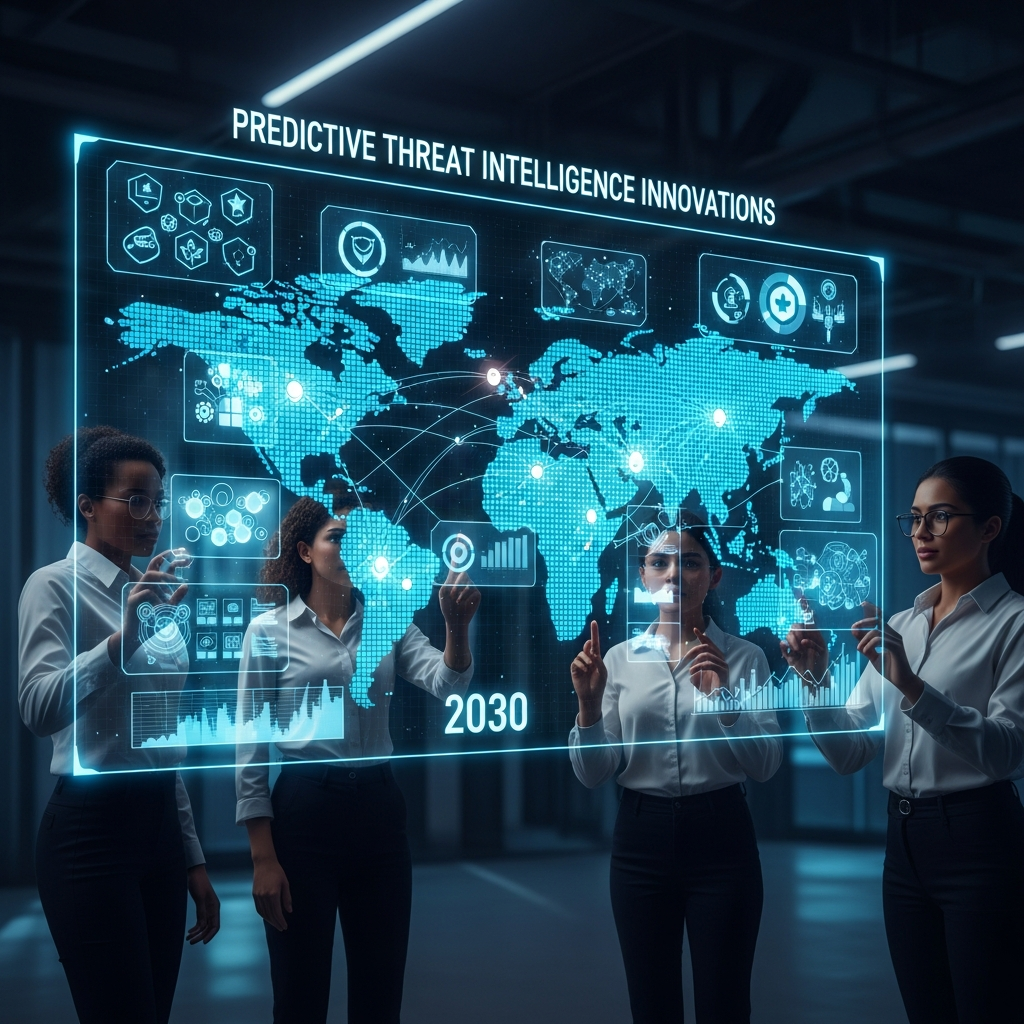
In a rapidly digitizing world, predictive threat intelligence stands as the next frontier of cybersecurity evolution. As enterprises embrace cloud-native infrastructure, AI-driven analytics, and hyper-connected ecosystems, the threat landscape grows more volatile. Cyber adversaries now use automated attack frameworks, AI-assisted malware, and quantum decryption techniques, leaving traditional defense models obsolete.
Predictive threat intelligence (PTI) transforms this scenario by moving security postures from reactive to proactive. It leverages big data analytics, behavioral modeling, and machine learning to forecast potential threats before they materialize. This shift turns information into foresight—enabling faster detection, smarter decision-making, and reduced attack impact.
By 2030, organizations will rely heavily on predictive analytics to protect digital infrastructure across sectors—finance, healthcare, supply chain, critical infrastructure, and government networks. Amid soaring risks, the integration of machine learning, neural threat modeling, quantum-safe cryptography, and AI orchestration will drive the next cybersecurity paradigm.
At Informatix.Systems, we provide cutting-edge AI, Cloud, and DevOps solutions for enterprise digital transformation—empowering organizations to deploy smarter, adaptive, and context-aware defense mechanisms. The road to 2030 is clear: Predictive Threat Intelligence will be the backbone of digital trust.
The Evolution of Threat Intelligence
From Reactive Defense to Predictive Insight
Traditional cybersecurity depended on static rules and post-incident responses. In contrast, predictive intelligence anticipates probable threats by analyzing global threat patterns and behavioral anomalies.
Key Evolutionary Stages
- Static Defense (2000–2010): Firewalls and signature-based antivirus systems dominated.
- Adaptive Defense (2010–2020): SIEM and EDR tools introduced analytics to detect known signatures.
- Predictive Defense (2020–2030): AI and machine learning predict threats before intrusion occurs.
Predictive intelligence transforms raw data streams into risk insights using advanced algorithms that detect unseen attack vectors long before exploitation.
Core Technologies Powering Predictive Threat Intelligence
Artificial Intelligence and Machine Learning
AI models process massive datasets from network logs, endpoints, and threat feeds to identify patterns impossible for human analysts to detect. Machine learning provides:
- Anomaly detection for zero-day behavior
- Predictive scoring to prioritize likely breaches
- Automated adaptation in continuously evolving environments
Big Data and Cloud Infrastructure
Predictive systems require vast compute resources to correlate data across millions of indicators. Cloud-native platforms allow real-time analytics and scalable computation with global visibility.
Behavioral and Linguistic Analytics
Understanding attacker motivations and social-engineering triggers enhances forecast accuracy. Predictive models integrate behavioral linguistics from dark web chatter to profile emerging campaigns.
At Informatix.Systems, our AI framework integrates these pillars into enterprise-grade threat ecosystems that empower cybersecurity teams to act preemptively.
The Role of Predictive Analytics in Cybersecurity
Predictive analytics enables organizations to anticipate vulnerabilities and mitigate them before exploitation.
Key Functions
- Vulnerability forecasting: Identifies weaknesses likely to be exploited next.
- Risk prioritization: Assigns weight to predicted threats for smarter response planning.
- Automated alerts: Reduces human error through intelligent prioritization.
- Resilient incident modeling: Simulates breach scenarios for proactive mitigation.
Predictive analytics helps organizations reduce incident recovery time by up to 60%, positioning them for proactive defense readiness by 2030.
AI-Powered Threat Forecasting Mechanisms
Artificial intelligence drives innovation in predictive threat modeling with multi-dimensional data streams.
Predictive AI Models in 2030
- Generative Adversarial Networks (GANs) simulate cyber-attacks to strengthen learning.
- Graph Neural Networks (GNNs) map relational threat patterns across networks.
- Reinforcement Learning Agents evolve detection strategies autonomously.
AI mechanisms will increasingly collaborate across ecosystem environments—linking enterprise, government, and defense systems to detect threats collectively.
Cloud and Edge Integration in Predictive Defense
By 2030, cloud and edge integration will redefine predictive threat ecosystems.
Cloud-Centric Threat Intelligence
- Real-time AI model orchestration across hybrid environments
- Global synchronization of threat feeds
- Continuous vulnerability assessment
Edge Security for Autonomous Defense
Edge computing enables on-site predictive analysis without latency, especially for IoT, autonomous vehicles, and smart city infrastructure.
At Informatix.Systems, our hybrid-cloud architecture ensures predictive analytics delivers insights seamlessly across centralized and distributed systems.
Predictive Threat Intelligence for Enterprise Sectors
Financial Services
- Fraud pattern anticipation through deep neural analysis
- Predictive compliance with evolving regulatory frameworks
Healthcare
- Protection from ransomware targeting patient data
- Predictive anomaly detection for connected medical devices
Manufacturing and IoT
- Forecasting production line vulnerabilities
- Hardening supply chain ecosystems
Predictive intelligence adapts uniquely to each vertical’s attack patterns and compliance standards.
Quantum Computing and Predictive Cybersecurity
By 2030, quantum computing introduces both opportunity and challenge. While it accelerates encryption-cracking, it also enables quantum-safe predictive modeling.
Quantum Innovations
- Quantum Neural Networks (QNNs): Enhance detection speed and precision.
- Post-quantum cryptography: Secures AI models against decryption attacks.
- Quantum correlation engines: Analyze entangled threat data across geographies.
Informatix.Systems invests in quantum-ready AI algorithms to prepare enterprises for this shifting landscape.
Human-AI Collaboration in Threat Intelligence
The human analyst remains central, aided—not replaced—by AI. Predictive systems amplify human expertise through machine precision.
Collaboration Model
- AI automates pattern detection, while analysts interpret context.
- Augmented dashboards deliver visual threat narratives.
- Predictive orchestration enables faster decision-making loops.
By 2030, AI-human synergy will define the optimal threat intelligence framework for global enterprises.
Compliance, Ethics, and Responsible AI in Threat Prediction
Predictive systems must align with privacy laws and ethical boundaries.
Key Ethical Principles
- Transparency: Explainable AI models ensure auditability.
- Data minimization: Protect sensitive enterprise and personal data.
- Bias prevention: Regular retraining and validation of predictive models.
At Informatix.Systems, we embed ethical AI frameworks within every threat intelligence platform—ensuring accountability, resilience, and trust.
The Competitive Edge of Predictive Intelligence for Enterprises
Benefits by 2030
- 80% faster threat identification
- 65% lower remediation costs
- Enhanced brand trust and resilience
- Continuous operational uptime
- Smarter resource allocation for security teams
Predictive intelligence shifts the cost-benefit equation by preventing rather than remediating incidents, creating measurable business value.
Building Predictive Security Architecture
Essential Components
- Centralized Threat Data Lake
- AI Modeling Layer
- Automation and Orchestration Engine
- Visualization Dashboard
- Compliance and Audit Framework
These components integrate seamlessly within Informatix.Systems’ cybersecurity suite to facilitate real-time insight generation.
Roadmap to 2030: Future Predictions
- Zero-Trust Predictive Ecosystems
- AI-as-a-Service Security Layers
- Global Federated Threat Networks
- Full Automation of Threat Lifecycle Management
Predictive threat intelligence will become a fundamental element of enterprise resilience planning.
Predictive Threat Intelligence 2030 redefines cybersecurity’s role in digital resilience. The convergence of AI, quantum computing, ethical frameworks, and edge-cloud architectures will enable predictive awareness at an unprecedented scale.
At Informatix.Systems, we help enterprises achieve this transformation—offering AI-powered cybersecurity, DevOps integration, and multi-cloud engineering designed for future-ready digital resilience.
Act now. Empower your organization with predictive defense strategies to stay ahead of tomorrow’s threats. Contact Informatix.Systems to future-proof your enterprise security framework.
FAQs
What is predictive threat intelligence?
Predictive threat intelligence uses AI and analytics to anticipate cyber threats before they occur, allowing organizations to take preemptive defense measures.
How does AI enhance threat prediction?
AI analyzes vast data sets to detect behavioral deviations and predict attacks more accurately than rule-based systems.
Why is predictive intelligence essential for 2030?
Rising digital dependencies and sophisticated cyberattacks demand systems that forecast, not just react to, potential intrusions.
Can small enterprises benefit from predictive threat intelligence?
Yes, cloud-based predictive security solutions now make this technology scalable and cost-effective for SMEs.
How will quantum computing impact predictive threat intelligence?
Quantum computing will accelerate analytics capability but also necessitate new cryptography to maintain security.
How do Informatix.Systems solutions leverage predictive technologies?
Informatix.Systems integrates AI and DevOps-based models to build real-time, adaptive, and intelligent threat defense ecosystems.
What ethical considerations are critical?
Transparency, fairness, and data protection are essential for ensuring responsible AI-led cybersecurity.
What industries gain the most from predictive intelligence?
High-risk industries like finance, healthcare, energy, and government benefit immensely from predictive security frameworks.
Keine Beiträge gefunden.
Rezension verfassen