- 3/8, North Pirerbag
- 60 Feet Main Road
- Mirpur, Dhaka 1216
- +880-967-8247365
- support@informatix.systems

CTI and SOC Automation Strategies 2027
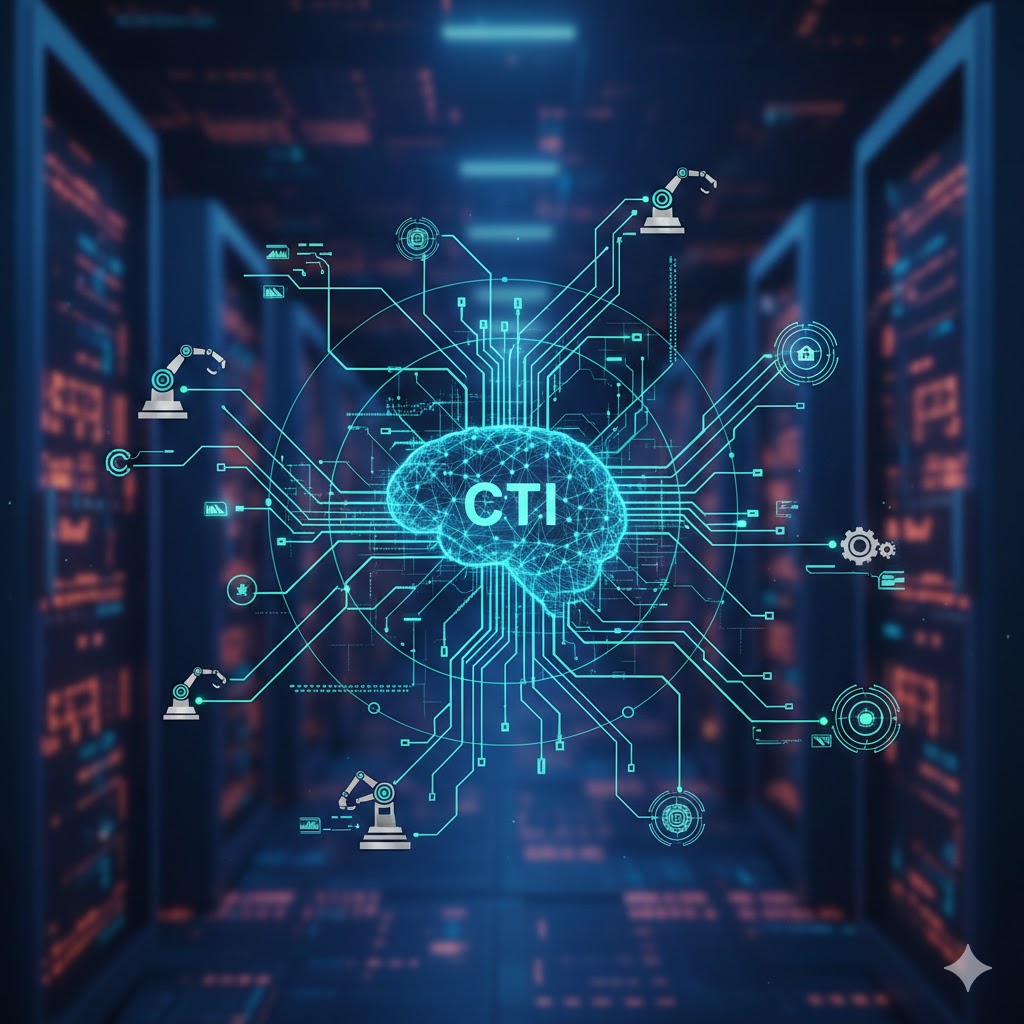
In 2027, the world’s digital infrastructure runs on automation, analytics, and AI. Every sector, finance, healthcare, manufacturing, and government, depends heavily on interconnected systems, cloud environments, and real-time data exchange. However, this digital acceleration comes with a cost: a hyper-evolving threat landscape where speed, scale, and sophistication define modern cyberattacks. Enter Cyber Threat Intelligence (CTI) and Security Operations Center (SOC) automation, the twin pillars of next-generation cybersecurity architecture. CTI provides predictive and contextual intelligence about threats, while automation enables security teams to respond swiftly, efficiently, and without human bottlenecks. Together, they form an intelligence-driven, self-learning defense system capable of mitigating threats at machine speed. Traditional SOCs, once reliant on manual intervention and static rules, struggle to process the overwhelming volume of alerts and data. By integrating AI, Machine Learning (ML), and orchestration frameworks, organizations are now transforming SOCs into Autonomous Security Operations Centers (ASOCs) capable of adapting, learning, and responding in real-time. At Informatix.Systems, we provide cutting-edge AI, Cloud, and DevOps solutions for enterprise digital transformation. Our CTI and SOC automation frameworks unify intelligence, automation, and response orchestration into a cohesive ecosystem. By empowering enterprises with predictive analytics and autonomous risk mitigation, we build security environments that think, decide, and act faster than any cyber adversary. This article explores how CTI and SOC automation strategies in 2027 revolutionize security models, drive operational efficiency, and transform organizations into resilient, proactive cyber defenders.
Redefining Cyber Defense: CTI and SOC Integration
The convergence of Cyber Threat Intelligence (CTI) and Security Operations Centers (SOCs) represents the most significant transformation in cybersecurity operations.
How Integration Works
- CTI Feeds Intelligence: Real-time insights from global threat data, dark web monitoring, and internal telemetry.
- SOC Responds with Automation: Direct integration with orchestration tools for automated response and risk mitigation.
- Feedback Loop: SOC actions enhance model learning; CTI updates strategy based on new threat data.
This integration allows organizations to detect, react, and adapt to threats uniformly across endpoints, networks, and cloud infrastructures.
The Importance of Automation in Modern SOCs
By 2027, manual response systems can no longer match the speed and scale of attack vectors. Automation eliminates repetitive tasks and turns security into a proactive, intelligent process.
Key Benefits of SOC Automation
- Reduced Response Time: Machine-led incident management reduces MTTR (Mean Time to Respond).
- Improved Accuracy: AI filters false positives and prioritizes actions by severity.
- Operational Efficiency: Analysts focus on complex decision-making instead of routine triage.
- Continuous Coverage: Automated SOCs operate 24/7 with no performance fatigue.
At Informatix.Systems, we integrate AI orchestration models that act within milliseconds of threat identification, ensuring enterprises stay one step ahead.
CTI Foundations: From Reaction to Prediction
Cyber Threat Intelligence provides the strategic foresight necessary for next-gen SOC effectiveness. It combines structured information with behavior-based analytics, offering comprehensive visibility across attack patterns and threat actors.
Core Pillars of CTI
- Threat Data Collection: Aggregates intelligence from open-source, proprietary, and dark web sources.
- Data Correlation: Connects different indicators into actionable insights.
- Predictive Modeling: Uses AI to forecast potential intrusions based on attack behavior.
- Contextual Intelligence: Prioritizes alerts based on risk severity and probability.
Predictive CTI acts as the nervous system of automated SOCs, providing actionable data that fuels instant response orchestration.
Architecture of an Automated SOC Ecosystem
An automated SOC is built upon a modular, AI-first architecture integrating intelligence, analytics, and orchestration layers.
Key Architecture Layers
- Data Ingestion: Collects logs, IoCs, and SIEM telemetry from multiple sources.
- Threat Intelligence Processing: CTI engines analyze indicators of threat campaigns.
- AI-Powered Analytics: ML models detect patterns, anomalies, and predictive triggers.
- Decision Layer: Automation engines execute containment and remediation actions.
- Feedback and Learning: Results are fed back into AI models for continuous adaptation.
This architecture transforms the SOC into a self-evolving, data-driven security organism.
AI and ML Algorithms for Detection and Decisioning
In 2027, machine learning models form the analytical core of every SOC operation. These systems learn historical trends, recognize anomalies, and automate mitigation commands.
Algorithmic Foundations
- Supervised Learning: Detects confirmed attack types using labeled training data.
- Unsupervised Learning: Identifies new, unknown anomalies or novel attack patterns.
- Reinforcement Learning: Optimizes defense strategy based on success/failure outcomes.
- Deep Learning Networks: Model attacker behavior across distributed data points.
At Informatix.Systems, our AI models provide threat anticipation, autonomous response, and contextual prioritization, driving predictive cyber intelligence at enterprise scale.
SOAR and SIEM Orchestration: The Backbone of Automation
Security Orchestration, Automation, and Response (SOAR) platforms unify CTI and SOC operations.
Key Functions of SOAR in 2027
- Automated Playbooks: Predefined workflows for incident detection, triage, and remediation.
- Integration with SIEM Systems: Real-time analytics and alert prioritization.
- AI-Powered Enrichment: Links incident data with contextual intelligence for informed decisions.
- Workflow Orchestration: Automates multi-department and multi-platform collaboration.
At Informatix.Systems, our SOAR-driven automation engines integrate seamlessly with SIEM and CTI, creating end-to-end visibility and active defense orchestration.
Predictive Threat Intelligence and SOC Adaptability
The next stage of SOC maturity lies in predictive intelligence models capable of evolving dynamically.
Predictive SOC Use Cases
- Behavioral Risk Patterns: Detect insider threats before policy breaches.
- Future Attack Surface Mapping: Predict next-targeted systems by adversary intent.
- AI-Powered Anomaly Forecasting: Identify unknown unknowns within large-scale data.
- Attack Simulation (Digital Twins): Use AI simulations to test resilience against real threats.
Predictive SOCs transform organizations from static defenders into strategic digital guardians armed with foresight, adaptability, and automation.
Integrating Cloud, DevSecOps, and CTI Automation
Enterprises deploying hybrid and multicloud infrastructures require unified visibility. Integration of DevSecOps pipelines with CTI ensures security evolves alongside product releases.
Benefits of Cloud-CTI Integration
- Automated Deployment Checks: Evaluates configurations and policies pre-release.
- Continuous Intelligence: Streams data directly into SOCs from CI/CD environments.
- Cloud API Monitoring: Detects exploitation attempts in real time.
- Zero-Trust Verification: Enforces access control via automated intelligence.
At Informatix.Systems, our frameworks embed AI-driven CTI across DevSecOps pipelines, ensuring every release is secure by design.
Governance, Ethics, and Compliance in Automated SOCs
Autonomy requires accountability. Automatic systems must balance performance with compliance and ethical responsibility.
Governance Frameworks
- Explainable AI (XAI): Ensures transparency in AI-based security decisions.
- AI Cyber Defense Standards (AICDS 2027): Global benchmark for automation compliance.
- DORA+ and GDPR++: Enforce cross-border financial and privacy protection.
- Bias and Ethical Audits: Regularly validate AI models for fairness and objectivity.
At Informatix.Systems, our automated SOC designs maintain compliance without sacrificing scalability or efficiency, a hallmark of trusted enterprise governance.
Benefits of Full CTI and SOC Automation Adoption
Strategic Advantages
- Proactive Risk Mitigation: Avoid breaches through predictive learning.
- Operational Efficiency: Cut manual workload with intelligent orchestration.
- Reduced Costs: Automation optimizes resource utilization.
- Faster Decision-Making: Response latency shrinks from hours to seconds.
- Cross-Organizational Synergy: Synchronizes security, development, and compliance.
Informatix.Systems enable enterprises to achieve full cybersecurity maturity, where intelligence, automation, and resilience converge.
Future Trends: Autonomous SOCs and Cognitive Security
Looking ahead to 2030, SOCs will become fully autonomous cognitive environments, capable of performing end-to-end operations with zero human oversight.
Innovations on the Horizon
- AI-Swarm Networks: Collective AI defense strategies coordinated across industries.
- Quantum-Secure Automation: Post-quantum encryption embedded in security response.
- Neuro-Symbolic AI Systems: Combining reasoning and learning for context-aware defense.
- Global Threat-Mesh Collaboration: Interconnected SOC ecosystems for shared defense intelligence.
At Informatix.Systems, we are pioneering these developments to usher in the era of self-defending, predictive security architectures. By 2027, CTI and SOC automation will redefine cybersecurity for enterprises worldwide. The convergence of intelligence and automation transforms SOCs from reactive monitoring hubs into autonomous, self-optimizing environments capable of proactive prediction and prevention. At Informatix.Systems, we lead this paradigm through AI-driven integration, predictive analytics, and hybrid automation frameworks that empower organizations to secure, adapt, and scale confidently. Tomorrow’s threat landscape demands more than vigilance; it requires intelligence that thinks, automates, and evolves.
FAQs
What is CT, I, and how does it support SOC automation?
CTI provides data-driven awareness about threats. Integrated with automation, it empowers SOCs to act faster through predictive analytics and orchestration.
How does SOC automation reduce response delays?
Automation eliminates manual triage, using AI-driven workflows and predefined playbooks to respond to incidents instantly.
What technologies power SOC automation in 2027?
Key technologies include AI, ML, SOAR, SIEM, and federated learning models, ensuring automated detection and mitigation.
Can complete automation replace human analysts?
No, humans remain vital for oversight, governance, and ethical validation of AI-powered decisions. Automation enhances, not replaces, human expertise.
How does Informatix.Systems integrate AI into SOCs?
We unify AI, Cloud, and DevOps solutions to build predictive, autonomous SOC frameworks customized to enterprise needs.
What compliance standards govern automated SOCs?
Regulations like AICDS 2027, DORA+, and GDPR++ ensure transparency and ethical AI use in SOC operations.
What benefits can enterprises expect from automated CTI?
Faster detection, predictive threat forecasting, reduced costs, and improved resilience against complex attacks.
What’s next for SOC automation beyond 2027?
The future lies in autonomous, cognitive SOC ecosystems capable of global collaboration and real-time quantum-secure intelligence sharing.
No posts found
Write a review