- 3/8, North Pirerbag
- 60 Feet Main Road
- Mirpur, Dhaka 1216
- +880-967-8247365
- support@informatix.systems

Emerging Next-Gen Threat Intelligence Platforms Strategies 2029
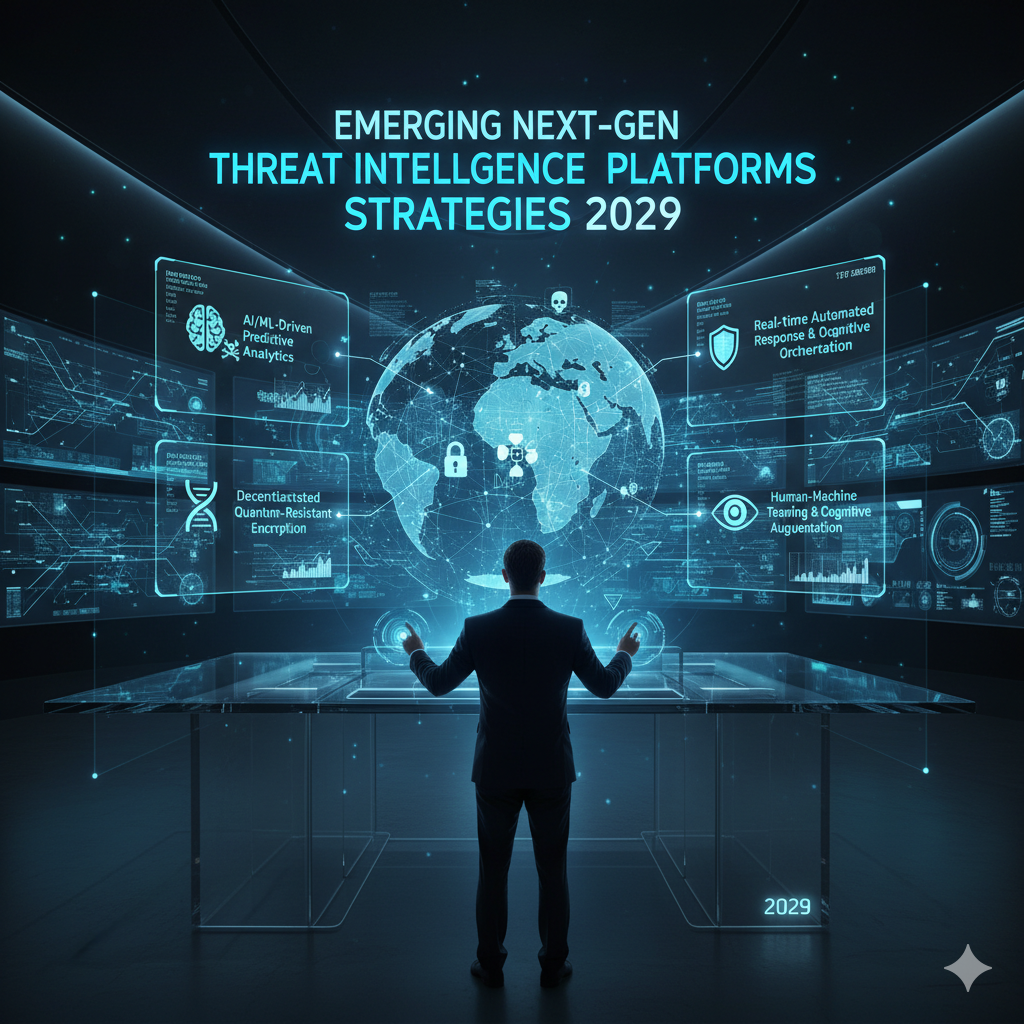
The global cybersecurity landscape in 2029 is vastly different from what businesses faced even a few years ago. Attackers now use automation, generative AI, and coordinated global operations to launch highly adaptive cyber threats. The result: data breaches, ransomware attacks, supply chain compromises, and advanced persistent threats have evolved to a scale beyond human response speed. In this environment of hyperconnected complexity, intelligence, not just protection, defines survival. This evolution has propelled the rise of next-generation threat intelligence platforms (TIPs), adaptive ecosystems designed to predict, prevent, and respond to threats in real time. These platforms integrate AI, machine learning (ML), advanced analytics, and cloud orchestration to deliver contextual, predictive, and automated threat insights. Unlike legacy systems focused solely on correlation, next-gen TIPs act as decision engines, empowering security teams with actionable intelligence at machine speed. By 2029, enterprises will be embracing platform-centric cybersecurity modular CTI architectures that unify dark web monitoring, threat hunting, SOC automation, and data visualization. The capability to fuse internal telemetry with external intelligence has become a competitive advantage for global businesses and governments alike. At Informatix.Systems, we provide cutting-edge AI, Cloud, and DevOps solutions for enterprise digital transformation. Our predictive threat intelligence architectures combine machine learning, automation, and analytics to empower organizations against tomorrow’s evolving attack vectors. This article dives deep into Emerging Next-Gen Threat Intelligence Platforms Strategies for 2029, exploring how AI convergence, automation, and predictive modeling will transform cybersecurity into an intelligence-first discipline.
Understanding Next-Gen Threat Intelligence Platforms
What Are Next-Gen Threat Intelligence Platforms (TIPs)?
Next-gen TIPs are unified platforms that automate threat data aggregation, analysis, and action. They combine traditional cyber threat intelligence with AI analytics, behavioral modeling, and context-aware automation.
Core Capabilities Include:
- Aggregation of threat feeds and internal telemetry
- Machine-learning-based prioritization of alerts
- Dark web and OSINT data integration
- Real-time cooperation with SIEM and SOAR systems
- Predictive analytics for attack anticipation
Difference Between Legacy CTI and Next-Gen TIPs
| Legacy CTI Systems | Next-Gen TIPs 2029 |
|---|---|
| Reactive detection based on known indicators | Predictive defense using AI and pattern recognition |
| Manual correlation and analyst dependence | Automated triage, scoring, and response |
| Siloed data without real-time context | Unified data enrichment across all intelligence layers |
| Single-source feed reliance | Cloud-based, multi-source, federated data aggregation |
Next-generation TIPs redefine intelligence as an autonomous capability, enabling organizations to outthink threats rather than merely react.
Why Businesses Need Next-Gen Threat Intelligence in 2029
Data Complexity and Scale
Modern enterprises handle petabytes of data daily, and identifying malicious anomalies in real-time is impossible without AI-driven automation.
Emerging Cyber Threat Sophistication
Adversaries now exploit AI-generated phishing, polymorphic malware, and adaptive intrusion algorithms. Next-gen TIPs use machine-learning detection models to predict attacker intent.
Regulatory and Compliance Pressures
Frameworks like GDPR, NIST, and ISO 27001 demand proactive threat management and incident transparency, impossible without real-time, data-backed intelligence.
Business Reputation and Continuity
Cyber resilience has become a business continuity metric, making intelligence-driven security a board-level priority. Informatix.Systems’ advanced AI threat intelligence platforms deliver these protections through continuous monitoring, predictive defense automation, and industry-grade compliance frameworks.
The Foundation of Next-Gen TIP Architecture
Data Ingestion Layer
Aggregates structured and unstructured threat data from internal telemetry, threat feeds, and real-time incident logs.
AI-Powered Correlation Engine
Uses machine learning and inference graphs to detect complex attack paths spanning endpoints, APIs, and cloud infrastructures.
Contextual Threat Enrichment Module
Applies natural language processing (NLP) to add a timeframe, actor, and geo-context to raw data.
Automated Orchestration Layer
SOAR-based orchestration ensures seamless communication between CTI tools, firewalls, and access management systems.
Visualization & Decision Support
Real-time dashboards and knowledge graphs help analysts prioritize responses through intuitive visual intelligence. Collectively, these layers transform raw data into predictive cyber awareness.
Core Technologies Driving Threat Intelligence Evolution
Artificial Intelligence (AI) and Machine Learning (ML)
AI automates pattern detection, while ML enhances contextual analysis, continuously learning from cyber event feedback loops.
Deep Learning for Threat Behavior Recognition
Neural networks uncover behavioral deviations signaling advanced attacks undetected by rule-based systems.
Natural Language Processing (NLP)
NLP decodes unstructured intelligence from security reports, dark web discussions, and social media chatter.
Graph Neural Networks (GNN)
GNNs identify relational anomalies between compromised devices, accounts, and cloud infrastructure assets.
Federated Learning Frameworks
Preserve organizational data privacy while enhancing collaborative intelligence sharing across industries. Each technology contributes to creating intelligent, unified, and adaptive TIPs by 2029.
Integrating Cloud, DevOps, and Threat Intelligence
Cloud-Native Intelligence Ecosystems
Cloud-native TIPs scale globally with edge-based monitoring capabilities, aggregating signals from hybrid infrastructures.
DevSecOps-Driven Security Pipelines
Automation pipelines integrate continuous intelligence evaluation, ensuring that deployments remain secure throughout the software lifecycle.
Multi-Cloud Integration
Unified orchestration supports AWS, Azure, and Google Cloud environments for centralized threat visibility across regions.
At Informatix.Systems, our DevSecOps intelligence integration aligns security, agility, and innovation, empowering enterprises to respond before breaches escalate.
Key Features of Next-Gen TIPs for 2029
- Predictive Attack Modeling: Uses probabilistic AI to forecast likely attacker behavior.
- Incident Prioritization Engines: Context-aware scoring minimizes analyst fatigue.
- Dark Web Integration: Continuous monitoring of underground markets for early indicators.
- Threat Intelligence-as-a-Service (TIaaS): Cloud-delivered predictive intelligence models on demand.
- AI-Enhanced SOC Automation: Boosts operational efficiency through end-to-end incident orchestration.
These capabilities ensure quicker threat detection and faster remediation cycles through automation and precision.
Challenges in Implementing Next-Gen Threat Intelligence
- Data Overload: Massive threat intelligence volumes can overwhelm systems.
- Interoperability: Disparate tools often struggle with unified communication.
- Talent Shortage: Shortage of CTI professionals capable of managing AI-integrated platforms.
- Privacy Concerns: AI-driven analytics must comply with data regulations.
- Cost and Scalability: Maintaining real-time intelligence for large enterprises requires strategic budgeting.
Solutions lie in AI automation, federated learning, and intelligence sharing ecosystems that balance privacy with collaboration.
Industry-Specific Applications of Next-Gen TIPs
Financial Services
Predictive fraud detection, blockchain transaction tracing, and insider threat intelligence across banking networks.
Healthcare
Patient data protection through anomaly-based network security and supply chain monitoring.
Energy and Utilities
Industrial control system (ICS) protection using AI analytics for real-time monitoring.
Retail and E-Commerce
Fraud prevention via dynamic behavioral modeling and identity analytics.
Government and Public Sector
Nation-state attack deterrence using centralized cross-agency threat databases.
Each vertical benefits from TIP customization aligned with domain-specific data risks.
Future of Threat Intelligence Platforms Beyond 2029
Looking forward to 2030 and beyond:
- Quantum-Enabled TIPs capable of encryption analytics resistant to quantum computing threats.
- Autonomous Intelligence Systems delivering self-healing and adaptive defense.
- Cognitive Risk Engines predict the strategic intent behind cyber campaigns.
- Decentralized Threat Networks sharing intelligence via blockchain for enhanced trust and speed.
- AI-Driven Threat Simulation Environments train defense systems through synthetic adversarial modeling.
As intelligence converges with autonomy, cybersecurity becomes proactive orchestration, not reactive repair.
Informatix.Systems: Empowering the Future of Threat Intelligence
At Informatix.Systems, we provide cutting-edge AI, Cloud, and DevOps solutions for enterprise digital transformation. Our Next-Gen Threat Intelligence Platforms leverage automation, advanced analytics, and strategic orchestration to protect modern digital enterprises.
Our Expertise Includes:
- Predictive AI-driven CTI platforms
- Automated threat orchestration and remediation
- Cloud-native security analytics
- Federated multi-industry intelligence collaboration
- Advanced DevOps integration with SOC environments
With Informatix.Systems, enterprises can safeguard their operations, reputation, and future with resilient, predictive, and adaptive cyber intelligence systems. The future of cybersecurity rests not on detection alone but on foresight powered by AI, automation, and integration. Emerging next-gen threat intelligence platforms will reshape enterprise security models, making defense autonomous, data-driven, and predictive. Enterprises adopting AI and DevOps-powered intelligence systems will enjoy reduced attack surfaces, improved compliance, and accelerated resilience. At Informatix.Systems, we empower organizations to transform intelligence into action. Partner with us to build an intelligent, proactive, and future-ready security ecosystem that redefines enterprise defense in 2029 and beyond. Adapt faster. Predict smarter. Secure stronger with Informatix.Systems.
FAQs
What is a Next-Gen Threat Intelligence Platform (TIP)?
It’s an AI-powered cybersecurity framework that aggregates, analyzes, and automates threat data for predictive and real-time defense.
How does AI improve next-gen TIPs?
AI enhances data correlation, reduces false positives, and predicts emerging attack trends before they occur.
Why are TIPs essential for enterprises in 2029?
They provide actionable insights, automation, and predictive analytics to address the speed and complexity of modern cyber threats.
Can TIPs integrate with existing SOC or SIEM systems?
Yes, TIPs interoperate with SOC/SIEM/SOAR systems to deliver real-time threat visibility and automated response.
What’s the role of cloud in modern TIPs?
Cloud-native architectures enable global scalability, cross-platform collaboration, and edge-level threat detection.
How can small businesses adopt next-gen CTI affordably?
Cloud-based Threat Intelligence-as-a-Service (TIaaS) offers scalable, cost-efficient predictive defense options.
What industries benefit most from next-gen threat platforms?
Finance, healthcare, energy, government, and retail gain the most due to high-value data and continuous exposure risks.
How does Informatix.Systems help enterprises implement TIP solutions?
We design AI-powered platforms integrating automation, cloud orchestration, and predictive analytics for adaptive enterprise security.
No posts found
Write a review