Anmelden | Registrieren
Sign in to get more opportunities
- 3/8, North Pirerbag
- 60 Feet Main Road
- Mirpur, Dhaka 1216
- +880-967-8247365
- support@informatix.systems

Emerging Next-Gen Threat Intelligence Platforms Strategies 2030
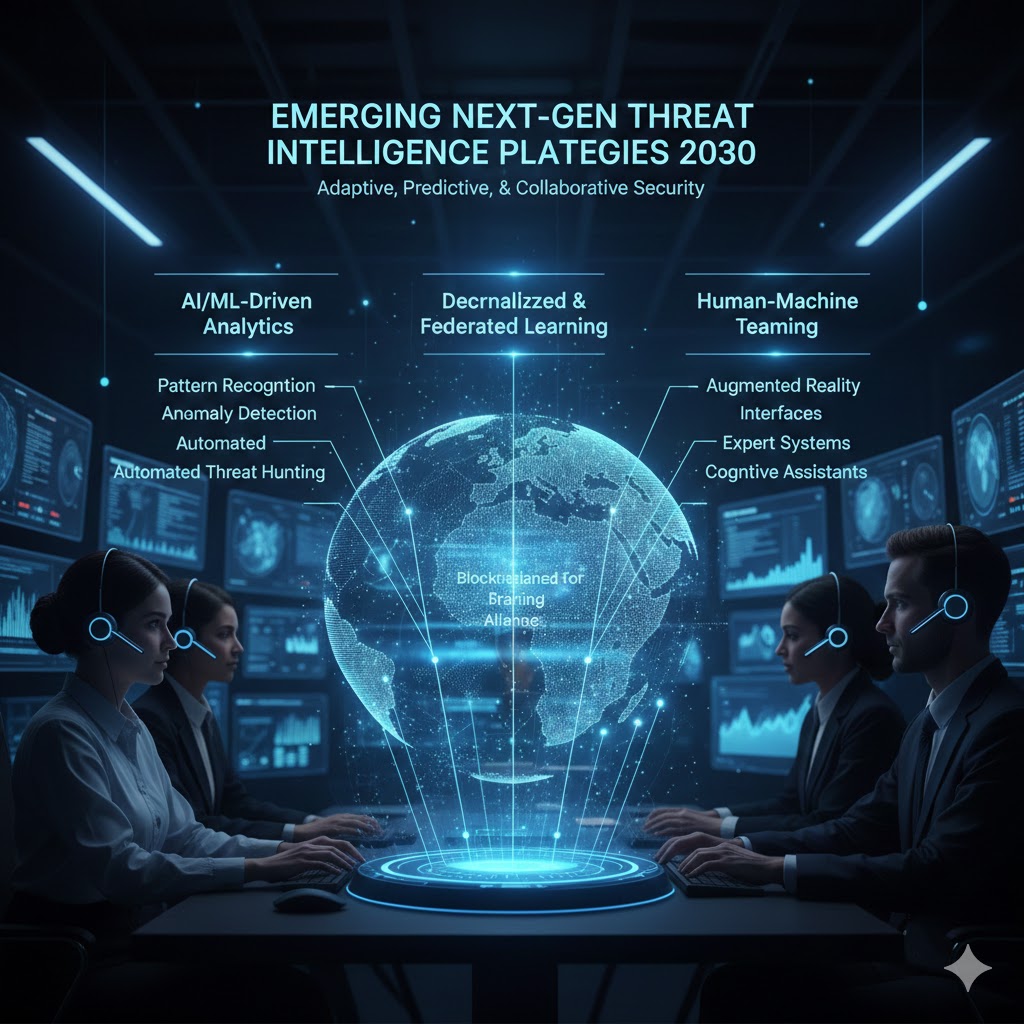
The cyber battlefield of 2030 demands a new class of intelligence—an infrastructure capable not only of defending but predicting emerging risks across ecosystems of data, cloud, devices, and people. As hybrid infrastructures become the norm and AI-driven threats multiply in speed and complexity, global enterprises require next-generation threat intelligence platforms (Next-Gen CTI) that unify automation, analytics, and adaptive learning into a cohesive defense system.
The business imperative is clear: global cyberattack costs are estimated to surpass $15 trillion by 2030, driven by AI-automated attacks, ransomware-as-a-service (RaaS), and state-sponsored adversaries. In this context, static CTI frameworks are obsolete. Enterprises are now shifting to AI-enhanced, cloud-native, and self-learning CTI ecosystems that merge threat visibility, behavioral analytics, and predictive automation.
Next-gen CTI platforms integrate AI, machine learning (ML), big data analytics, and DevSecOps orchestration to deliver real-time, adaptive threat detection and mitigation. They provide the agility to forecast attack vectors, automate response actions, and reduce the decision-to-defense gap across expansive digital networks.
At Informatix.Systems, we provide cutting-edge AI, Cloud, and DevOps solutions for enterprise digital transformation. Our next-generation threat intelligence frameworks combine predictive models with intuitive automation to help organizations move from reactive defense to predictive cyber resilience.
This article explores Emerging Strategies for Next-Gen Threat Intelligence Platforms in 2030, focusing on the technologies, frameworks, and methodologies that redefine cybersecurity for enterprise agility and trust.
Understanding Next-Gen Threat Intelligence Platforms
What Are Threat Intelligence Platforms (TIPs)?
A Threat Intelligence Platform (TIP) is an integrated system that aggregates, analyzes, and correlates global threat data to generate actionable insights for security teams.
Traditional TIP Functions Include:
- Aggregating threat feeds from multiple sources.
- Correlating IOCs (Indicators of Compromise).
- Visualizing threat patterns for faster remediation.
- Enabling automation with SIEM and SOAR tools.
What Makes Next-Gen Platforms Different?
By 2030, next-gen TIPs operate beyond detection—they predict and act autonomously. These systems leverage cloud computing, AI, and federated networks to deliver near-real-time protection across hybrid infrastructures.
Key Attributes of Next-Gen CTI Platforms:
- AI-Powered Predictive Analytics.
- Federated Intelligence Collaboration.
- Cloud-Native Orchestration.
- Zero Trust Integration.
- Automated SOAR Connectivity.
Next-gen CTI platforms embody the future of proactive, adaptive, and intelligent cybersecurity.
The Business Importance of Next-Gen CTI in 2030
- High-Speed AI Threats: Adversaries leverage machine learning to automate phishing, malware mutation, and lateral movement.
- Global Compliance Pressures: Banking, healthcare, and government sectors must align with GDPR 3.0, ISO 27701, and next-gen data privacy mandates.
- Dynamic Multi-Cloud Security: Cloud-first enterprises require cross-environmental visibility and intelligence orchestration.
- Data-Driven Governance: CISOs rely on predictive models to assess cyber risk as part of operational decision-making.
Next-gen CTI transforms defense into a business enabler—marrying intelligence with operational agility and regulatory foresight.
Core Technologies Driving Next-Gen Threat Intelligence
Artificial Intelligence and Machine Learning (AI/ML)
AI and ML are the brain of modern CTI platforms. They process immense data volumes, detect subtle anomalies, and forecast adversarial campaigns before they strike.
Big Data Analytics
Massive cloud-based data lakes fuel next-gen CTI by cross-referencing threat data across industries, countries, and attack surfaces.
Cloud-Native Infrastructure
Scalable, distributed CTI workloads enable enterprises to deploy intelligence systems across hybrid, multi-cloud, and edge environments seamlessly.
Federated Learning
Allows secure model sharing across organizations without compromising private data—critical for multinational and regulated industries.
Automation and SOAR
Security Orchestration, Automation, and Response (SOAR) tools automate incident management, drastically reducing response times.
At Informatix.Systems, our AI-augmented CTI frameworks blend these innovations into modular architectures for global predictive defense ecosystems.
Architecture of Next-Generation Threat Intelligence Platforms
Data Ingestion and Normalization Layer
Integrates feeds from open, commercial, and deep web threat sources, cleansing and structuring data for enrichment.
Threat Correlation and Analytics Engine
Applies machine learning and behavioral modeling to connect patterns across disparate logs, networks, and identity systems.
Predictive Intelligence Core
Forecasts likely threats using dynamic data clustering, context enrichment, and adversarial modeling.
Automated Response Hub
Executes pre-programmed or adaptive responses through SOAR and SIEM integration to neutralize risks in real time.
Visualization and Decision-Support Dashboard
Provides executives with predictive threat maps, KPI analysis, and compliance insights.
Through these five layers, next-gen TIPs evolve into cognitive intelligence systems capable of learning and acting with minimal human input.
Key Functional Capabilities of Modern CTI Platforms
- AI-Powered Threat Detection: Uncovers hidden attack patterns and zero-day indicators.
- Behavioral Analytics: Identifies anomalies in user and entity behavior.
- Threat Prioritization: Enables alert scoring and risk-weighted response plans.
- Cross-Infrastructure Awareness: Correlates insights between on-premise, cloud, and edge systems.
- Real-Time Threat Sharing: Leverages federated networks for collective intelligence.
- Adaptive Forensics: AI-driven simulations for root-cause analysis and policy training.
These capabilities turn next-gen CTI platforms into living ecosystems of defense intelligence and business foresight.
Predictive Threat Intelligence and Automation
Predictive Intelligence for Early Detection
AI forecasts attack campaigns based on telemetry patterns, providing enterprises the luxury of time before compromise.
Adaptive SOAR Implementation
Combines predictive analytics and automation to prevent, detect, and respond with precision.
Continuous Learning Systems
Real-time retraining of models ensures detection systems evolve along with global threat trends.
At Informatix.Systems, our predictive CTI solutions continuously learn from billions of data points, empowering enterprises to stop attacks before they begin.
Integration of Next-Gen CTI with SOC and DevSecOps Pipelines
Smart SOC (Security Operation Centers)
AI-driven SOCs no longer just monitor—they interpret context, correlate intelligence, and initiate automated remediation.
Benefits:
- Reduced Mean Time to Detect (MTTD).
- Proactive Incident Response (IR).
- Continuous data enrichment through threat learning loops.
DevSecOps Integration
Embedding CTI within DevOps ensures security automation from code design to deployment pipelines.
Advantages:
- Early vulnerability identification.
- Automated patch validation.
- Continuous compliance checks.
At Informatix.Systems, our DevSecOps-Ready CTI platforms integrate seamlessly with CI/CD tools, enabling enterprises to balance innovation speed with robust security.
Industry Applications of Next-Gen CTI Platforms
Financial Services
Predicts fraud, insider threats, and transaction anomalies.
Healthcare
Safeguards digital health data and predicts ransomware propagation.
Manufacturing
Analyzes industrial control systems and IoT signal vulnerabilities.
Government and Defense
Tracks state-sponsored APT campaigns and cyber espionage activities.
Telecommunications
Monitors 5G infrastructure and secure data exchange networks for breach risks.
CTI platforms offer sector-specific customization, adapting intelligence outputs to each industry’s unique threat topology.
Key Metrics to Evaluate CTI Platform Performance
- Mean Time to Detect (MTTD): How quickly can anomalies be identified?
- Mean Time to Respond (MTTR): Average time from detection to containment.
- Threat Prediction Accuracy (TPA%): Efficiency of AI in predicting pre-incident indicators.
- False Positive Reduction (FPR): Measurement of alert precision after AI fine-tuning.
- Automation Execution Ratio (AER): Percentage of security workflows executed without human input.
Tracking these metrics ensures the continuous optimization of intelligence systems for operational excellence.
Challenges and Solutions in Implementing Next-Gen CTI
| Challenge | Solution |
|---|---|
| Data Integration Silos | Cloud-native data orchestration and standardized CTI schemas. |
| AI Model Bias and Errors | Explainable AI (XAI) models with governed ethics layers. |
| Adversarial AI Attacks | Continuous adversarial training and validation pipelines. |
| Regulatory Constraints | Federated CTI sharing aligned with privacy compliance (GDPR, ISO 27701). |
| High Cost of Adoption | Modular, scalable platforms with consumption-based pricing. |
Next-gen CTI success depends on interoperability, ethical governance, and accessible deployment models.
The Future of Threat Intelligence Platforms Beyond 2030
- Quantum-Ready Intelligence Systems: Anti-quantum cryptography for predictive decryption analysis.
- Cognitive Cyber Defense Ecosystems: Symbiotic networks of human and AI collaboration.
- Autonomous Threat Policy Engines: AI that writes, tests, and deploys policies autonomously.
- Global Threat Mesh Networks: Decentralized collaboration among national and private CTI systems.
- Digital Immune Systems: Integrated platforms capable of self-healing network integrity after attacks.
By 2035, CTI will evolve from static intelligence tools into conscious, self-adaptive defense ecosystems ensuring global digital continuity.
Informatix.Systems: Transforming Cyber Resilience Through Intelligence
At Informatix.Systems, we provide cutting-edge AI, Cloud, and DevOps solutions for enterprise digital transformation. Our Next-Gen Threat Intelligence Platforms empower global enterprises to predict, align, and respond to cyber risks autonomously.
Our Expertise Includes:
- AI-Powered Predictive Cyber Defense Systems
- Cloud-Native CTI Automation and Forecasting
- DevSecOps Integration for Scalable Security Development
- Federated Intelligence Sharing Frameworks
- Quantum-Resilient Risk Management Solutions
Enterprises partnering with Informatix.Systems gain cutting-edge CTI ecosystems engineered to evolve with every data point.
By 2030, threat intelligence will define the difference between vulnerability and resilience. Next-generation platforms embed AI, automation, and analytics into the heart of cyber ecosystems—transforming threat response from hours to milliseconds.Next-gen CTI empowers enterprises to transition from reactive containment to predicted prevention—creating resilient, autonomous, and compliant infrastructures.At Informatix.Systems, we design predictive, cloud-native CTI systems that redefine intelligence as a service—where foresight meets performance, and precision meets speed.Predict intelligently. Protect continuously. Evolve digitally—with Informatix.Systems.
FAQ
What differentiates Next-Gen Threat Intelligence Platforms from traditional CTI tools?
Next-gen CTI integrates AI, automation, and cloud-native analytics for predictive, autonomous cyber defense.
Can these platforms integrate with legacy SOC environments?
Yes. Cloud APIs and modular designs ensure seamless interoperability with existing SIEM and SOAR systems.
How does AI enhance CTI operations?
AI automates data correlation, reduces noise, and forecast threats based on global behavioral analysis.
Are Next-Gen CTI systems suitable for hybrid and multi-cloud environments?
Absolutely. Cloud-native architectures ensure real-time threat visibility across distributed infrastructures.
How does Informatix.Systems strengthen enterprise CTI?
By combining AI, Cloud, and DevOps workflows to deliver unified, predictive, and compliant intelligence ecosystems.
What KPIs measure CTI platform efficiency?
Mean Time to Detect (MTTD), automation ratio, and prediction accuracy are key optimization metrics.
How are privacy and compliance maintained in Next-Gen CTI collaboration?
Federated learning and secure blockchain integrations enable shared intelligence without violating data sovereignty.
What’s the future after 2030 for CTI?
Self-healing, quantum-ready, and federated intelligence networks will define the next evolution of cybersecurity.
Keine Beiträge gefunden.
Rezension verfassen