- 3/8, North Pirerbag
- 60 Feet Main Road
- Mirpur, Dhaka 1216
- +880-967-8247365
- support@informatix.systems

Emerging AI-Driven Cyber Threat Intelligence Trends Strategies 2027
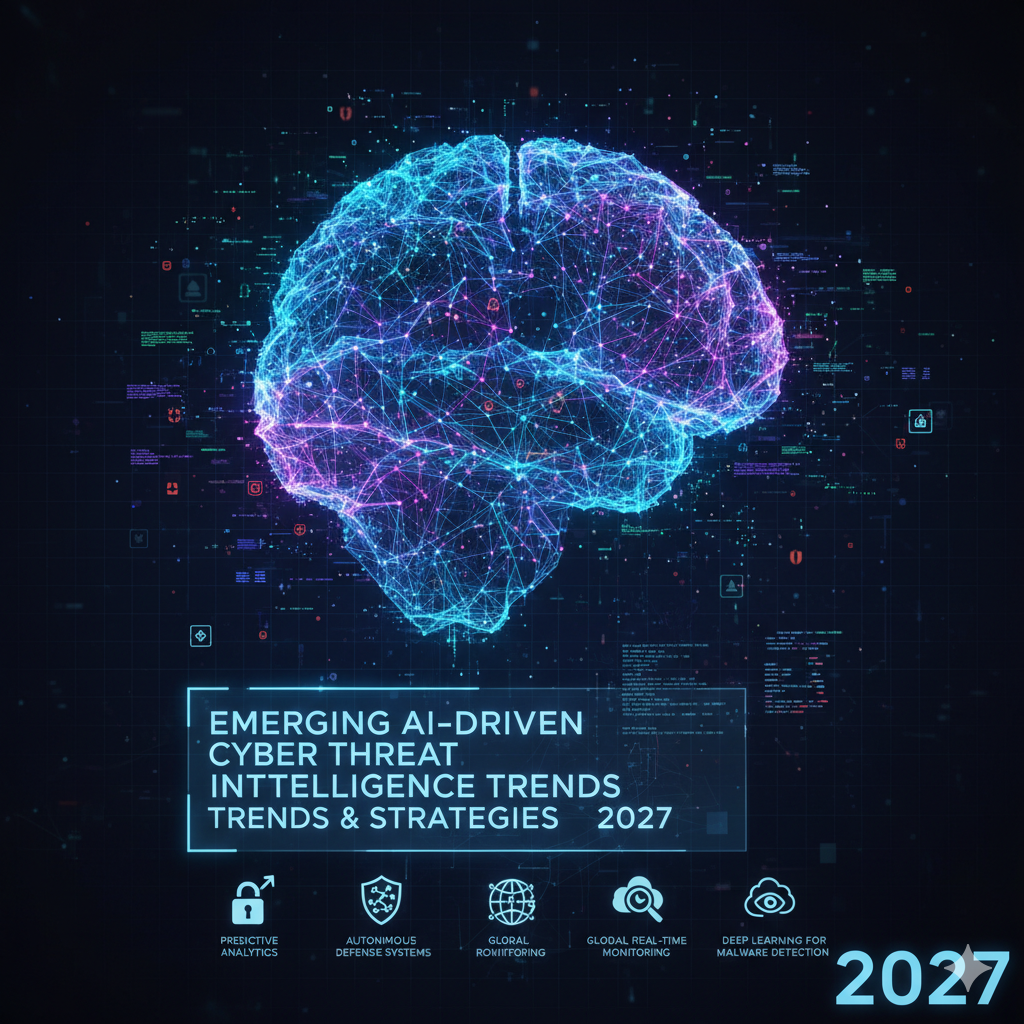
The digital battlefield of 2027 looks vastly different from today. As artificial intelligence continues to evolve, cyber threats have become faster, more adaptive, and disturbingly autonomous. Traditional defensive models that rely on reactive approaches have already proven insufficient. Enterprises are now racing to adopt proactive, AI-driven cyber threat intelligence (CTI) systems that can anticipate, analyze, and neutralize attacks before they cause damage. Informatix.Systems stand at the forefront of this transformation, helping businesses navigate the complex convergence of AI, machine learning, and cybersecurity at Informatix.Systems, we provide cutting-edge AI, Cloud, and DevOps solutions for enterprise digital transformation, empowering your organization to anticipate and respond to evolving cyber trends effectively. As we move toward 2027, a few megatrends stand out. Machine learning is redefining anomaly detection. Deep neural networks are improving malware classification accuracy. Predictive AI systems are shifting cybersecurity from a posture of defense to deterrence. At the same time, cybercriminals are harnessing the same technologies, creating autonomous malware and sophisticated social engineering engines. This long-form guide explores the emerging AI-driven cyber threat intelligence trends, strategies, and real-world impacts that will shape enterprise defenses through 2027 and beyond. You’ll gain insight into how leading organizations can use these tools for cybersecurity readiness, regulatory compliance, and strategic advantage.
Evolution of AI in Cyber Threat Intelligence
From Reactive to Predictive Defense
Cybersecurity has evolved from static firewalls to intelligent, dynamic ecosystems. AI-enhanced systems no longer wait for threats; they predict them. Predictive analytics in CTI offers preemptive mitigation options before attacks occur.
Machine Learning as the Core Engine
Machine learning is the heartbeat of modern CTI. Algorithms analyze massive datasets to uncover unknown threat vectors, detect anomalies, and classify suspicious behaviors with extraordinary precision.
Key benefits include:
- Faster detection through behavior-based learning
- Automated response mechanisms
- Higher detection accuracy for zero-day exploits
- Improved data correlation across endpoints
Key AI-Driven Cyber Threat Trends for 2027
Predictive Behavioral Modeling
Predictive AI will enable early threat forecasting by assessing user behaviors, access trends, and device activity signatures. Enterprises can automate risk scoring based on deviations from established baselines.
Autonomous Threat Hunting
AI agents will autonomously conduct 24/7 threat hunting operations, bridging gaps between human analysis and automated scanning systems.
Offensive AI: The Dark Mirror
Cyber attackers increasingly weaponize generative AI for fake identities, synthetic voices, and realistic phishing content. This trend fuels the AI arms race, where defending intelligence must outsmart offensive AI.
AI in Endpoint Detection and Response (EDR)
AI systems within EDR tools enhance system immunity by recognizing malicious actions even from trusted user accounts or compromised admin credentials.
Deep Learning for Malware and Ransomware Detection
Neural Networks for Code Recognition
Deep learning enables threat models to learn from millions of malware signatures. Neural networks classify malicious code in milliseconds.
Adaptive Learning Against Polymorphic Malware
Polymorphic malware frequently changes its structure to avoid traditional detection. Deep learning models continuously adapt by learning from new variants without manual retraining.
Impact areas:
- Faster incident response
- Reduced false positives
- Enhanced zero-day vulnerability protection
Generative AI Threats and Synthetic Cyber Risks
Deepfakes and Synthetic Identities
AI-generated deepfakes are now used for impersonation attacks, fraudulent communications, and misinformation. The challenge for CTI teams is identifying subtle inconsistencies in audio or video metadata.
Automated Social Engineering
Generative AI can now simulate human conversation, emotions, and responses—making spear-phishing or BEC (Business Email Compromise) attacks increasingly convincing.
Mitigation strategy:
Deploy AI-based verification layers combined with identity intelligence tools that assess linguistic patterns and metadata for authenticity.
The Role of Federated Intelligence Networks
Collaborative Defense Models
In 2027, cybersecurity will move toward shared intelligence ecosystems. Federated CTI networks allow participants to share anonymized data while preserving privacy.
Key advantages:
- Cross-industry attack data correlation
- Faster propagation of newly discovered threat intelligence
- Reduced global response latency
Privacy-Preserving Learning
Federated machine learning ensures no sensitive data leaves its origin, enabling joint model training across institutions securely.
Quantum-AI Convergence in Future Threat Detection
Quantum Machine Learning (QML) for Encryption Analysis
Quantum computing, combined with AI, will accelerate decryption speeds and vulnerability analysis. AI-guided quantum algorithms identify weak cryptographic points that classical systems cannot.
Secure by Design: Quantum-Resistant AI
Enterprises must prepare for quantum-era cybersecurity by implementing AI-assisted post-quantum encryption techniques. At Informatix.Systems, we are already developing advanced AI-quantum integration frameworks to help organizations future-proof their digital assets.
Threat Intelligence Automation and Orchestration
SOAR and AI Integration
Security Orchestration, Automation, and Response (SOAR) platforms will evolve with AI-driven automation. They will dynamically respond to alerts by applying priority context, past incident data, and real-time risk analysis.
Business advantages:
- Reduced alert fatigue
- Faster Mean Time to Response (MTTR)
- Improved cybersecurity ROI
AI-Enhanced Threat Attribution and Forensics
Pattern Recognition in Attack Traces
Modern CTI uses pattern recognition algorithms that map digital fingerprints of hackers (TTPs – tactics, techniques, procedures).
Automated Evidence Analysis
AI-driven forensic tools can reconstruct timeline events, identify compromised endpoints, and attribute responsibility in near real-time. This automation not only strengthens compliance but also accelerates legal investigations.
Compliance, Ethics, and Governance in AI Security
AI Auditability
As AI tools autonomously make decisions, the need for transparency grows. Explainable AI (XAI) is becoming essential for compliance with cyber governance standards.
Ethical Cyber Threat Intelligence
Organizations should prioritize ethical data collection, ensuring that AI models avoid reinforcing privacy violations or bias. At Informatix.Systems, our cybersecurity frameworks embed ethics and accountability into every AI-driven solution for regulatory alignment and brand trust.
Enterprise Strategies to Leverage AI Threat Intelligence
Build a Centralized Threat Data Lake
Integrate all cybersecurity feeds, logs, network data, and endpoint telemetry into a single repository for AI model training.
Deploy Continuous Learning Pipelines
Enable systems to evolve with emerging threats through semi-supervised machine learning models.
Align Security with Business Objectives
Effective AI-driven CTI frameworks must align with enterprise KPIs, not just IT metrics.
Partner with Proven AI Security Providers
Collaborate with experts who deliver not only tools but continuous innovation. Informatix.Systems empowers enterprise teams to integrate AI-driven intelligence across their global infrastructure for proactive resilience.
Innovations on the Horizon: 2027 and Beyond
- Cognitive threat simulators for predictive attack scenario planning
- AI-powered deception systems that create synthetic attack surfaces to attract, identify, and isolate intruders
- Self-healing cybersecurity frameworks integrating autonomous remediation capabilities
- Cross-domain intelligence sharing for unified situational awareness across government and private sectors
AI-driven cyber threat intelligence is redefining the future of digital defense. By 2027, enterprises must integrate predictive, autonomous, and ethical AI systems to withstand increasingly intelligent and automated attacks. At Informatix.Systems, we bridge this transition with intelligent AI and cybersecurity frameworks tailored for enterprise transformation. Our AI-powered threat intelligence solutions combine automation, analytics, and innovation to secure your digital future. Start transforming your cybersecurity strategy today. Connect with our enterprise solutions team at Informatix Systems to harness AI for next-generation defense.
FAQs
What is AI-driven cyber threat intelligence?
It involves using machine learning and AI algorithms to collect, analyze, and predict cyber threats before they occur.
How does AI enhance incident response time?
AI automates triage and investigation, reducing human error and cutting response times by up to 80%.
What are the biggest AI cybersecurity trends for 2027?
Predictive defense systems, autonomous threat hunting, quantum-based security analytics, and federated intelligence sharing.
Is AI replacing human analysts in cybersecurity?
AI enhances human capability but doesn’t replace expert judgment. It automates repetitive tasks, enabling analysts to focus on high-level threat strategy.
How can companies adopt AI-driven CTI effectively?
By integrating centralized data lakes, continuous learning pipelines, and partnerships with trusted AI providers like Informatix.Systems.
Are there ethical concerns with AI security systems?
Yes. Transparency, data privacy, and bias prevention must be systematically built into AI models.
What are AI deception systems?
They deploy synthetic traps or honeypots to detect attackers in real time, gathering intelligence on malicious activities.
How can Informatix Systems help my business prepare for 2027?
We offer AI-driven threat intelligence, DevOps security automation, and integrated monitoring frameworks that align with your enterprise objectives.
No posts found
Write a review