- 3/8, North Pirerbag
- 60 Feet Main Road
- Mirpur, Dhaka 1216
- +880-967-8247365
- support@informatix.systems

Emerging Advanced Persistent Threats Forecasting Strategies 2025
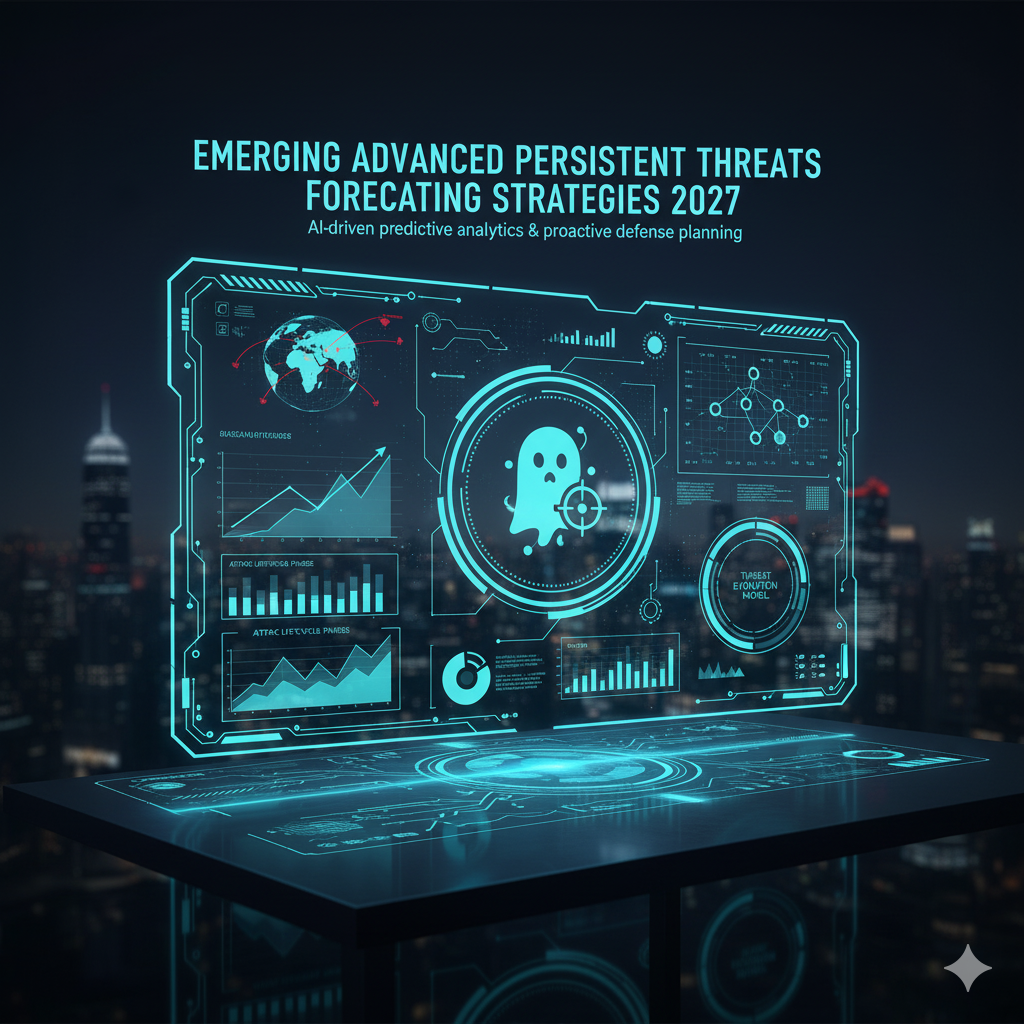
In 2025, the corporate and geopolitical digital environment faces one of its toughest adversaries, Advanced Persistent Threats (APTs). Unlike opportunistic attacks, APTs are highly structured, well-funded, and often state-sponsored campaigns designed to infiltrate organizations for long-term intelligence gathering or sabotage. These attacks combine stealth, persistence, and precision, exploiting even the smallest vulnerabilities across enterprise and national networks. Global digitization, the rise of hybrid cloud infrastructures, and reliance on Internet of Things (IoT) devices have dramatically widened the cyberattack surface. While cyber defenses evolve, adversarial actors develop advanced, AI-powered intrusion tools that can evade detection systems and adapt autonomously. This continuous escalation demands forecasting strategies that anticipate APT activities before they occur, leveraging predictive analytics, automation, and artificial intelligence. Forecasting APTs isn’t about predicting an attack with certainty; it’s about quantifying the probability, understanding attacker behavior, and building proactive resilience strategies. Predictive cybersecurity allows organizations to model threats dynamically, forecast attack campaigns, and respond proactively rather than reactively. At Informatix.Systems, we provide cutting-edge AI, Cloud, and DevOps solutions for enterprise digital transformation. Our APT Forecasting and Intelligence Frameworks help organizations anticipate sophisticated campaigns, mitigate vulnerabilities, and empower informed decision-making to protect digital assets effectively. This article explores the emerging Advanced Persistent Threat (APT) Forecasting Strategies of 2025, addressing trends, technologies, and frameworks shaping predictive defense against tomorrow’s cyber adversaries.
Understanding Advanced Persistent Threats (APTs)
What Are APTs?
Advanced Persistent Threats are complex, continuous hacking efforts targeting high-value networks. Unlike quick monetary-driven hacks, APTs focus on strategic objectives over long durations.
Key Characteristics:
- Sophisticated Tactics: Custom tools and malware designed for target-specific operations.
- Persistence: Long-term infiltration spanning months or years.
- Stealth: Operates undetected using encryption or legitimate network activities.
- Targeted Focus: Geopolitical, defense, financial, and enterprise sectors are prime targets.
By 2025, APTs will have evolved into AI-fueled campaigns where adversaries deploy autonomous reconnaissance, deepfake social engineering, and quantum-resistant encryption exploits.
The Rising Global Threat of APTs in 2025
- Nation-State Espionage: State-backed APT groups employ cyber warfare tactics against rival governments and corporations.
- AI-Powered Exploitation: Machine learning algorithms enhance lateral movement and evasion techniques.
- Zero-Day Vulnerabilities: Rapid exploit weaponization outpaces patching ability.
- Supply Chain Attacks: Vendors and service providers serve as easy ingress points.
- Hybrid Warfare Integration: APTs merge cyber operations with strategic misinformation campaigns.
APT forecasting now focuses on proactive models that interpret evolving adversary patterns based on global telemetry and behavioral intelligence.
Forecasting: The Next Great Frontier in Cyber Defense
Forecasting involves anticipating the probability and nature of APT operations before execution. This requires AI-driven analysis, threat simulation, and predictive intelligence frameworks integrated into Security Operations Centers (SOCs).
Core Forecasting Objectives:
- Modeling future behavior of APT groups.
- Detecting weak signals across dark web activities.
- Assessing geopolitical indicators of upcoming cyber conflicts.
- Enhancing resilience through proactive patching and configuration changes.
APT forecasting transforms defensive models from detection into adaptive prediction, bridging intelligence, analytics, and strategic readiness.
Core Technologies Powering APT Forecasting in 2025
Artificial Intelligence and Machine Learning
AI analyzes multi-dimensional data across networks, correlating incidents, learning attacker behaviors, and forming predictive risk scores.
Natural Language Processing (NLP)
Processes communication patterns across forums, dark web posts, and command-and-control servers to extract adversary intent.
Big Data Analytics
Processes terabytes of intelligence data in real time through advanced data lakes.
Federated Learning
Enables multi-organization collaboration to predict APT strategies while maintaining data privacy.
Behavioral Anomaly Detection
Detects early warning indicators in user activities, network traffic, or API calls linked to APT intrusions.
At Informatix.Systems, we integrate these innovations into cloud-native, AI-powered APT Forecasting Systems that continuously learn and adapt to emerging attack methodologies.
The Role of Predictive Intelligence Models in APT Forecasting
Data Sources for Predictive Modeling:
- Global Cyber Threat Intelligence (CTI) feeds.
- Vulnerability and malware databases.
- Corporate network logs and behavioral telemetry.
- OSINT and dark web intelligence.
Predictive AI Models Used:
- Supervised Learning: Trains on labeled attack datasets for detection precision.
- Unsupervised Learning: Identifies hidden correlations without predefined categories.
- Reinforcement Learning: Enhances predictive accuracy based on success and error feedback.
- Deep Neural Networks: Analyze multi-source threat characteristics and attack evolution.
Each model provides a unique layer of defense foresight, enabling organizations to anticipate and deactivate APT campaigns before impact.
APT Attack Lifecycle: From Detection to Prediction
Traditional Lifecycle Steps:
- Reconnaissance: Attackers gather intelligence on target networks.
- Intrusion: Exploit network vulnerabilities to gain entry.
- Persistence: Establish command centers and hidden backdoors.
- Lateral Movement: Infiltrate deeper systems undetected.
- Exfiltration: Extract sensitive or classified information.
Predictive Model Enhancements:
- AI identifies reconnaissance activities at early stages.
- Behavioral analysis predicts lateral movement patterns.
- Automated playbooks execute containment steps autonomously.
This intelligence lifecycle fusion transforms defense operations into a prediction-focused security ecosystem.
Federated APT Threat Intelligence Collaboration
APT attacks are transnational; therefore, defending against them requires cross-industry intelligence collaboration. Federated AI frameworks allow organizations to share insights securely without exposing sensitive datasets.
Collaborative Benefits:
- Multi-sector learning reduces blind spots.
- Privacy-preserving federated learning ensures compliance.
- Shared vulnerability databases accelerate predictive defenses.
APT forecasting relies heavily on trust-driven collaboration to strengthen collective digital resilience across industries.
Integration of APT Forecasting into DevSecOps
DevSecOps Applications for APT Readiness:
- Continuous Vulnerability Monitoring: Embedded AI models detect weak spots before deployment.
- Predictive Threat Testing: Simulates APT attacks during software lifecycle phases.
- Data Compliance Automation: Monitors code for security framework alignment.
- Secure Infrastructure as Code (IaC): Implements real-time policy enforcement.
At Informatix.Systems, we embed APT forecasting capabilities directly into DevSecOps pipelines, ensuring continuous, predictive application protection from inception to release.
Cloud-Native APT Defense Architectures
Hybrid and multi-cloud deployments amplify attack vectors, requiring integrated detection and forecasting across distributed networks.
Cloud-Native Features for APT Forecasting:
- Elastic AI Scaling: Manage real-time analytics with high-volume cloud workloads.
- Unifying Visibility: Single-pane dashboards across AWS, Azure, and private clouds.
- Zero-Trust Enforcement: Continuous verification of users, applications, and APIs.
- Predictive SOC Integration: Combines threat intelligence from distributed resources.
Informatix.Systems designs cloud-native predictive architectures ensuring enterprise-grade defense, scalability, and global threat anticipation.
Regulatory Compliance and Ethical AI in APT Forecasting
As predictive cyber defense grows, maintaining ethical AI governance is critical.
Key Compliance and Ethical Standards:
- ISO 42001 (AI Management Standards).
- NIST 800-207 (Zero Trust Architecture Framework).
- GDPR 3.0 (Cross-Border Privacy Regulations).
Ethical AI Measures Include:
- Eliminating bias in predictive models.
- Maintaining accountability and human validation.
- Ensuring transparency through Explainable AI (XAI).
At Informatix.Systems, our Ethical AI Governance Framework integrates compliance-first APT forecasting that aligns innovation with accountability.
Key Metrics for Evaluating Forecasting Effectiveness
| Metric | Description | Importance |
|---|---|---|
| Prediction Accuracy (%) | Precision of APT forecasting algorithms. | Determines the reliability of outcomes. |
| Detection Latency (DL) | Time from anomaly detection to prediction. | Measures operational efficiency. |
| Risk Mitigation Rate (RMR) | Percent of threats neutralized before escalation. | Quantifies prevention value. |
| Learning Adaptability Index (LAI) | Speed of AI updates in learning models. | Evaluates intelligence agility. |
| Collaborative Insight Index (CII) | Success in cross-sector intelligence integration. | Reflects ecosystem maturity. |
Tracking these KPIs ensures APT forecasting models remain agile, adaptive, and optimized across evolving threat landscapes.
Overcoming Challenges in APT Forecasting
- Data Overload: Vast intelligence inflows challenge real-time analysis.
- Model Drift: AI accuracy can degrade over time without retraining.
- Lack of Standardization: Cross-sector data inconsistency hampers integration.
- Adversarial AI Manipulation: Attackers feed false data to mislead forecasting algorithms.
- Global Privacy Constraints: International laws restrict information sharing.
At Informatix.Systems, we address these challenges through federated data frameworks, quantum-safe analytics, and continuous AI model optimization.
The Future of APT Forecasting Beyond 2025
- Quantum-Enabled APT Simulation: Quantum computing predicts threat sequences in real time.
- Neural Network SOC Integration: Self-learning SOCs autonomously manage detection and response.
- Autonomous AI Defense Ecosystems: Complete automation of defense processes and predictive response.
- Cognitive Threat Forecasting: Knowledge-based AI reasoning predicts adversary objectives.
- Global APT Prediction Mesh: Shared predictive platforms across international agencies.
APT forecasting is poised to evolve into a proactive global cyber immune system, ensuring continental digital sovereignty and adaptive resilience.
Informatix.Systems: Leading the Global APT Forecasting Revolution
At Informatix.Systems, we provide cutting-edge AI, Cloud, and DevOps solutions for enterprise digital transformation. Our APT Forecasting Systems combine federated intelligence, predictive modeling, and compliance automation to anticipate and neutralize sophisticated cyber campaigns.
Our Core Offerings Include:
- AI-Powered APT Prediction Models.
- Cloud-Integrated Predictive Security Platforms.
- Federated Intelligence Collaboration Networks.
- SOAR-Orchestrated APT Response Automation.
- Quantum-Ready Defense Architectures.
We empower enterprises and governments to move beyond reactive defense by implementing scalable, predictive cyber ecosystems that redefine readiness. The Advanced Persistent Threat ecosystem is no longer a linear challenge; it is an evolving, borderless conflict fought through automation and intelligence. Predictive forecasting turns uncertainty into strategy, enabling organizations to stay steps ahead of adversaries. AI-driven systems have made this transformation possible. By combining behavioral analytics, federated learning, and predictive modeling, cybersecurity becomes anticipatory, strategic, and resilient. At Informatix.Systems, we lead this transformation with AI, Cloud, and DevOps-powered APT forecasting solutions that help businesses predict and prevent the next wave of digital attacks. Anticipate the threat. Forecast the future. Defend with Informatix.Systems.
FAQs
What is APT forecasting?
APT forecasting uses AI and data analytics to predict the occurrence and impact of advanced persistent threats before execution.
How does AI improve APT detection?
AI models analyze patterns and correlate global threats, predicting sophisticated attack strategies before infiltration.
What industries are most at risk from APTs?
Defense, finance, healthcare, and critical infrastructure industries are top APT targets due to high-value assets.
Can predictive intelligence prevent APTs completely?
While not eliminating all risks, predictive forecasting significantly reduces exposure and response times.
Is APT forecasting compliant with global privacy laws?
Yes. Informatix.Systems’ solutions are fully compliant with ISO, GDPR, and NIST frameworks, ensuring lawful intelligence sharing.
How does Informatix.Systems’ APT platforms differ from traditional systems?
We utilize AI, federated learning, and automation for real-time prediction, cross-sector collaboration, and proactive defense.
What emerging trends influence APT forecasting?
Quantum-safe analytics, cognitive AI forecasting, and global intelligence sharing frameworks.
What is the future of APT forecasting beyond 2025?
Autonomous and AI-governed cyber ecosystems capable of forecasting, simulating, and neutralizing attacks in real time.
No posts found
Write a review