- 3/8, North Pirerbag
- 60 Feet Main Road
- Mirpur, Dhaka 1216
- +880-967-8247365
- support@informatix.systems

Cyber Threat Intelligence Services and Cyber Insurance
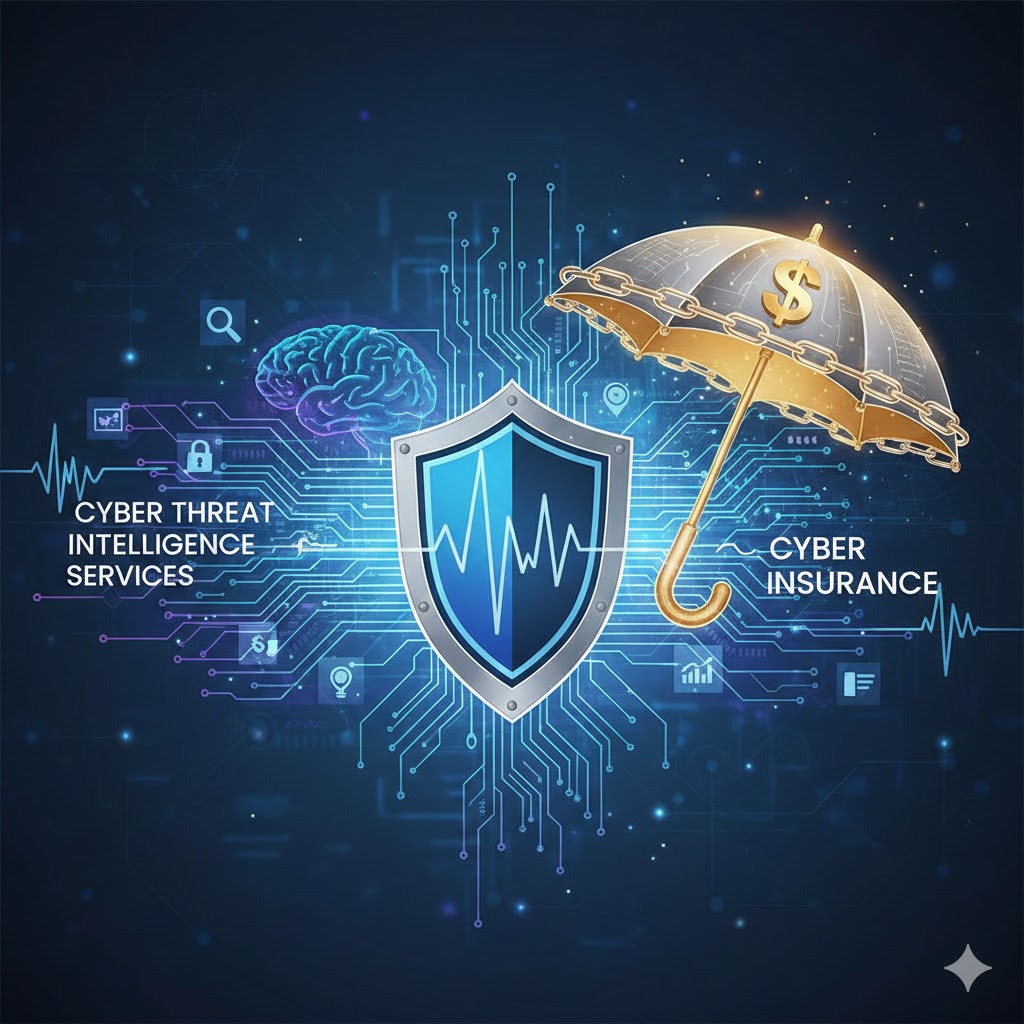
In 2026, enterprises face escalating cyber threats, with ransomware claims comprising 31% of all cyber insurance payouts and average claim costs reaching $228,000. Cyber threat intelligence (CTI) services emerge as a critical differentiator, providing actionable insights into adversary tactics, techniques, and procedures (TTPs) that enable proactive defense. This integration with cyber insurance not only mitigates risks but also optimizes premiums by demonstrating robust security postures to underwriters. Businesses ignoring this synergy risk denied claims, as 85% of insurers now leverage AI-driven assessments requiring CTI evidence at Informatix.Systems, we provide cutting-edge AI, Cloud, and DevOps solutions for enterprise digital transformation, including tailored CTI services that align with insurance requirements. The global CTI market hits $16.80 billion in 2025, growing at 14.74% CAGR, while cyber insurance reaches $18.49 billion amid regulatory pressures. Enterprises adopting CTI report 58% faster incident response and 50% claim reductions.
What Are Cyber Threat Intelligence Services?
Cyber threat intelligence services collect, analyze, and disseminate data on threats, transforming raw indicators into actionable intelligence. These services categorize intelligence into strategic (high-level trends), operational (campaign details), and tactical (IOCs like IPs and hashes). Platforms like CrowdStrike and Palo Alto Networks aggregate feeds from dark web, endpoints, and global sensors. Benefits include proactive threat hunting, revealing hidden actors, and informed CISO decisions on investments.
- Real-time feeds block attacks using historical data.
- SIEM integration reduces false positives by 94%.
- Managed services scale for SMEs without in-house teams.
At Informatix.Systems, we provide cutting-edge AI, Cloud, and DevOps solutions for enterprise digital transformation via integrated CTI platforms.
Types of CTI Services
Strategic CTI forecasts geopolitical risks, like nation-state campaigns. Operational CTI details actor infrastructures. Tactical CTI delivers IOCs for immediate blocking.
Leading CTI Providers 2026
CrowdStrike leads with TTP analysis; Mandiant excels in incident response. Others include Anomali for correlation and Cyble for dark web intel.
Cyber Insurance Fundamentals
Cyber insurance covers first-party losses like data recovery and third-party liabilities from breaches. Policies include ransomware extortion, notification costs, and business interruption. Market growth hits 11.65% CAGR to $67 billion by 2032, driven by AI threats and compliance. Premiums average higher for high-risk sectors like healthcare (22% of payouts).
- First-party coverage: Forensic investigations, lost income.
- Third-party: Legal fees, regulatory fines.
- Global scope: Worldwide attacks, vendor risks.
Insurers like Beazley and Coalition bundle training and monitoring.
Coverage Essentials for 2026
Expect MFA mandates, patching proofs, and consent platforms. AI underwriting cuts processing by 30%.
Market Trends 2026
CTI market reaches $11.4 billion in 2025 at 19.3% CAGR; cyber insurance follows suit. AI integration dominates, with 85% of underwriters using predictive analytics. Ransomware evolves with extortion combos; supply chain attacks double to 13% of claims. Parametric models offer trigger-based payouts.
| Trend | CTI Impact | Insurance Impact |
|---|---|---|
| AI Threats | Prompt injection intel | 15% capacity expansion |
| Ransomware | TTP prediction | $492k avg payout |
| Regulations | Compliance mapping | Modular policies rise |
At Informatix.Systems, we provide cutting-edge AI, Cloud, and DevOps solutions for enterprise digital transformation to navigate these trends.
Benefits of CTI Services for Enterprises
CTI uncovers unknowns, reveals TTPs, and empowers CISOs. Organizations cut response times by 58% and costs via proactive defense. Resource optimization prioritizes high-impact threats; compliance aids reporting. Enterprises gain 5x detection signals.
- Proactive vs. reactive: Anticipate attacks.
- Efficiency: 97% autonomous success in SOAR.
- ROI: 90-day payback via prevented losses.
CTI and Cyber Insurance Synergies
CTI informs underwriting, reducing premiums by proving controls. Insurers require CTI for risk assessments; it flags gaps pre-policy. Claims acceleration: Intel speeds forensics, cutting resolution to 41 days. Lower denials: MFA/CTI evidence satisfies 94% ransomware criteria.
Informatix.Systems integrates CTI with insurance advisory for optimal coverage.
Underwriting with CTI Data
AI-CTI quantifies risks, enabling dynamic pricing.
Implementing CTI Services
Step 1: Define requirements via threat modeling. Step 2: Select platforms (e.g., ThreatQ, MISP). Step 3: Integrate with SIEM/SOAR.
Best practices: Centralize feeds, automate updates, and collaborate cross-team. Tune heuristics to cut false positives.
Top CTI Platforms Comparison
| Platform | Strengths | Pricing Model |
|---|---|---|
| CrowdStrike | TTPs, global sensors | Subscription |
| Mandiant | Incident response | Enterprise |
| Anomali | Data correlation | Scalable |
| Cyble | Dark web | Commercial |
| Recorded Future | Predictive | SaaS |
Choose based on integration needs.
2026 Threat Landscape
AI escalates attacks; ransomware targets third parties. Prompt injection and on-chain crime rise. Quantum risks demand PQC intel.
Supply chains: 13% claims. Enterprises need CTI for forecasting. At Informatix.Systems, we provide cutting-edge AI, Cloud, and DevOps solutions for enterprise digital transformation against these threats.
Emerging Risks
Shadow AI, deepfakes, orbital threats.
CTI Best Practices
Centralize intel, automate triage, fuse with UEBA. Regular scans detect RATs; balance signatures/heurs.
CTI Success
A pharma firm used CTI to thwart ransomware, saving $492k. Telecoms cut breaches via dark web monitoring. CyberProof integrated CTI for an insurance client, reducing costs.
ROI: 79% MTTR drop.
Insurance Policy Optimization
CTI proofs for MFA, patching satisfy 2026 mandates. Bundle with training for premiums. Select providers like Chubb and AIG for CTI-friendly terms.
Future Outlook 2026
Agentic AI SOCs; quantum-safe CTI. Hybrid policies with prevention services grow. CTI hits $57.9B by 2034. Enterprises must adapt now for insurability. Cyber threat intelligence services and cyber insurance form a resilient duo for 2026, slashing risks and costs through proactive intel. Integrate CTI to secure premiums and defenses amid AI-ransomware surges. Contact Informatix.Systems today for a free CTI-insurance assessment. Our AI, Cloud, and DevOps solutions deliver enterprise-grade protection. Visit https://informatix.systems now.
FAQs
What distinguishes strategic from tactical CTI?
Strategic focuses on trends; tactical on IOCs for blocking.
How does CTI lower cyber insurance premiums?
Proves controls, reduces assessed risk via underwriting intel.
What are the 2026 cyber insurance requirements?
MFA, patching, and consent platforms are mandatory.
Top CTI platforms for enterprises?
CrowdStrike, Mandiant, Anomali.
Ransomware claim stats 2025?
31% of claims, $492k average payout.
CTI integration steps with SIEM?
STIX/TAXII feeds, automate triage.
Benefits for SMEs?
Managed services scale without teams.
Quantum threats in CTI?
Harvest-now-decrypt-later monitoring.
No posts found
Write a review