- 3/8, North Pirerbag
- 60 Feet Main Road
- Mirpur, Dhaka 1216
- +880-967-8247365
- support@informatix.systems

Warehouse Automation Solutions for E-commerce in 2026 | Informatix.Systems
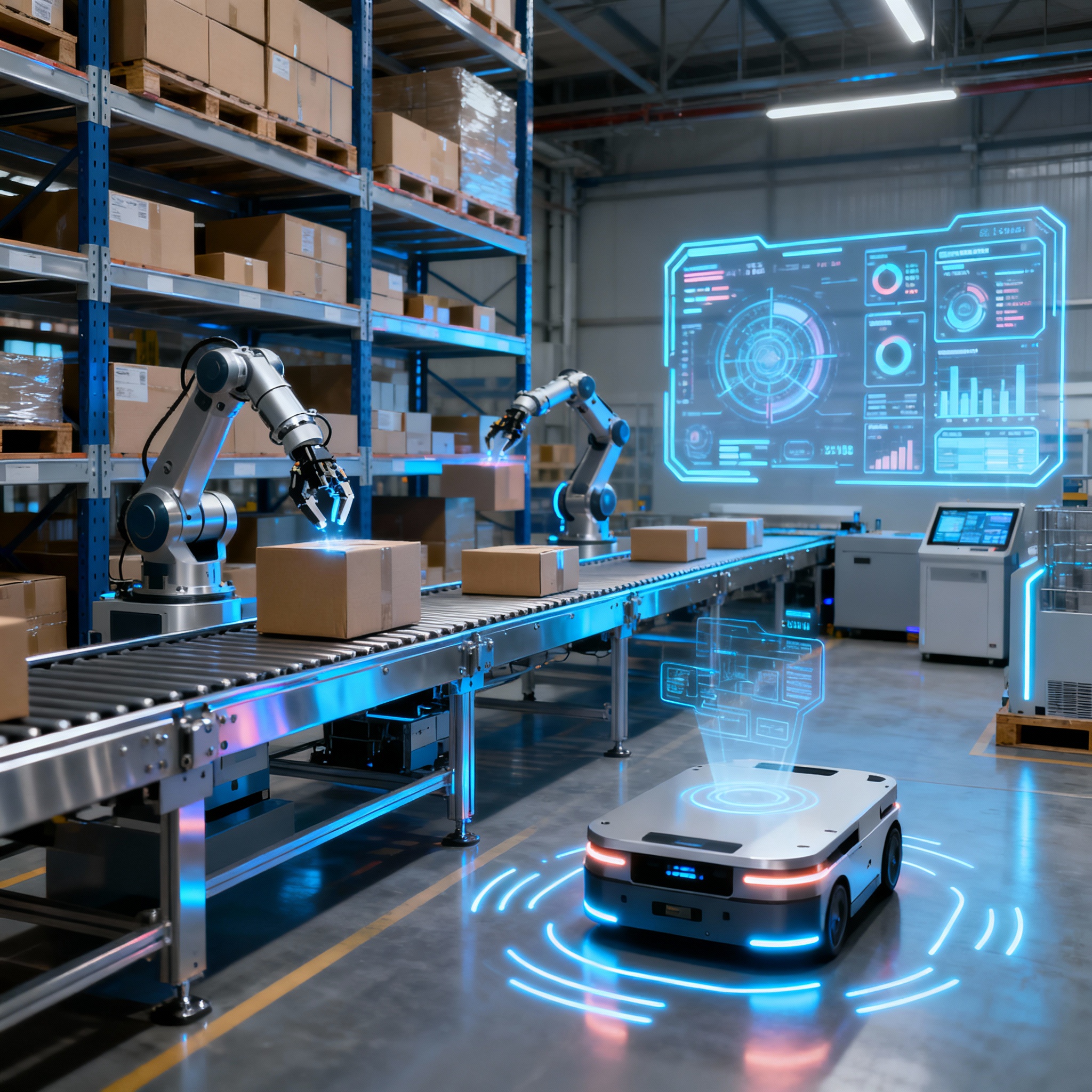
The e-commerce marketplace in 2026 is an arena driven by instant gratification and near-perfect delivery precision. Consumers no longer tolerate delays or stock discrepancies, expecting rapid, accurate shipments with seamless real-time updates. To meet these rising expectations, businesses are turning toward warehouse automation solutions that combine robotics, AI, IoT, and cloud analytics to revolutionize storage, picking, packing, and dispatching processes. The complexity of modern fulfillment networks, increased SKU counts, and the global push for sustainability are driving enterprises to reimagine warehouse operations beyond manual or semi-automated models. Smart automation now enables 24/7 precision-driven workflows, cost reductions, and greater scalability, turning logistics from a bottleneck into a strategic advantage. At Informatix.Systems, we provide cutting-edge AI, Cloud, and DevOps solutions for enterprise digital transformation, empowering e-commerce and supply chain businesses to automate their warehouses intelligently. Our integrated approach involves machine learning, robotics process automation (RPA), and intelligent inventory management,t eliminating inefficiencies, reducing labor costs, and accelerating order fulfillment through end-to-end visibility. As we move into 2026, the convergence of automation and data-driven intelligence is reshaping what’s possible in warehouse efficiency. In this comprehensive guide, we’ll explore the latest trends, technologies, and enterprise strategies behind warehouse automation solutions for e-commerce and how leading businesses are using Informatix.Systems technology to transform logistics into a pillar of competitive success.
Understanding Warehouse Automation in 2026
Warehouse automation integrates advanced technology to perform logistics processes with minimal human intervention, from inbound goods processing to outbound shipping.
Core Components
- Automated guided vehicles (AGVs) and autonomous mobile robots (AMRs)
- Automated storage and retrieval systems (AS/RS)
- Smart conveyors and pick-to-light systems
- AI-driven warehouse management systems (WMS)
Strategic Advantages:
- Significantly reduces labor dependency
- Minimizes picking and inventory errors
- Accelerates turnaround for order fulfillment
- Enhances operational ROI through predictive efficiency
The Role of AI and Machine Learning in Automation
AI enables real-time optimization of warehouse workflows, predicting demand patterns, and automating inventory decisions based on sales projections and storage analytics.
Key AI Capabilities for Warehouses:
- Dynamic inventory allocation: AI predicts which zones need stock replenishment.
- Predictive maintenance: Sensors forecast system failures before they happen.
- Computer vision: Automated item recognition and quality assurance.
At Informatix.Systems, our AI integrations deliver adaptive intelligence for every stage—from inbound logistics to delivery optimization—powered by scalable cloud-based analytics.
Robotics and Autonomous Systems in E-commerce Logistics
Robots are the backbone of e-commerce warehouse automation in 2026. They handle repetitive, high-speed, and high-accuracy tasks more effectively than human labor.
Types of Robotics Driving Automation:
- Pick-and-place robots for order accuracy.
- Mobile warehouse robots navigate smartly via AI mapping.
- Collaborative robots (cobots) supporting human teams.
- Drones for inventory scanning and item tracking.
Benefits for E-commerce Enterprises:
- Reduced human error rates
- Increased order throughput
- 24/7 operational continuity
- Safer and more ergonomic environments
Cloud-Based Warehouse Management Systems (WMS)
Cloud computing has made warehousing scalable and connected across regions. A Cloud WMS provides centralized control over data visibility, reporting, and software updates.
Advantages of Cloud WMS by Informatix.Systems:
- Multi-location synchronization
- Secure real-time analytics dashboards
- Seamless integration with ERP, CRM, and e-commerce platforms
- Zero infrastructure downtime through cloud redundancy
At Informatix.Systems, we build cloud-native WMS platforms integrating AI analytics, IoT data analysis, and predictive reporting—helping enterprises scale sustainably.
Internet of Things (IoT) in Modern Warehouse Automation
IoT connects physical assets—like racks, forklifts, and conveyors—into a unified data ecosystem, ensuring continuous visibility across the supply chain.
Applications of IoT in Warehousing:
- Real-time asset tracking using RFID and GPS.
- Temperature and humidity sensors for sensitive goods.
- Predictive maintenance alerts for equipment longevity.
- Digital twins for real-time warehouse simulations.
When integrated with Informatix.Systems Cloud, IoT ensures predictive control and intelligent orchestration of warehouse systems for maximum productivity.
Data Analytics and Forecasting in Warehouse Operations
E-commerce warehouses in 2026 rely heavily on predictive analytics to anticipate market demand, plan slots, and optimize restocking cycles.
Data Analytics Applications:
- Identifying fast-moving SKUs for dynamic placement.
- Detecting bottlenecks across picking routes.
- Forecasting seasonal spikes and optimizing labor scheduling.
- Budget control through performance KPI tracking.
Informatix.Systems Insights:
Our analytics team empowers logistics managers with actionable intelligence—turning raw warehouse data into a decision-driven, profit-oriented strategy.
Sustainability Through Smart Automation
Sustainability is now a decisive metric for warehouse efficiency. Automated systems reduce waste, optimize resource use, and support green processing mechanisms.
Key Sustainability Practices:
- Energy-efficient robotic systems
- Battery optimization for mobile fleets
- Zero-paper digital documentation
- Resource-efficient climate controls
At Informatix.Systems, sustainability is embedded into our automation frameworks—helping enterprises reduce carbon footprints while sustaining operational excellence.
Integration with E-commerce Platforms and Fulfillment Networks
Automation becomes more powerful when synchronized with sales and distribution systems. Integration ensures orders, inventory, and logistics data flow seamlessly across the ecosystem.
Platforms Integrated:
- Shopify, Magento, WooCommerce
- ERP platforms like SAP and Oracle
- Transportation Management Systems (TMS)
Integration Benefits:
- Real-time order visibility
- Streamlined fulfillment synchronization
- Automatic restock and return handling
- Enhanced customer experience through transparency
Cybersecurity and Data Protection in Smart Warehouses
Greater connectivity introduces higher security demands. Protecting operational data is paramount as cloud and IoT networks become central in warehousing.
Cybersecurity Implementations:
- End-to-end data encryption
- Role-based access control (RBAC)
- Continuous network monitoring
- AI-based anomaly detection
Informatix.Systems integrates DevSecOps into automation deployments, ensuring compliance, resilience, and data sovereignty in global warehouse infrastructure.
Future Trends: What’s Ahead for Warehouse Automation (2026–2030)
Automation will evolve into hyper-intelligent systems capable of autonomous decisions and self-learning logistics orchestration.
Future Innovations:
- Quantum computing for real-time optimization
- Autonomous delivery and robotic swarming
- Edge computing for ultra-fast warehouse analytics
- Blockchain-integrated supply chain management
With Informatix.Systems, enterprises gain early access to next-generation warehouse automation powered by our continuous R&D into AI-driven industrial innovation. Warehouse automation is the cornerstone of competitive success in 2026. As enterprises scale across markets, automation is no longer an option; it’s an operational imperative. At Informatix.Systems, we empower e-commerce leaders with AI-driven warehouse automation, cloud-native analytics, and DevOps scalability, enabling performance excellence from inbound logistics to last-mile fulfillment. Whether your goal is faster delivery, smarter resource use, or next-gen sustainability, our custom automation architectures deliver results aligned with your business strategy. Take the first step toward future-ready warehouse automation contact Informatix.Systems today and transform your e-commerce supply chain into an intelligent powerhouse.
FAQs
What is warehouse automation in e-commerce?
It refers to implementing robotics, AI, and software systems to streamline warehouse operations—improving speed, accuracy, and cost efficiency.
How does AI improve warehouse automation?
AI predicts demand, optimizes inventory, and automates workflows, reducing manual effort and increasing fulfillment accuracy.
Are warehouse robots replacing human workers?
Not entirely obots handle repetitive tasks, allowing humans to focus on strategic operations and system management.
How can Informatix.Systems help my e-commerce business?
We offer AI, Cloud, and DevOps-driven automation tailored for e-commerce enterprises, integrating robotic systems with smart software and predictive analytics.
What are the cost benefits of warehouse automation?
Companies experience lower labor costs, improved throughput, reduced errors, and faster ROI through streamlined processes.
How secure are automated warehouses?
Modern systems utilize encryption, authentication, and AI threat detection to ensure data and infrastructure security.
Can small or mid-sized businesses adopt automation?
Yes. Scalable cloud-based automation solutions make advanced technologies affordable and adaptable to any business size.
What’s next for warehouse automation beyond 2026?
Expect greater autonomy in robotics, cloud-quantum integration, and industry-wide sustainable logistics driven by intelligent AI ecosystems.
No posts found
Write a review