- 3/8, North Pirerbag
- 60 Feet Main Road
- Mirpur, Dhaka 1216
- +880-967-8247365
- support@informatix.systems

AI Models for Predictive Cyber Defense 2027
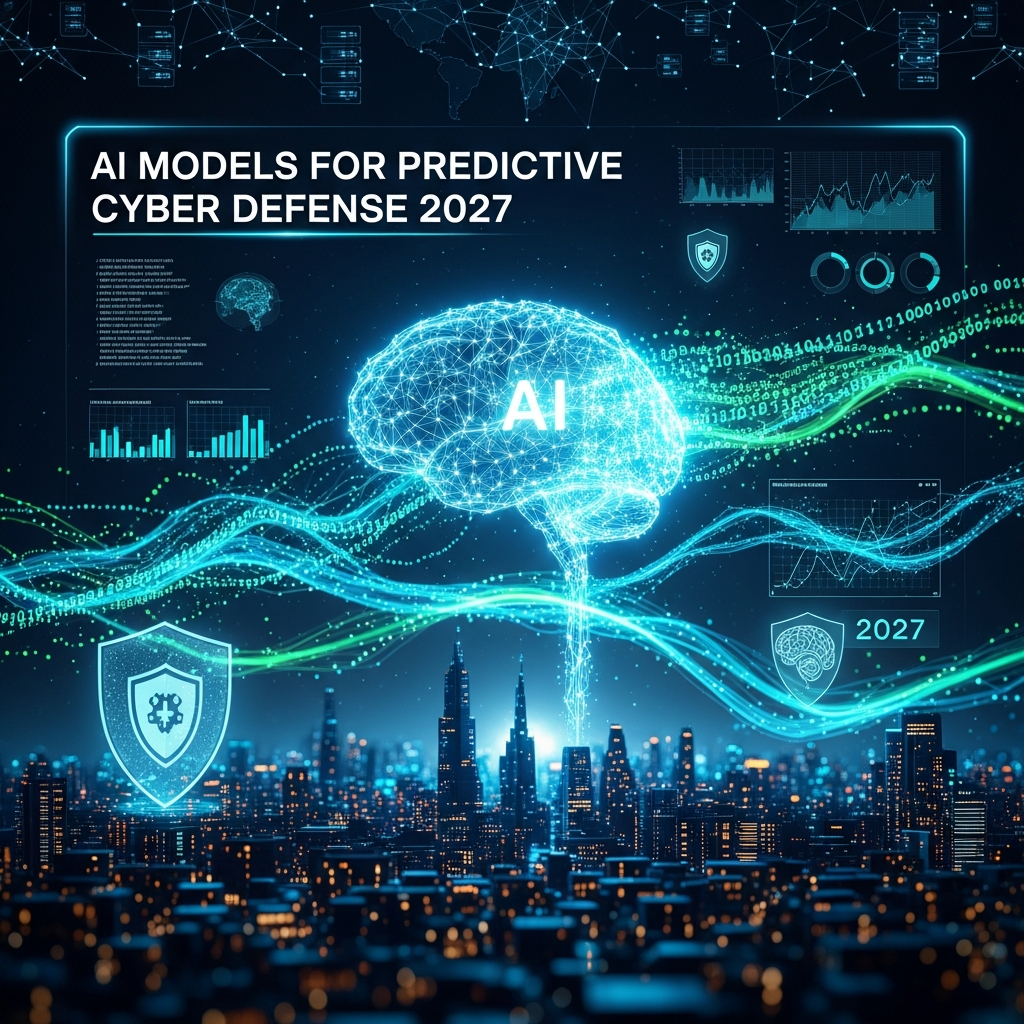
In a digital ecosystem where cyberattacks evolve faster than human response capabilities, Artificial Intelligence (AI) is revolutionizing how enterprises defend themselves. By 2027, predictive cyber defense is expected to become the global standard for cybersecurity, enabling systems to anticipate, identify, and neutralize threats before they occur. Modern cyber defense no longer revolves around reactive detection. Instead, predictive approaches powered by AI, machine learning (ML), and advanced analytics can proactively model likely attack vectors using behavioral data, threat intelligence feeds, and anomaly detection engines. As attack surfaces expand through cloud adoption, IoT integration, and edge computing, the need for AI-driven predictive models has become a mission-critical priority at Informatix. Systems, we provide cutting-edge AI, Cloud, and DevOps solutions for enterprise digital transformation, including intelligent cybersecurity architectures that integrate predictive defense capabilities. Our AI solutions enable organizations to deploy self-learning systems that dynamically anticipate attacks, automate mitigation, and enforce adaptive security postures. This article explores the future of AI models for predictive cyber defense in 2027, examining their architectures, applications, real-world use cases, and strategic value for enterprise resilience.
The Evolution of Cyber Defense: From Reactive to Predictive
Reactive Defense Limitations
Traditional cybersecurity relies on:
- Signature-based detection tools.
- Human-led incident response teams.
- Rule-based monitoring systems.
These systems are effective only against known threats, leaving organizations vulnerable to zero-day exploits, polymorphic malware, and novel attack vectors.
Predictive Models as the Future
Predictive defense flips the paradigm, focusing on preemptive threat anticipation rather than reactive containment. AI models simulate attacker behavior, identify potential vulnerabilities, and forecast malicious activity patterns before exploitation occurs.
Key Advantages
- Reduction in breach incidents.
- Accelerated incident response time.
- Lower threat investigation overhead.
- Enhanced situational awareness.
Understanding Predictive Cyber Defense
Definition
Predictive cyber defense combines AI, data analytics, and automation to anticipate cyberattacks using historical logs, behavioral models, and network telemetry.
Core Principles
- Data-driven inference – Leveraging large-scale datasets from network devices and endpoints.
- Dynamic adaptation – Continuous model training on new threat variants.
- Autonomous mitigation – AI-driven orchestration of real-time defense.
Example
An AI system detects subtle deviations in login behavior across servers and predicts an internal compromise hours before data exfiltration occurs.
Key AI Models Driving Predictive Cyber Defense
Machine Learning (ML) Models
ML models use statistical methods to identify malicious behaviors.
Common ML techniques include:
- Supervised learning for classifying known threats.
- Unsupervised learning for discovering anomalies.
- Reinforcement learning for adaptive security strategies.
Deep Learning Neural Networks
Deep learning architectures analyze multi-dimensional inputs from endpoints, logs, and network traffic to predict attack vectors with high accuracy.
Examples:
- CNNs for traffic pattern recognition.
- RNNs for temporal threat sequence prediction.
Natural Language Processing (NLP)
NLP-powered systems analyze hacker communications, phishing content, and dark web chatter to anticipate trends.
Graph Neural Networks (GNNs)
Used for relational pattern detection in connected infrastructures, such as lateral movement prediction within enterprise networks.
Federated Learning Models
Federated AI systems share patterns across institutions without sharing confidential data, ensuring collaborative intelligence while maintaining data privacy.
Data Foundations for Predictive Threat Intelligence
Key Data Sources
- Security Information and Event Management (SIEM) logs
- Intrusion Detection and Prevention Systems (IDS/IPS) data
- Endpoint Detection and Response (EDR) telemetry
- Threat intelligence feeds
- Cloud workload logs
Importance of Data Quality
Predictive models require:
- Clean, annotated datasets.
- Balanced threat versus benign activity examples.
- Regular retraining to prevent data drift.
Core Algorithms Used in Predictive Models
Anomaly Detection Algorithms
- Isolation Forest
- One-Class SVM
- Autoencoders
Classification Algorithms
- Random Forest
- Gradient Boosting Machines
- Support Vector Machines
Sequential Data Models
- Long Short-Term Memory (LSTM) networks for network activity logs.
- Hidden Markov Models for behavioral profiling.
Reinforcement Learning
Used for autonomous defense decision-making, such as:
- Dynamic firewall rule adjustments.
- Automated incident containment actions.
Implementation Architecture for Predictive Cyber Defense Systems
Layered Framework
- Data Ingestion Layer – Collects raw input from enterprise infrastructure.
- Processing Layer – Uses ML pipelines for feature extraction.
- Prediction Layer – Generates real-time threat probabilities.
- Action Layer – Automates responses via SOAR (Security Orchestration, Automation, and Response) tools.
- Feedback Layer – Incorporates analyst insights to retrain models.
Deployment Approaches
- On-premises data center defense.
- Hybrid cloud intelligence layers.
- Full cloud-native SIEM integration.
At Informatix.Systems, our AI-driven defense architectures combine DevSecOps pipelines and multi-cloud security frameworks, ensuring model scalability and compliance.
Real-World Applications of Predictive Cyber Defense Models
Financial Sector
AI predicts fraudulent transactions before execution using behavioral analytics.
Healthcare Sector
Predictive models guard patient data from ransomware through anomaly-based intrusion detection.
Government Systems
Machine learning enables early detection of espionage attempts and insider threats.
Critical Infrastructure
Real-time AI forecasting prevents attacks on utility grids and transportation systems.
E-commerce & Cloud Enterprises
Predictive defense models shield data centers from credential-stuffing and botnet attacks.
Future Landscape: Predictive Cyber Defense in 2027
Technological Shifts
By 2027, predictive defense will be fueled by:
- Self-learning agents integrated with Zero Trust Architecture (ZTA).
- Quantum-resistant AI algorithms.
- Autonomous response frameworks enabling closed-loop mitigation.
Market Trends
- Projected 45% CAGR in AI cyber defense investments.
- 80% of enterprises are expected to integrate predictive models in security stacks.
- Rise of AI-driven Red Teams for proactive vulnerability discovery.
Policy and Compliance
Regulatory frameworks will align with AI governance mandates, emphasizing:
- Explainable AI (XAI).
- Data privacy assurance.
- Ethical model governance.
Challenges Facing Predictive AI Cyber Defense
Data Imbalance & Bias
Malicious samples often underrepresent real-world traffic distributions.
Model Interpretability
AI black boxes hinder trust in automated decisions.
Adversarial AI Attacks
Attackers manipulate training data to deceive prediction systems.
Integration Complexity
Legacy security systems often lack the architecture to support AI modules.
Human-AI Collaboration
Effective deployment requires skilled analysts to oversee AI outputs and calibration.
Building Enterprise Predictive Cyber Defense Capabilities
Step-by-Step Roadmap
- Assess existing threat detection infrastructure.
- Identify data sources for model training.
- Design AI architecture integrating ML/Deep Learning pipelines.
- Implement continuous model retraining.
- Automate response workflows via DevSecOps.
- Measure results using cyber defense KPIs.
Required Skills and Tools
- Data science and AI engineering expertise.
- Cyber threat intelligence analysis.
- Cloud-native AI platforms (Azure Sentinel, AWS GuardDuty, Informatix SecureAI Suite).
At Informatix.Systems, our SecureAI framework enables enterprises to operationalize predictive analytics seamlessly, integrating defense automation through scalable cloud-native pipelines.
Ethical and Governance Considerations in AI-Driven Defense
Ethical Risks
- Bias in detection models.
- Privacy violations from deep behavioral analysis.
- Overreliance on autonomous decisions.
Governance Solutions
- Implement AI ethics boards.
- Maintain explainability dashboards.
- Enforce data minimization principles.
Predictive systems must balance proactive defense with ethical responsibility, ensuring transparency and user trust.
Measuring ROI of Predictive AI Cyber Defense
Key Performance Indicators (KPIs)
- Mean Time to Detect (MTTD) reduction.
- Mean Time to Respond (MTTR) reduction.
- False Positive Rate (FPR) improvements.
- Overall operational expenditure (OpEx) savings.
Business Impact
- Reduced financial loss per incident.
- Enhanced customer data protection.
- Strengthened brand reputation.
Enterprises investing in AI-based predictive systems typically experience 25–40% faster incident resolution and significant cost avoidance over traditional reactive methods. As cyber threats grow in scale and sophistication, AI-driven predictive models represent the next leap forward in safeguarding digital enterprises. By 2027, the fusion of machine learning, automation, and cloud-native orchestration will empower organizations to stay ahead of adversaries, not chase them. At Informatix.Systems, we enable organizations to build future-ready predictive defense ecosystems, integrating customized AI models, federated data intelligence, and DevSecOps security automation across multi-cloud environments. Future-ready cybersecurity demands proactivity, intelligence, and adaptability. Partner with Informatix.Systems to harness the full potential of AI for predictive cyber defense today.
FAQs
What is predictive cyber defense?
Predictive cyber defense uses AI and data analytics to forecast cyber threats before they cause damage, focusing on proactive prevention instead of post-incident response.
Which AI algorithms are most used for predictive cybersecurity in 2027?
Key models include LSTM networks, autoencoders, Random Forests, and reinforcement learning architectures optimized for network telemetry and threat detection.
How do AI models prevent zero-day attacks?
By analyzing anomalous patterns and behavioral deviations, AI systems identify stealth behaviors often linked to zero-day exploits even before signatures are available.
Can predictive AI systems replace human analysts?
No. They augment human intelligence by automating routine detection and providing insights, allowing analysts to focus on complex, high-risk scenarios.
How can enterprises integrate predictive AI defense?
Organizations should begin by consolidating data sources, adopting cloud-native AI security platforms, and continuously training models using threat feedback loops.
Are AI models for cybersecurity secure themselves?
Yes, though they can be vulnerable to adversarial AI attacks, robust training and governance frameworks mitigate manipulation risks.
What industries benefit most from predictive cyber defense?
Banking, healthcare, e-commerce, government, and critical infrastructure sectors derive the highest value from predictive AI implementation.
How can Informatix Systems help enterprises deploy predictive defense models?
Informatix.Systems designs and implements AI-based, cloud-integrated cybersecurity architectures tailored to organizational needs, enabling proactive security transformation.
No posts found
Write a review