- 3/8, North Pirerbag
- 60 Feet Main Road
- Mirpur, Dhaka 1216
- +880-967-8247365
- support@informatix.systems

Cloud-Native CTI Operations 2030
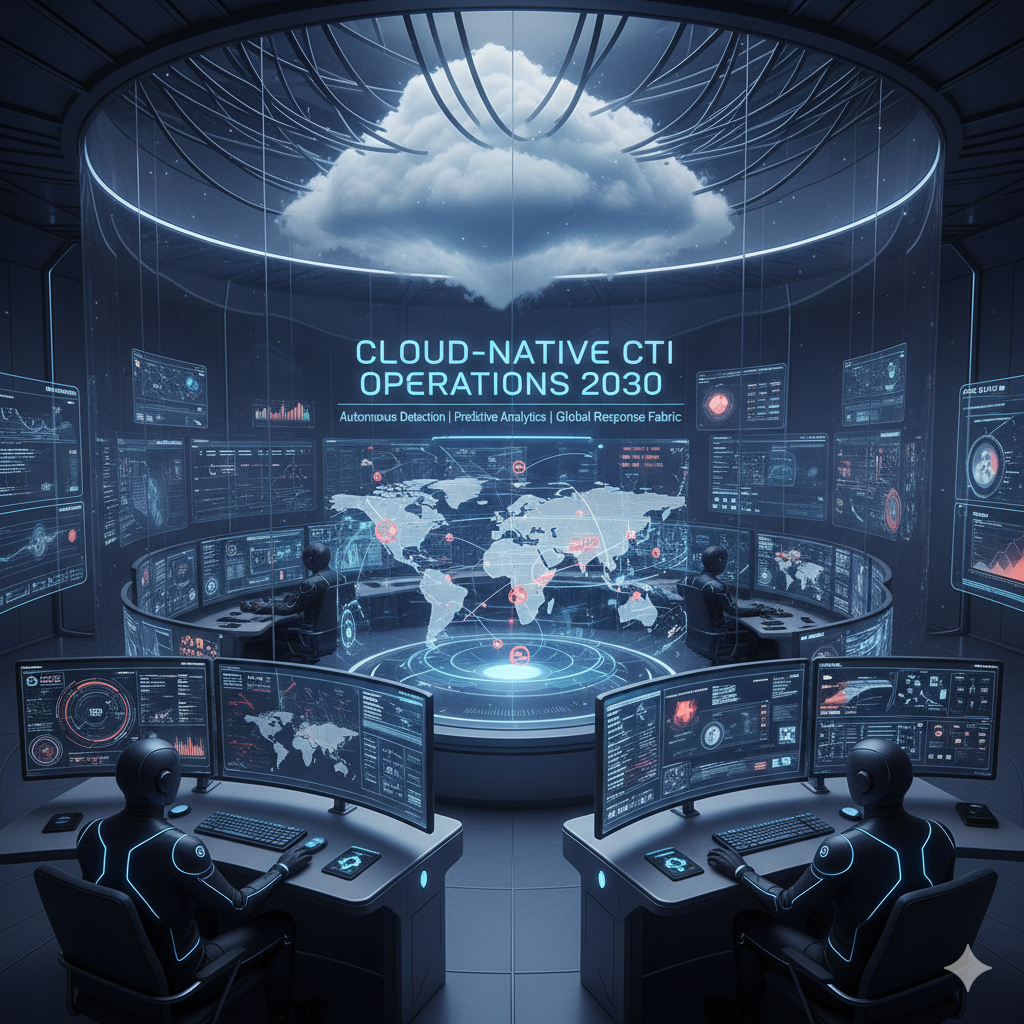
By 2030, the cybersecurity battlefield will have shifted entirely to the cloud. Enterprises, governments, and global institutions operate across distributed cloud ecosystems that power automation, digital transactions, and enterprise collaboration. Yet this widespread connectivity also invites sophisticated attacks targeting APIs, containerized workloads, and hybrid infrastructures. Traditional on-premise threat intelligence models can no longer deliver the scale, speed, and agility required to protect modern businesses. This paradigm shift has given rise to Cloud-Native Cyber Threat Intelligence (CTI) Operations, an architecture that integrates intelligence, automation, and real-time visibility into hybrid and multi-cloud environments. Cloud-Native CTI unites AI-driven analytics, machine learning (ML), container orchestration, and federated threat intelligence sharing to detect, predict, and neutralize advanced threats. The transition from reactive security to predictive, autonomous operations highlights the importance of combining intelligence collection, automation, and data-driven insights within cloud environments. As enterprises integrate security deeper into DevOps pipelines, CTI operations enable continuous threat detection, rapid response, and compliance assurance across dynamic infrastructures at Informatix.Systems, we provide cutting-edge AI, Cloud, and DevOps solutions for enterprise digital transformation. Our Cloud-Native CTI frameworks unify real-time data intelligence, machine learning detection, and automated orchestration, empowering global enterprises to build resilient, self-defending networks that evolve with tomorrow’s threats. This article explores Cloud-Native CTI Operations 2030, uncovering emerging innovations shaping predictive cybersecurity, data automation, and multi-cloud resilience for the next digital decade.
Understanding Cloud-Native CTI Operations
What Is Cloud-Native Cyber Threat Intelligence (CTI)?
Cloud-Native CTI is a next-generation approach to collecting, analyzing, and acting on cyber threat data using distributed, scalable, and container-based cloud infrastructures.
Core Principles of Cloud-Native CTI:
- Scalability: Automatically adapts to processing global threat datasets in real-time.
- Automation: Uses AI and ML to detect, respond, and optimize defense mechanisms autonomously.
- Resilience: Ensures uninterrupted threat monitoring across multi-cloud environments.
- Collaboration: Integrates federated CTI ecosystems to enhance joint intelligence efforts across industries.
This architecture redefines cyber defense by integrating cloud-native deployment practices (Kubernetes, containers, APIs, and microservices) with advanced intelligence workflows.
The Evolution of CTI Operations to Cloud-Native Models
On-Premise Intelligence (Pre-2020)
Traditional security models used centralized, hardware-dependent infrastructures. Scalability was limited, and detection latency was high.
Hybrid Cloud Transformation (2020–2025)
Adoption of multi-cloud operations increased visibility but created fragmented intelligence silos.
Cloud-Native Predictive Operations (2026–2030)
CTI becomes embedded within distributed systems, capable of continuous automation, detection, and predictive orchestration across global networks.
By 2030, cloud-native CTI operations are not just adaptive, they are self-learning, enabling enterprises to identify threats before attackers act.
Why Cloud-Native CTI Matters in 2030
- Expanding Attack Surface: AI-powered bots and deepfake phishing exploit scalable cloud services.
- Data Explosion: Hybrid systems generate massive telemetry streams that require real-time correlation.
- AI-Driven Adversaries: Automated tools enable attackers to evolve faster than manual defense systems.
- Compliance Acceleration: Regulations like ISO 42001 and GDPR 3.0 require adaptive governance intelligence.
- Multi-Cloud Operations: Enterprises span AWS, Azure, and GCP, requiring unified threat visibility.
Cloud-Native CTI operations provide dynamic, autonomous defense across all environments, bridging efficiency, security, and intelligence.
Key Technologies Enabling Cloud-Native CTI
Artificial Intelligence (AI) and Machine Learning (ML)
AI continuously processes enormous data volumes, enabling predictive pattern recognition and faster anomaly detection.
Container Security and Kubernetes Orchestration
Microservices architectures ensure that threat detection, patching, and monitoring scale seamlessly across distributed workloads.
Federated Threat Analytics
Collaborative AI models share intelligence insights while preserving data privacy across borders.
Cloud-Native Security Meshes
Dynamic network layers interlink intelligence services across environments for unified monitoring and response.
DevSecOps Integration
Embedding CTI pipelines directly into DevOps workflows promotes continuous vulnerability scanning and process hardening. At Informatix.Systems, we combine these technologies to deliver AI-powered Cloud-Native CTI frameworks optimized for rapid scaling, data predictability, and cyber adaptability.
Architecture of Cloud-Native CTI Operations
Threat Data Collection Layer
Gathers telemetry data from endpoints, APIs, containers, and third-party threat intelligence feeds.
Analytics and Correlation Layer
AI models process structured and unstructured data, identifying high-probability attack vectors.
Orchestration and Automation Layer
Event-triggered workflows initiate response actions, like isolating nodes or revoking keys, autonomously.
Learning and Optimization Layer
Reinforcement learning continuously improves decision models based on feedback from incidents.
Visualization Layer
Interactive dashboards provide executives with threat posture insights and compliance metrics. This modular design ensures contextual detection, predictive defense modeling, and resilient cloud performance.
The Role of AI in Cloud-Native CTI
Predictive Analytics
AI identifies patterns and anticipates threats before execution by correlating historical and real-time telemetry.
Adaptive Learning
Reinforcement algorithms continuously evolve to detect novel attack tactics across cloud networks.
Automated Response Systems
AI automatically triggers playbooks via Security Orchestration, Automation, and Response (SOAR) frameworks, drastically reducing incident dwell time.
Threat Modeling with Graph Neural Networks (GNNs)
GNNs map relationships between indicators, actors, and infrastructure to reveal complex threat chains. With AI integration, CTI evolves into cognitive cybersecurity, a self-adaptive ecosystem that guarantees resilience against emerging adversarial AI.
Integrating Cloud-Native CTI with SOC Automation
Smart SOC Ecosystems
Cloud-Native CTI integration transforms SOCs into autonomous, data-driven intelligence hubs.
Key Benefits:
- Continuous security posture assessment.
- Real-time incident triage and reduction of false positives.
- Predictive healing, pre-emptively addressing vulnerabilities.
Seamless CTI–SOC Synergy
Data from CTI pipelines feeds directly into SOC systems, providing contextual alerts and automated response triggers. At Informatix.Systems, we architect cloud-native SOC automation frameworks tightly woven with CTI pipelines, offering predictive insight without operational friction.
Cloud-Native CTI for Multi-Cloud Infrastructures
Unified Threat Visibility Across Clouds
AI normalizes telemetry from AWS, Azure, and GCP environments into unified dashboards.
Multi-Cloud Workload Protection
Automated security policies adapt dynamically to diverse configurations across hybrid infrastructures.
Cross-Cloud Analytics for Threat Patterns
Federated models aggregate intelligence from diverse environments without compromising sovereignty.
Autonomous Cloud Security Orchestration
Real-time SOAR rules enforce adaptive protection across virtualized and edge workloads. Cloud-native CTI ensures that enterprises manage complexity with clarity, agility, and intelligence.
Security Governance and Compliance in Cloud-Native CTI
Real-Time Compliance Monitoring
AI verifies that every change across cloud systems aligns with enterprise and regional compliance frameworks.
Continuous Auditing and Reporting
Automated compliance dashboards generate evidence for audits like ISO 27001, SOC 2, and NIST 800-53.
Policy-Driven Automation
CTI integrates compliance enforcement directly into workflows, preventing non-compliant operations. Predictive governance ensures that security aligns with business agility and global compliance standards.
Benefits of Cloud-Native CTI Operations
- Scalability: Seamlessly adapts to increased data, workloads, and campaign detection volume.
- Predictive Foresight: Detects and mitigates threats before escalation.
- Operational Cost Reduction: Reduces human workload via automation.
- Collaborative Intelligence: Unites industry CTI ecosystems through cloud-native sharing models.
- Enhanced Resilience: Self-learning mechanisms strengthen the organization’s ability to counter evolving threats.
Cloud-native CTI shifts the focus from reaction to anticipation and resilience, forming the foundation for digital trust.
Challenges in Cloud-Native CTI Implementation
- Integration Complexity: Multi-cloud and legacy systems complicate full alignment.
- Data Compliance Legislation: Varying sovereignty laws require federated learning approaches.
- Adversarial AI Manipulation: Need for ethical, transparent, and explainable AI frameworks.
- Cost of Implementation: High upfront infrastructure costs for large-scale integration.
- Skill Shortages: Workforce expertise in AI, cloud, and intelligence fusion remains scarce.
At Informatix.Systems, we solve these challenges through explainable AI (XAI), federated security frameworks, and modular microservice architectures designed for scalability and compliance.
The Future of Cloud-Native CTI Beyond 2030
- Quantum-Ready Threat Intelligence Systems: Integrations capable of handling quantum-era encryption.
- Decentralized Intelligence Meshes: Peer-to-peer security models creating global resilience grids.
- Self-Healing CTI Ecosystems: AI agents autonomously detect, patch, and adapt without human input.
- Zero Trust Cloud Orchestration: End-to-end adaptive access control for dynamic workloads.
- Cognitive-Adaptive Governance: AI continuously synchronizes compliance and detection across industries.
Beyond 2030, cloud-native CTI operations will become central to autonomous digital security ecosystems, merging AI cognition with predictive decision-making.
Informatix.Systems: Building Predictive Cloud-Native CTI Ecosystems
At Informatix.Systems, we provide cutting-edge AI, Cloud, and DevOps solutions for enterprise digital transformation. Our Cloud-Native CTI Platforms empower organizations to adopt scalable, automated, and intelligence-driven cybersecurity architectures.
Our Expertise Includes:
- AI-Powered Multi-Cloud CTI Infrastructures
- Predictive Threat Analytics and Visualization
- SOC and SOAR Orchestration Automation
- DevSecOps-Integrated Security Pipelines
- Quantum-Safe and Federated Data Intelligence Frameworks
Enterprises partnering with Informatix.Systems harness the power of real-time, predictive security, achieving cloud scale, automation speed, and intelligence-driven resilience. The next decade marks a definitive transformation for cybersecurity. Cloud-Native CTI Operations represent the nexus of intelligence, automation, and scale, allowing organizations to anticipate risks, act autonomously, and ensure security without sacrificing speed or compliance. The fusion of AI, Cloud, and DevOps is redefining enterprise defense architectures. By integrating CTI across multi-cloud ecosystems, organizations gain unprecedented foresight, operational efficiency, and predictive self-healing capacity. At Informatix.Systems, we lead this transformation, engineering intelligence-first architectures that redefine how global enterprises build, secure, and scale digital trust. Predict faster. Automate smarter. Protect continuously, with Informatix.Systems.
FAQs
What is Cloud-Native CTI?
Cloud-Native CTI integrates cyber threat intelligence operations directly into cloud ecosystems, enabling scalable, predictive, and autonomous defense systems.
How does it improve traditional security models?
It eliminates silos, automates detection, and provides real-time cross-cloud threat visibility.
What technologies power Cloud-Native CTI?
Core enablers include AI, ML, container orchestration, federated intelligence networks, and DevSecOps.
Can Cloud-Native CTI integrate with existing systems?
Yes, through API-driven microservices and SIEM integrations that ensure interoperability.
How does Informatix.Systems deliver Cloud-Native CTI?
We build unified ecosystems integrating AI, Cloud, and DevOps for scalable, predictive, and real-time intelligence operations.
What are the major benefits of Cloud-Native CTI?
Predictive foresight, automated defense, cost efficiency, and compliance efficiency across hybrid infrastructures.
How is AI used in Cloud-Native CTI?
AI predicts attacks, automates risk containment, and continuously learns to improve detection accuracy.
What lies ahead for Cloud-Native CTI beyond 2030?
Fully autonomous, quantum-safe, and decentralized intelligence ecosystems will define cybersecurity’s next century.
No posts found
Write a review