- 3/8, North Pirerbag
- 60 Feet Main Road
- Mirpur, Dhaka 1216
- +880-967-8247365
- support@informatix.systems

CTI for Crisis Management
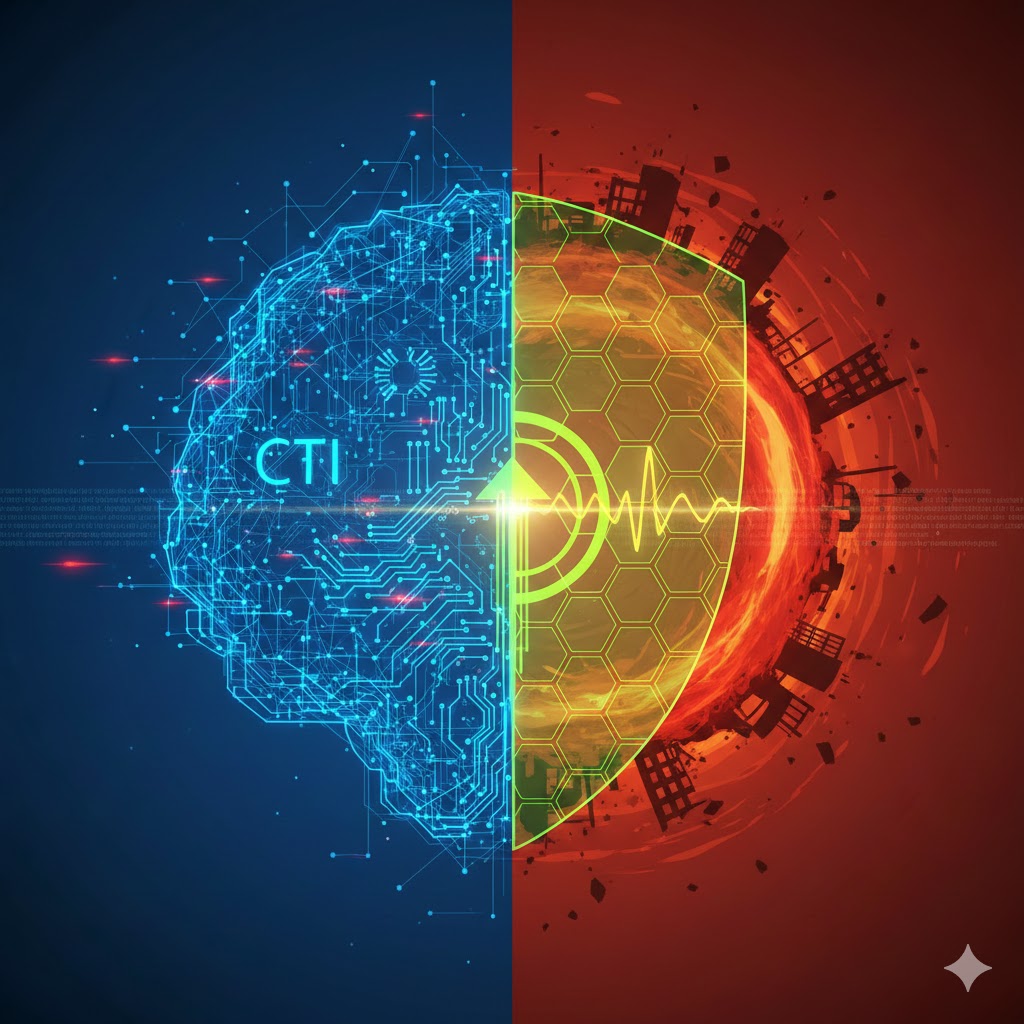
In today's hyper-connected enterprise landscape, crises strike without warning, ransomware paralyzes operations, supply chain attacks disrupt global networks, and nation-state threats target critical infrastructure. Cyber Threat Intelligence (CTI) emerges as the linchpin for effective CTI for crisis management, transforming raw threat data into actionable foresight that prevents escalation and ensures business continuity. Enterprises leveraging CTI reduce breach impacts by up to 50%, detecting threats days earlier than reactive teams. The business imperative is clear: cyber incidents cost $10.5 trillion annually by 2025, with downtime alone averaging $9,000 per minute for large firms. Without CTI, crisis management relies on guesswork, leading to prolonged recovery and reputational damage. CTI provides visibility into adversary tactics, techniques, and procedures (TTPs), enabling proactive defenses during crises like data exfiltration or DDoS floods, at Informatix.Systems, we provide cutting-edge AI, Cloud, and DevOps solutions for enterprise digital transformation, integrating CTI into resilient architectures that withstand 2026's evolving threats. This article explores CTI for crisis management comprehensively, from foundations to future trends, equipping leaders with strategies for unbreakable resilience.
What is CTI?
Cyber Threat Intelligence (CTI) collects, analyzes, and disseminates data on cyber threats, turning fragmented information into strategic assets for defense. It goes beyond alerts, contextualizing threats with actor motives, TTPs, and indicators of compromise (IOCs).
Core components include:
- Data sources: Dark web forums, threat feeds, and endpoint telemetry.
- Analysis layers: Machine learning identifies patterns in vast datasets.
- Actionable outputs: Prioritized risks for SOC teams and executives.
In crisis management, CTI shifts responses from reactive firefighting to predictive containment.
Types of CTI
Enterprises deploy four CTI types tailored to crisis phases.
Why CTI Matters in Crisis Management
Crises amplify vulnerabilities; CTI provides the edge for rapid triage and minimal downtime. It identifies threats pre-impact, cutting response times by 70% in mature programs.
Key benefits:
- Proactive detection: Spots anomalies before breaches materialize.
- Resource optimization: Prioritizes high-impact incidents.
- Regulatory compliance: Aligns with NIS2 and NIST frameworks.
Without CTI, 2026 enterprises face amplified risks from AI-driven attacks and supply chain compromises.
Business Continuity Impact
CTI integrates with business continuity planning (BCP), mapping threats to recovery time objectives (RTOs). Firms using CTI report 40% faster recovery.
The CTI Lifecycle in Crises
CTI follows a structured cycle: collection, processing, analysis, dissemination, and feedback. During crises, this accelerates to real-time loops.
Phases:
- Collection: Aggregate from 300+ feeds.
- Processing: AI filters noise.
- Analysis: Contextualize with MITRE ATT&CK.
- Dissemination: Role-based dashboards.
- Action: Automate playbooks.
ENISA emphasizes instantaneous channels for crisis activation.
Integration with Incident Response
CTI enhances NIST IR phases: preparation via IOC feeds, detection via anomaly baselines, response via TTP playbooks.
Key Benefits of CTI for Enterprises
CTI for crisis management delivers measurable ROI through reduced breach costs and faster MTTR (mean time to respond). Healthcare providers using CTI mitigated ransomware without data loss.
Advantages:
- Threat prioritization: 80% alert reduction via scoring.
- Collaboration: Share intel across sectors.
- Resilience: Anticipate, withstand, recover, adapt.
At Informatix.Systems, we provide cutting-edge AI, Cloud, and DevOps solutions for enterprise digital transformation, embedding CTI for seamless crisis handling.
Quantified ROI
| Metric | Without CTI | With CTI |
|---|---|---|
| Breach Cost | $4.45M avg | 30-50% lower |
| Response Time | 200+ days | <100 days |
| Downtime | 24+ hours | <4 hours |
Real-World Case Studies
Financial firms blocked phishing via CTI-trained filters, slashing successes by 90%. Energy sectors fortified their infrastructure against APTs using operational intel.
Notable examples:
- Healthcare Ransomware: Early IOC detection prevented encryption.
- Retail Supply Chain: Vendor monitoring averted SolarWinds-like breaches.
- Airline Disruptions: CTI dashboards enabled rapid recovery.
These validate CTI for crisis management in high-stakes environments.
Lessons from Failures
Non-CTI reliant firms like Equifax suffered prolonged crises; integrated CTI averts repeats.
Top CTI Platforms for 2026
2026 platforms emphasize AI and automation: Stellar Cyber, Recorded Future, and Mandiant lead with TTP focus.
Recommendations:
- OpenCTI: Free, STIX 2.1 compliant for SMEs.
- Cyble Vision: AI prediction for enterprises.
- Flare: OSINT automation.
| Platform | Strengths | Crisis Fit |
|---|---|---|
| Stellar Cyber | Integrated TIP | Real-time IR |
| Recorded Future | Cloud intel | Predictive alerts |
| Mandiant | Expert analysis | APT hunting |
Integrating CTI into Crisis Frameworks
Align CTI with NIST Cybersecurity Framework and ENISA Blueprint: govern, identify, protect, detect, respond, recover. Define escalation triggers and coordinators per NIS2.
Steps:
AI-Enhanced Frameworks
AI fuses CTI with threat modeling, boosting anticipation by 60%.
Best Practices for Implementation
CTI for crisis management succeeds via governance: appoint coordinators, secure channels, and formalize roles.
- Start small: Pilot tactical CTI.
- Automate: SOAR integration.
- Measure: Track MTTR, false positives.
- Collaborate: ISACs for sector intel.
Informatix.Systems tailors these for DevOps pipelines.
Common Pitfalls to Avoid
Overlooking TTPs beyond IOCs leads to blind spots; prioritize behavioral analytics.
Future Trends: CTI in 2026
Proactive AI-CTI shifts to TTPs, supply chain focus, with 30% incidents from vendors. Expect agentic AI for autonomous response.
Emerging shifts:
- XTI (Extended TI): Cross-industry sharing.
- Digital Twins: Simulate crises.
- Quantum-Resistant CTI: Prep for post-quantum threats.
Conferences like SANS CTI Summit highlight these.
Regulatory Evolution
NIS2 mandates CTI coordinators by 2026.
Challenges and Mitigation Strategies
Data overload burdens teams; AI triage resolves 70% alerts. Skill gaps? Outsource to platforms like Informatix.Systems.
Overcome hurdles:
Building a CTI-Enabled Crisis Team
Cross-functional teams with CTI for crisis management training excel: SOC analysts, execs, and legal. Practice unannounced drills.
Team structure:
Metrics for Success
Track CTI for crisis management via KPIs: threat coverage (95%+), MTTD (hours), recovery cost savings.
| KPI | Target 2026 |
|---|---|
| MTTR | <24 hours |
| Coverage | 300+ feeds |
| ROI | 3x investment |
Vendor and Supply Chain CTI
Monitor third-parties: 30% breaches originate here. CTI scans vendors for vulnerabilities.
Practices:
Training and Awareness Programs
CTI for crisis management demands phishing simulations and tabletop exercises. Annual refreshers build muscle memory. CTI for crisis management redefines enterprise resilience, turning threats into managed risks through intelligence-driven strategies. From lifecycle integration to AI trends, it ensures 2026 readiness amid rising attacks. Implement now for unbreakable continuity. Partner with Informatix.Systems for tailored AI, Cloud, and DevOps CTI solutions. Contact us at https://informatix.systems to audit your crisis posture today.
FAQs
What is Cyber Threat Intelligence (CTI)?
CTI gathers and analyzes threat data for proactive defense, crucial in crisis management.
How does CTI improve crisis response times?
By prioritizing threats and automating playbooks, MTTR drops 70%.
Which CTI platforms suit enterprises in 2026?
Stellar Cyber and OpenCTI excel for AI integration and scalability.
Can CTI prevent supply chain attacks?
Yes, via vendor monitoring and TTP intel, averting 30% risks.
What are NIS2 CTI requirements?
Mandatory coordinators and escalation plans for cyber crises.
How to measure CTI ROI in crises?
Track MTTR, cost savings, and coverage KPIs.
Is AI essential for modern CTI?
Yes, for the prediction and triage of 2026 threats.
How to start CTI for crisis management?
Pilot tactical feeds, integrate SIEM, and train teams.
No posts found
Write a review