- 3/8, North Pirerbag
- 60 Feet Main Road
- Mirpur, Dhaka 1216
- +880-967-8247365
- support@informatix.systems

Cyber Threat Intelligence for Operational Resilience
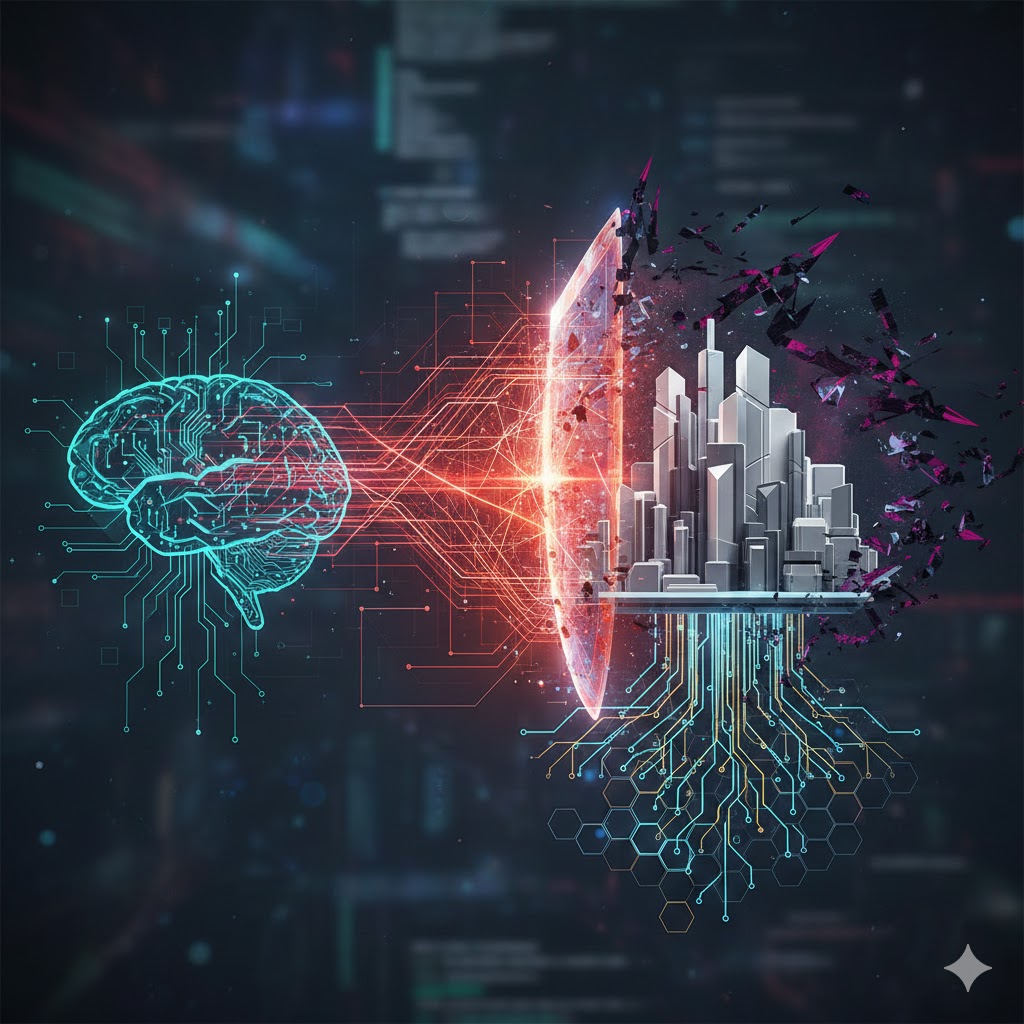
In today's hyper-connected digital economy, enterprises face escalating cyber threats that can disrupt operations, erode trust, and inflict massive financial losses. Cyber threat intelligence (CTI) emerges as the cornerstone of operational resilience, transforming raw threat data into actionable insights that enable proactive defense. As organizations navigate 2026's AI-driven attacks and geopolitical tensions, CTI provides the foresight needed to anticipate, withstand, and recover from disruptions. Operational resilience means maintaining critical functions during and after cyber incidents, aligning with standards like NIST's cybersecurity framework. Businesses ignoring CTI risk downtime costing millions average breach recovery exceeds $4.5 million globally. CTI shifts security from reactive firefighting to a predictive strategy, analyzing adversary tactics, techniques, and procedures (TTPs) for preemptive action, at Informatix.Systems, we provide cutting-edge AI, Cloud, and DevOps solutions for enterprise digital transformation, helping clients integrate CTI seamlessly into operations. This article explores CTI's role in resilience, covering frameworks, lifecycle, integration strategies, and 2026 trends. Enterprises adopting CTI report 50% faster incident response and reduced breach impacts, proving its business imperative.
What Is Cyber Threat Intelligence?
Cyber threat intelligence collects, processes, and analyzes data on threats, adversaries, and attack methods to deliver context-rich insights. It categorizes into strategic (high-level trends for executives), operational (campaign details), tactical (TTPs for teams), and technical (IoCs like IPs). CTI empowers proactive defense by revealing unknown risks and adversary behaviors. Unlike alerts, it provides actionable recommendations tied to business context.
Strategic CTI Benefits
Operational CTI Value
Focuses on active campaigns for immediate response planning.
Importance of Operational Resilience
Operational resilience ensures continuity amid disruptions, per NIST definitions. CTI fuels this by anticipating threats, prioritizing vulnerabilities, and optimizing resource allocation. In 2026, AI-enhanced threats demand resilience; CTI reduces mean time to detect (MTTD) by 40-60%. Financial sectors using CTI cut outage risks by 35%. Enterprises gain competitive edges through resilient operations, avoiding revenue losses from ransomware or DDoS.
Types of Cyber Threat Intelligence
CTI spans four types, each serving resilience layers.
Blend types for comprehensive coverage.
Threat Intelligence Lifecycle
The lifecycle planning, collection, processing, analysis, dissemination, and feedback turn data into resilience tools.
Planning and Direction
Define needs: Protect cloud assets or monitor supply chains.
Collection Phase
Gather from OSINT, dark web, feeds.
Processing normalizes data; analysis yields insights. Feedback refines cycles.
Key Steps:
- Identify priorities
- Collect multi-source data
- Analyze for TTPs
- Disseminate via dashboards
- Measure effectiveness
Key Frameworks and Standards
Frameworks like MITRE ATT&CK, Diamond Model, and NIST CSF structure CTI for resilience. MITRE CTID (2026): Predicts adversary intent via AI telemetry.
NIST emphasizes tiers from ad-hoc to adaptive resilience. ISO aligns with operational continuity.
| Framework | Strength | 2026 Relevance |
|---|---|---|
| MITRE ATT&CK | TTP mapping | AI threat modeling |
| Diamond Model | Intrusion analysis | Multi-event correlation |
| NIST CSF | Resilience tiers | Governance overlay |
At Informatix.Systems, we provide cutting-edge AI, Cloud, and DevOps solutions for enterprise digital transformation using these frameworks.
Building a CTI Team
Start with 2-10 experts: analysts, researchers, managers. Integrate with SOC/IR.
Essential Roles:
- Lead Analyst: Oversees lifecycle
- Collectors: OSINT/dark web
- Data Scientists: AI processing
Hire for OSINT skills; budget $150K-300K annually per role. Train on 2026 trends like GenAI threats.
Top CTI Tools and Platforms
2026 platforms emphasize AI integration, feeds, and automation.
Leaders:
- CrowdStrike Falcon X: Endpoint intel, 230+ groups tracked
- Cyble Vision: AI real-time mapping
- ThreatConnect: 450+ integrations
| Platform | Key Feature | Integration |
|---|---|---|
| Rapid7 | Dark web monitoring | SIEM |
| Stellar Cyber | Behavioral analytics | EDR/SOAR |
| Exabeam | UEBA with CTI | Incident timelines |
AI and ML in CTI
AI automates IOC extraction, predicts threats, and reduces false positives.
2026 Trends:
AI cuts analysis time 70%; enables proactive resilience.
Integrating CTI into DevOps
Embed CTI in CI/CD for DevSecOps: Scan code, alert on threats.
Steps:
- Ingest feeds (MITRE, VirusTotal)
- Automate scanners (Snyk)
- AI anomaly detection in pipelines
Tools: ThreatQuotient TIP, Splunk SIEM. Yields shift-left security. At Informatix.Systems, we provide cutting-edge AI, Cloud, and DevOps solutions for enterprise digital transformation, streamlining CTI-DevOps fusion.
Metrics and KPIs for Success
Track utilization: Incidents via TI, MTTR reduction.
Core KPIs:
- Indicators ingested/acted (target: 80%)
- Incidents elevated by TI
- MTTD/MTTR improvement (goal: <1 hour)
Dashboards measure ROI: $1.49M savings per simulation-tested breach.
| KPI | Formula | Target |
|---|---|---|
| TI Utilization | (Actions/Total IOCs) x 100 | >75% |
| Breach Cost Reduction | Pre/post TI avg | 30-50% |
Real-World Impact
Retail firm used CTI to thwart supply chain attack, enhancing vendor monitoring. Energy sector protected infrastructure via TTP analysis, averting disruptions. Simulations cut the response by 54 days.
Lessons:
Best Practices for 2026
Proactive Habits:
- Automate feeds into SIEM
- Continuous training on AI threats
- Cross-team dissemination
Align with NIST tiers; simulate crises quarterly. Prioritize cloud/OT.
2026 Cyber Threat Trends
GenAI phishing, credential attacks, and unified SOCs dominate.
Predictions:
CTI counters via predictive intel.
Challenges and Mitigation
Common Hurdles:
- Data overload: Use AI filtering
- Silos: Foster SOC-CTI integration
- Skills gaps: Upskill via platforms
Budget 10-15% of security for CTI.
Cyber threat intelligence fortifies operational resilience by enabling prediction, rapid response, and continuous adaptation against 2026 threats. Frameworks, AI tools, DevOps integration, and metrics ensure enterprises thrive amid risks. Implement CTI lifecycle now for unbreakable defenses. Partner with Informatix.Systems for tailored AI, Cloud, and DevOps solutions. Contact us at https://informatix.systems to audit your CTI maturity and build resilience today.
FAQs
What is cyber threat intelligence?
Evidence-based knowledge on threats, turning data into proactive actions.
How does CTI improve operational resilience?
Anticipates disruptions, cuts MTTR, and aligns with NIST.
What are the four types of CTI?
Strategic, operational, tactical, and technical for all levels.
Which CTI platforms lead in 2026?
CrowdStrike, Cyble Vision, ThreatConnect for AI/automation.
How to integrate CTI into DevOps?
Automate feeds in CI/CD with Snyk, MITRE.
What KPIs measure CTI success?
IOC utilization, incident reductions, MTTD.
Can AI replace human CTI analysts?
No, AI augments with prediction; humans provide context.
What 2026 threats demand CTI focus?
No posts found
Write a review