- 3/8, North Pirerbag
- 60 Feet Main Road
- Mirpur, Dhaka 1216
- +880-967-8247365
- support@informatix.systems

Cyber Threat Intelligence for Telecom Operators
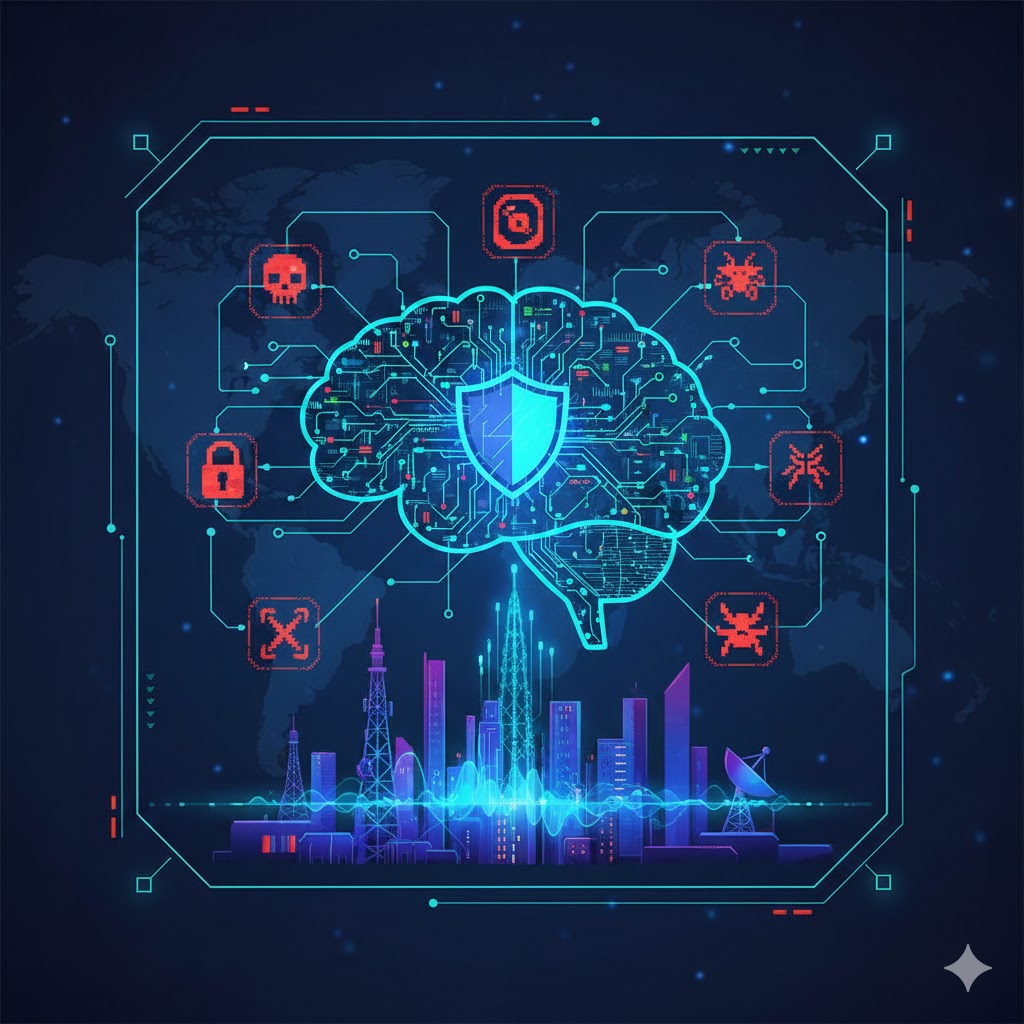
Telecom operators face an escalating cyber threat landscape in 2026, where networks underpin critical infrastructure, financial services, and national security. Cyber threat intelligence (CTI) emerges as the cornerstone for proactive defense, transforming raw data into actionable insights on adversaries, tactics, and vulnerabilities. As 5G evolves toward 6G and AI saturates operations, threats like advanced persistent threats (APTs), distributed denial-of-service (DDoS) attacks, and supply chain compromises persist from 2025, amplified by new risks in satellite integration and quantum computing. The business stakes are immense: a single breach can disrupt millions of users, erode customer trust, and incur regulatory fines under frameworks like GDPR and NIST. In 2025, APT campaigns targeted telecom for espionage via privileged network access, while DDoS floods strained capacity during peak events. Kaspersky reports these threats carry into 2026, intersecting with AI automation risks. Operators must prioritize CTI to prioritize vulnerabilities in hybrid legacy-modern systems, enabling real-time mitigation at Informatix.Systems, we provide cutting-edge AI, Cloud, and DevOps solutions for enterprise digital transformation, empowering telecoms with tailored CTI platforms. This article explores CTI's role, frameworks, threats, and implementation strategies for 2026 resilience.
What is Cyber Threat Intelligence?
Cyber threat intelligence (CTI) involves collecting, analyzing, and disseminating data on threats, actors, and methods to inform security decisions. For telecom operators, CTI shifts from reactive firewalls to predictive defenses against sector-specific attacks. CTI encompasses four maturity levels: strategic (high-level trends), tactical (TTPs), operational (campaign planning), and technical (IoCs like IPs). Platforms automate this cycle, integrating with SIEM and EDR tools.
- Strategic CTI: Guides executive risk assessments for board-level decisions.
- Technical CTI: Feeds automated blocking of malicious IPs in real-time.
Why Telecom Operators Need CTI
Telecom networks form the internet's backbone, handling billions of daily connections and sensitive data flows. Without CTI, operators remain blind to evolving threats like SIM-swapping fraud and botnet recruitment. In 2025, 70% of telecom leaders deemed AI analytics essential, yet legacy systems create exploitable gaps. CTI enables prioritization, reducing mean time to detect (MTTD) by 50% via enriched indicators. Business impacts include revenue protection, DDoS alone costs operators millions in downtime, and compliance with GSMA standards.
Key Cyber Threats to Telecom in 2026
APTs and Espionage Campaigns
APTs dominate, seeking long-term access for data interception. State actors exploit telecom positioning for surveillance.
DDoS and Availability Attacks
DDoS floods persist as capacity tests, targeting edge routing. Botnets leverage IoT for amplification.
Supply Chain Compromises
Vendors and third-party software provide entry points in interconnected ecosystems.
- eSIM Fraud: Anomalous patterns signal revenue leaks.
- Quantum Risks: Emerging decryption threats to encryption.
CTI Frameworks for Telecom
GSMA MoTIF and T-ISAC
GSMA's Mobile Threat Intelligence Framework (MoTIF) classifies actors, while T-ISAC enables real-time sharing among 120+ operators. Members access curated IoCs and best practices securely.
Diamond Model and MITRE ATT&CK
Diamond Model maps adversary-infrastructure-victim relations; MITRE ATT&CK details telecom-specific TTPs. These structural analyses for 5G slicing vulnerabilities. At Informatix.Systems, we provide cutting-edge AI, Cloud, and DevOps solutions for enterprise digital transformation, integrating these frameworks into custom CTI pipelines.
Implementing CTI in Telecom Operations
Building a CTI Program
Start with threat intelligence platforms (TIPs) aggregating OSINT, dark web, and internal logs. Mobileum's AI-driven service uses signaling data for anomaly detection.
Steps:
- Define scopes: Focus on core network, BSS/OSS.
- Integrate sources: SIEM, EDR, GSMA feeds.
- Automate workflows: ML for prioritization.
Network Segmentation and Monitoring
Segment networks to contain breaches; deploy IDS/IPS with CTI enrichment. Continuous traffic analysis spots zero-days.
AI and Machine Learning in CTI
AI powers real-time threat hunting, analyzing petabytes of telemetry for anomalies. Platforms predict breaches via behavioral baselines.
- Automated Response: Isolates segments at machine speed.
- Predictive Analytics: Forecasts campaigns from trends.
70% of leaders integrate AI for telecom CTI, per Nokia. Kaspersky's EDR Expert exemplifies early APT detection.
DevSecOps Integration for Telecom CTI
DevSecOps embeds CTI into CI/CD, automating scans for 5G microservices. Tools provide feedback loops, ensuring security-as-code.
Benefits:
Future: AI-driven DevSecOps for zero-trust in 6G. At Informatix.Systems, we provide cutting-edge AI, Cloud, and DevOps solutions for enterprise digital transformation, streamlining DevSecOps-CTI fusion.
Real-World Case Studies
T-Mobile 2021 Breach (Lessons for 2026)
Exposed 50M records via unpatched servers; highlights patching urgency.
Kyivstar 2023 Attack
Wiped core infrastructure, disrupting 24M users for days. CTI could have flagged reconnaissance.
2025 French Telcos (SFR, Free)
DDoS and ransomware waves underscore collaboration needs.
Regulatory Compliance and CTI
CTI ensures adherence to EU NIS2, US CISA guidelines, and mapping threats to controls. GSMA T-ISAC aids reporting.
- GDPR Alignment: Protects subscriber data via intel-driven access controls.
- 5G Toolbox: Mandates threat sharing.
Future Trends in Telecom CTI for 2026
6G and Edge Computing Risks
6G introduces AI exploitation, quantum hacking, and demanding post-quantum CTI.
Zero-Trust and Predictive Intel
AI arms race favors predictive platforms over rules-based systems. Satellite/NTN integration needs orbital threat intel.
Best Practices for CTI Deployment
- Collaborate via T-ISAC: Share IoCs anonymously.
- MFA and Patching: Core hygiene amplified by intel.
- Incident Response Plans: Test with CTI simulations.
- Vendor Risk Management: CTI-vetted supply chains.
Prioritize AI TIPs for zero-touch security.
Challenges in Telecom CTI Adoption
Legacy integration slows deployment; skill gaps persist. Budgets favor ops over intel, yet ROI from averted breaches justifies investment. Overcome via managed services like Cognyte's platform. Cyber threat intelligence equips telecom operators for 2026's complex threats, from APTs to 6G vulnerabilities, through frameworks like GSMA MoTIF, AI analytics, and DevSecOps. Proactive CTI minimizes disruptions, safeguards revenue, and builds trust. Ready to fortify your networks? Contact Informatix.Systems today for cutting-edge AI, Cloud, and DevOps solutions tailored to telecom CTI. Schedule a free consultation at https://informatix.systems and stay ahead of cyber risks.
FAQs
What is cyber threat intelligence for telecom?
CTI collects and analyzes threat data to protect networks from sector-specific attacks like DDoS and APTs.
Why join GSMA T-ISAC?
It enables real-time intel sharing, reducing MTTD across operators.
How does AI enhance telecom CTI?
AI enables predictive detection and automated responses, analyzing signaling for anomalies.
What are the top 2026 telecom threats?
APTs, supply chain attacks, DDoS, and 6G AI/quantum risks.
How to implement DevSecOps with CTI?
Integrate TIPs into CI/CD for automated vulnerability prioritization.
What role does CTI play in 5G security?
It addresses slicing vulnerabilities and edge threats via enriched monitoring.
Are there CTI platforms for telecom?
Yes, Mobileum and Cognyte offer AI-powered solutions with global data.
How does CTI ensure compliance?
Maps threats to NIST/GDPR controls for audit-ready defenses.
No posts found
Write a review